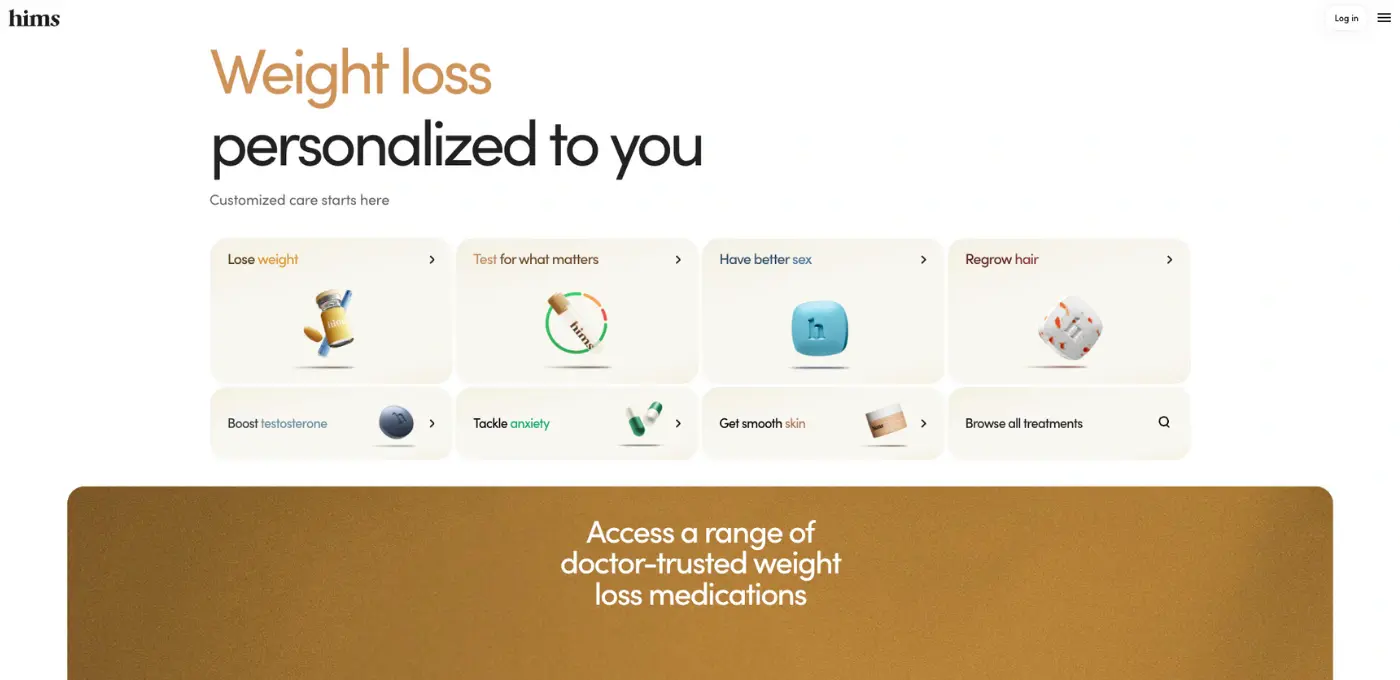
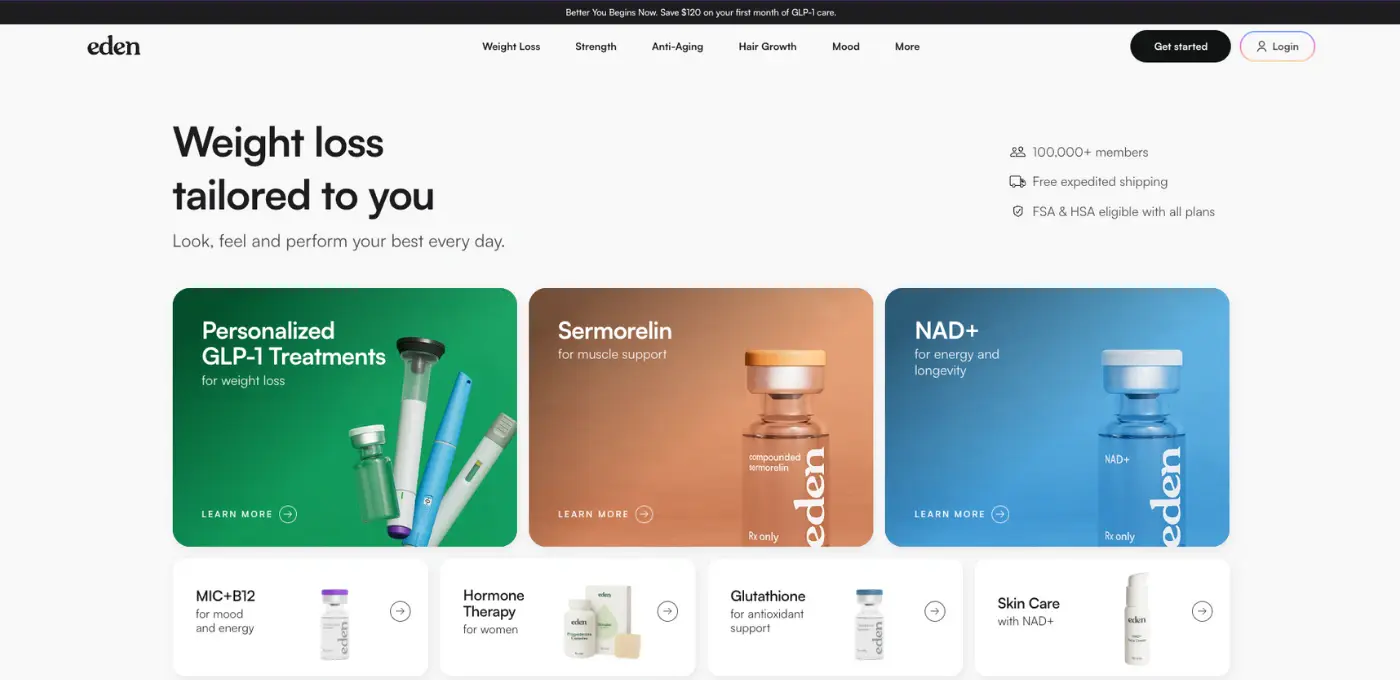
hims and Eden take contrasting approaches to weight loss: hims as a multi-category telehealth giant offering weight loss alongside ED, hair loss, and other treatments, with semaglutide at $199/mo and oral GLP-1 options from $149/mo, while Eden specializes exclusively in weight loss. Eden's last recorded rate with us was $129/mo back in May 2026, and its weight loss listing has since dropped out of our rankings. This evidence-based comparison examines pricing, treatment quality, expertise, and which platform offers better value if you are looking at semaglutide or tirzepatide.
Overview: Multi-Category Telehealth Giant vs Weight Loss Specialist
hims and Eden represent fundamentally different business models in the telehealth market. hims operates as a men's and women's wellness platform (through its hers sister brand) offering treatments across erectile dysfunction, hair loss, skincare, mental health, primary care, and weight management. The company went public in 2021, establishing itself as one of the most recognized telehealth brands with marketing reach and scale. Eden focuses exclusively on weight loss through GLP-1 receptor agonists, positioning as an alternative to multi-category platforms.
The fundamental philosophical difference lies in service breadth versus specialization. hims built its reputation on making previously stigmatized treatments accessible through discreet online consultations, initially focusing on erectile dysfunction and hair loss before expanding into adjacent categories. Multi-category platforms achieve economies of scale and cross-selling opportunities but may deliver less specialized expertise in any single area. Eden counters with deep focus on weight loss optimization, arguing concentrated expertise produces better patient outcomes.
Both platforms employ board-certified healthcare providers operating under telemedicine regulations that permit remote diagnosis and treatment for appropriate conditions. According to
Federation of State Medical Boards guidelines, proper patient-provider relationships can be established through telehealth when adequate medical history, symptom assessment, and clinical decision-making occur. hims conducts brief consultations focused on treatment eligibility screening, while Eden emphasizes richer weight loss consultations including metabolic assessment and lifestyle evaluation.
This comparison examines how the established multi-category leader stacks up against the weight loss specialist across dimensions that matter to patients: pricing competitiveness, treatment quality and innovation, medical oversight and safety, patient experience and support, and long-term outcomes. For patients specifically seeking weight loss treatment, the question becomes whether hims' brand recognition and scale deliver better value than Eden's focus, or whether the concentrated expertise at Eden justifies potential premium pricing and narrower service scope.
Cost Analysis: Established Brand Premium vs Competitive Specialist
hims pricing for weight loss spans a wide range depending on medication type and dose. Oral GLP-1 options start at $149/mo. Semaglutide is listed at $199/mo as a flat rate rather than a dose ladder, and hims says its GLP-1 menu includes name-brand FDA-approved options at no price markup. These prices include provider consultations, prescription management, and medication delivery.
Eden employs competitive pricing designed to undercut multi-category platforms while maintaining quality. Eden's compounded semaglutide and tirzepatide were last recorded at $129/mo in May 2026, custom dosed rather than tiered by strength. Against hims' $199/mo semaglutide that is a difference of about $70 a month, though the Eden figure is over a year old now and its listing is no longer in our weight loss rankings. Eden includes nutritional guidance, weight tracking tools, and weight loss coaching in these prices.
Over a typical 12-month weight loss journey progressing from starter to maintenance doses, cost differences become substantial. A year of semaglutide at hims' $199/mo comes to about $2,388, against roughly $1,548 at Eden's recorded $129/mo, a difference of around $840.
However, hims offers cross-category bundling unavailable at single-focus platforms. Men treating both erectile dysfunction and weight gain can combine treatments: ED plans from $32/mo plus weight loss from $149/mo within a single platform and provider relationship. Women using hers for skincare, birth control, or other women's health needs can add weight loss without managing multiple provider relationships. Hims' consolidated, multi-condition model trades convenience against higher per-category costs.
Both platforms accept HSA/FSA payment for qualifying medical expenses. According to
IRS Publication 502, prescription medications for obesity (BMI ≥30) or overweight (BMI ≥27) with comorbidities qualify for health savings account reimbursement. Neither platform accepts insurance directly for GLP-1 weight loss medications, standard across the telehealth industry. Eden's lower baseline pricing provides better value for weight loss-focused patients, while hims' multi-category access offers convenience for those needing treatments across several health areas.
Medication Options: Broad Portfolio vs GLP-1 Specialization
hims offers a tiered weight loss treatment approach starting with oral medications for patients who do not meet GLP-1 criteria or prefer less intensive interventions. Metformin, originally a diabetes medication, is sometimes used off-label to support insulin sensitivity and modest weight reduction. Naltrexone-bupropion, sold as Contrave, works through appetite suppression and craving reduction. Neither platform lists a price for it, so ask before assuming it is on the menu. According to
FDA approval data, naltrexone-bupropion produces average weight loss of roughly 4% over 12 months (individual results vary), substantially less than GLP-1 medications but useful for patients with contraindications to semaglutide or tirzepatide.
The core hims weight loss offering has centered on compounded GLP-1 receptor agonists, compounded at MedisourceRx, the outsourcing facility hims owns, which is registered with the FDA as a 503B outsourcing facility (verified September 2026). hims announced in March 2026 that it no longer advertises compounded GLP-1s and offers them only on a limited basis. Semaglutide follows standard dose escalation from 0.25mg weekly to maximum 2.4mg weekly over approximately 20 weeks. Tirzepatide escalates from 2.5mg weekly to 15mg weekly. The platform provides both medication formulations, allowing providers to recommend the option best suited to patient circumstances. Research from
STEP trials and
SURMOUNT trials showing average weight loss of 14.9% (STEP 1) to 20.9% (SURMOUNT-1) underpins these prescriptions.
Eden concentrates exclusively on GLP-1 medications, offering both compounded semaglutide and tirzepatide but not oral alternatives. Its marketing presents a GLP-1 as the first thing to try rather than a last resort. Providers evaluate whether a GLP-1 is appropriate for you and choose between semaglutide and tirzepatide based on your goals, tolerance concerns, and cost.
Treatment customization differs between platforms. hims operates with more standardized protocols - patients receive medications at predetermined doses with limited personalization beyond dose escalation timing. Eden emphasizes individualized treatment plans incorporating not just medication selection and dosing but also nutritional strategies, exercise recommendations, and behavioral interventions tailored to patient circumstances. According to Obesity Medicine Association guidelines, weight management combining pharmacotherapy with lifestyle modification produces superior long-term outcomes compared to medication alone.
hims says its GLP-1 lineup includes name-brand FDA-approved options; Eden's listing names only compounded semaglutide and tirzepatide. Brand-name GLP-1s carry list prices around $1,000-$1,400 monthly without insurance, though manufacturer direct-pay programs now run considerably below that, so check those before assuming the list figure applies to you. The compounded versions at both platforms cost far less than those list prices, and they are not FDA-approved and have not been reviewed by the FDA for safety, effectiveness, or quality. According to
FDA regulations on compounding, compounding is permitted only in defined circumstances, and with the tirzepatide shortage declared resolved in December 2024 and the semaglutide shortage in February 2025, it now turns on a clinical need specific to you rather than on the shortage exception. Eden describes its pharmacies as both 503A and 503B and does not name them, so you cannot tell which tier fills your prescription there.
Patient Journey: Fast Processing vs Hands-On Engagement
hims consultations follow the platform's signature rapid-access model. New patients complete online questionnaires covering weight history, BMI, previous diet attempts, medical conditions, and current medications. The intake process takes approximately 10-15 minutes and feeds into an asynchronous provider review. Board-certified physicians or nurse practitioners evaluate submissions within 24 hours, approving appropriate candidates for treatment. Video consultations are available for additional fees but most patients proceed through the text-based pathway.
The hims approach prioritizes speed and convenience. Patients appreciate quick treatment access without scheduling appointments or sitting in waiting rooms. The platform provides basic dosing instructions and side effect information but less intensive education about weight loss psychology, plateau management, or long-term maintenance strategies.
Eden implements more thorough intake evaluations aligned with weight loss specialization. Initial consultations include metabolic assessment, discussion of previous weight loss attempts and barriers to success, evaluation of eating patterns and emotional triggers, and collaborative goal-setting. Providers spend more time explaining how GLP-1 medications work, what realistic weight loss trajectories look like, and how to optimize results through dietary and behavioral changes alongside medication.
The onboarding experience at Eden includes access to registered dietitians who provide meal planning guidance, strategies to minimize GLP-1 side effects through food choices, and ongoing nutritional support. Patients receive weight tracking tools, progress monitoring dashboards, and educational content about weight loss physiology. Eden's onboarding is built around preparation - having questions answered before starting medication.
Follow-up care intensity differs substantially. hims conducts check-ins aligned with prescription refills, primarily assessing tolerance and determining dose escalation readiness. The platform provides messaging access to providers but operates more reactively - patients initiate contact when questions arise rather than receiving proactive outreach. Eden schedules regular follow-ups including weight checks, side effect assessments, dietary check-ins, and treatment optimization discussions. The platform monitors adherence, identifies barriers to progress, and makes adjustments rather than just medication dose changes.
Medical Oversight: Standard Screening vs Weight-Loss-Specific Surveillance
hims implements appropriate safety screening for GLP-1 medications, asking about contraindications including personal or family history of medullary thyroid cancer, multiple endocrine neoplasia syndrome type 2, history of pancreatitis, pregnancy, and breastfeeding. According to FDA boxed warnings, these represent absolute contraindications to semaglutide and tirzepatide. The platform excludes inappropriate candidates and provides standard safety information about concerning symptoms requiring immediate medical attention.
Baseline laboratory testing is not routinely required or facilitated through hims for weight loss treatment. The platform relies on patient-reported medical history and symptom monitoring rather than objective lab data. Patients with pre-existing conditions like diabetes, kidney disease, thyroid disorders, or cardiovascular disease may benefit from pre-treatment metabolic panels, lipid profiles, and A1c testing that hims does not systematically include. Patients wanting labs must coordinate separately with primary care providers.
Eden recommends full baseline labs before initiating GLP-1 therapy, though requirements vary by individual circumstances. The platform can facilitate lab orders through Quest Diagnostics or LabCorp partnerships for complete metabolic panel, lipase, hemoglobin A1c, thyroid function tests, and lipid profile. Providers review results and discuss any abnormalities before prescribing. This approach aligns with Endocrine Society recommendations for baseline metabolic assessment in obesity pharmacotherapy.
Ongoing monitoring protocols reflect each platform's focus. hims tracks basic parameters: weight change, tolerance to current dose, gastrointestinal side effects, and readiness for dose escalation. The platform provides safety information about warning signs like severe abdominal pain, persistent vomiting, or rapid heart rate but monitors primarily through patient-initiated reporting. Eden conducts more systematic surveillance including regular weight measurements, tracking of non-scale victories (energy, mobility, comorbidity improvements), monitoring for concerning symptoms, and periodic lab reassessment for patients with underlying conditions.
hims compounds at MedisourceRx, the outsourcing facility hims owns, which is registered with the FDA as a 503B outsourcing facility (verified September 2026), while Eden describes its pharmacies as both 503A and 503B and does not name them. According to
FDA regulations on 503B facilities, registered 503B outsourcing facilities must meet current good manufacturing practice standards and are inspected by the FDA, while 503A pharmacies are licensed by state boards and are not subject to those requirements. Eden does not name its compounding facilities, so you cannot independently verify which tier fills your prescription there.
Weight Loss Outcomes: Brand Recognition vs Focused Support
Weight loss results depend primarily on reaching and maintaining a therapeutic dose, combined with lifestyle adherence. Both platforms prescribe compounded semaglutide and tirzepatide, but they source them differently: hims compounds at its own registered 503B facility, while Eden does not name its pharmacies. The brand-name versions of these molecules averaged 14.9% (STEP 1) and up to 20.9% (SURMOUNT-1) body weight loss in trials; the compounded versions are not FDA-approved, have not been reviewed by the FDA for safety, effectiveness, or quality, and were not studied in those trials, and individual results vary. Your own outcome also turns on starting weight, metabolic factors, how consistently you take it, and how well you tolerate dose escalation.
We hold no outcome data of our own from either platform, and neither publishes results you could audit. For context on the molecule, brand-name semaglutide averaged 14.9% weight loss over 68 weeks in
STEP trial data, which studied the FDA-approved product rather than a compounded one (individual results vary).
Reviews of Eden emphasize feeling supported through the process rather than the numbers. Comments frequently mention dietitian consultations helping manage nausea through food choices, coaching through plateaus, and education that set expectations before starting.
Treatment persistence significantly affects long-term outcomes. Research shows
GLP-1 discontinuation rates of 50-70% by 12 months in real-world settings, often due to side effects, cost concerns, or perceived inadequate results. Platforms providing better education, side effect management, and realistic expectation-setting may improve persistence. Eden's structured support potentially reduces discontinuation versus hims' more hands-off approach, though comparative data is limited.
Long-term value extends beyond initial weight loss to maintenance after medication discontinuation. Both platforms face the common challenge that
significant weight regain occurs when GLP-1 medications are stopped without strong lifestyle habits in place. Eden's emphasis on building sustainable behaviors alongside medication may provide better foundation for post-treatment maintenance, while hims' medication-focused approach may leave patients less prepared for the transition off pharmacotherapy. The platform investing more in lifestyle change may deliver superior long-term outcomes despite potentially higher short-term costs.
How We Compared Hims vs Eden
Our Comparison Methodology
This comparison is based on analysis of clinical protocols, pricing structures, service models, and treatment approaches from both platforms.
Clinical Evidence: Weight loss treatment recommendations reference FDA-approved GLP-1 medication information (FDA Wegovy Label) and clinical efficacy data from The New England Journal of Medicine.
Pricing Analysis: Pricing reflects the rates last recorded in our provider database; providers change prices frequently, so confirm current pricing directly at checkout.
Service Verification: Platform capabilities, provider credentials, medication sourcing, and treatment protocols were evaluated through detailed review of service offerings and models.
Our analysis is our own editorial work. Most of the providers compared here pay ManyTreatments a commission when you buy through a link on this page. Nobody pays us for a placement, a rating, or a listing, and we are not going to add that commissions have never influenced anything, because that is a claim about our own conduct we cannot show you evidence for. Our goal is to provide evidence-based comparison to help you make informed treatment decisions.
Final Verdict: Hims vs Eden
Choose hims if: You need treatments across multiple health categories (ED, hair loss, mental health, primary care, weight loss) and value the convenience of managing everything through a single platform despite higher per-category costs. The multi-category approach works well for patients treating several conditions simultaneously who prefer consolidated provider relationships and unified account management. hims also makes sense if brand recognition and established scale provide you comfort and peace of mind, even though the weight loss service specifically may not match specialist competitors in support quality or cost competitiveness.
Choose Eden if: Weight loss is your primary or sole health concern and you want expertise, support, and competitive pricing focused exclusively on optimizing weight loss outcomes. Eden's $129/mo record sits below hims' $199/mo semaglutide, and its free consults, 24/7 messaging and custom dosing suit someone focused on this one goal. That $129 figure is from May 2026 though, so price it directly before you count on it. The platform offers structured follow-up and lifestyle guidance alongside the prescription, which may help you stay with treatment longer than medication alone would. On those two recorded rates the yearly gap is about $840, which alongside the dedicated support makes Eden worth pricing out if weight loss is your sole focus.
The Bottom Line: hims excels at multi-category convenience for patients juggling various health needs, while Eden dominates in weight loss value and support. If you primarily want weight loss treatment, Eden delivers better pricing, fuller guidance, and focused expertise that justifies choosing a platform over a generalist brand. A gap of that size offsets any comfort you might take from hims' brand recognition, though hims has the advantage of a live, currently verified price. Only choose hims for weight loss if you genuinely need their other services and are willing to pay a premium for consolidated multi-category access.
Frequently Asked Questions
Which platform offers better pricing for GLP-1 weight loss medications?
Eden provides consistently lower pricing: Eden's compounded semaglutide and tirzepatide were last recorded at $129/mo in May 2026. hims lists semaglutide at $199/mo and oral GLP-1 options from $149/mo, both verified in August 2026. Across a year those recorded rates differ by roughly $840 on the injection tier, but Eden's is the older figure and its listing is no longer in our rankings, so confirm it directly. Eden also includes nutritional coaching and weight tracking tools in base pricing that hims does not provide. However, hims offers the convenience of bundling weight loss with other treatments (ED, hair loss, skincare) for patients needing multiple services, which may justify higher per-category costs for some users.
Does hims provide weight loss support like Eden?
No, hims operates as a multi-category platform providing medication access across many health areas rather than weight-loss-specific support. You will receive basic dosing instructions and side effect information but not the nutritional counseling, dietitian access, weight loss coaching, or behavioral support that Eden includes. hims consultations are brief and focus on prescription eligibility, while Eden conducts metabolic assessments and creates treatment plans integrating medication with lifestyle strategies. If you want deeper expertise, structured support, guidance throughout your weight loss journey, Eden delivers substantially more value despite similar or slightly higher base costs. If you primarily want medication access with minimal interaction, hims may suffice.
Can I get treatments for other health issues at Eden like I can at hims?
No, Eden focuses exclusively on weight loss and does not offer treatments for erectile dysfunction, hair loss, skincare, mental health, or other categories that hims provides. If you want weight loss treatment alongside other health services, you would need to use multiple platforms - for example, hims for ED and hair loss plus Eden for weight loss - or consolidate everything at hims despite higher weight loss costs. The multi-category convenience at hims appeals to patients preferring single-platform management of multiple conditions. Weight-loss-focused individuals without other telehealth needs get better value from Eden's focused service and lower pricing.
Which platform has better customer service and support?
Patient reviews suggest Eden provides more responsive support for weight loss specifically. In our ratings, Hims holds a 9.4 (Outstanding) and Eden a 9.1 (Excellent). For weight loss specifically, Eden's narrower focus translates to better-informed providers and deeper guidance.
Are the medications the same quality at both platforms?
Not from the same kind of facility. hims compounds at MedisourceRx, the outsourcing facility hims owns, which is registered with the FDA as a 503B outsourcing facility (verified September 2026) and says it now offers compounded GLP-1s only on a limited basis. Eden describes its pharmacies as both 503A and 503B and does not name them. Compounded GLP-1s are not FDA-approved and are not reviewed by the FDA for safety, effectiveness, or quality. That difference is most of the answer: at hims you can identify the facility and the tier it registers under, and at Eden you cannot. When a product carries no FDA review behind it, the facility that prepares it is what quality assurance rests on. Ask Eden who compounds your prescription before you decide.
Should I choose based on brand recognition or depth of expertise?
This depends on what you value more: hims offers brand recognition, multi-category convenience, and established scale across various health categories. Eden provides weight loss expertise, fuller support, lower costs for GLP-1 medications, and focused attention on optimizing weight loss outcomes specifically. If you are treating multiple conditions and value consolidated care despite higher per-category costs, hims makes sense. If weight loss is your sole or primary concern and you want maximum value with stronger support, Eden delivers better overall experience at lower cost. Brand recognition does not necessarily equal better outcomes for specific treatment categories where focused expertise matters.
Editorial Note: Researched and edited by our editorial team. AI tools assist with initial research and drafting; all content is fact-checked and edited by humans before publication. Learn more about our editorial standards