We earn commissions from the providers listed here. No provider buys a position, a rating, or a listing. The order is set by hand, and we do not claim it is independent of what we earn. Advertising Disclosure
Shed Review: Honest Look at Pricing, GLP-1 Plans, and Pros/Cons
GLP-1 weight loss with a 120-day guarantee
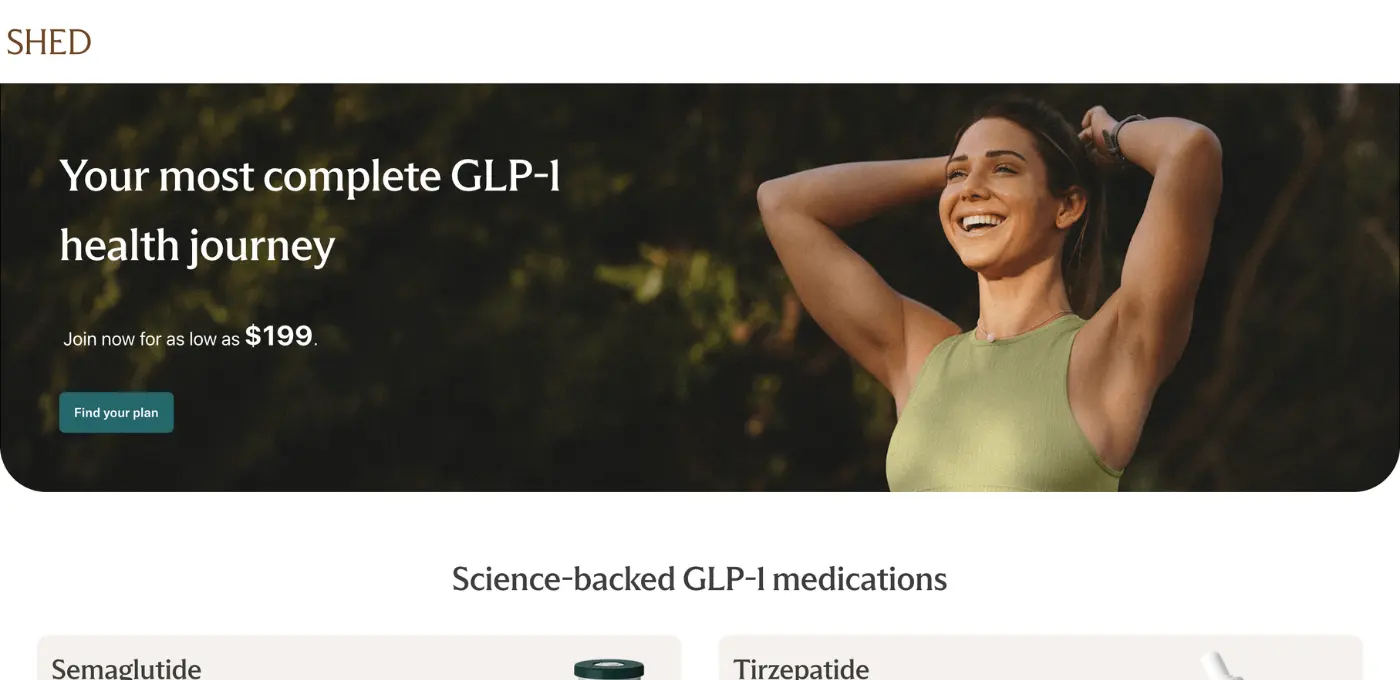
Shed is a telehealth weight loss platform offering compounded GLP-1 medications in multiple formats including injections, liquid drops, lozenges, and oral tablets. Shed reports over 150,000 members and advertises what it calls the 120-Day Weight Loss Guarantee: lose 5% of your weight in 120 days or get your money back, subject to eligibility, required check-ins, and adherence to your treatment plan.
TL;DR: Shed is a no-frills GLP-1 weight loss platform with competitive pricing on compounded semaglutide and tirzepatide - no wellness philosophy packaging, no mandatory lifestyle coaching, just prescription weight loss medication with clinical oversight at a low monthly cost. That stripped-down approach is the feature, not a limitation. Best for people who want GLP-1 medication access without paying for program elements they will not use.
Our Verdict
Shed delivers what it promises: straightforward, competitively priced access to compounded GLP-1 medications with licensed provider oversight and monthly check-ins included. The no-frills approach is right for patients who know what they want and do not need an elaborate program structure to use the medication effectively.
The platform's limitation is the same as its strength: it is medication-forward and support-light. For patients who need behavioral guidance, lab integration, or intensive clinical contact, the simplicity becomes a gap. For patients who are self-directed, have realistic expectations about the medication, and want reliable GLP-1 access at a fair price, Shed is a solid choice in a crowded market.
Shed Pros & Cons
Pros
✓Multiple medication formats beyond just injections
✓120-day money-back guarantee if you do not lose 5%
✓Shed reports a member base above 150,000
✓Both compounded and FDA-approved brand-name options
✓Flexible treatment plans with doctor guidance
Cons
✗Weight loss is the only treatment category
✗Two-month minimum commitment required
✗Cash-pay only, no insurance accepted
✗Compounded medications are not FDA-approved as finished products
Medical Disclaimer: Content is for informational purposes only - not medical advice. Consult a licensed healthcare provider before any treatment. Learn more
Shed Treatments & Pricing
GLP-1 Weight Loss
From $159/month (12-month term)
Shed offers compounded semaglutide and tirzepatide in multiple delivery formats. Choose from injections, liquid drops, lozenges, or oral tablets based on your preference. Brand-name options like Wegovy and Zepbound are also available.
Compounded semaglutide & tirzepatide
Injectable, drops, lozenges & oral tablets
Brand-name Wegovy & Zepbound available
Personalized dosing by licensed providers
Monthly medication delivery
120-day 5% weight loss guarantee, conditions apply
Individual results may vary. Results depend on many factors including adherence to treatment, individual health conditions, and other medications. The information above represents typical ranges based on clinical studies and manufacturer data, not guaranteed outcomes.
Money-Saving Tips for Shed
Here's what you can actually do to lower your Shed cost, based on what they publish about pricing and payment options.
Current Promotion
Here's what Shed is promoting right now: "Semaglutide From $159/mo - 120-Day Money-Back Guarantee." Promotions and terms change, so confirm the details at checkout before you commit.
HSA/FSA Eligibility
Shed accepts HSA and FSA payment, so you may be able to put pre-tax money toward eligible treatments. Whether a specific treatment qualifies depends on your plan and IRS rules, so check with your plan administrator before you count on it.
Price Range for Shed
$159-$499/month
Actual costs depend on treatment plan, medication selection, and insurance coverage.
How Shed Works
1Complete an online health assessment about your weight loss goals and medical history.
2A licensed provider reviews your information and recommends a personalized GLP-1 treatment plan.
3Choose your preferred medication format: injections, drops, lozenges, or oral tablets.
4Your medication ships to your door with ongoing doctor support and monthly refills.
About This Comparison
Our Editorial Standards
This weight loss provider comparison is independently researched by our editorial team. We compare telehealth services based on publicly available information including pricing, available treatments, and service areas. Our ratings are editorial judgments, not tallies of reviews.
Independent Research: We do not accept payment for rankings or favorable reviews
Affiliate Disclosure: We may earn commissions from qualifying purchases at no extra cost to you
Regular Updates: Content is reviewed and updated monthly for accuracy
Licensed Providers Only: All listed services employ US-licensed healthcare providers
Not Medical Advice: This comparison is for informational purposes only. We are not healthcare providers. Always consult with a licensed physician before starting any treatment. Read our full medical disclaimer and editorial policy.
Independent ResearchNo paid placements
Fact-Checked InformationVerified against official sources
Regularly UpdatedLast updated August 22, 2026
Licensed Providers OnlyAll listed services are US-licensed
Shed In-Depth Review
Written by Eric GoldEditor-in-Chief
12 min readUpdated August 22, 2026
Shed is direct about what it offers. The name signals the goal, and the platform delivers on it without lifestyle branding or coaching programs that most patients are not going to use anyway. Compounded semaglutide and tirzepatide, licensed provider oversight, competitive pricing. In a GLP-1 market where platforms increasingly justify higher prices with wellness add-ons, Shed's bet is that most people just want the medication to work. If you want an effective prescription weight loss program at a low price without extras, Shed is that.
What Shed Offers and How It Works
Shed provides compounded semaglutide and compounded tirzepatide through a standard telehealth model. You complete an online intake covering your health history, BMI, current medications, and weight loss goals. A licensed provider reviews your submission and issues a prescription if you qualify. The medication ships from a licensed compounding pharmacy directly to your door.
The standard semaglutide titration protocol at Shed starts at 0.25mg weekly, stepping up every 4 weeks based on your tolerance and response. The goal is to reach the dose where appetite suppression is meaningful without GI side effects being severe enough to interfere with daily life. Most patients spend 12-16 weeks reaching their maintenance dose of 1.0-2.4mg weekly.
Monthly provider check-ins are included in the subscription. These appointments confirm you are tolerating the current dose, assess your weight loss progress, and make dosing decisions for the next month. Between check-ins, messaging support is available through the platform for side effect questions or concerns.
What Shed does not build into the program: structured nutrition coaching, one-on-one dietitian sessions, exercise programming, or a behavioral health component. The platform covers the medical side of GLP-1 treatment. The lifestyle work is on you.
Compounded semaglutide - prepared by a licensed compounding pharmacy and not FDA-approved, though not FDA-approved - is Shed's primary offering. Clinical trial data from the STEP program showed average weight loss of 14.9% of body weight over 68 weeks at the 2.4mg maintenance dose. For a 230-pound person, that's roughly 34 pounds. The medication works by activating GLP-1 receptors, reducing appetite, slowing gastric emptying, and improving insulin sensitivity.
Compounded tirzepatide - containing tirzepatide, the active ingredient in Zepbound and Mounjaro, though not FDA-approved - activates both GLP-1 and GIP receptors. The SURMOUNT-1 trial showed average weight loss of 20.9% at the highest dose over 72 weeks, making tirzepatide the more potent option for patients who tolerate it. Shed's tirzepatide is priced higher than semaglutide, consistent with the broader market.
For patients starting GLP-1 treatment for the first time without prior experience with either medication, Shed providers typically recommend beginning with semaglutide. The longer real-world track record, well-understood side effect profile, and lower cost make it the natural starting point. Tirzepatide is often recommended for patients who have tried semaglutide with insufficient weight loss response or for those who specifically request it.
Shed prices compounded semaglutide by plan length rather than by dose. Its semaglutide product page, price-verified September 17, 2026, lists $199 per month on a 1-month plan, $179 per month on a 6-month plan and $159 per month on a 12-month plan, so the $159 headline on the homepage is the 12-month rate. What Shed does not publish is a dose-by-dose ladder, so whether a higher maintenance dose costs more than the plan price is not something you can look up before you sign up. Compounded tirzepatide has its own product page with the same structure: $299 per month on a 1-month plan, $269 on 6 months and $239 on 12 months, price-verified September 17, 2026.
What sits behind checkout is the rest: what happens if you cancel partway through a 6-month or 12-month plan, whether the plan price holds when your dose changes, and what the subscription renews at. None of that is stated on the product page. So treat the plan price as the first question rather than the answer: ask what is bundled in, what you owe if you stop, and whether the quote covers the dose you expect to be on.
Shed operates on a cash-pay model - no insurance billing, no prior authorization navigation, no insurance paperwork. This is standard for compounded GLP-1 platforms because compounded medications are not covered by insurance formularies. If you have insurance coverage for branded Wegovy or Zepbound through your employer plan, a platform that helps with prior authorization (like PlushCare or Ro) might save you money. For everyone else, Shed's cash-pay pricing is competitive.
If you carry an HSA or FSA card, confirm at checkout whether Shed accepts it, and work any tax benefit out against the total you are actually quoted rather than against the starting figure.
Shed sources compounded semaglutide and tirzepatide from FDA-registered 503B outsourcing facilities. This regulatory designation matters for compounded injectable medications. 503B facilities are subject to FDA inspection, must follow current Good Manufacturing Practice standards, and conduct batch testing for sterility, potency, and contamination. The distinction between 503B and unregulated compounders is the difference between medication that meets pharmaceutical-grade production standards and medication that does not.
The medication is shipped as pre-filled injection pens or vials depending on dose and availability. Injection training materials are included with the first shipment, and the provider check-in system allows for injection technique questions if you are new to self-administered subcutaneous injections.
Proper storage matters for compounded semaglutide: refrigerate at 36-46°F upon arrival and do not freeze. Shed ships with appropriate cold-chain packaging. Plan to be available to receive the first shipment or have it held at a secure location.
The FDA has issued guidance on the regulatory status of compounded GLP-1 medications that has evolved as the branded shortage designation has changed. Patients using compounded GLP-1 medications should be aware that the regulatory landscape for compounding is subject to change, which could affect availability.
Shed works best for a specific patient profile: adults who meet GLP-1 eligibility criteria (BMI 30+ or BMI 27+ with a weight-related comorbidity), are comfortable with the self-injection process, do not require structured behavioral support to make dietary changes, and want medication-forward access at a competitive price.
The platform is a natural fit for patients who have done their homework on GLP-1 medications and want to get started efficiently rather than navigating a complex intake process or paying for program features they do not intend to use. If you already understand how semaglutide works, what the titration schedule looks like, and what dietary adjustments support the medication, Shed delivers the prescription access without the overhead.
Shed is less suited for patients who need significant behavioral support alongside the medication - those who want weekly dietitian check-ins, structured meal planning, or fitness coaching integrated into their program. For that level of support, platforms like Ro Body or dedicated medical weight loss programs provide more infrastructure at a higher price point.
Patients with complex metabolic conditions - type 2 diabetes requiring careful HbA1c monitoring, kidney disease affecting medication metabolism, or cardiovascular history needing close clinical oversight - benefit from a platform with more capable lab monitoring integration than Shed currently offers.
Long-Term Weight Maintenance Considerations
The clinical evidence on long-term GLP-1 treatment consistently shows substantial weight regain when the medication is stopped. The STEP 4 extension trial found that trial participants who discontinued semaglutide regained approximately two-thirds of their lost weight within one year. This makes GLP-1 treatment effectively a long-term commitment rather than a short-term course.
Shed providers raise this during check-ins as you approach your goal weight. The options are: continue at a maintenance dose indefinitely, attempt gradual dose reduction with careful monitoring, or transition to behavioral strategies that may support weight maintenance without medication. The evidence for the third option is limited - the biological drivers of weight regain (increased appetite, reduced energy expenditure, altered gut hormones) are suppressed by the medication and reassert themselves when it is removed.
If you plan to stay on treatment for years rather than months, the cost is a standing commitment worth pinning down before you start. The figures Shed puts in public are plan prices, $159 to $199 per month for semaglutide depending on whether you commit to 12 months or 1, and none of them says what a higher maintenance dose costs. Ask what your maintenance dose costs and what the subscription renews at, then build your own long-run number from the quote you are given.
There may be room to move on that. Shed providers can adjust dosing based on clinical response, and if you hold your results at a dose below your maximum titration level, ask whether your monthly charge follows the dose down. The answer decides what the long run actually costs you.
Shed vs Other Weight Loss Platforms
In the competitive compounded GLP-1 market, Shed positions alongside iVIM Health and Skinny.Rx as a lower-cost, medication-focused option. The differentiators come down to pricing, support depth, and platform experience.
Against Ro Body - which offers more capable clinical support, lab integration, and dietary coaching - Shed is less expensive but provides less structured support. If you value monthly nutrition counseling or integrated lab monitoring, the price premium at those platforms is justified by the services you receive.
Against hims, a price comparison needs more than two headline figures. Shed publishes plan prices by commitment length and nothing about what a maintenance dose costs, so the only fair way to line the two up is to get a quote from each for the dose you expect to be on. Weigh what each one includes at the same time, because how often a provider actually reviews you is part of what you are buying.
The clearest advantage Shed has over most competitors is simplicity. The intake is straightforward, the clinical model is clean, and the published prices are three plan lengths per medication rather than a menu of tiers to decode. There are no upsells, no add-on packages, no app features requiring engagement to access the subscription value. If you want uncomplicated access to a medication you have already decided to try, that simplicity is a genuine feature.
Shed prices compounded semaglutide by plan length: $199 per month on a 1-month plan, $179 on a 6-month plan and $159 on a 12-month plan, price-verified September 17, 2026 on Shed's semaglutide page. Compounded tirzepatide is $299, $269 and $239 per month on the same three plan lengths. Shed does not publish what a higher dose costs, so the quote you get after your provider evaluation is the real number.
Does Shed accept insurance?
No. Shed is a cash-pay platform. Compounded medications are not covered by insurance. HSA and FSA cards are accepted.
What medications does Shed offer?
Shed offers compounded semaglutide (containing the active ingredient in Wegovy and Ozempic) and compounded tirzepatide (containing the active ingredient in Zepbound and Mounjaro). Compounded versions are not FDA-approved and are not reviewed by the FDA for safety, effectiveness, or quality. Both are available as weekly subcutaneous injections.
Who qualifies for Shed?
Adults with BMI 30 or higher, or BMI 27 or higher with a weight-related health condition (type 2 diabetes, hypertension, high cholesterol, sleep apnea). People with a history of medullary thyroid cancer, pancreatitis, or pregnancy do not qualify.
How often do I speak with a provider at Shed?
Monthly check-ins are included in the subscription. Between check-ins, messaging support is available for side effect questions and clinical concerns.
Does Shed offer nutrition coaching?
No. Shed focuses on the medical side of GLP-1 treatment - prescription, medication, and provider oversight. Structured nutrition coaching is not part of the program.
How is the semaglutide at Shed sourced?
Shed sources from FDA-registered 503B outsourcing facilities that meet current Good Manufacturing Practice standards, including batch testing for sterility and potency.
How long until I see results with Shed?
Appetite suppression typically begins in the first 1-2 weeks. Meaningful weight loss usually appears in weeks 4-8 as doses increase. In the STEP 1 trial, participants taking semaglutide 2.4mg lost an average of 14.9% of body weight over 68 weeks (individual results vary).
Can I cancel my Shed subscription?
Yes. Subscriptions can be cancelled anytime without contracts or cancellation fees.
What side effects should I expect at Shed?
Nausea, constipation, diarrhea, and reduced appetite are most common during dose escalation. These typically improve within 2-3 weeks at each new dose level. Shed providers can prescribe antiemetics if nausea is severe.
Does Shed offer tirzepatide?
Yes. Compounded tirzepatide has its own product page at Shed, priced by plan length at $299 per month for 1 month, $269 for 6 months and $239 for 12 months, price-verified September 17, 2026. Whether a higher dose costs more is not published. Your provider recommends the medication based on your health history.
Is Shed available in my state?
Shed operates in most US states. Check the Shed website for current state-specific availability.
Sources & References
Our comparisons are informed by official sources and regulatory guidelines. We encourage readers to verify information with authoritative sources.
Editorial Note: Researched and edited by our editorial team. AI tools assist with initial research and drafting; all content is fact-checked and edited by humans before publication. Learn more about our editorial standards
Is Shed Legit?
We checked their medical licenses and pharmacy certifications.
See how Shed stacks up against other popular telehealth providers. Compare pricing, services, and our editorial ratings to find the best option for your needs.
Eric Gold is a writer and editor with a background in digital media and consumer research. He has spent the last several years covering the health and wellness industry, with a particular focus on telehealth services and direct-to-consumer healthcare. Eric believes that access to clear, unbiased information should not require a medical degree. When he is not reviewing telehealth platforms, he enjoys hiking, cooking, and following the stock market a little too closely.
Medical Disclaimer: This review is for informational purposes only and is not a substitute for professional medical advice. Always consult with a licensed healthcare provider before starting any treatment. Individual results may vary. We may receive compensation through affiliate links, which helps support our research and content.