We earn commissions from the providers listed here. No provider buys a position, a rating, or a listing. The order is set by hand, and we do not claim it is independent of what we earn. Advertising Disclosure
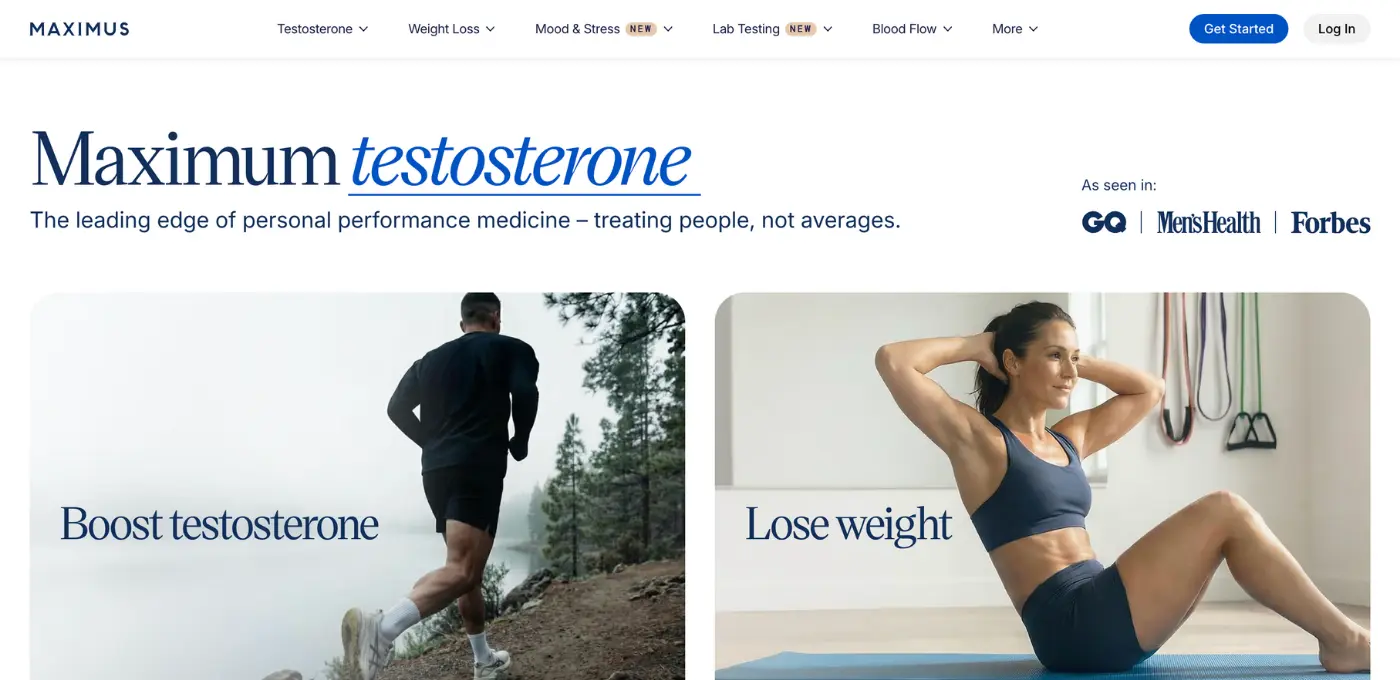
Maximus is a men's health telehealth platform specializing in testosterone replacement therapy and erectile dysfunction treatment. With three TRT delivery methods (injectable, oral enclomiphene, and gel) and at-home testosterone testing via LabCorp/Quest, Maximus offers a full-service approach to men's hormonal health.
TL;DR: Maximus is the best TRT platform for men who approach testosterone as a performance and longevity optimization tool rather than a medical treatment - it combines lab-first hormone protocols with coaching, lifestyle programming, and community in a model that goes well beyond standard TRT prescribing. The program costs more than basic TRT telehealth options because it includes substantially more. Best for men who want a full hormone optimization program with accountability and structure, not just testosterone access.
Our Verdict
Maximus has built a TRT platform that works on two levels simultaneously: it delivers clinically sound testosterone optimization with lab-first protocols, ongoing monitoring, and estrogen management, while framing that clinical work within a performance optimization narrative that resonates with its target demographic. For men who want TRT delivered with the depth of a full hormone program and the language of vitality and peak performance, Maximus is one of the better-designed options in the market.
The clinical rigor - mandatory labs, estrogen monitoring, hCG availability, fertility counseling, safety monitoring protocols - sets Maximus above basic TRT prescription platforms. The performance coaching adds lifestyle support that improves treatment outcomes beyond what medication alone provides. At $139-199/month plus initial evaluation costs, it is priced appropriately for what it delivers.
Maximus Pros & Cons
Pros
✓Three TRT delivery options for patient preference
✓At-home testosterone testing for convenience
✓All 3 major ED medications available
✓HSA/FSA accepted to reduce costs
Cons
✗No insurance accepted
✗$49 initial assessment fee
✗Limited to TRT and ED (no hair loss, weight loss)
Medical Disclaimer: Content is for informational purposes only - not medical advice. Consult a licensed healthcare provider before any treatment. Learn more
Maximus Treatments & Pricing
Testosterone Replacement Therapy
From $149/month
Maximus offers three TRT delivery methods to fit your lifestyle. Choose injectable testosterone for maximum effectiveness, oral enclomiphene for a pill-based option, or topical gel for daily convenience. All include at-home testosterone testing and ongoing hormone monitoring.
Maximus provides all three major ED medications - Sildenafil (generic Viagra), Tadalafil (generic Cialis), and Vardenafil (generic Levitra). Work with your clinician to find the right medication and dosage for your needs.
Individual results may vary. Results depend on many factors including adherence to treatment, individual health conditions, and other medications. The information above represents typical ranges based on clinical studies and manufacturer data, not guaranteed outcomes.
Money-Saving Tips for Maximus
Here's what you can actually do to lower your Maximus cost, based on what they publish about pricing and payment options.
Current Promotion
Here's what Maximus is promoting right now: "ED Meds From $35.99/mo - Free Priority Shipping." Promotions and terms change, so confirm the details at checkout before you commit.
HSA/FSA Eligibility
Maximus does not currently take HSA or FSA payment, so budget for the full cash price when you compare it against providers that do.
Price Range for Maximus
$49-$199/month
Actual costs depend on treatment plan, medication selection, and insurance coverage.
How Maximus Works
1Complete a 5-minute at-home testosterone test shipped to your door.
2A licensed clinician reviews your results and conducts a video consultation.
3Choose your preferred TRT method: injectable, oral, or gel.
4Your medication ships free with ongoing monitoring and support.
About This Comparison
Our Editorial Standards
This erectile dysfunction provider comparison is independently researched by our editorial team. We compare telehealth services based on publicly available information including pricing, available treatments, and service areas. Our ratings are editorial judgments, not tallies of reviews.
Independent Research: We do not accept payment for rankings or favorable reviews
Affiliate Disclosure: We may earn commissions from qualifying purchases at no extra cost to you
Regular Updates: Content is reviewed and updated monthly for accuracy
Licensed Providers Only: All listed services employ US-licensed healthcare providers
Not Medical Advice: This comparison is for informational purposes only. We are not healthcare providers. Always consult with a licensed physician before starting any treatment. Read our full medical disclaimer and editorial policy.
Independent ResearchNo paid placements
Fact-Checked InformationVerified against official sources
Regularly UpdatedLast updated August 22, 2026
Licensed Providers OnlyAll listed services are US-licensed
Maximus In-Depth Review
Written by Ben KowalskiStaff Writer
12 min readUpdated August 22, 2026
Maximus treats TRT as a performance system rather than a prescription transaction. The platform starts with full lab work, builds a personalized hormone protocol around your results, and layers in coaching and community support designed to optimize testosterone alongside training, sleep, and nutrition. If you have looked at standard TRT telehealth platforms and found them too transactional - prescription issued, no follow-through - Maximus is built for the opposite experience. It costs more than most alternatives, and the difference is real program structure rather than nominal add-ons.
The Maximus Approach to Testosterone Optimization
Maximus requires full lab work before any prescription is issued - total testosterone, free testosterone, LH, FSH, hematocrit, PSA, complete metabolic panel, and often additional markers like SHBG, estradiol, and thyroid function. This full panel is necessary to understand not just whether testosterone is low but the mechanism driving it (primary vs. secondary hypogonadism), the presence of conditions that influence how TRT should be managed, and whether other hormonal systems are contributing to the patient's symptoms.
The lab-first requirement is a clinical standard, but what distinguishes Maximus is the depth of interpretation. Providers are looking not just for clinical hypogonadism (T under 300 ng/dL) but for functional suboptimal levels - men whose total testosterone may be in the "normal" range but whose free testosterone is low due to high SHBG, or men in the 300-500 range who have significant symptoms and whose quality of life would be meaningfully improved by optimization.
This broader therapeutic window - treating men who are technically normal but functionally suboptimal - is where the optimization framing diverges from standard clinical practice. Traditional endocrinology typically reserves TRT for men with clearly established hypogonadism. Maximus, like other optimization-focused platforms, operates with a more expansive view of who benefits from testosterone support.
This approach has advocates and critics in the medical community. The advocates cite evidence that men with testosterone in the low-normal range who are symptomatic show meaningful quality-of-life improvements with treatment. The critics note that the long-term effects of TRT in men with technically normal testosterone are less well-studied. Patients should understand this debate when making their decision.
The Performance Coaching Framework
Maximus integrates testosterone therapy with a broader performance optimization framework that distinguishes it from basic TRT platforms. Alongside medication management, the program includes coaching around the lifestyle variables that interact with testosterone and general performance: sleep optimization, training protocols, nutrition for hormonal health, and recovery strategies.
Testosterone is primarily secreted during deep sleep, and sleep deprivation considerably impairs testosterone production. Men with sleep apnea - which is common in the demographic presenting with low testosterone symptoms - show markedly reduced testosterone levels compared to controls without sleep disorders.
Resistance training protocols are part of the performance framework because strength training increases testosterone production and also improves body composition in ways that are bidirectionally beneficial with TRT. Visceral fat is an estrogen factory (aromatase enzyme in fat tissue converts testosterone to estrogen), and reducing fat mass improves the testosterone-to-estrogen ratio. Training prescriptions that maximize these effects are clinically relevant to testosterone optimization.
Nutrition guidance focuses on the dietary variables associated with testosterone production: adequate healthy fat intake (testosterone is synthesized from cholesterol), micronutrients (zinc, vitamin D, magnesium deficiencies are associated with low testosterone), protein adequacy for muscle preservation, and avoidance of foods that impair testosterone production or raise estrogen.
TRT Protocols Available Through Maximus
Maximus offers standard TRT delivery formats with provider selection based on patient circumstance:
Testosterone enanthate: Similar to cypionate with a slightly longer half-life. Used by some providers as an alternative when cypionate is unavailable or as patient preference.
Topical testosterone gel/cream: For patients who prefer not to inject. Applied daily to shoulders, upper arms, or inner thighs. Produces more stable levels than injections but requires daily application and carries transfer risk.
Human chorionic gonadotropin (hCG): Often used alongside testosterone cypionate in the Maximus protocol. hCG stimulates the Leydig cells in the testes to produce endogenous testosterone, maintaining testicular volume and function and preserving spermatogenesis. This is particularly important for men who are not certain their family is complete - hCG use during TRT reduce considerablys fertility suppression compared to testosterone alone.
Enclomiphene: A selective estrogen receptor modulator that blocks the hypothalamic feedback that suppresses LH/FSH production. By blocking this feedback, enclomiphene stimulates the body to produce more testosterone naturally. This is not TRT in the traditional sense - it boosts endogenous production rather than replacing it externally. Maximus uses enclomiphene for men with secondary hypogonadism who want to maintain natural testosterone production and fertility.
Maximus monitors estradiol as part of its follow-up labs and manages estrogen excess when it occurs. The management options are:
Aromatase inhibitors (anastrozole, exemestane): Block the conversion of testosterone to estrogen. Anastrozole is commonly used in TRT management. However, over-suppression of estrogen is also problematic - testosterone and estrogen balance is necessary for bone density, cardiovascular health, and cognitive function in men. Judicious use of aromatase inhibitors to bring estradiol into the optimal range (rather than eliminating it) is a clinical skill that not all TRT platforms manage well.
Lifestyle interventions: Reducing body fat (which reduces aromatase activity), optimizing zinc intake (zinc inhibits aromatase), and reducing alcohol consumption (liver metabolism of estrogen is impaired by alcohol) can reduce estrogen conversion without medication.
SERMs: Tamoxifen or clomiphene can address gynecomastia specifically by blocking estrogen receptors in breast tissue.
The attention to estrogen balance is one of the markers of a sophisticated TRT program. Platforms that prescribe testosterone and monitor only testosterone levels - without tracking estradiol and managing the downstream conversion - miss a clinically important variable.
Pricing and Program Structure
Maximus operates a subscription model priced at approximately $139-199/month depending on the specific program tier and medications included. The subscription includes the testosterone medication, ongoing provider oversight, required monitoring labs at specified intervals, and access to the performance coaching curriculum.
The initial evaluation - which includes the complete lab panel - typically costs $99-149, which covers both the labs and the initial provider consultation to review results and develop a treatment plan. For men who have not previously had a full hormonal panel, this cost is fully justified given what a complete endocrine lab panel costs at retail.
Follow-up monitoring labs (every 3-6 months) may be included in the subscription or billed separately depending on the program tier. Maximus's website details current pricing, which has evolved as the platform has scaled.
The hCG addition to a TRT protocol adds approximately $30-60/month to the base testosterone cost, depending on dose. Enclomiphene as a standalone or adjunctive treatment is priced similarly. Aromatase inhibitor prescriptions are relatively inexpensive generics.
Annual cost for a standard Maximus TRT program runs $1,700-2,500 including the initial evaluation, ongoing subscription, and monitoring labs. This compares favorably to in-person TRT clinics ($200-400/month plus clinic fees) and is similar to other full-service telehealth TRT programs.
Maximus positions its program partly around cognitive performance - the effect of optimized testosterone on focus, motivation, mental clarity, and mood. This framing reflects real clinical evidence: hypogonadism is associated with depression, brain fog, reduced motivation, and cognitive fatigue. Treatment of hypogonadism improves these outcomes in clinical trials.
The extension to "cognitive optimization" in men with normal-to-low-normal testosterone is where the evidence is less definitive. Correlational data shows relationships between testosterone levels and various cognitive performance measures, but the randomized trial evidence for cognitive benefits of TRT in men who are not clearly hypogonadal is more limited.
Maximus's coaching curriculum addresses the behavioral and lifestyle variables that support cognitive performance alongside hormone optimization: sleep quality (as above), stress management protocols, physical training effects on brain health (BDNF production from exercise), and nutritional factors relevant to cognitive function.
The integrated approach - optimizing hormones alongside the behavioral and lifestyle variables that interact with hormones - represents a more complete model for men seeking performance improvement than either TRT alone or lifestyle coaching without attention to hormonal status. Whether men want to frame this as medicine or optimization, the practical program content addresses both the physiological and behavioral dimensions of male vitality.
Maximus vs. Other TRT Platforms
The TRT telehealth market includes platforms across a spectrum from basic (prescription testosterone with minimal support) to complete (lab-first protocol, ongoing monitoring, lifestyle coaching, estrogen management). Maximus positions in the complete tier alongside platforms like Peter MD and Fountain TRT.
The differentiation between Maximus and Peter MD: Maximus has stronger lifestyle coaching infrastructure and performance-oriented framing; Peter MD has a slightly more traditional clinical approach with comparable lab rigor. Both are appropriate for men who want complete TRT management. The choice often comes down to whether you want the performance optimization narrative (Maximus) or a more clinical framing (Peter MD).
Against basic TRT platforms that prescribe testosterone with minimal monitoring or lifestyle support, Maximus represents a meaningfully higher standard of care. The performance coaching is not just marketing - managing sleep, training, and estrogen balance alongside testosterone replacement produces better outcomes than testosterone alone.
Against in-person TRT clinics, Maximus offers comparable clinical rigor at lower cost and without the requirement for clinic visits. For men in areas with limited access to TRT specialists, or who prefer the telemedicine convenience, Maximus provides a clinically defensible alternative.
PSA monitoring: Prostate-specific antigen is measured before starting and at regular intervals. A significant PSA rise prompts urological evaluation.
Cardiovascular review: Men with pre-existing cardiovascular disease require more careful monitoring. The relationship between TRT and cardiovascular outcomes has been studied extensively; current evidence suggests physiological replacement doses are safe for most men, but individual cardiovascular risk assessment at baseline and ongoing is appropriate.
There are situations where Maximus appropriately escalates to in-person specialist care: men who develop polycythemia requiring intervention, significant PSA elevation requiring prostate evaluation, cardiovascular symptoms during treatment, or complex hormonal findings requiring endocrinology subspecialty evaluation. A responsible telehealth TRT platform knows the limits of remote management and makes referrals when in-person evaluation is indicated.
Frequently Asked Questions
What makes Maximus different from other TRT platforms?
Maximus integrates testosterone optimization with a performance coaching framework covering sleep, training, and nutrition. The platform uses a complete lab panel before prescribing, monitors estrogen balance alongside testosterone, and includes hCG protocols for fertility preservation.
Does Maximus require blood work before prescribing TRT?
Yes. complete labs including total and free testosterone, LH, FSH, estradiol, hematocrit, PSA, and metabolic markers are required before treatment begins.
How much does the Maximus program cost?
Monthly subscriptions run approximately $139-199/month depending on medications and program tier. The initial evaluation including labs costs $99-149. Follow-up lab monitoring is included in some tiers or billed separately.
Does Maximus offer hCG alongside testosterone?
Yes. hCG is available as an addition to the testosterone protocol to maintain testicular function and reduce fertility suppression during TRT.
What is enclomiphene and does Maximus prescribe it?
Enclomiphene is a SERM that stimulates natural testosterone production by blocking hypothalamic estrogen feedback. Maximus prescribes it for men with secondary hypogonadism who want to boost natural production and preserve fertility rather than using exogenous testosterone.
Does Maximus monitor estrogen levels during TRT?
Yes. Estradiol is part of the monitoring panel. Elevated estradiol from aromatase conversion of testosterone can cause water retention, gynecomastia, and mood issues. Maximus manages estrogen balance with aromatase inhibitors when indicated.
How long until results are noticeable on TRT through Maximus?
Libido improvements often appear within 3-4 weeks. Energy and mood improvements at 4-8 weeks. Muscle composition changes become apparent at 3-6 months. Full optimization typically requires 6-12 months.
Does Maximus offer weight loss treatment?
Maximus focuses primarily on testosterone optimization and men's performance health. GLP-1 weight loss may be available through the platform - check the current service list on the Maximus website.
What TRT delivery formats does Maximus offer?
Testosterone cypionate weekly subcutaneous injections are the primary format. Topical gel and cream are available as alternatives. Delivery method selection is based on patient preference and clinical considerations.
How does Maximus handle fertility concerns for men on TRT?
TRT suppresses sperm production. For men who are not certain their family is complete, Maximus providers discuss hCG supplementation (maintains sperm production during TRT) or enclomiphene (stimulates natural testosterone without exogenous suppression of the HPG axis).
Is Maximus available in all states?
Maximus operates in most US states. State-specific telehealth regulations and controlled substance prescribing rules may affect availability in certain states.
Can I see my lab results through the Maximus platform?
Yes. Lab results are available through the Maximus patient portal with provider interpretation. Results are reviewed during scheduled check-ins and any concerning values prompt provider outreach.
Sources & References
Our comparisons are informed by official sources and regulatory guidelines. We encourage readers to verify information with authoritative sources.
AUA - Testosterone Deficiency GuidelineAUA clinical guideline for testosterone deficiency: required lab work, diagnostic criteria, treatment protocols, and monitoring standards.
Editorial Note: Researched and edited by our editorial team. AI tools assist with initial research and drafting; all content is fact-checked and edited by humans before publication. Learn more about our editorial standards
Is Maximus Legit?
We checked their medical licenses and pharmacy certifications.
Regulatory noticeRegulatory note (verified August 22, 2026): A May 2026 review of maximustribe.com led the FDA to issue Maximus Health, Inc. warning letter MARCS-CMS 730095 on June 8, 2026. The language quoted here concerns effect and sourcing rather than ingredient comparison: "Clinically studied ingredients," "Clinically studied to help patients...," and "Proven to lose weight effectively," alongside a statement that the compounded products come from "FDA approved pharmacies." On that last point the agency was explicit that no FDA-approved or FDA-licensed designation exists for compounding pharmacies or outsourcing facilities, so describing one that way is misleading. Both findings were cited as misbranding under FD&C Act 502(a) and 502(bb). Nothing in FDA’s index records a close-out, so we log the matter as open. Read the FDA letter
Compare Maximus to Alternatives
See how Maximus stacks up against other popular telehealth providers. Compare pricing, services, and our editorial ratings to find the best option for your needs.
Ben Kowalski is a writer and researcher who covers men's health, sexual wellness, and online healthcare services. He stumbled into health writing after realizing how much bad information exists online about topics men are too embarrassed to ask their doctor about. Ben thinks that needs to change. When he is not untangling medical jargon or stress-testing telehealth apps, he is watching Premier League football, grilling something, or losing at trivia nights with the same group of friends he has had since college.
Medical Disclaimer: This review is for informational purposes only and is not a substitute for professional medical advice. Always consult with a licensed healthcare provider before starting any treatment. Individual results may vary. We may receive compensation through affiliate links, which helps support our research and content.