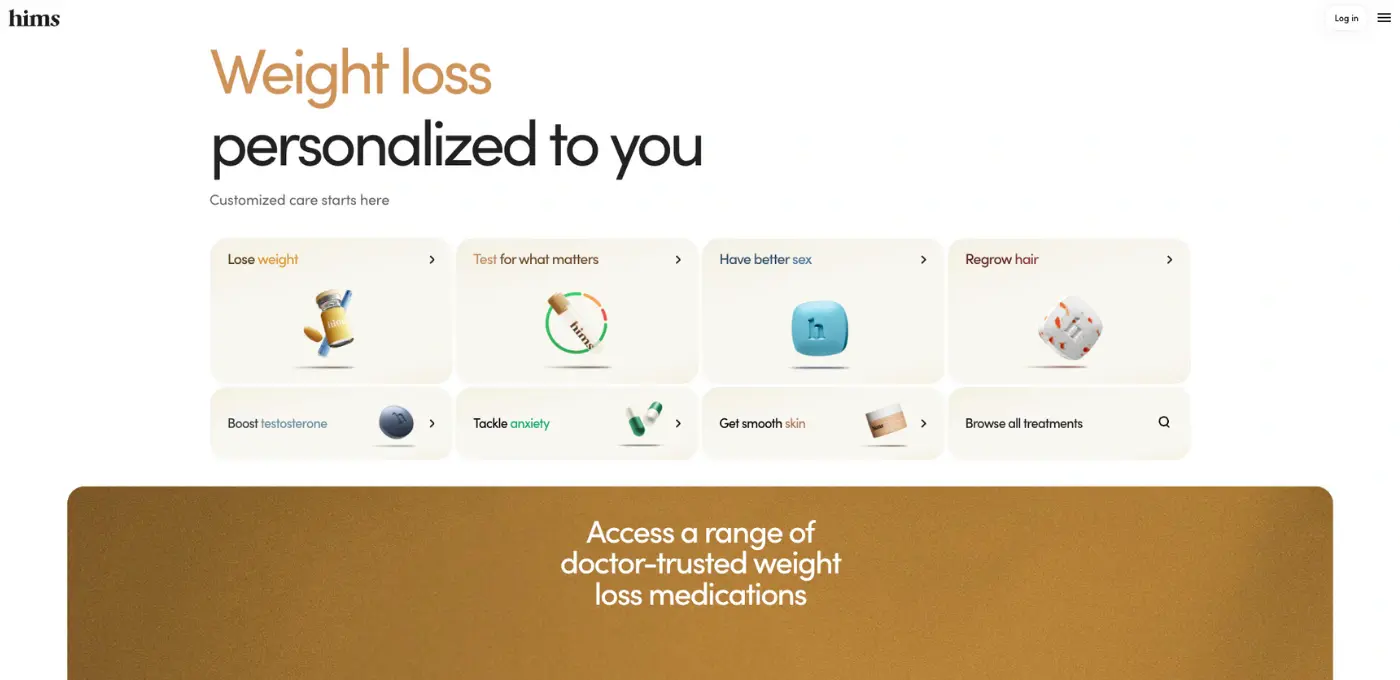
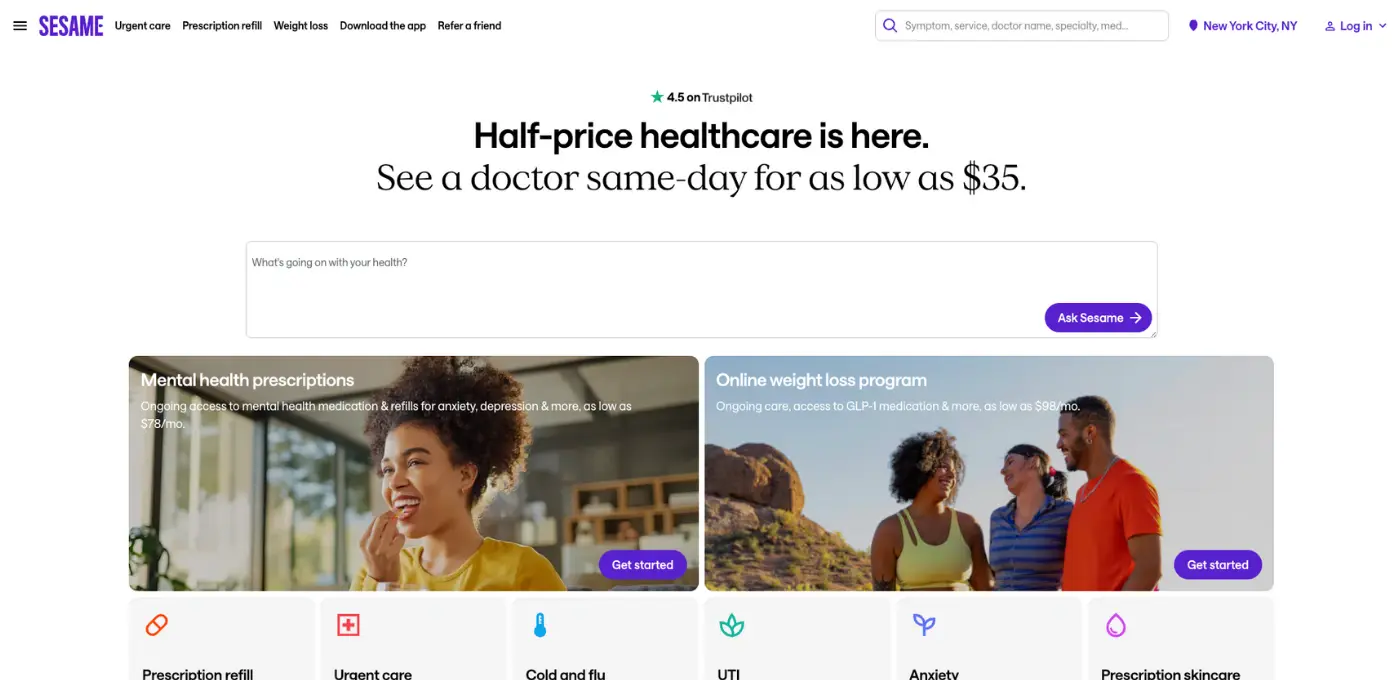
hims and Sesame Care represent fundamentally different telehealth business models: hims operates subscription-based productized services for men's health conditions (ED, hair loss, mental health, weight loss) with monthly fees bundling medications and medical oversight, while Sesame Care functions as a healthcare marketplace connecting patients with thousands of independent providers for pay-per-visit services without subscriptions. This comparison examines pricing models, service breadth, insurance acceptance, and consultation processes to help you choose between focused subscription convenience versus marketplace flexibility with full healthcare access.
Platform Overview: Subscription Telehealth vs Healthcare Marketplace
hims launched in 2017 as a subscription-based telehealth platform specializing in men's health treatments for erectile dysfunction, hair loss, skincare, mental health, and weight management. The platform operates through monthly subscription pricing bundling medications, consultations, and ongoing medical oversight into single fees. hims provides streamlined online consultations, asynchronous physician reviews, and automatic prescription refills shipped directly to homes. Their business model emphasizes convenience, predictable monthly costs, and focus on common men's health concerns affecting millions.
Sesame Care launched in 2020 as a healthcare marketplace connecting patients with independent providers for pay-per-visit services without subscriptions or memberships. Rather than employing physicians directly, Sesame aggregates thousands of independent doctors, nurse practitioners, therapists, and specialists who list services at transparent upfront prices. Patients browse provider profiles, compare costs, book individual appointments (video or in-person depending on location), and pay only for services used. Sesame operates across primary care, specialty consultations, mental health therapy, lab work, and imaging - functioning as the "Airbnb of healthcare" with marketplace dynamics.
The fundamental distinction centers on business model philosophy: hims provides productized telehealth through subscription packages designed for chronic ongoing conditions (hair loss requiring continuous finasteride, ED needing regular medication refills, mental health demanding sustained treatment). Sesame offers a la carte healthcare for episodic needs, one-time consultations, second opinions, or patients preferring fee transparency over subscription commitments. According to 2024 telehealth trends from JAMA Health Forum, subscription models work best for chronic conditions while marketplace models suit acute episodic care.
For men seeking ongoing treatment for hair loss, ED, or mental health with predictable monthly costs and automatic medication refills, hims delivers convenience through subscription continuity. For patients needing occasional consultations, specialist referrals, primary care visits, or those preferring to avoid recurring charges, Sesame provides flexible pay-per-use access with transparent pricing and broader provider selection across medical specialties.
Both platforms maintain quality standards - hims employs board-certified physicians directly while Sesame credentials independent providers requiring state licensure, malpractice insurance, and background verification. However, they serve different patient priorities: subscription predictability versus usage flexibility, productization versus marketplace breadth.
Treatment Categories and Service Scope
hims offers five productized treatment categories: (1) Erectile dysfunction with sildenafil (Viagra generic), tadalafil (Cialis generic), and custom ED mints combining medications for rapid onset. (2) Hair loss featuring finasteride oral medication, minoxidil topical solution, biotin supplements, and combination treatment packages. (3) Skincare with tretinoin for anti-aging, prescription acne medications, and dermatologist-formulated products. (4) Mental health providing SSRIs for depression/anxiety, therapy referrals, and psychiatric medication management. (5) Weight loss offering GLP-1 medications (semaglutide) with medical monitoring.
Each hims category follows streamlined workflows: thorough online questionnaires, physicians review within 24-48 hours, medications ship if approved, ongoing care through quarterly reviews and messaging. The productized approach works well for straightforward conditions with standardized treatments but limits flexibility for complex cases requiring specialist expertise or in-person examination. hims cannot provide full-service primary care, acute illness treatment, injury evaluation, or specialty consultations beyond their core categories.
Sesame Care provides a much broader service scope through its marketplace model: same-day video visits for ED from $34, dermatology and hair loss from $37, women's health sessions from $69, a $79/mo mental health medication subscription, and cash-pay GLP-1 medications from $149/mo. Lab work, imaging and diagnostic services are priced upfront the same way, and you pick your provider by rating, price and same-day availability.
Sesame's marketplace includes thousands of providers with varying specialties, availability, and pricing. You browse profiles showing credentials, patient reviews, appointment availability, and exact consultation costs before booking. Some providers offer in-person visits in addition to telehealth for patients preferring face-to-face care or requiring physical examination. This flexibility exceeds hims' productized telehealth limited to specific condition categories.
For men needing only ED medication, hair loss treatment, or mental health prescriptions, hims' focus provides sufficient coverage. For patients requiring primary care, specialist consultations, family healthcare (Sesame serves all demographics including women and children), or complex medical needs beyond hims' categories, Sesame delivers comprehensive marketplace access. According to research in Health Affairs, marketplace models increase healthcare access 28% for underserved populations compared to specialized subscription platforms.
Pricing Models and Total Cost Comparison
hims uses subscription pricing bundling medications and medical oversight: ED plans are listed from $32/mo, with sildenafil from $4 per use and tadalafil from $6 per use depending on how often you need them. Hair loss treatment runs $22-25/mo, covering finasteride and minoxidil as a spray, chew or serum. Mental health care starts at $49/mo including unlimited provider messaging, and the consultation that starts it is free. Weight loss GLP-1 medications start at $199/month. These subscriptions include physician reviews, prescription management, and medication refills - no separate consultation fees.
Subscription predictability benefits chronic conditions: if you need ED medication monthly, a plan from $32/mo gives you a figure you can budget around. However, you pay whether or not you use services that month - vacation months, medication breaks, or periods not needing treatment still incur charges until you pause subscriptions. hims doesn't charge per-consultation fees for routine care, but initial enrollment and quarterly reviews are bundled into monthly pricing.
Sesame Care operates pay-per-visit without subscriptions or memberships: Video visits start at $34 for ED and $37 for dermatology, and you see the price before you book. Mental health is sold as a $79/mo medication subscription rather than by the session. Women's health sessions are listed at $69, and prescriptions go to a nearby pharmacy for pickup. There is no membership requirement at all, so you can use Sesame completely a la carte.
Cost comparison for ED treatment: a hims plan from $32/mo works out to about $384 a year, with medication, provider access and shipping bundled in. Sesame works differently: you pay $34 and up per visit, then fill the prescription yourself at a pharmacy, so your total depends on what that pharmacy charges rather than on a figure Sesame publishes. Which comes out cheaper depends entirely on your pharmacy's price, and it means managing renewals and refills yourself instead of having them arrive automatically.
For hair loss over 12 months: hims runs $22-25/mo, roughly $264-300 a year, with automatic refills. Sesame charges $37 a dermatology visit and sends the prescription to your pharmacy, so the medication is billed separately at whatever that pharmacy charges. The unbundled model can come out lower if your pharmacy is cheap, but it puts prescription and pharmacy coordination on you.
For mental health treatment: hims starts at $49/mo, about $588 a year, with unlimited provider messaging. Sesame's mental health subscription is $79/mo, about $948 a year, also covering video visits and unlimited messaging. On the listed rates hims is the cheaper of the two here, by roughly $360 a year.
Sesame provides better value for episodic needs, one-time consultations, or patients comfortable managing prescriptions independently. hims delivers better value for chronic ongoing conditions requiring continuous medication with minimal patient coordination. According to healthcare economics research, subscription models save patients time (4-6 hours annually) despite sometimes higher costs through automated workflows.
Consultation Process and Provider Interaction
hims operates primarily through asynchronous consultations for efficiency. You complete detailed health questionnaires covering medical history, current medications, symptoms, treatment goals, and condition-specific questions. For ED, you answer questions about cardiovascular health, blood pressure medications, and prior treatment attempts. For hair loss, you upload photos documenting thinning patterns. Licensed physicians in your state review submissions within 24-48 hours, approve prescriptions if appropriate, or request additional information.
The asynchronous model minimizes wait times and scheduling but eliminates real-time conversation. You don't speak directly with physicians unless specifically requesting phone/video consultations (available but not standard workflow). Ongoing care occurs through messaging platforms - you send questions, physicians respond within 24 hours. Quarterly medical reviews assess treatment efficacy and side effects, typically conducted asynchronously unless complex issues require live discussion.
hims physicians are employees or contracted providers working exclusively through the platform. You don't select individual doctors - the platform assigns physicians based on state licensure and availability. This standardization ensures consistent care protocols but limits continuity - you may interact with different physicians over time rather than establishing relationships with specific providers.
Sesame Care operates through live video consultations booked in advance. You browse provider profiles showing photos, credentials (MD, DO, NP, PA), specialties, years of experience, patient ratings, and availability calendars. You select providers based on preferences (credentials, gender, availability times, patient reviews), book specific appointment slots, and attend scheduled video visits at reserved times.
Live consultations enable real-time conversation, clarifying questions, physical examination guidance (if applicable), and relationship building with chosen providers. However, scheduling requires coordination - you must book days in advance and attend at specific times rather than completing asynchronous questionnaires on your schedule. According to patient satisfaction research in JAMA Network Open, 67% of patients prefer live video visits for complex concerns while 58% prefer asynchronous care for routine prescription refills.
Sesame allows provider continuity - you can re-book the same physician for follow-ups, establishing ongoing relationships and care consistency. Providers maintain your medical records within Sesame's platform, enabling longitudinal care tracking. This continuity exceeds hims' rotating provider model where you may interact with different physicians across visits.
Insurance Acceptance and Payment Flexibility
hims operates entirely as cash-pay telehealth without insurance billing. You cannot submit claims to insurance companies for medications or medical consultations through hims. However, you can use HSA/FSA cards for qualified medical expenses including prescription medications and physician consultations. hims provides itemized receipts and documentation for potential tax deductions - medical expenses exceeding 7.5% of adjusted gross income may be deductible when itemizing.
The cash-pay model creates pricing transparency (you know exact monthly costs) but eliminates insurance cost-sharing. Even if you have excellent health insurance covering ED medications or mental health treatment, hims won't bill your plan - you pay full retail pricing through subscriptions. If your plan already covers these medications at a low copay, a cash subscription can easily cost more than going through your insurance, so check your benefits before you sign up.
Sesame Care accepts insurance for many services, creating flexible payment options. Depending on provider preferences, you can use insurance for primary care visits, specialist consultations, therapy sessions, and lab work. Providers mark profiles indicating insurance acceptance - some accept all major plans, others operate cash-pay only. When insurance is accepted, you submit claims for reimbursement (Sesame provides necessary documentation) or providers bill directly if they participate in your network.
Even when using insurance through Sesame, transparent upfront pricing shows exact costs before booking. A Sesame dermatology visit is listed at $37, and that is the figure you see during booking rather than a number that arrives later. This transparency exceeds traditional healthcare where costs remain unknown until after-visit billing. According to 2024 healthcare pricing research, price transparency increases patient satisfaction by 34% and reduces billing disputes by 45%.
For patients with extensive insurance covering relevant services, Sesame delivers significantly better value through insurance billing capabilities. For uninsured patients or those with high-deductible plans, both platforms operate on similar cash-pay terms - though Sesame's unbundled pricing may still cost less for episodic needs than hims' ongoing subscriptions.
Platform Experience and Service Quality
hims operates through polished website and mobile apps (iOS/Android) emphasizing streamlined workflows. The platform uses simple questionnaires, photo uploads, and minimal friction between signup and prescription approval. Medication packaging arrives in discreet unmarked boxes with automatic refills every 1-3 months. Customer support operates via email and live chat with 2-4 hour response times for non-urgent questions.
The user experience prioritizes efficiency over personalization - standardized workflows ensure consistency but limit customization. You cannot extensively discuss treatment alternatives, request specific medication formulations outside standard options, or negotiate care plans. The productized approach works well for straightforward cases but frustrates patients with unique needs or preferences requiring flexibility.
Sesame Care provides marketplace-style browsing with provider profiles, filters (specialty, availability, pricing, ratings), and detailed credential displays. You read provider bios, review patient feedback, and select based on individual preferences. The platform operates like booking travel or accommodations - transparent comparison shopping for healthcare services.
Platform quality varies by individual providers since Sesame aggregates independent practitioners rather than employing standardized teams. Some providers maintain excellent communication, thorough examinations, and detailed explanations. Others provide rushed consultations with minimal engagement. Patient reviews help identify high-quality providers, but experiences vary more than hims' standardized service delivery.
hims medications come from FDA-registered pharmacies with consistent quality through centralized sourcing. Sesame prescriptions get filled at patients' chosen pharmacies (CVS, Walgreens, local independent pharmacies, mail-order), creating flexibility but requiring patients to manage prescription transfers and pharmacy coordination. According to patient experience research, centralized prescription management saves patients 3-5 hours annually compared to independent pharmacy coordination.
How We Compared Hims vs Sesame Care
Our Comparison Methodology
This comparison is based on comprehensive analysis of business models, service offerings, pricing structures, and treatment approaches from both platforms.
Clinical Evidence: Men's health treatment recommendations reference FDA prescribing information for ED medications, hair loss medication guidelines, and mental health treatment standards from National Institute of Mental Health.
Pricing Analysis: Pricing reflects the rates last recorded in our provider database; providers change prices frequently, so confirm current pricing directly at checkout. Sesame Care pricing varies by individual providers in marketplace model.
Service Verification: Platform capabilities, provider credentials, insurance acceptance, and service breadth were evaluated through detailed review of offerings and models.
This comparison is written by our own editorial team, and ManyTreatments is paid an affiliate commission by most of the providers listed here when you buy through a link on this page. Payment for placement, for a rating, or for a listing is not something we accept. What we will not claim is that commissions have never influenced anything, because that would be a statement about our own conduct we cannot evidence. Our goal is to provide evidence-based comparison to help you make informed healthcare decisions.
Final Verdict: Hims vs Sesame Care
Choose hims if: You need ongoing treatment for ED, hair loss, mental health, or weight loss with chronic medication requirements and prefer subscription convenience with automatic refills, predictable monthly budgeting, and minimal patient coordination. hims excels for straightforward men's health conditions requiring sustained treatment, particularly if you value time savings over cost optimization and don't have insurance covering these services. The productized workflow delivers efficiency for standard cases.
Choose Sesame Care if: You need primary care, specialist consultations, family healthcare (women, children, elderly), or episodic medical services beyond hims' core categories. Sesame provides marketplace flexibility for occasional needs, insurance acceptance creating cost savings for insured patients, provider selection enabling relationship continuity, and transparent pay-per-visit pricing avoiding subscription commitments. Best for broad healthcare access or patients managing multiple family members.
Consider using both if: You have chronic men's health needs (ED medication, hair loss treatment) benefiting from hims' subscription automation while requiring occasional primary care, specialist referrals, or family healthcare through Sesame's marketplace. Many patients maintain hims for ongoing treatments while using Sesame for broader medical needs.
Bottom line: hims provides subscription telehealth optimized for chronic men's health conditions with productized convenience at premium pricing. Sesame delivers healthcare marketplace access with pay-per-visit flexibility, insurance acceptance, and extensive service scope. Choose based on whether you prioritize subscription automation (hims) or usage flexibility with potential cost savings (Sesame).
Editorial Note: Researched and edited by our editorial team. AI tools assist with initial research and drafting; all content is fact-checked and edited by humans before publication. Learn more about our editorial standards