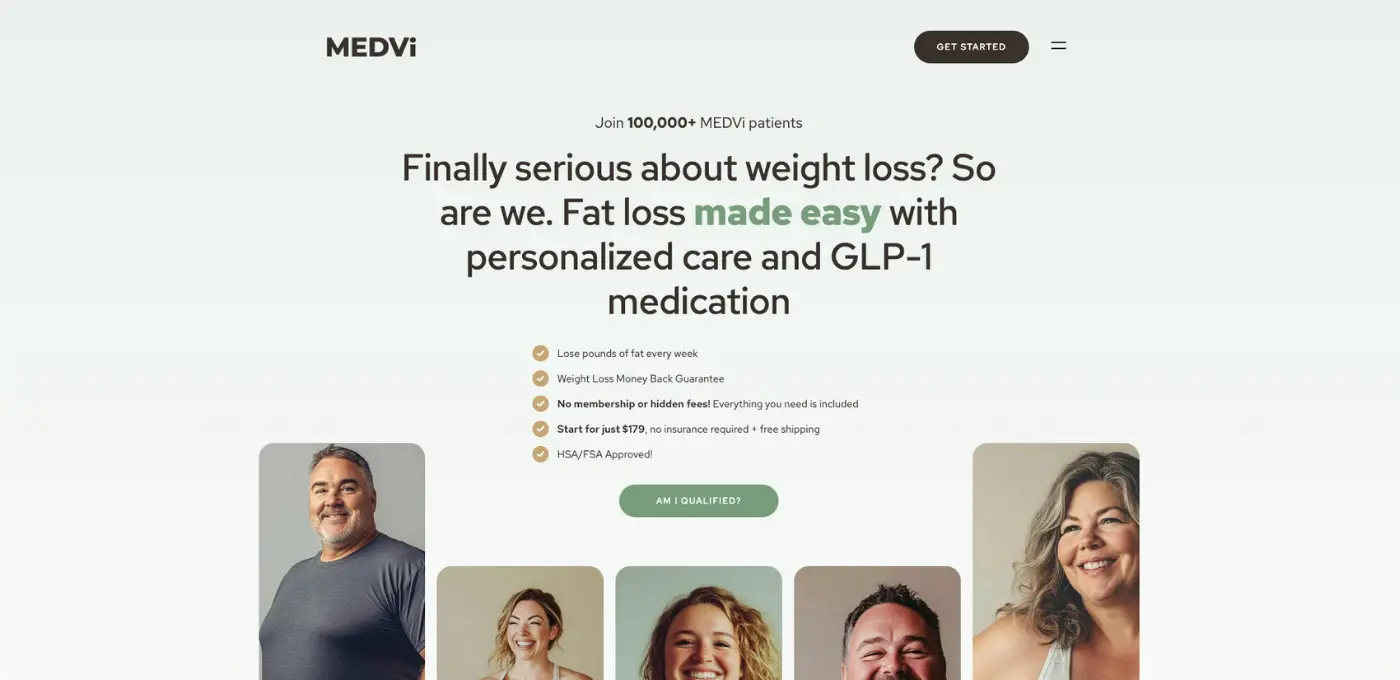
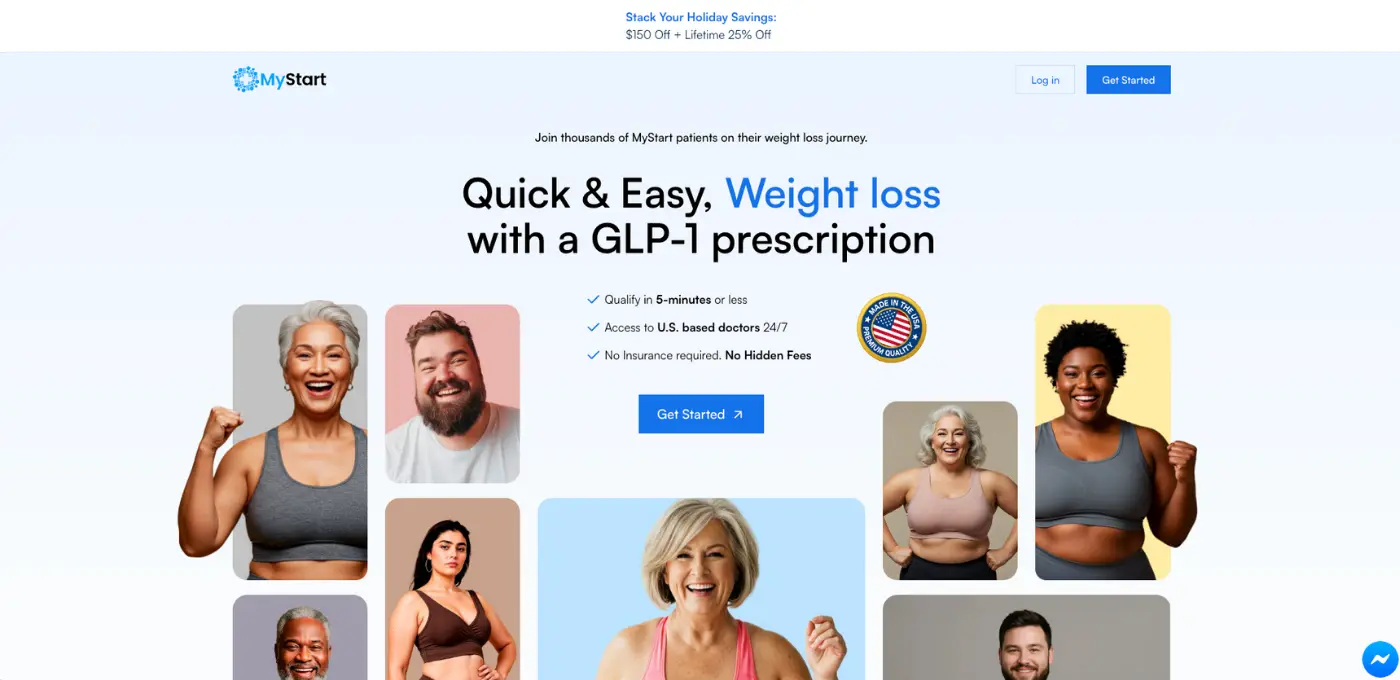
Choosing between Medvi and MyStart Health for GLP-1 weight loss medication means selecting between nearly identical ultra-budget platforms competing primarily on aggressive pricing for compounded semaglutide and tirzepatide. This evidence-based comparison analyzes both platforms across pricing ($179-$269/month), service scope, medication quality, maturity, and customer support to help you assess whether ultra-budget options offering $800-$3,800 annual savings justify accepting minimal clinical support, emerging platform risks, and compounded medication quality tradeoffs versus established competitors providing full programming.
Overview: Budget GLP-1 Platforms Competing on Price
Medvi and MyStart Health represent ultra-budget entrants in the competitive GLP-1 weight loss market, both launching in 2023-2024 to capitalize on semaglutide and tirzepatide demand. These platforms undercut established competitors through aggressive pricing on compounded medications, minimal clinical infrastructure, and streamlined digital operations. Medvi charges $179-$249/month for compounded semaglutide depending on dosage tier; MyStart Health prices similarly at $189-$269/month. Both position as affordable alternatives to premium platforms charging $300-$600/month for comparable services.
Medvi operates as straightforward medication access platform without full weight loss programming. You complete an online questionnaire, a physician reviews eligibility and prescribes, and compounded formulations ship from partner compounding pharmacies. Medvi names Triad Rx, RedRock Pharmacy and Beaker Pharmacy as partners and calls them FDA-regulated; none appears on the FDA's current list of registered 503B outsourcing facilities. The company provides basic educational content about medication usage and side effects but no coaching, behavioral support, or nutritional programming. Monthly consultations occur through brief check-in questionnaires assessing progress and tolerability.
MyStart Health similarly focuses on pharmaceutical intervention over programming. The platform offers compounded semaglutide and tirzepatide with physician oversight but minimal support services. Initial consultations assess BMI, medical history, and weight loss goals through asynchronous questionnaires. Follow-up monitoring occurs monthly via app-based check-ins without scheduled video visits or dedicated coaching. MyStart positions as "medication-focused weight loss" for patients confident managing diet and exercise independently.
Both platforms emerged during the 2023-2024 GLP-1 shortages, when brand-name Wegovy and Zepbound faced supply constraints. Compounding pharmacies filled the gap by preparing semaglutide and tirzepatide, letting budget platforms sell at a fraction of brand-name retail ($1,200-$1,500/month). The FDA has since declared both shortages resolved, in December 2024 for tirzepatide and February 2025 for semaglutide, so the sustainability of ultra-budget models built on compounded supply faces real uncertainty.
The comparison reflects race-to-bottom pricing in crowded telehealth weight loss market. Neither platform offers meaningful differentiation beyond aggressive pricing - no proprietary coaching, unique clinical protocols, or innovative technology. Success depends on price-sensitive customers prioritizing cost savings over end-to-end support, and on continued compounding pharmacy medication access amid evolving regulatory market.
Pricing: Aggressive Budget Positioning
Medvi charges $179/month for compounded semaglutide starting doses (0.25mg-0.5mg), $219/month for mid-range doses (1mg), and $249/month for maintenance doses (2.4mg). Compounded tirzepatide costs $299/month across dose ranges. These prices include consultation fees, medication, and shipping - no separate visit charges. First-year costs for semaglutide treatment total $2,148-$2,988 ($179-$249/month × 12), positioning Medvi at the budget end of established platforms.
MyStart Health pricing aligns closely: $189/month for semaglutide starting doses, $229/month for mid-range, and $269/month for maintenance. Tirzepatide runs $319/month. Annual costs range $2,268-$3,228 for semaglutide - within $120-$240 of Medvi annually, essentially equivalent given dose titration variability. Neither platform offers meaningful pricing advantage over the other; both compete primarily against more expensive established competitors.
Compared with brand-name prescriptions through insurance-accepting platforms, which often cost $200-$600/month after coverage, compounded pricing can mean real savings - though not against every competitor: Ro's weight loss program starts at $145/month in our provider database (price-verified August 2026), below both platforms' current rates, so compare pricing directly. Both platforms appeal to uninsured patients or those with insurance not covering GLP-1s for weight loss.
However, ultra-budget pricing reflects minimal service provision. Established platforms include coaching, behavioral programming, nutritional education, community support, and full medical oversight justifying higher costs. Medvi and MyStart provide bare-bones medication access - prescriptions ship, physicians approve refills, minimal interaction occurs. Patients save money but assume full responsibility for diet management, exercise planning, and behavior modification.
Sustainability concerns exist for aggressive pricing. Compounding pharmacy costs, physician licensing, platform operations, and customer acquisition expenses challenge profitability at sub-$250/month price points. Both platforms likely operate at thin margins or losses, betting on volume scale and eventual pharmaceutical partnerships. Price-sensitive patients benefit short-term; long-term viability remains questionable for platforms lacking differentiation beyond low cost.
Service Scope: Minimal Support Models
Medvi provides medication access with basic physician oversight. Initial consultations occur through in-depth questionnaires covering medical history, weight loss attempts, eating patterns, physical activity levels, and contraindications to GLP-1 therapy. Physicians review submissions within 24-48 hours, approve prescriptions for eligible patients, and communicate treatment plans via platform messaging. No video consultations included; asynchronous messaging handles all interactions.
Ongoing support through Medvi consists of monthly check-in questionnaires assessing weight loss progress, side effect severity, and dose tolerability. Physicians review responses and adjust dosing or provide side effect management guidance. Educational content includes basic GLP-1 mechanism explanations, common side effects, and dosing instructions but lacks weight loss curriculum. No dedicated coaching, nutritional planning, exercise programming, or behavioral support provided.
MyStart Health offers similar minimal model. Questionnaire-based initial consultations determine eligibility, physicians prescribe medications, monthly check-ins monitor progress. The platform provides slightly more educational content than Medvi - basic nutrition guidelines, food journaling suggestions, and exercise recommendations - but no personalized coaching or program design. Patients access generic educational materials; individualized support remains limited to physician messaging about medication management.
Neither platform offers features common to complete weight loss programs: health coaches providing accountability and motivation, registered dietitians designing meal plans, fitness professionals developing exercise protocols, or community support groups. Behavioral modification programming addressing emotional eating, stress management, and habit formation - critical for long-term weight maintenance - is absent. Platforms assume patients possess knowledge and discipline to manage lifestyle changes independently.
The minimal service model suits specific patient population: self-directed individuals with strong health literacy, those who already understand nutrition and exercise but need pharmaceutical assistance, or budget-conscious consumers willing to trade support for cost savings. If you lack weight loss experience or want someone checking in on you, fuller platforms are worth their higher costs.
Medication Quality and Supply Reliability
Both platforms prescribe compounded semaglutide and tirzepatide rather than brand-name Wegovy and Zepbound. Compounded semaglutide and tirzepatide are not FDA-approved and have not been reviewed by the FDA for safety, effectiveness, or quality, and they were not studied in the trials that support the brand-name products. Quality assurance depends on each compounding pharmacy's compliance with the state board that licenses it, not the testing FDA-approved drugs undergo.
Medvi partners with multiple compounding pharmacies to diversify supply chains and reduce shortage risk. However, its named partner pharmacies do not appear on the FDA's current list of registered 503B outsourcing facilities, and Medvi describes them only as FDA-regulated, so you cannot verify the tier independently. The FDA has sent waves of warning letters to compounding pharmacies and telehealth sellers over sterility failures, potency deviations, labeling, and marketing claims, including large batches dated September 2025, February 2026, and June 2026. If you use compounded medications you accept risk that FDA-approved products do not carry.
MyStart Health similarly does not publicly disclose its compounding pharmacy partners or the tier they operate under, so you cannot independently verify its quality practices. Compounding pharmacy regulation remains less rigorous than traditional pharmaceutical manufacturing - facilities do not require efficacy trials, post-market surveillance, or manufacturing inspections matching FDA-approved drug standards.
Supply reliability concerns affect both platforms. The FDA declared the tirzepatide shortage resolved in December 2024 and the semaglutide shortage resolved in February 2025, which closed the shortage-based route for compounding them at scale. Compounding now depends on a clinical need specific to you and documented by your prescriber, and the FDA has continued to act against compounded GLP-1 marketing. Both platforms face business model vulnerability if that access tightens further.
If medication quality assurance matters most to you, a platform prescribing FDA-approved brand-name medications gives you a product the FDA has reviewed for safety, effectiveness, and quality, usually at a higher price. Compounded semaglutide and tirzepatide cost less and carry no such review, and neither Medvi nor MyStart names a facility whose record you could check. Knowing what compounding is and is not reviewed for is what lets you weigh that tradeoff with a licensed provider.
What You're Actually Paying For
As of August 2026, Medvi lists weight-loss care at $179/mo (rated 9.2 Outstanding in our database); MyStart Health's last-recorded price is $222/mo (rated 8.6 Very Good) - a $43/mo gap before anything else.
Medvi's price includes free dietician visits and ongoing care coaching, and it's currently the only one of these two active in a second category on this site (erectile dysfunction).
MyStart Health advertises a price-lock guarantee that holds even if your dose changes, but it isn't currently shown in our weight-loss provider rankings, and its price record was last verified in May 2026 - treat it as last-recorded rather than live.
Customer Support and Patient Experience
Medvi provides email-based customer support with stated 48-hour response times for administrative questions. Medical inquiries route to physicians through platform messaging, also targeting 48-hour replies though actual times vary. No phone support, live chat, or video consultation options exist. The minimal support infrastructure reflects budget positioning - customer service increases operational costs incompatible with aggressive pricing.
Platform features emphasize functionality over sophistication. Patients can view prescriptions, request refills, message providers, and complete monthly check-ins through basic web and mobile interfaces. Missing features compared to complete platforms include: Progress tracking dashboards, educational content libraries, community forums, integrated nutrition tracking, and advanced weight loss analytics. Medvi provides medication access efficiently; little beyond that.
MyStart Health offers similar bare-bones support - email customer service, physician messaging, basic platform functionality. Response times average 48-72 hours for non-urgent inquiries; emergency medical questions receive faster attention. The startup lacks resources for 24/7 support, dedicated account managers, patient success teams available from premium competitors. Support suffices for straightforward medication management; complex issues may receive inadequate attention.
Patient experience through both platforms emphasizes transaction efficiency over relationship building or full care. Consultations take 5-10 minutes via questionnaires, prescriptions approve within 24-48 hours, medications ship in 5-7 days - fast but impersonal. For patients wanting only pharmaceutical intervention at lowest cost, this streamlined approach works. For those needing coaching or structured weight management, both feel inadequate despite the cost savings.
The support comparison highlights fundamental tradeoff: pay less, receive less. Ultra-budget platforms minimize non-essential services enabling aggressive pricing. Patients comfortable managing weight loss independently, possessing strong health literacy, and prioritizing cost over end-to-end support find value. Those needing guidance or integrated programming require platforms charging 30-100% premiums for superior support infrastructure.
How We Compared Medvi vs MyStart Health
Our Comparison Methodology
This comparison is based on comprehensive analysis of GLP-1 weight loss protocols, pricing structures, maturity, and treatment approaches from both platforms.
Clinical Evidence: Weight loss treatment recommendations reference FDA registration trials for semaglutide (STEP 1, n=1,961) and tirzepatide (SURMOUNT-1, n=2,539) from New England Journal of Medicine, showing 14.9% to 20.9% average weight loss (individual results vary; these trials studied the brand-name products, not compounded versions).
Pricing Analysis: Pricing reflects the rates last recorded in our provider database; providers change prices frequently, so confirm current pricing directly at checkout. Both platforms operate as ultra-budget tier targeting price-sensitive consumers.
Service Verification: Platform capabilities, provider credentials, maturity (Medvi 2 years, MyStart Health 6-12 months), and medication sourcing were evaluated through company websites and our own editorial rating of each platform (see How We Rate).
This comparison is written by our own editorial team, and ManyTreatments is paid an affiliate commission by most of the providers listed here when you buy through a link on this page. Payment for placement, for a rating, or for a listing is not something we accept. What we will not claim is that commissions have never influenced anything, because that would be a statement about our own conduct we cannot evidence. Our goal is to provide evidence-based comparison to help you assess ultra-budget GLP-1 options.
Final Verdict: Medvi vs MyStart Health
Choose Medvi if you need budget-friendly compounded semaglutide access ($179-$249/month, not FDA-approved), a slightly longer operating history than MyStart (2 years vs 6-12 months), and a higher rating in our database (9.2 vs 8.6). Medvi suits extremely price-sensitive patients comfortable managing weight loss independently, possessing strong nutrition and exercise knowledge, and accepting bare-bones medication delivery over programming. The platform works for self-directed individuals prioritizing cost savings ($800-$3,800 annually vs established competitors) over coaching, accountability, or clinical support.
Choose MyStart Health if Medvi doesn't operate in your state, you prefer their slightly deeper educational content, or minor pricing differences favor MyStart for your dosage tier. Functionally, MyStart offers nearly identical services to Medvi at comparable costs ($189-$269/month). The platform suits the same patient profile: budget-focused, self-directed, comfortable with minimal support. Neither platform provides meaningful differentiation - both compete purely on aggressive pricing for compounded medications with bare-bones service models.
The bottom line: Medvi and MyStart Health are virtually interchangeable ultra-budget GLP-1 platforms offering minimal differentiation beyond price. Both provide medication access without support, coaching, or behavioral programming. Annual savings of $800-$3,800 versus established platforms come at cost of reduced service quality, uncertainty (early-stage startups with questionable long-term viability), and compounding pharmacy quality risks. Choose ultra-budget platforms only if you're highly self-directed, possess weight loss expertise, and prioritize cost over support. For coaching, accountability, behavioral programming, or clinical infrastructure, an established platform like Ro (from $145/month in our provider database, price-verified August 2026) is worth comparing on service depth and operational stability. Your choice depends on whether cost minimization trumps service quality and long-term support.
Frequently Asked Questions
Should I choose Medvi or MyStart Health for GLP-1 weight loss treatment?
Medvi and MyStart Health offer nearly identical services at comparable prices - both provide compounded semaglutide ($179-$269/month) with minimal physician oversight and no support. Medvi has a slightly longer operational history (2 years vs 6-12 months) and a higher rating in our database (9.2 vs 8.6). MyStart includes slightly more educational content. Practically, differences are negligible - choose based on which has better availability in your state or minor pricing variations. Both represent ultra-budget options suitable only for self-directed patients comfortable managing diet, exercise, and behavior change independently without coaching programming.
How do Medvi and MyStart Health compare to established weight loss platforms?
In our provider database, Medvi's weight loss program starts at $179/month (price-verified August 2026) and MyStart Health's last-recorded rate is $222/month (last verified May 2026), while Ro starts at $145/month - so neither is automatically the cheapest option, and you should confirm current pricing at checkout. Lower-priced medication-only plans provide minimal services: no coaching, no behavioral programming, no nutritional planning, limited physician interaction. Established platforms include support, educational curriculum, community resources, and clinical infrastructure justifying higher costs. Choose ultra-budget if you need only medication access and possess weight loss knowledge independently. Choose established platforms if you need coaching, accountability, behavioral support, or holistic programming despite higher costs.
Are compounded medications from Medvi and MyStart Health safe?
Compounded semaglutide and tirzepatide are not FDA-approved and have not been reviewed by the FDA for safety, effectiveness, or quality, and they were not studied in the trials that support Wegovy and Zepbound. Quality depends on the compounding pharmacy and the state board that licenses it. Neither platform names a facility that appears on the FDA's list of registered 503B outsourcing facilities, so you cannot verify the tier independently. That is a risk FDA-approved medications do not carry, and FDA warning letters to compounders cite sterility failures and potency deviations. Compounded GLP-1s cost significantly less. If you want the strongest quality assurance, choose a platform that prescribes brand-name medications exclusively, and check manufacturer direct-pay pricing before assuming brand-name is out of reach.
What happens if Medvi or MyStart Health goes out of business?
Both platforms are early-stage startups (1-2 years operational) with limited funding, thin margins, and questionable long-term viability. If either ceases operations, patients face prescription transfer challenges, medical record access issues, and potential treatment interruptions. To protect yourself: maintain backup prescriptions through primary care physician, download medical records regularly, use credit cards (not debit) for refund protection if company folds, and have exit strategy for medication continuity. For long-term weight loss requiring multi-year GLP-1 treatment, consider operational stability alongside pricing. Larger, longer-established platforms such as Ro may offer greater business continuity assurance.
Do I need coaching and support for GLP-1 weight loss, or is medication alone sufficient?
In the STEP 1 and SURMOUNT-1 trials, the brand-name GLP-1s alone produced average weight loss of 14.9% to 20.9% over 68 to 72 weeks (individual results vary, and the compounded versions these platforms sell were not studied in those trials), but long-term maintenance requires lifestyle changes. In the STEP 1 trial extension, participants regained roughly two-thirds of lost weight within a year of stopping semaglutide without sustained lifestyle changes (individual results vary). Coaching, behavioral programming, and nutritional education - absent from ultra-budget platforms - significantly improve maintenance success. If you possess strong nutrition knowledge, exercise discipline, and behavior change skills, medication-only approaches through Medvi/MyStart can succeed. If you need accountability, guidance, habit formation support, or lack weight loss experience, a program that includes structured coaching support may be a better fit.
Will compounded semaglutide remain available through Medvi and MyStart Health?
Compounding pharmacy access to semaglutide/tirzepatide depends on FDA drug shortage determinations; the FDA declared the tirzepatide shortage resolved in December 2024 and the semaglutide shortage resolved in February 2025. With those shortages resolved, the FDA restricts compounding to patient-specific clinical need and has warned telehealth companies over compounded GLP-1 marketing. If FDA tightens compounding regulations, both platforms lose access to affordable medications, forcing price increases (prescribing brand-name) or business model changes. This regulatory uncertainty threatens sustainability of ultra-budget models built entirely on compounded medication access. Patients should understand this risk - compounded GLP-1 availability at current prices may not persist long-term. Diversifying treatment options or choosing platforms with brand-name medication access provides greater long-term assurance.
Editorial Note: Researched and edited by our editorial team. AI tools assist with initial research and drafting; all content is fact-checked and edited by humans before publication. Learn more about our editorial standards