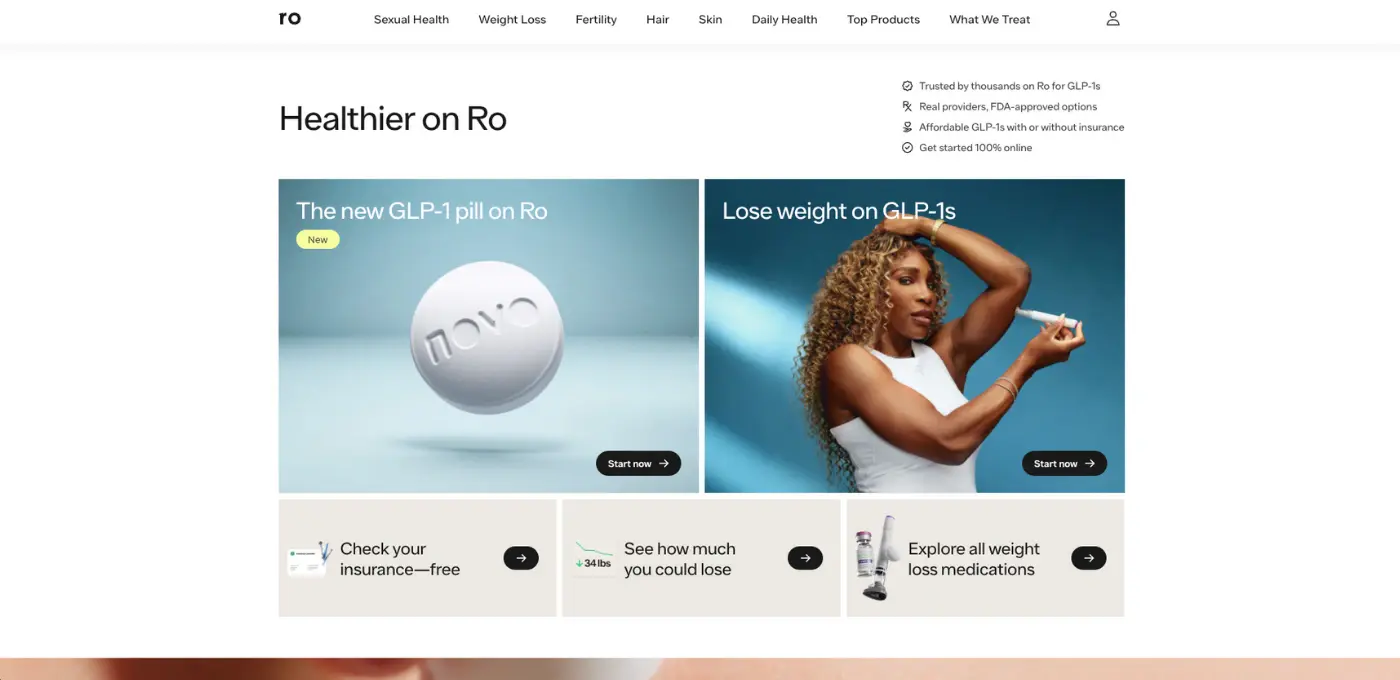
Choosing between Ro and Henry Meds for GLP-1 weight loss medication? Ro's weight-loss lineup is now FDA-approved GLP-1s only, billed as a membership charge plus medication priced separately, and it includes a free insurance check for brand-name coverage ($25-100/month typical copays when covered). Henry Meds' last-recorded price in our provider database is a flat $149/month with medication, supplies, and shipping included (May 2026) - Henry Meds isn't currently shown in our weight-loss rankings, so confirm current pricing directly. This comparison analyzes pricing, medications, and medical supervision.
Overview: Ro vs Henry Meds Weight Loss Comparison
Ro (Ro Body) and Henry Meds have emerged as leading
telehealth platforms for accessing GLP-1 receptor agonist medications for weight loss, including semaglutide and tirzepatide. With obesity affecting over 42% of American adults and GLP-1 medications demonstrating unprecedented average weight loss in trials (14.9% to 20.9% average body weight loss in the STEP 1 and SURMOUNT-1 trials; individual results vary), demand for affordable access has exploded. Both platforms address insurance coverage gaps and high retail costs ($1,000-1,400/month) by offering compounded GLP-1 formulations at significantly reduced prices.
Ro Body, the weight loss division of Ro (formerly Roman), launched in 2023 as an expansion of their broad telehealth services. Ro accepts insurance for brand-name
Wegovy, Ozempic, Mounjaro, and Zepbound when covered, with typical copays of $25-100/month. If you do not have insurance coverage, Ro prices FDA-approved GLP-1s for cash pay and no longer offers a compounded option, so confirm the current medication price at checkout. Ro distinguishes itself through insurance navigation, prior authorization handling, and integration with their broader telehealth platform (ED, hair loss, mental health).
Henry Meds launched in 2022 focused on affordable GLP-1 access through compounded medications. Its business model centers on transparent cash-pay pricing without insurance billing: the last price recorded in our provider database is a flat $149/month covering medication, supplies, and shipping, with a free evaluation - you pay only if prescribed (recorded May 2026). Henry Meds isn't currently shown in our weight-loss provider rankings, so treat that figure as last-recorded rather than live and confirm current pricing directly with Henry Meds.
Both platforms employ board-certified physicians and follow
HIPAA compliance standards. The consultation process includes thorough medical history, BMI calculation, blood work requirements, and cardiovascular screening. Neither platform prescribes GLP-1 medications for cosmetic weight loss - eligibility requires BMI ≥30 or BMI ≥27 with weight-related comorbidities (hypertension, diabetes, sleep apnea) per
FDA indications.
Detailed Pricing Comparison: Insurance vs Cash-Pay
Pricing for GLP-1 weight loss medications varies dramatically based on insurance coverage, brand-name vs compounded formulations, and dosage progression. Understanding total monthly costs including medication, consultations, and required monitoring is essential for budget planning.
Ro's insurance-based pricing offers the best value for patients with comprehensive prescription drug coverage. Brand-name Wegovy (semaglutide 2.4mg weekly) or Zepbound (tirzepatide 15mg weekly) typically cost $25-100/month copays depending on insurance tier and formulary. However, prior authorization requirements are standard, requiring documentation of BMI ≥30, previous diet/exercise attempts, and weight-related health conditions. Approval timelines range from 3-14 days. Ro handles prior authorization submissions and insurance coordination, though approval is never guaranteed - many plans exclude weight loss medications entirely or require step therapy.
Without insurance coverage, Ro lists cash-pay pricing on brand-name Zepbound and Wegovy, and no longer lists a compounded alternative. Dose-level and tirzepatide pricing, plus any consultation or lab fees your care requires, are confirmed at checkout - totals vary by dose and plan.
Henry Meds operates on cash-pay pricing without insurance billing. The last price recorded in our provider database is a flat $149/month (May 2026), with medication, supplies, and shipping included and a free evaluation - you pay only if prescribed. We have no verified per-dose tier pricing for Henry Meds, and its listing isn't currently in our weight-loss rankings, so confirm current dose-level costs directly with Henry Meds before enrolling.
Insurance coverage dramatically shifts the value proposition. If your plan covers brand-name GLP-1s through Ro, you might pay $25-100/month in copays - far below any cash-pay route. Without coverage, the two platforms' recorded entry prices sit within a few dollars of each other ($145 vs $149 per month), so the deciding factors become data freshness (Ro's price is current; Henry Meds' dates to May 2026) and which service model you prefer. Confirm current rates on both before enrolling.
Both platforms accept
HSA and FSA cards, providing 25-35% effective tax savings depending on your tax bracket. Neither offers refunds for unused medication if you discontinue treatment due to side effects or lack of efficacy.
- Ro Insurance: $25-100/month copays (brand-name Wegovy/Zepbound), prior authorization required
- Ro: FDA-approved GLP-1s only, billed as membership plus medication; confirm current pricing at checkout
- Henry Meds: flat $149/month last recorded in our database (May 2026) - medication, supplies, and shipping included; not currently in our weight-loss rankings
- Data freshness: Ro's price is live and verified; Henry Meds' is last-recorded and may have changed - confirm before enrolling
- Best Value: Ro with insurance ($25-100/month copays); on last-recorded cash prices the two platforms sit within a few dollars ($145 vs $149)
- Both Accept: HSA/FSA cards for 25-35% effective tax savings
GLP-1 Medications: Brand-Name vs Compounded Formulations
Semaglutide and tirzepatide are the two most effective weight loss medications ever approved, working by mimicking GLP-1 and GIP hormones that regulate appetite, glucose metabolism, and satiety.
The STEP 1 trial reported average weight loss of 14.9% of body weight with semaglutide (Wegovy, 68 weeks) and up to 20.9% with tirzepatide (Zepbound, 72 weeks), exceeding older medications like phentermine (individual results vary).
Ro offers brand-name FDA-approved medications (Wegovy, Ozempic, Mounjaro, Zepbound), with a free insurance check and cash-pay pricing when insurance does not cover them. Ro no longer offers compounded semaglutide or tirzepatide for weight loss (verified on Ro's own site, September 2026). Brand-name medications come in pre-filled injection pens with precise dosing and extensive safety data from multi-year clinical trials involving tens of thousands of patients. Compounded semaglutide and tirzepatide are supplied in vials that you draw up and inject with a syringe rather than in a pre-filled pen, which is more affordable but less convenient. They are not FDA-approved and are not reviewed by the FDA for safety, effectiveness, or quality.
Henry Meds exclusively offers compounded GLP-1 medications, as they don't work with insurance. Henry Meds says prescriptions are filled by a 503A compounding pharmacy or a 503B outsourcing facility, and does not name which, so you cannot verify the tier independently. Compounded medications are not FDA-approved and are not reviewed by the FDA for safety, effectiveness, or quality, and lack the clinical trial data behind brand-name drugs. Henry Meds provides detailed injection training videos and support if you are new to self-injection.
Dosage progression follows similar protocols on both platforms. Semaglutide starts at 0.25mg weekly for 4 weeks to minimize GI side effects, then escalates monthly: 0.5mg → 1mg → 1.7mg → 2.4mg maintenance dose. Tirzepatide starts at 2.5mg weekly, increasing to 5mg → 7.5mg → 10mg → 12.5mg → 15mg maximum. The gradual titration reduces nausea, vomiting, and diarrhea - common side effects affecting 30-50% of users initially.
Neither platform offers oral semaglutide (Rybelsus), which requires daily dosing and shows inferior weight loss compared to weekly injections. Both emphasize that GLP-1 medications work best combined with reduced-calorie diet (500-750 calorie daily deficit) and increased physical activity (150+ minutes weekly). Medication alone without lifestyle changes produces suboptimal results.
- Semaglutide Efficacy: 14.9% average weight loss over 68 weeks in the STEP 1 trial (individual results vary)
- Tirzepatide Efficacy: up to 20.9% average weight loss over 72 weeks in the SURMOUNT-1 trial (individual results vary)
- Ro Medications: Brand-name FDA-approved GLP-1s, through insurance or cash-pay
- Henry Meds: Compounded only; Henry Meds says prescriptions are filled by a 503A compounding pharmacy or a 503B outsourcing facility, and does not name which
- Dosing Schedule: Weekly injections, gradual dose escalation over 4-6 months
- Lifestyle Required: 500-750 calorie deficit + 150 min/week exercise for best results
Medical Consultation, Ongoing Support, and Monitoring
Full medical supervision is critical for safe GLP-1 use given potential side effects, drug interactions, and contraindications. Ro and Henry Meds take notably different approaches to consultation depth and ongoing patient support, according to
FDA semaglutide safety information.
Ro Body consultation takes 15-20 minutes and covers medical history, current medications, weight loss history, eating habits, and physical activity levels. You'll provide recent weight, height, blood pressure, and photos documenting current body composition. Ro requires baseline blood work (basic metabolic panel, kidney function, liver enzymes) before starting semaglutide or tirzepatide, though they don't arrange testing - you must visit a local lab like Quest or LabCorp independently. A licensed physician reviews your submission within 24-48 hours and either approves treatment, requests additional information, or recommends in-person medical evaluation for complex cases, according to
GoodRx medication pricing data.
Henry Meds' listing includes provider consultations and a free initial evaluation - you pay only if prescribed. Consultation length, lab coordination, and approval timelines aren't details we can verify from our provider data, so confirm those specifics directly with Henry Meds before enrolling.
For ongoing support, Henry Meds' listing notes provider consultations and ongoing monitoring included with treatment. We can't verify check-in cadence, nutrition resources, or messaging response times from our data - ask Henry Meds directly what ongoing support comes with a current plan.
Ro's listing highlights on-demand provider coaching and support, 100% online. Confirm follow-up visit details and any fees at checkout.
Ask both platforms what blood-work monitoring they require and what it costs. Lab arrangements vary by state and plan, and neither platform's lab pricing is something we can verify from our provider data.
- Ro Consultation: online provider visit with on-demand coaching and support, per its listing
- Henry Meds Consultation: provider consultations included per its listing; free evaluation - you pay only if prescribed
- Blood Work: Both require baseline + quarterly monitoring
- Ro Labs: baseline blood work may be required; confirm arrangements and costs at checkout
- Henry Meds Labs: confirm lab requirements and any costs directly with Henry Meds
- Support details: both listings note provider support; confirm specifics with each platform before enrolling
Side Effects, Contraindications, and Safety Monitoring
GLP-1 medications carry significant
side effect profiles requiring informed consent and medical monitoring. Both semaglutide and tirzepatide affect gastrointestinal function, glucose metabolism, and thyroid activity.
Common side effects affect 30-50% of users: nausea, vomiting, diarrhea, constipation, abdominal pain, and decreased appetite. These symptoms are most severe during initial dosing and dose escalations, typically improving after 1-2 weeks at stable doses. Gradual titration minimizes severity. Approximately 5-10% of users discontinue treatment due to intolerable GI symptoms despite dose adjustments.
Serious side effects requiring medical attention include acute pancreatitis (inflammation of pancreas causing severe abdominal pain), gallbladder disease (gallstones and cholecystitis), hypoglycemia when combined with diabetes medications, and acute kidney injury in patients with dehydration from vomiting/diarrhea. The
FDA requires warnings about potential risk of thyroid C-cell tumors based on rodent studies, though human relevance remains unclear.
Absolute contraindications include personal or family history of medullary thyroid carcinoma, multiple endocrine neoplasia syndrome type 2, pregnancy/breastfeeding, and severe gastroparesis. Relative contraindications requiring careful monitoring: diabetic retinopathy, history of pancreatitis, severe kidney disease, and eating disorders. Both platforms screen for these conditions during consultation.
Neither Ro nor Henry Meds provides 24/7 emergency medical support. For severe side effects (severe abdominal pain, persistent vomiting, signs of pancreatitis), patients must seek emergency care at local hospitals. Standard telemedicine limitations apply - complex medical issues require in-person evaluation.
Long-term safety data beyond 2 years remains limited for weight loss indications, though semaglutide has been used for diabetes treatment (Ozempic) since 2017 with acceptable safety profiles. Concerns about potential muscle loss, bone density reduction, and weight regain after discontinuation are under ongoing research.
- Common Side Effects: Nausea (30-50%), diarrhea, constipation, abdominal pain
- Serious Risks: Pancreatitis, gallstones, kidney injury (dehydration), hypoglycemia
- FDA Warnings: Thyroid C-cell tumors (rodent studies), gastroparesis/ileus
- Contraindications: Thyroid cancer history, MEN2 syndrome, pregnancy
- Discontinuation Rate: 5-10% stop due to intolerable side effects
- Emergency Support: Neither platform offers 24/7 emergency care
Customer Reviews and Real-World Results
Customer satisfaction data reveals how real users experience GLP-1 weight loss treatment beyond clinical trial efficacy rates. Both platforms maintain strong ratings, though review patterns highlight different strengths.
Henry Meds holds a 9.0 rating (Excellent) in our ratings. Its listing emphasizes transparent all-inclusive pricing and a free evaluation where you pay only if prescribed. The practical differences are that Ro's listing is live in our rankings and Henry Meds' currently is not, and that Ro's weight-loss medication is now FDA-approved rather than compounded, which changes what the price buys.
Ro holds a 9.3 rating (Outstanding) in our ratings. Weight loss-specific reviews praise insurance navigation support and access to brand-name medications when covered. Common criticisms cite additional fees for consultations/labs not disclosed upfront, slower customer service response times compared to competitors, and inconsistent medication availability during 2023-2024 shortages. Patients appreciate the option to add ED or hair loss treatment from the same platform.
Real-world weight loss results align with clinical trial data when patients maintain lifestyle modifications.
Both platforms report high patient satisfaction when insurance covers medications (Ro advantage) or when full support services justify premium pricing (Henry Meds advantage). Dissatisfaction arises primarily from unexpected costs, medication shortages, or side effects requiring discontinuation.
- Henry Meds Rating: 9.0 (Excellent) in our ratings
- Ro Rating: 9.3 (Outstanding) in our ratings
- Average Weight Loss: 25-45 lbs over 6 months with lifestyle changes
- Best Results: 500+ cal deficit daily + 150+ min/week exercise
- Common Praise: Henry Meds support, Ro insurance navigation
- Common Complaints: Ro hidden fees, both platforms had 2023 shortages
How We Compared Ro vs Henry Meds
Our Comparison Methodology
This comparison is based on comprehensive analysis of GLP-1 weight loss protocols, insurance integration, pricing structures, and support models from both platforms.
Clinical Evidence: Weight loss treatment recommendations reference FDA-approved drug labels for Wegovy and clinical trial data showing average weight loss of 14.9% for semaglutide (STEP 1) and up to 20.9% for tirzepatide (SURMOUNT-1); individual results vary.
Pricing Analysis: Pricing reflects the rates last recorded in our provider database; providers change prices frequently, so confirm current pricing directly at checkout. Total annual costs compared across insurance and cash-pay scenarios.
Service Verification: Platform capabilities, insurance acceptance, provider credentials, monthly check-in protocols, nutritional counseling, and lab coordination were evaluated through detailed review of each platform's published service information.
Our analysis is our own editorial work. Most of the providers compared here pay ManyTreatments a commission when you buy through a link on this page. Nobody pays us for a placement, a rating, or a listing, and we are not going to add that commissions have never influenced anything, because that is a claim about our own conduct we cannot show you evidence for. Our goal is to provide evidence-based comparison to help you make informed weight loss treatment decisions.
Final Verdict: Ro vs Henry Meds
For patients with insurance coverage, Ro provides unbeatable value at $25-100/month copays for brand-name Wegovy or Zepbound versus $300-1,400 retail costs. Ro's prior authorization navigation and insurance billing expertise justify choosing them over Henry Meds if your plan covers GLP-1 weight loss medications. However, approval is never guaranteed, and many insurance plans exclude coverage entirely.
Paying cash? They are priced on different models now. Ro charges membership and FDA-approved medication separately, and Henry Meds' last-recorded flat rate is $149/month with medication, supplies, and shipping included (May 2026 - Henry Meds isn't currently shown in our weight-loss rankings, so confirm current pricing directly before enrolling). Henry Meds bundles its costs into one price with a free evaluation where you pay only if prescribed; Ro's live listing offers the broader medication menu, including brand-name Zepbound and Wegovy.
Weight loss potential comes from the medication itself (semaglutide or tirzepatide) rather than the platform prescribing it (individual results vary). Success depends on medication adherence, 500-750 calorie daily deficit, and 150+ minutes weekly exercise - not which platform prescribes the medication. Choose based on insurance coverage and preferred level of medical supervision, not expecting different clinical outcomes.
Frequently Asked Questions
Is Ro or Henry Meds better for GLP-1 weight loss?
Ro is better if you have insurance that covers Wegovy or Zepbound ($25-100/month copays vs $300-1,400 retail). Henry Meds may appeal if you want one flat bundled price: its last-recorded rate is $149/month with medication, supplies, and shipping included (May 2026). Henry Meds isn't currently shown in our weight-loss rankings, so confirm current pricing directly before comparing.
Which is cheaper: Ro or Henry Meds?
Ro is cheapest with insurance ($25-100/month copays). These are no longer comparable on a single entry price. Ro now charges membership and FDA-approved medication separately, while Henry Meds' last-recorded flat rate is $149/month including medication, supplies, and shipping (May 2026). Henry Meds isn't currently shown in our weight-loss rankings, so confirm its current pricing directly - and confirm dose-level costs on both platforms.
Do Ro and Henry Meds prescribe brand-name or compounded GLP-1s?
Ro prescribes brand-name FDA-approved GLP-1s (Wegovy, Ozempic, Mounjaro, Zepbound) and no longer offers compounded semaglutide or tirzepatide for weight loss. Henry Meds offers only compounded GLP-1s, and Henry Meds says prescriptions are filled by a 503A compounding pharmacy or a 503B outsourcing facility, and does not name which. Compounded versions cost less, but they are not FDA-approved and are not reviewed by the FDA for safety, effectiveness, or quality and usually come in vials rather than pre-filled pens.
How much weight can I lose with Ro or Henry Meds?
The medications are the same class at both platforms, and published trial results reflect the drug rather than the prescribing platform (individual results vary). In the STEP 1 and SURMOUNT-1 trials, semaglutide averaged 14.9% body weight loss over 68 weeks and tirzepatide up to 20.9% over 72 weeks (individual results vary).
Does insurance cover Ro or Henry Meds GLP-1 medications?
Ro accepts insurance and can bill brand-name Wegovy, Ozempic, Mounjaro, and Zepbound directly to your insurance carrier. Typical copays are $25-100/month but require prior authorization (3-14 day wait) and many plans exclude weight loss coverage entirely. Henry Meds does not accept insurance and operates on cash-pay only. Both accept HSA/FSA cards.
What are the side effects of GLP-1 medications from Ro or Henry Meds?
Side effects are identical regardless of platform since both use the same medications. Common: nausea (30-50%), vomiting, diarrhea, constipation, abdominal pain. Serious but rare: pancreatitis, gallstones, kidney injury from dehydration. 5-10% discontinue due to intolerable GI symptoms. Both platforms screen for contraindications but neither offers 24/7 emergency medical support.
Editorial Note: Researched and edited by our editorial team. AI tools assist with initial research and drafting; all content is fact-checked and edited by humans before publication. Learn more about our editorial standards