complete analysis comparing Ro and PlushCare across pricing, features, treatments, and user experience.
Platform Overview
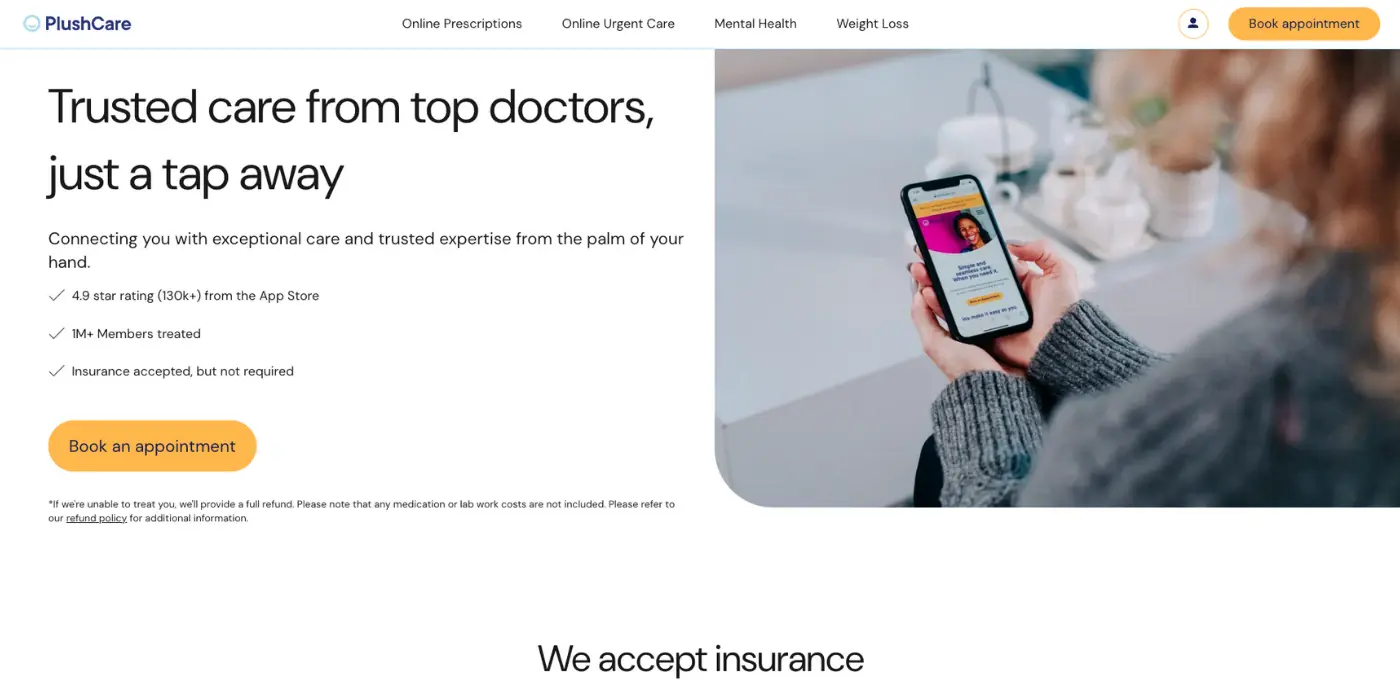
PlushCare operates full primary care telemedicine platform serving both men and women across diverse medical conditions including hair loss, chronic disease management, mental health, acute illness, and preventive care. The platform employs board-certified family medicine and internal medicine physicians providing synchronous video consultations (15-minute appointments) for diagnostic evaluation and treatment planning. Hair loss treatment represents one clinical offering among primary care services, with providers prescribing finasteride, minoxidil, spironolactone, and other FDA-approved medications as clinically appropriate. PlushCare accepts most major insurance plans and lists a $129 cash visit for those going without, positioning as virtual primary care clinic providing medical evaluation across full health spectrum.
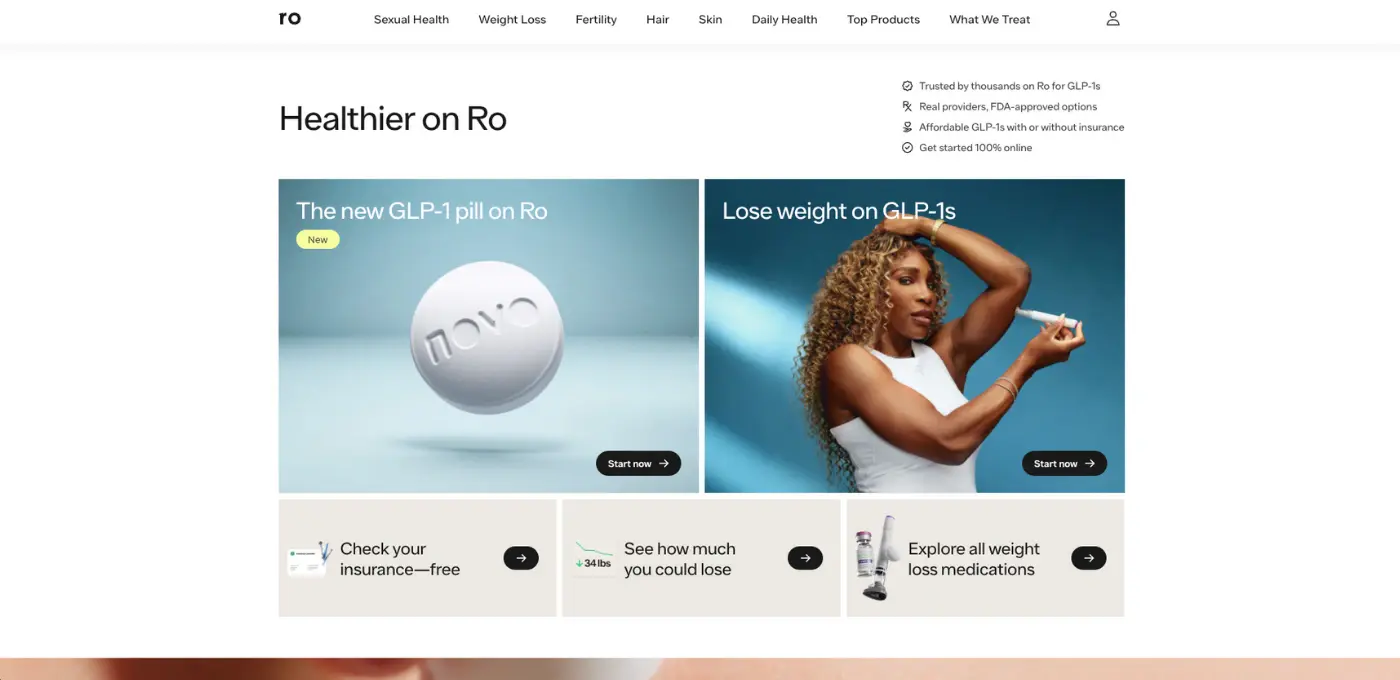
Ro operates multi-category men's and women's health telemedicine platform offering hair loss, weight loss, erectile dysfunction, sexual wellness, and skincare services. The platform prescribes FDA-approved pharmaceutical treatments including finasteride, minoxidil, and spironolactone through asynchronous consultations with physicians and nurse practitioners, with its hair loss plan listed at $16-20/mo. Ro positions as a digital health service with competitive pharmaceutical pricing, evidence-based treatment approaches, and efficient asynchronous consultation model emphasizing convenience and affordability. The multi-category platform serves both men and women across diverse health concerns, providing nationwide provider network accessibility through streamlined messaging-based consultations.
This comparison examines primary care video consultation platform (PlushCare) versus efficient asynchronous pharmaceutical service (Ro) for hair loss treatment. The platforms differ in consultation models (synchronous video vs asynchronous messaging), provider types (physicians only vs physician/NP mix), pricing structures (per-visit fees vs subscription), insurance integration (vs limited), service positioning (primary care clinic vs health categories), and cost profiles (insurance-dependent vs fixed pricing). Selection depends on insurance coverage, consultation format preferences, value placed on real-time physician interaction, diagnostic breadth needs, and budget considerations.
Consultation Models: Synchronous Video vs Asynchronous Messaging
PlushCare employs synchronous video consultation model requiring scheduled appointments (15-minute slots) with board-certified physicians. Patients book time-specific video visits where providers conduct real-time clinical interviews, visual assessments, medical discussions before prescribing treatments. The synchronous format enables bidirectional conversation, immediate clarification questions, medical evaluation beyond photograph review. Physicians can assess patient concerns holistically, conduct differential diagnosis during conversation, coordinate hair loss treatment with existing medical conditions, and provide recommendations through face-to-face virtual interaction. This consultation depth requires appointment scheduling and visit time but enables full-service primary care evaluation across full diagnostic spectrum. Source: Synchronous telemedicine effectiveness
Ro utilizes asynchronous consultation model where patients complete questionnaires, upload scalp photographs, and submit treatment requests without scheduled appointments. Physicians and nurse practitioners review submitted information within 24-48 hours, prescribing medications if clinically appropriate or requesting additional information if contraindications exist. The asynchronous approach eliminates appointment scheduling, wait times, and real-time conversation requirements - patients receive prescriptions via platform messaging without video interaction. This model prioritizes convenience and cost efficiency for straightforward androgenetic alopecia cases where photograph-based assessment and medical history screening sufficiently determine treatment appropriateness. Quarterly touchpoints occur through messaging rather than scheduled video appointments. Source: Asynchronous telemedicine models
The consultation format distinction significantly impacts convenience, clinical depth, and cost trade-offs. PlushCare's synchronous video model provides real-time evaluation, diagnostic conversation, and immediate physician interaction but requires appointment coordination and time commitment. Ro's asynchronous model maximizes convenience - patients submit information anytime without scheduling constraints - and enables budget pricing through consultation efficiency, but limits provider interaction to one-way review rather than bidirectional discussion. Patients with straightforward male or female pattern baldness seeking prescription access often find Ro's asynchronous model sufficient and convenient; those desiring medical evaluation, diagnostic investigation, or real-time physician consultation benefit from PlushCare's synchronous format despite appointment requirements. Source: Telemedicine consultation format comparison
Insurance Integration and Cost Structures
PlushCare maintains insurance integration accepting most major plans including Blue Cross Blue Shield, UnitedHealthcare, Aetna, Cigna, Medicare, and others. With insurance you pay your plan's specialist copay rather than the full visit fee, which is the single biggest variable in what this route costs you. The platform processes insurance claims directly, enabling patients to utilize existing health benefits for telemedicine visits. Totals swing hard on insurance status: with coverage you pay four copays a year plus whatever your pharmacy charges, while without it four $129 visits come to $516 a year before any medication at all. Insurance coverage represents critical cost variable determining PlushCare affordability.
Source: PlushCare insurance acceptance 2025Ro operates primarily self-pay subscription model with transparent pricing: $16-20/mo, about $192-240 a year, for hair loss prescriptions with medications and provider messaging included. The platform accepts some insurance for prescription medications with coverage varying by plan formularies, potentially reducing medication costs below advertised subscription prices, though consultation fees typically fall outside standard insurance coverage. Most patients pay advertised subscription rates regardless of insurance status, creating predictable out-of-pocket expenses without significant insurance impact. The fixed pricing model eliminates insurance complexity but offers limited cost reduction opportunities through health benefits coverage. That figure stays flat month to month, with no separate consultation or pharmacy bill.
Source: Ro pricing structure 2025Insurance represents dramatic differentiator affecting relative costs: PlushCare costs you four copays a year with coverage, or $516 in visit fees without it, while Ro is $192-240 a year either way. If your copay is small and your plan covers finasteride and minoxidil, PlushCare can land under Ro, though the margin is narrower than it sounds given how low Ro's flat rate already is. Without insurance, or on a high-deductible plan, Ro is straightforwardly cheaper: $192-240 a year all in, against $516 in PlushCare visit fees before medication. The insurance variable critically determines which platform offers better value, with well-insured populations strongly favoring PlushCare's integrated model while uninsured patients benefit from Ro's predictable subscription approach.
Source: Insurance impact on telehealth costsClinical Scope and Diagnostic Capabilities
PlushCare provides general primary care services across full medical spectrum - hair loss treatment exists among chronic disease management, mental health services, acute illness care, preventive medicine, and diagnostic evaluation. Board-certified primary care physicians bring medical training enabling identification of underlying causes beyond androgenetic alopecia: thyroid disorders, nutritional deficiencies, hormonal imbalances, autoimmune conditions, or medication side effects causing hair loss. Physicians can order laboratory testing, conduct differential diagnosis across medical specialties, coordinate with existing health conditions and medications, and provide healthcare beyond isolated hair loss prescription writing. The primary care scope enables medical evaluation for atypical presentations or suspected systemic causes requiring investigation beyond routine pattern baldness assessment. Source: Primary care scope in telemedicine
Ro focuses specifically on defined health categories - hair loss, weight loss, erectile dysfunction, sexual wellness, skincare - rather than primary care. The platform prescribes FDA-approved medications for straightforward presentations within service categories but operates with narrower diagnostic scope compared to full-spectrum primary care. Providers assess standard androgenetic alopecia patterns through photograph review and medical history but lack full-service primary care breadth for investigating complex underlying causes, ordering laboratory workups, or managing multiple comorbid conditions affecting treatment selection. The focused model efficiently serves patients with straightforward hair loss seeking pharmaceutical treatment without requiring full medical evaluation, though it provides limited diagnostic investigation capabilities for atypical presentations or suspected systemic causes. Source: Category-focused telemedicine models
The clinical scope distinction affects diagnostic capabilities and appropriate patient selection: PlushCare's primary care physicians provide in-depth medical evaluation identifying underlying causes, coordinating with complex medical histories, and conducting differential diagnosis beyond routine pattern baldness assessment. Ro's category-focused model efficiently prescribes FDA-approved medications for straightforward androgenetic alopecia but provides limited diagnostic breadth for complex presentations. Patients with atypical hair loss patterns, sudden onset, suspected systemic causes, or complex medical histories benefit from PlushCare's primary care capabilities. Those with typical male or female pattern baldness seeking efficient pharmaceutical access find Ro's focused model sufficient without requiring diagnostic investigation. Source: Diagnostic scope in telemedicine
Provider Credentials and Medical Training
PlushCare exclusively employs board-certified family medicine and internal medicine physicians (no nurse practitioners in most states) for all consultations, emphasizing physician-led primary care as service foundation. These physicians complete full medical residency training across full patient lifespan and condition spectrum, bringing diagnostic education and clinical experience beyond hair loss specialty. While individual physicians may see fewer hair loss cases than platforms focused narrowly on dermatology, they possess diagnostic capabilities to identify uncommon causes, complex presentations, and systemic conditions manifesting as hair loss. The medical training enables patient assessment, laboratory interpretation, specialist referrals, and management of multiple comorbid conditions affecting treatment safety and selection. Source: Primary care physician training
Ro employs both physicians and nurse practitioners for hair loss consultations, with credential mix varying by state regulatory requirements and case complexity. Nurse practitioners provide appropriate clinical oversight for routine hair loss prescriptions within scope of practice for standard androgenetic alopecia treatment. Physicians handle complex cases requiring broader diagnostic consideration. The provider mix enables cost-efficient consultation model while maintaining clinical appropriateness - NPs manage straightforward cases while physicians address complex presentations. Ro providers practice across multiple health categories (hair loss, weight loss, ED) rather than specializing exclusively in single domain, bringing category-specific knowledge rather than full-service primary care training across full medical spectrum. Source: Nurse practitioner scope in telemedicine
The provider credential distinction reflects platform positioning: PlushCare's board-certified primary care physicians bring medical training with diagnostic capabilities across full health spectrum, while Ro's physician/NP mix enables cost-efficient consultations appropriate for routine prescriptions within defined health categories. For straightforward androgenetic alopecia, clinical outcomes likely differ minimally between competent providers regardless of credential type - both appropriately prescribe finasteride and minoxidil for typical presentations. For complex cases requiring medical evaluation, differential diagnosis, or coordination with multiple health conditions, PlushCare's primary care physician training provides diagnostic depth advantages. The credential difference matters most for patients with complex medical histories, atypical presentations, or those valuing physician-only primary care evaluation. Source: Provider credentials and clinical outcomes
Pricing Models and Long-Term Cost Implications
PlushCare operates a per-visit fee model, listing $129 for a cash visit when you are not using insurance. With insurance, you pay your plan's copay rather than the full fee. The fee-per-visit structure means hair loss consultations require payment for each appointment - initial evaluation, follow-up visits, prescription renewals beyond automated refills. Medication costs additional through patient's pharmacy or mail-order service. Long-term costs depend almost entirely on insurance: with a low copay you pay four of them a year for consultations, plus whatever your plan leaves you owing on generic finasteride and minoxidil at the pharmacy. Without insurance, quarterly consultations come to $516 a year, plus separate medication expenses on top.
Source: PlushCare pricing structure 2025Ro charges subscription pricing bundling medications and consultations: $16-20/mo, about $192-240 a year, covering oral finasteride, oral minoxidil and topical minoxidil options. The subscription model creates predictable monthly expenses with all-inclusive pricing (medications, provider oversight, quarterly reviews). Long-term costs remain consistent at advertised rates for most patients regardless of insurance status, creating budget predictability but limited insurance benefit potential. That flat $192-240 a year arrives without hidden consultation fees or separate pharmacy charges, though subscription approach offers minimal cost reduction through insurance coverage beyond potential medication formulary benefits.
Source: Ro pricing structure 2025Over the long run insurance is the variable that matters, though the gap is smaller than it looks. Ro's $192-240 a year is already low enough that beating it takes a genuinely small copay, and without coverage PlushCare's $516 in visit fees lands above Ro before a single prescription is filled. Across a five-year course of treatment those annual gaps compound in whichever direction your coverage points, so the honest advice is to price your own copay against Ro's flat rate before committing to either. Insurance status determines optimal financial choice: Coverage strongly favors PlushCare, while limited/no insurance favors Ro's predictable subscription approach.
Source: Long-term telehealth cost analysisHow We Compared Ro vs PlushCare
Methodology & Clinical Evidence
This comparison synthesizes publicly available information about PlushCare and Ro service models, consultation formats, pricing structures, provider credentials, insurance acceptance, and clinical scope as of our latest content review. Analysis incorporates platform marketing materials, terms of service, provider credential disclosures, pricing schedules, insurance partnership information, and service positioning statements from official websites. Clinical effectiveness assessments reference FDA approval data for finasteride, minoxidil, and spironolactone in androgenetic alopecia treatment, with efficacy expectations identical across platforms given both prescribe same pharmaceutical interventions. Consultation model comparisons incorporate telemedicine literature evaluating synchronous versus asynchronous care formats, diagnostic capabilities research, and patient satisfaction studies. Cost analyses reflect advertised pricing and typical insurance copay ranges without accounting for individual plan variables, promotional discounts, or geographic pricing variations. Medical supervision considerations incorporate primary care and telemedicine literature on clinical evaluation standards. This analysis does not constitute medical advice; patients should consult licensed healthcare providers to determine appropriate hair loss treatment based on individual medical history, underlying conditions, and diagnostic evaluation requirements.
Final Verdict: Ro vs PlushCare
Final Verdict: Insurance-Integrated Primary Care vs Efficient Subscription Platform
PlushCare and Ro represent different telemedicine models - full primary care with video consultations versus efficient category-focused platform with asynchronous messaging. Optimal selection depends critically on insurance coverage (dramatic cost impact), consultation format preferences, diagnostic breadth needs, and value placed on real-time physician interaction versus convenient messaging-based care.
PlushCare suits you if you have health insurance and would rather use it, since a copay replaces its $129 visit rate. Bear in mind that Ro's hair loss plan runs $16-20/mo, about $192-240 a year with the medication included, so a copay has to be genuinely low before insurance wins on this particular treatment. Board-certified primary care physicians bring medical training enabling identification of underlying causes, differential diagnosis, and healthcare coordination beyond isolated hair loss treatment. Synchronous video consultations provide real-time diagnostic conversation medical evaluation. The insurance-integrated model makes PlushCare optimal choice for well-insured patients seeking thorough medical assessment with financial accessibility through health benefits.
Ro excels for uninsured patients and those prioritizing maximum convenience through asynchronous consultations without appointment scheduling. Predictable subscription pricing of $16-20/mo, roughly $192-240 a year, comes in well under four $129 PlushCare visits, and that is before PlushCare's medication is billed separately. Efficient messaging-based consultations eliminate appointment coordination, enabling patients to submit information anytime receiving provider review within 24-48 hours. The streamlined model suits straightforward androgenetic alopecia cases seeking convenient pharmaceutical access without full-service primary care evaluation needs.
The fundamental selection factors involve insurance coverage (determines dramatic cost differential), consultation format preferences (real-time video vs convenient messaging), and diagnostic breadth requirements (general primary care vs focused pharmaceutical prescribing). Clinical outcomes for straightforward pattern baldness likely differ minimally - both prescribe identical FDA-approved medications with appropriate medical oversight - making insurance status and consultation format preference primary differentiators rather than treatment efficacy itself.
Choose PlushCare if:
- You have health insurance providing low specialist copays and want to use it
- You prioritize primary care evaluation and diagnostic investigation
- You value synchronous video consultations with board-certified primary care physicians
- You want healthcare coordination across multiple health conditions
- You desire thorough medical assessment for atypical presentations or underlying cause investigation
- You accept appointment scheduling requirements for real-time physician consultation depth
- You seek insurance-integrated care utilizing existing health benefits for maximum affordability
Choose Ro if:
- You lack health insurance or have high-deductible plans (Ro costs less without insurance benefits)
- You prioritize maximum convenience through asynchronous consultations without appointments
- You have straightforward pattern baldness without complex diagnostic needs
- You value predictable subscription pricing at $16-20/mo with the medication included
- You want efficient pharmaceutical access without comprehensive primary care evaluation
- You prefer messaging-based consultations completed on your timeline without scheduling
- You seek budget-efficient treatment when insurance benefits don't significantly reduce costs
Bottom line: PlushCare and Ro serve different patient needs through fundamentally different models - insurance-integrated comprehensive primary care versus efficient subscription pharmaceutical access. Insurance coverage is the deciding factor, but not by as much as it first looks: Ro's $192-240 a year is low enough that only a genuinely small copay beats it, and without insurance Ro is clearly the cheaper route. Both prescribe identical FDA-approved medications - selection hinges on insurance status (mandatory consideration), consultation format preferences (video vs messaging), diagnostic breadth needs (vs focused), and value placed on primary care relationship versus efficient pharmaceutical prescribing. Most patients optimally choose based on insurance coverage first, then consider consultation format and diagnostic needs as secondary factors.
Editorial Note: Researched and edited by our editorial team. AI tools assist with initial research and drafting; all content is fact-checked and edited by humans before publication. Learn more about our editorial standards