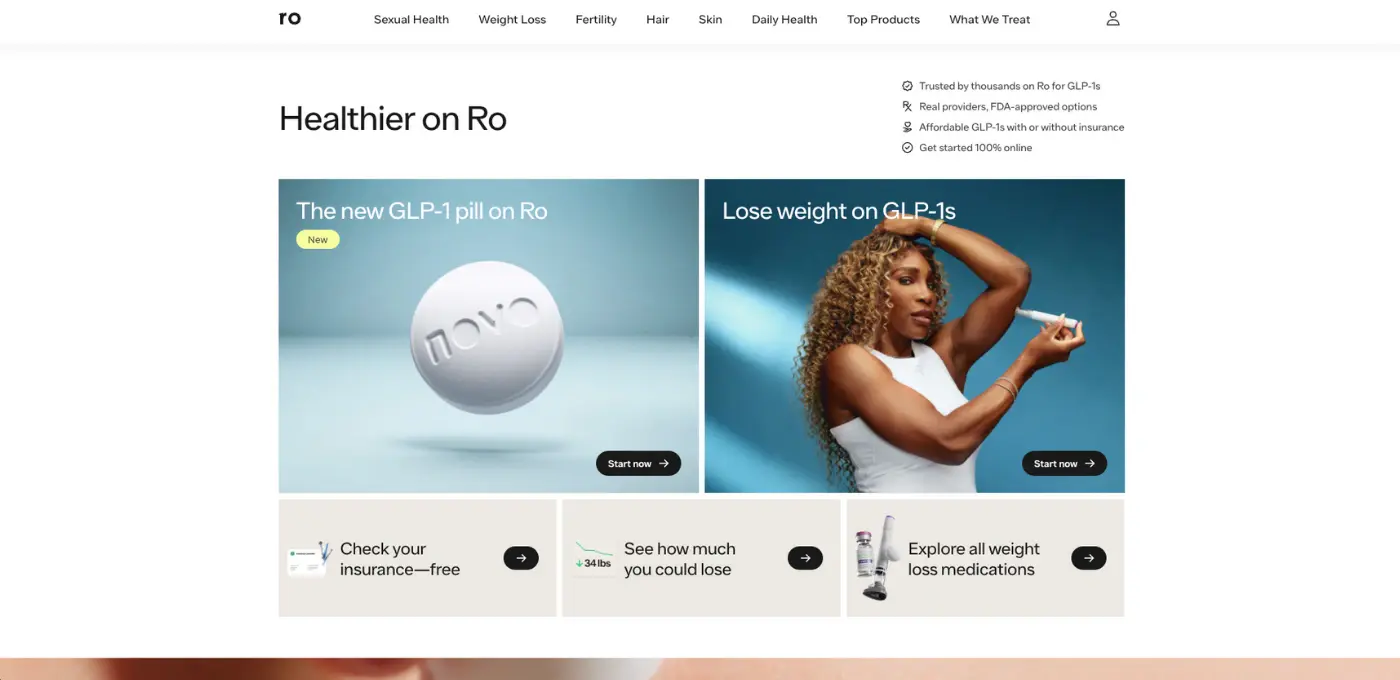
Choosing between Ro and Strut for erectile dysfunction treatment? Ro offers FDA-approved oral medications with ED plans from $48/mo as of our latest verification, with 60-85% success rates in mild-moderate ED. Strut provides specialized tri-mix injection therapy - it doesn't publish a standard price in our provider database, so confirm rates directly - achieving 85-90% success rates in oral medication failures. This comparison analyzes pricing, efficacy, safety, and when custom injections justify premium costs versus standard oral medications.
Overview: Multi-Category Platform vs Custom Formulation Specialist
Ro and Strut represent distinct
telehealth approaches to erectile dysfunction treatment - broad multi-category platform versus boutique custom formulation specialist. Ro (formerly Roman) operates as one of the largest telehealth companies offering ED medications alongside hair loss treatment, weight loss management, and mental health services with quick consultations and FDA-approved generic drugs. Strut focuses exclusively on compounded treatments, creating custom ED formulations and tri-mix/quad-mix injection therapy for patients who don't respond to standard oral medications. Compounded medications are not FDA-approved and have not been reviewed by the FDA for safety, effectiveness, or quality.
The fundamental distinction lies in medication philosophy and target patient population. Ro prescribes single-ingredient FDA-approved PDE5 inhibitors -
sildenafil (Viagra generic) and tadalafil (Cialis generic) - with decades of clinical trial data demonstrating 60-85% efficacy for achieving erections sufficient for sexual intercourse. Strut specializes in compounded custom formulations combining multiple vasodilators in personalized concentrations, plus tri-mix and quad-mix injection therapy achieving 85-90% success rates in men who failed oral medications.
Brand recognition and market positioning differ dramatically. Ro launched in 2017 and quickly became household name through extensive marketing campaigns, celebrity partnerships, and mainstream media presence. The company has expanded into retail partnerships. Strut operates as smaller boutique platform emphasizing physician expertise in custom compounding, dosing adjustments, and intensive medical consultations for treatment-resistant cases requiring interventions.
Patient suitability varies by ED severity and prior treatment history. Ro serves typical ED patients with mild-to-moderate vascular dysfunction responding to standard oral medications. The platform emphasizes convenience, discreet packaging, and eliminating embarrassment of in-person doctor visits for common sexual health concerns. Strut targets treatment-resistant patients who tried oral PDE5 inhibitors without success, those with severe vascular damage from diabetes or cardiovascular disease, post-prostatectomy patients, or individuals seeking custom formulations tailored to specific needs.
Both platforms employ board-certified physicians and maintain
HIPAA compliance for patient privacy. Ro physicians are licensed in all 50 states enabling nationwide service availability through asynchronous consultations. Strut physicians provide more intensive one-on-one consultations explaining compounding rationale, injection technique training, and ongoing dosage optimization. Neither platform replaces in-depth urology evaluation for complex cases requiring thorough physical examination and diagnostic testing.
Cost Analysis: Standard Medications vs Custom Injection Therapy
Ro pricing reflects high-volume business model with competitive rates for FDA-approved oral ED medications. Ro's ED plans start at $48/mo as of our latest verification, covering generic sildenafil or tadalafil. Monthly costs vary based on the medication, strength, and how often you use it - dose-based pricing can vary, so confirm current rates at checkout. All pricing includes physician consultation, prescription approval, and free shipping, according to
FDA prescribing information, according to FDA prescribing information.
Strut premium pricing reflects custom formulation services and injection therapy. Strut doesn't publish a standard price for tri-mix, quad-mix (which adds atropine for reduced pain), or its custom compounded oral formulations in our provider database, so confirm current rates directly. Initial consultations include detailed medical history review, treatment failure analysis, injection technique training videos, and titration protocols justifying higher service costs.
On recorded figures, Ro's plans start at $48/mo - about $576/year at the recorded rate - while Strut's injection pricing isn't published in our provider database. For patients responding to standard oral medications, Ro provides significantly better value. For treatment-resistant patients requiring injections, Strut's services represent only available telehealth option - in-person urology care for tri-mix adds its own consultation and medication costs.
Value proposition assessment requires considering treatment effectiveness and prior medication failures. Men achieving satisfactory results with generic sildenafil or tadalafil from Ro get ED treatment at fraction of injection therapy costs. However, approximately 30-40% of men don't respond adequately to oral PDE5 inhibitors due to severe vascular damage, neurological conditions (diabetes neuropathy, spinal cord injury), or post-prostatectomy nerve damage. For these patients, Strut's injection therapy represents potentially only effective option justifying higher costs.
Hidden costs and additional expenses differ between platforms. Ro's all-inclusive pricing for oral medications requires no additional supplies beyond water for swallowing tablets. Strut injection therapy requires supplies - syringes, alcohol wipes, and a sharps disposal container - that add to first-month costs, with smaller refill costs in later months. Factor those supplies in alongside medication pricing when you compare totals.
Treatment Options: Oral PDE5 Inhibitors vs Intracavernosal Injections
Ro ED medications include generic sildenafil (Viagra) in 20mg, 50mg, and 100mg tablets, and generic tadalafil (Cialis) in 5mg, 10mg, and 20mg tablets. Sildenafil onset occurs within 30-60 minutes with duration of 4-6 hours, requiring sexual stimulation for effectiveness. Tadalafil offers longer duration of 24-36 hours enabling spontaneous sexual activity without timing medications precisely before intercourse. Daily low-dose tadalafil (5mg) provides continuous erectile support versus as-needed higher doses (10-20mg), according to
FDA prescribing information, according to FDA prescribing information.
Clinical efficacy data for oral PDE5 inhibitors comes from extensive FDA registration trials. Sildenafil demonstrates 60-85% success rates for achieving erections sufficient for intercourse in men with mild-to-moderate ED. Tadalafil shows similar efficacy with advantages of longer duration and daily dosing option. Both medications work by increasing nitric oxide-mediated cyclic GMP levels, enhancing smooth muscle relaxation and blood flow to penile tissue. Cardiovascular health screening is required as nitrates (nitroglycerin) are absolute contraindication.
Strut injection therapy uses tri-mix and quad-mix formulations delivering medications directly to penile tissue bypassing need for systemic circulation. Tri-mix combines alprostadil (prostaglandin E1), phentolamine (alpha-blocker), and papaverine (vasodilator) in customized concentrations. Alprostadil relaxes smooth muscle and dilates blood vessels, phentolamine blocks vasoconstriction, papaverine enhances blood flow through phosphodiesterase inhibition. Quad-mix adds atropine to reduce injection site discomfort.
Injection therapy mechanism differs fundamentally from oral medications. Intracavernosal injection delivers drugs directly into corpora cavernosa (erectile tissue), producing erections within 5-20 minutes independent of sexual stimulation. Success rates reach 85-90% even in severe vascular disease, post-prostatectomy patients, or diabetic neuropathy cases where oral medications fail. Dosing requires careful titration starting with low concentrations to determine individual response and prevent priapism (prolonged painful erections requiring emergency treatment).
Strut also offers custom oral formulations combining PDE5 inhibitors with other vasodilators or testosterone boosters for patients needing enhanced potency beyond standard sildenafil or tadalafil. These compounded combinations lack FDA approval and clinical trial validation of individual components, though theory suggests synergistic effects. Evidence supporting multi-ingredient oral formulations over FDA-approved single-ingredient drugs remains limited in peer-reviewed literature.
Medical Consultations: Quick Questionnaires vs One-on-One Assessment
Ro consultation model prioritizes efficiency through asynchronous online questionnaires eliminating need for scheduled video appointments. Patients complete thorough intake forms addressing erectile function severity (using validated IIEF-5 questionnaire), cardiovascular health, current medications, and relevant medical conditions. Board-certified physicians review submissions within 24 hours and approve prescriptions for appropriate candidates. Process takes 10-15 minutes for questionnaire completion with medication shipping within 2-3 business days.
Cardiovascular screening through Ro assesses contraindications including nitrate medication use, recent heart attack or stroke, severe heart failure, and uncontrolled hypertension. Physicians review medication lists for drug interactions (alpha-blockers, antifungals, HIV protease inhibitors affecting PDE5 inhibitor metabolism). Men with complex cardiovascular disease or multiple medication failures are directed to in-person urology evaluation. Standard-risk patients receive prescription approval without video consultation required.
Strut consultation process involves detailed physician interaction and treatment planning. Initial consultations include detailed medical history review focusing on prior ED treatment attempts, response to oral medications, cardiovascular risk assessment, and explanation of injection therapy mechanisms and techniques. For injection therapy patients, physicians provide extensive educational materials including video demonstrations of injection technique, sterile preparation protocols, and step-by-step dosing instructions.
Injection therapy training distinguishes Strut from oral medication platforms. Physicians guide patients through self-injection technique: sterile field preparation, medication drawing from vial, selecting injection site on lateral penile shaft, proper needle insertion angle, and post-injection compression. Initial doses are very low (0.05-0.1ml) to assess individual response and prevent priapism. Dosage titration occurs over several weeks through physician communication tracking erection firmness, duration, and side effects.
Follow-up care intensity differs significantly between platforms. Ro provides messaging access to medical team for dosage adjustments or side effect concerns, with automatic prescription refills for stable patients. Strut emphasizes ongoing physician relationship with scheduled follow-up consultations assessing injection therapy response, concentration adjustments, and troubleshooting issues like inadequate firmness or prolonged erections. Custom formulation patients require more intensive medical supervision than oral medication users.
Safety Profiles and Adverse Effects
Oral PDE5 inhibitors from Ro demonstrate well-established safety profiles from decades of clinical use. Most common side effects include headache (15-20% of users), facial flushing (10-15%), nasal congestion (5-10%), and dyspepsia (5-10%). These effects are usually mild and decrease with continued use. Rare serious adverse events include vision changes (blue-tinted vision with sildenafil, 1-3%), priapism (prolonged erection >4 hours requiring emergency treatment, <1%), and cardiovascular events in high-risk patients.
Contraindications for oral ED medications include nitrate use (nitroglycerin for angina), recent cardiovascular events (heart attack or stroke within 6 months), severe heart failure, and uncontrolled hypertension >170/110 mmHg. Drug interactions require dose adjustments when combined with alpha-blockers (tamsulosin for prostate), antifungals (ketoconazole), or HIV medications affecting cytochrome P450 metabolism. Ro physicians screen for these contraindications before prescription approval.
Injection therapy from Strut carries different risk profile than oral medications. Primary concern is priapism - prolonged painful erection requiring emergency treatment to prevent permanent erectile tissue damage. Incidence ranges 1-5% with tri-mix/quad-mix therapy, higher risk with incorrect dosing or failure to follow titration protocols. Treatment involves aspiration of blood from corpora cavernosa and injection of phenylephrine to reverse vasodilation. Immediate emergency department evaluation is required for erections lasting >4 hours.
Additional injection risks include penile fibrosis (scarring from repeated injections causing curvature or deformity, 1-2% with long-term use), hematoma from incorrect injection technique, infection from non-sterile preparation, and injection site pain affecting 10-20% of users. Quad-mix formulations adding atropine reduce pain compared to tri-mix. Proper sterile technique, rotating injection sites, and following dosing guidelines minimize complications. Most men tolerate injections well after mastering technique.
Strut compounded oral formulations combine multiple active ingredients raising theoretical drug interaction and side effect risks. Multi-ingredient formulations have not undergone the rigorous FDA safety testing of individual approved drugs. Adverse effect profiles of custom combinations are extrapolated from individual component data rather than tested in clinical trials. Conservative approach suggests using FDA-approved single-ingredient medications unless clear treatment failure justifies experimental multi-drug formulations.
Expected Results and Success Rates
Ro oral medication success rates align with FDA registration trial data. Sildenafil achieves satisfactory erections for intercourse in 60-85% of men with mild-to-moderate ED, with efficacy decreasing in severe vascular disease or neurological damage. Tadalafil demonstrates similar success rates with advantage of longer duration (24-36 hours versus 4-6 hours) and daily dosing option enabling spontaneous sexual activity. Response varies by ED etiology - best results in psychogenic or mild vascular ED, poorer outcomes in severe diabetes, post-prostatectomy, or advanced atherosclerosis, according to
FDA prescribing information, according to FDA prescribing information.
Oral medication failures occur in approximately 30-40% of ED patients, particularly those with severe underlying conditions. Diabetes with neuropathy and vascular damage, radical prostatectomy disrupting neurovascular bundles, spinal cord injuries, and severe cardiovascular disease all reduce PDE5 inhibitor effectiveness. These patients represent target population for Strut's injection therapy services - men who exhausted oral medication options without satisfactory results.
Strut injection therapy achieves 85-90% success rates even in severe ED cases refractory to oral medications. Direct delivery of vasodilators to penile tissue bypasses systemic circulation and oral absorption limitations. Tri-mix and quad-mix work independent of nerve function, making them effective for post-prostatectomy patients and diabetic neuropathy cases. Erections occur within 5-20 minutes and last 30-90 minutes depending on dose, with firmness typically exceeding natural erections.
Treatment satisfaction varies by patient priorities and expectations. Men valuing convenience, discretion, and minimal medical intervention prefer Ro's oral medications despite potentially lower efficacy in some cases. Patients prioritizing maximum erectile firmness regardless of method may choose Strut injections even if oral medications provide partial response. Quality of life considerations include spontaneity (oral tadalafil allows spontaneous activity, injections require preparation), partner perception, and psychological comfort with self-injection.
Long-term outcomes and treatment sustainability differ between approaches. Oral medications can be used indefinitely without tolerance development or dose escalation required in most cases. Injection therapy carries long-term risks of penile fibrosis from repeated injections, though incidence is low (1-2%) with proper rotating site technique. Neither treatment addresses underlying ED causes - both provide symptomatic management requiring continued use for ongoing benefit. Addressing cardiovascular risk factors (smoking cessation, diabetes control, hypertension management) improves treatment response regardless of platform selection.
How We Compared Ro vs Strut
Our Comparison Methodology
This comparison is based on comprehensive analysis of ED treatment protocols, medication approaches, pricing structures, and treatment intensity from both platforms.
Clinical Evidence: Erectile dysfunction treatment recommendations reference FDA drug approval documents for sildenafil and tadalafil.
Pricing Analysis: Pricing reflects the rates last recorded in our provider database; providers change prices frequently, so confirm current pricing directly at checkout. Recorded pricing compared (Ro from $48/mo; Strut unpublished in our database) with treatment complexity factored.
Service Verification: Platform capabilities, consultation models, FDA-approved versus compounded medications, injection training protocols, and safety monitoring were evaluated through detailed review and FDA Adverse Event Reporting System data.
Our analysis is our own editorial work. Most of the providers compared here pay ManyTreatments a commission when you buy through a link on this page. Nobody pays us for a placement, a rating, or a listing, and we are not going to add that commissions have never influenced anything, because that is a claim about our own conduct we cannot show you evidence for. Our goal is to provide evidence-based comparison to help you make informed ED treatment decisions.
Final Verdict: Ro vs Strut
Choose Ro for first-line erectile dysfunction treatment with FDA-approved oral medications at competitive pricing. Plans start at $48/mo as of our latest verification, with oral medications achieving 60-85% success rates in mild-to-moderate ED. Streamlined consultations, automatic refills, and daily tadalafil option (24-36 hour duration) provide convenient, evidence-based care. That works out to about $576/year at the recorded rate; dose-based pricing can vary, so confirm current rates at checkout. Best for typical ED patients, those valuing spontaneity and discretion, and anyone starting ED treatment before exhausting oral medication options.
Choose Strut for treatment-resistant erectile dysfunction when oral medications fail at maximum doses. Tri-mix and quad-mix injection therapy achieves 85-90% success rates even in severe vascular disease, post-prostatectomy ED, or diabetic neuropathy cases refractory to oral PDE5 inhibitors. Custom formulations, injection training, and dosing optimization justify Strut's premium positioning - it doesn't publish a standard price in our provider database, so confirm rates directly. Best for confirmed oral medication failures, post-surgical patients, severe diabetes complications, or men requiring maximum erectile firmness regardless of method.
Evidence-based approach prioritizes Ro oral medications as first-line therapy with decades of FDA safety data and documented efficacy at lower costs. Reserve Strut injection therapy for documented treatment failures after optimizing oral medication use - switching prematurely incurs unnecessary costs, complexity, and injection risks. For 60-70% of ED patients responding to standard oral therapies, Ro provides superior value. For 30-40% needing advanced interventions, Strut offers expertise unavailable through mainstream platforms.
Frequently Asked Questions
Should I choose Ro or Strut for erectile dysfunction treatment if I haven't tried medications before?
Choose Ro for first-line ED treatment before considering Strut's injection-based services. Oral sildenafil or tadalafil plans from Ro start at $48/mo as of our latest verification, with 60-85% success rates in men with mild-to-moderate ED - a simpler, less invasive starting point than injection therapy. FDA-approved oral medications have decades of safety data and minimal invasiveness. Start with Ro's generic PDE5 inhibitors, trying both sildenafil and tadalafil at maximum doses before concluding oral medications failed. Only consider Strut's tri-mix injections (pricing isn't published in our provider database; confirm directly) if you've exhausted oral medication options without satisfactory results. Most men achieve adequate erectile function with standard oral medications, reserving injections for treatment-resistant cases with severe vascular damage, post-prostatectomy ED, or neurological conditions.
How much more expensive is Strut injection therapy compared to Ro oral medications for ED?
Ro's ED plans start at $48/mo as of our latest verification - about $576/year at the recorded rate. Strut doesn't publish a standard price in our provider database, so confirm its current rates directly before comparing totals. Daily tadalafil is typically chosen for convenience and spontaneity rather than treatment failure. For men who respond to oral medications, Ro provides substantially better value. For treatment-resistant patients requiring injections, Strut offers the added convenience of telehealth over in-person urology tri-mix care, which carries its own consultation and medication costs.
Will I get better erections with Strut injection therapy than Ro oral medications?
Strut injection therapy typically produces firmer, more reliable erections than Ro oral medications in men with severe ED or oral medication failures. Tri-mix and quad-mix achieve 85-90% success rates with erections often firmer than natural physiological response due to direct intracavernosal drug delivery. However, injections carry higher risks (priapism 1-5%, penile fibrosis 1-2% long-term), require self-injection preparation, and eliminate spontaneity requiring 10-15 minute pre-planning before sexual activity. For men who respond adequately to oral sildenafil or tadalafil from Ro (60-85% of typical ED patients), switching to injections solely for marginal firmness improvement isn't justified given increased cost, complexity, and risk. Reserve injections for confirmed oral medication failures where satisfactory erections cannot be achieved with maximum doses of both sildenafil and tadalafil.
Are Ro FDA-approved medications safer than Strut compounded injection formulations?
Ro FDA-approved oral medications (sildenafil, tadalafil) have more extensive safety data and regulatory oversight than Strut compounded injection formulations. Oral PDE5 inhibitors underwent rigorous Phase III clinical trials with thousands of patients demonstrating safety and efficacy before FDA approval. Three decades of post-market surveillance provide full understanding of rare adverse events. Manufacturing occurs under FDA cGMP standards with strict quality control. Strut tri-mix and quad-mix use established drug components (alprostadil, phentolamine, papaverine) but compounded formulations face less regulatory oversight than FDA-approved products. Injection therapy carries unique risks (priapism 1-5%, penile fibrosis 1-2%) not present with oral medications. For most patients, FDA-approved oral medications represent lower-risk first-line approach with extensive safety evidence.
Can I switch from Ro to Strut if oral medications stop working?
Yes - switching from Ro oral medications to Strut injection therapy is appropriate pathway for treatment-resistant ED. Before switching, ensure you've optimized oral medication use: tried both sildenafil and tadalafil at maximum doses (sildenafil 100mg, tadalafil 20mg), taken medications on empty stomach for optimal absorption, allowed adequate time for onset (60 minutes sildenafil, 30 minutes tadalafil), and addressed lifestyle factors (reducing alcohol, improving cardiovascular fitness, managing diabetes/hypertension). If oral medications fail despite optimization, Strut tri-mix offers 85-90% success rates in oral medication failures. Consult urologist before switching to rule out underlying conditions requiring specialist intervention (Peyronie's disease, hormonal deficiencies, severe vascular disease needing revascularization). Strut provides second-line treatment for confirmed oral medication failures without requiring in-person urology visits.
Does Strut provide better medical care and physician attention than Ro for ED treatment?
Strut provides more physician interaction and deeper expertise for complex ED cases, while Ro offers appropriate care for straightforward cases requiring standard medications. Strut's detailed consultations, injection training, custom formulation optimization, and ongoing dosage adjustments benefit treatment-resistant patients needing individualized approaches. Ro's quick questionnaires and automated prescription approval work well for typical ED patients responding to first-line oral therapies. Medical care quality should match patient complexity - routine mild-moderate ED doesn't require intensive consultation, while post-prostatectomy patients or severe diabetic ED benefit from Strut's injection therapies. For 60-70% of ED patients who respond to standard oral medications, Ro provides efficient, affordable, evidence-based care. For 30-40% needing advanced interventions, Strut offers expertise justifying higher costs and intensive consultations.
Editorial Note: Researched and edited by our editorial team. AI tools assist with initial research and drafting; all content is fact-checked and edited by humans before publication. Learn more about our editorial standards