complete analysis comparing Hers and Keeps across pricing, features, treatments, and user experience.
Platform Overview
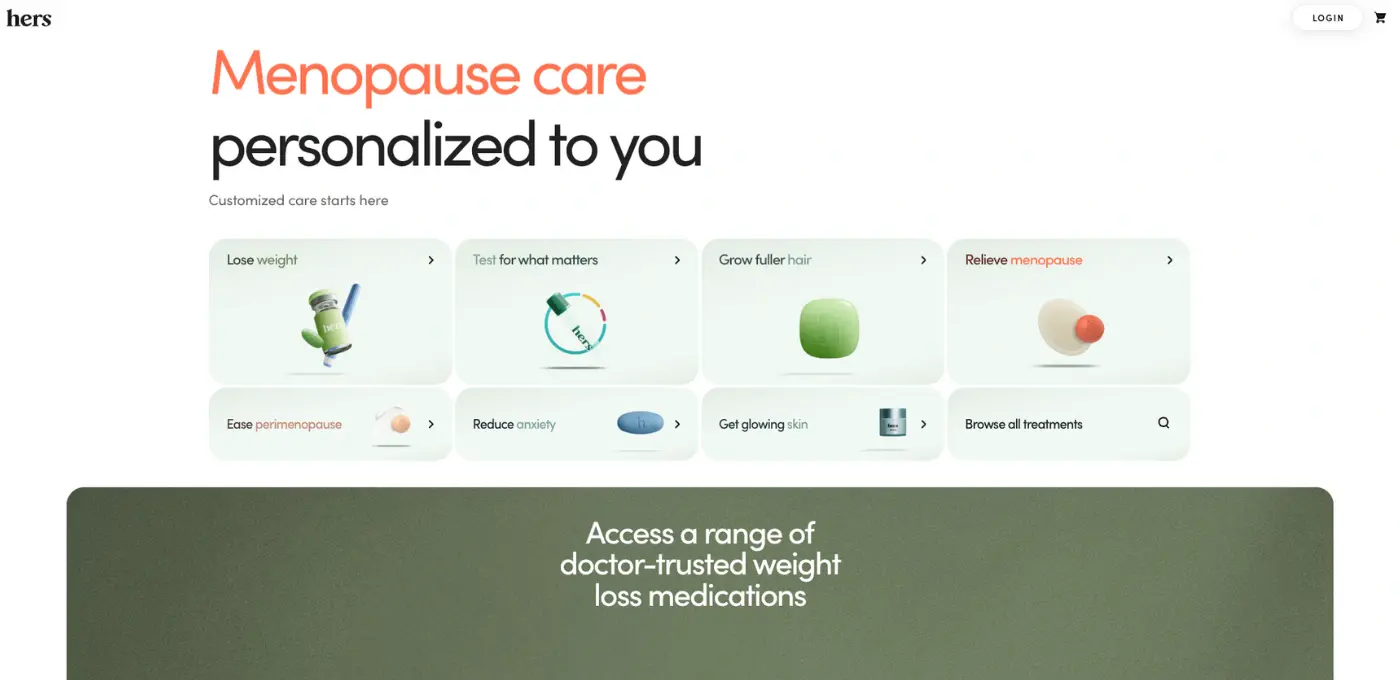
Hers launched as a women's health platform offering hair loss treatment alongside weight management, mental health services, sexual wellness, and dermatology. The platform emphasizes women's health with multi-category care coordination, serving patients seeking integrated health management beyond isolated hair loss treatment. Hers provides minoxidil (2% solution from $12.67/month as of our latest verification), finasteride, and combination treatments through nurse practitioner-led care with optional physician consultation. The multi-category infrastructure enables coordination across metabolically-linked conditions affecting women's health, hormones, and appearance.
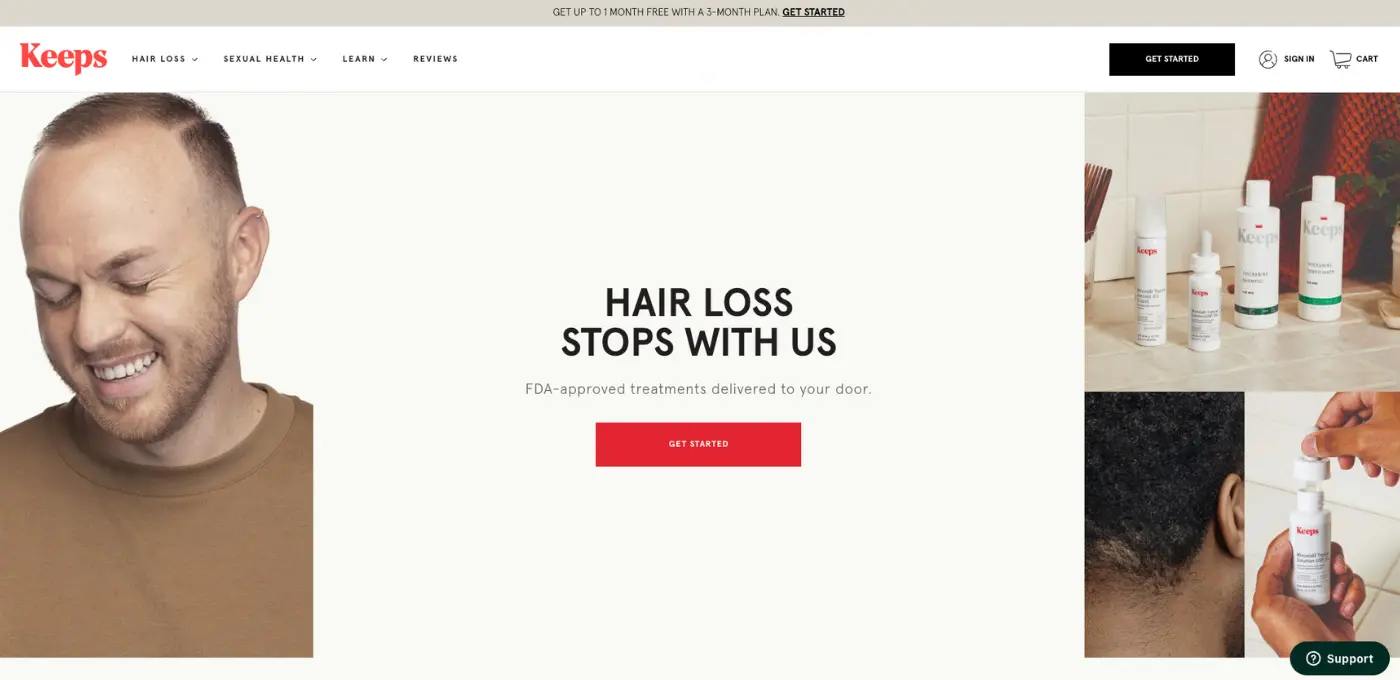
Keeps launched as a men's hair loss platform focusing exclusively on male pattern baldness treatment through finasteride and minoxidil. The platform operates single-category infrastructure optimized for male hair loss, offering streamlined prescribing through physician-led evaluation; Keeps doesn't publish a standard price in our provider database, so confirm current rates directly. Keeps targets men seeking hair loss expertise without multi-category health coordination, operating efficient single-purpose service model with lower overhead than full platforms. The platform has established maturity over multiple years with proven business model sustainability in the hair loss niche.
This comparison examines fundamentally different platform models: Hers' multi-category women's health approach versus Keeps' single-category male hair loss focus. The platforms serve different patient populations (women vs men) with different service philosophies (integrated health vs treatment), making direct comparison relevant only for understanding positioning differences rather than competitive evaluation.
Gender-Specific Service Models
Hers operates women-centric health model addressing female-specific hair loss patterns, hormonal influences, and integrated health concerns. Female hair loss often involves hormonal factors, PCOS, thyroid dysfunction, or postpartum changes requiring in-depth evaluation beyond simple pattern baldness assessment. Hers providers evaluate reproductive health history, hormonal contraception use, pregnancy plans, and metabolic conditions affecting hair growth. The multi-category infrastructure enables coordination when hair loss intersects with hormonal health, weight management, or mental health concerns common in women experiencing hair thinning. Source: Female pattern hair loss clinical guidelines
Keeps operates male-centric model focusing exclusively on androgenetic alopecia (male pattern baldness) without broader health coordination. Male hair loss typically follows predictable patterns with DHT-driven miniaturization responding well to finasteride and minoxidil monotherapy. Keeps evaluation focuses on Norwood scale pattern assessment, family history, and contraindications to finasteride without hormonal or metabolic evaluation unnecessary for straightforward male pattern cases. The approach enables efficient prescribing optimized for male hair loss without the infrastructure complexity of multi-category platforms. Source: Male androgenetic alopecia treatment guidelines
Gender-specific differences make platform comparison primarily informational rather than competitive. Women cannot use Keeps (male-focused service), and men seeking integrated health coordination would consider Hims (male equivalent to Hers) rather than Keeps. However, understanding these positioning differences helps patients recognize value propositions: Integrated health versus focused treatment.
Treatment protocols differ by gender requirements. Hers must carefully evaluate pregnancy plans and contraception compliance before prescribing finasteride (teratogenic concerns), while Keeps prescribes finasteride to men without reproductive safety complexity. Women often require combination therapies addressing hormonal factors beyond simple DHT blockade, while men typically respond to standardized finasteride/minoxidil protocols. Source: Gender differences in hair loss treatment
Pricing & Service Scope Comparison
Hers hair loss treatment starts at $12.67/month for minoxidil 2% solution, with oral minoxidil from $29/month and hair-support gummies from $35/month, including nurse practitioner oversight with optional physician consultation available. The pricing sits within a multi-category platform with full-spectrum women's health evaluation and integrated care coordination. At the entry rate, annual costs come to about $152 for the minoxidil 2% option. The multi-category subscription enables adding weight management, mental health, or dermatology services within unified platform, creating economies of scope for patients needing multiple services. No insurance accepted for hair loss treatment.
Source: Hers pricing structure 2025Keeps doesn't publish a standard price in our provider database, so confirm its current hair loss treatment rates - medication plus physician consultation - directly before comparing costs. No insurance accepted. The focused approach eliminates costs of health platform but provides no pathway for integrated multi-category care.
Source: Keeps pricing structure 2025Cost comparison must account for gender-specific service differences and platform scope. Hers' higher pricing includes women's health specialization, hormonal evaluation, reproductive safety protocols, and multi-category coordination infrastructure. Keeps' lower pricing reflects male hair loss focus without broader health services. Direct cost comparison is misleading given fundamentally different service models serving different patient populations with different clinical needs.
Value proposition differences extend beyond pricing. Hers provides platform for lifelong women's health management with hair loss as one component of full care. Keeps provides focused hair loss solution without health coordination beyond follicle DHT blockade. Patients seeking integrated health management value Hers' infrastructure; patients seeking hair loss treatment at lowest cost value Keeps' focused efficiency. Source: Telehealth value proposition analysis
Clinical Evaluation & Provider Model
Hers employs nurse practitioners for initial evaluation with optional physician consultation for complex cases, operating through women's health assessment. Evaluation covers hormonal health, reproductive history, metabolic conditions, thyroid function, PCOS screening, stress factors, and nutritional status beyond basic hair loss pattern assessment. The thorough evaluation recognizes female hair loss often involves systemic health factors requiring broader assessment than male pattern baldness. Providers coordinate across Hers' multi-category services when hair loss intersects with hormonal, metabolic, or mental health concerns. Source: Women's health telehealth clinical protocols
Keeps employs physicians for hair loss evaluation, focusing specifically on androgenetic alopecia assessment through Norwood scale classification and family history. Evaluation is streamlined for male pattern baldness without systemic health assessment unnecessary for straightforward DHT-driven miniaturization. The physicians develop expertise in male hair loss specifically, operating efficient evaluation optimized for single condition without multi-category complexity. Keeps' focused model enables rapid prescribing for appropriate candidates without full health platform overhead. Source: Male hair loss clinical evaluation
Provider model differences reflect service scope distinctions. Hers' NP-led model with physician backup provides appropriate oversight for multi-category women's health platform requiring care coordination. Keeps' physician-led model provides expert hair loss assessment without broader health coordination infrastructure. Neither model is superior - they serve different purposes for different patient populations with different clinical needs.
Ongoing monitoring approaches differ substantially. Hers monitors hair regrowth alongside broader women's health metrics, evaluating how hormonal changes, weight management, or other health factors affect hair growth. Keeps monitors hair regrowth specifically without coordinated health tracking beyond scalp follicle response. Source: Hair loss treatment monitoring protocols
Multi-Category Coordination vs Specialized Focus
Hers' multi-category infrastructure enables treatment coordination across metabolically-linked conditions affecting women's appearance and health. Women experiencing hair loss often simultaneously face hormonal imbalances, PCOS, thyroid dysfunction, stress-related conditions, or postpartum changes benefiting from coordinated treatment. The platform can address hair loss alongside weight management for PCOS patients, mental health support for stress-related shedding, or hormonal optimization for perimenopausal thinning. This coordination may improve outcomes through health management rather than isolated symptom treatment. Source: Integrated women's health outcomes
Keeps' focus optimizes male pattern baldness treatment without health coordination infrastructure. For straightforward androgenetic alopecia responding to finasteride/minoxidil, the focused approach eliminates unnecessary complexity and costs of health platforms. Men seeking only hair loss treatment without integrated health management benefit from Keeps' efficiency. The single-category model avoids platform bloat, focusing resources exclusively on hair loss expertise and medication access. Source: Vs telehealth models
Platform infrastructure differences create meaningful service distinctions beyond gender. Hers represents full-spectrum health management philosophy where hair loss treatment integrates with broader wellness optimization. Keeps represents treatment philosophy where focused expertise and efficiency provide superior value for isolated condition management. Neither approach is universally superior - patient needs and preferences determine appropriate platform selection.
Long-term platform evolution reflects these philosophies. Hers expands service offerings to provide deeper women's health solutions, positioning as lifelong health partner. Keeps deepens hair loss specialization, potentially adding advanced treatments like low-level laser therapy or PRP while maintaining single-category focus. These divergent evolution paths serve different patient relationship models: Ongoing health management versus episodic treatment. Source: Telehealth platform evolution strategies
Target Patient Populations & Use Cases
Hers targets women seeking health management incorporating hair loss treatment within broader wellness optimization. Ideal patients include women with hormonal factors contributing to hair loss (PCOS, thyroid, postpartum), women managing multiple health concerns simultaneously (weight, mood, hair, skin), and women preferring unified platform for lifelong health partnership. The multi-category model particularly benefits women whose hair loss intersects with metabolic or hormonal conditions requiring coordinated treatment. Women seeking only isolated hair loss treatment may find infrastructure unnecessary. Source: Women's health platform utilization patterns
Keeps targets men seeking hair loss treatment without integrated health coordination. Ideal patients include men with straightforward androgenetic alopecia seeking focused expert care, cost-conscious patients prioritizing efficiency over services, and men preferring provider expertise over generalist multi-category platforms. The focused model particularly benefits men with isolated hair loss not requiring broader health management, enabling access to care at lower cost than full platforms. Men seeking integrated health management should consider Hims rather than Keeps. Source: Male telehealth utilization preferences
Patient selection criteria differ fundamentally. Women requiring hair loss treatment should use women's health platforms (Hers, Nurx, women-focused services) rather than male-focused platforms like Keeps. Men seeking hair loss treatment choose between platforms (Keeps) men's health platforms (Hims) based on preference for focused expertise versus integrated care. Gender-appropriate platform selection is prerequisite before evaluating service model preferences.
Use case alignment determines satisfaction. Women valuing full-spectrum health coordination, hormonal factor evaluation, and multi-category service access maximize value from Hers' integrated platform. Men valuing hair loss expertise, efficiency, and lowest cost for isolated treatment maximize value from Keeps' focused model. Misalignment creates dissatisfaction: women seeking care using focused platforms lack needed coordination; men seeking focused treatment using full-service platforms pay for unused infrastructure.
How We Compared Hers vs Keeps
Our Comparison Methodology
This comparison is based on analysis of pricing structures and service models from both platforms.
This analysis evaluates gender-specific service models, versus care delivery, multi-category coordination benefits, and patient-platform alignment to provide guidance for appropriate platform selection based on gender, clinical complexity, and health management preferences.
Final Verdict: Hers vs Keeps
Final Verdict: Gender-Specific Service Models for Different Patient Populations
Choose Hers if:
- You are a woman seeking hair loss treatment (Keeps serves men only)
- Your hair loss may involve hormonal factors, PCOS, thyroid issues, or postpartum changes
- You manage multiple health concerns (weight, hormones, mood, skin) benefiting from coordination
- You value full-spectrum women's health platform with multi-category integration
- You seek lifelong health partner incorporating hair loss within broader wellness optimization
- You want entry pricing from $12.67/month for minoxidil 2% within an integrated platform
- You prefer full evaluation addressing systemic factors beyond isolated hair loss
Choose Keeps if:
- You are a man seeking hair loss treatment (Hers serves women only)
- You have straightforward male pattern baldness without systemic health complications
- You seek hair loss expertise without broader health coordination needs
- You prioritize efficiency and a focused, single-purpose service over full platforms
- You prefer focused single-category care over multi-category health platforms
- You want physician-led evaluation optimized for male androgenetic alopecia
- You manage no other health conditions requiring coordinated multi-category treatment
Bottom line: Hers and Keeps represent fundamentally different platform philosophies serving different patient populations (women vs men) with different service models (integrated health vs focused treatment). Direct comparison is primarily informational rather than competitive, as gender-appropriate platform selection is prerequisite before evaluating service model preferences. Hers provides women's health platform where hair loss integrates with broader wellness optimization, particularly valuable for women whose hair loss relates to hormonal or systemic factors. Keeps provides male hair loss expertise with efficiency, particularly valuable for straightforward androgenetic alopecia without broader health coordination needs. Women should choose women's health platforms (Hers or alternatives), while men should choose men's health platforms (Keeps for focus or Hims for care). Service model selection (full vs specialized) should match clinical complexity, health management preferences, and budget constraints after gender-appropriate platform filtering.
Editorial Note: Researched and edited by our editorial team. AI tools assist with initial research and drafting; all content is fact-checked and edited by humans before publication. Learn more about our editorial standards