




complete analysis comparing Hers and Nutrafol across pricing, features, treatments, and user experience.
Platform Overview
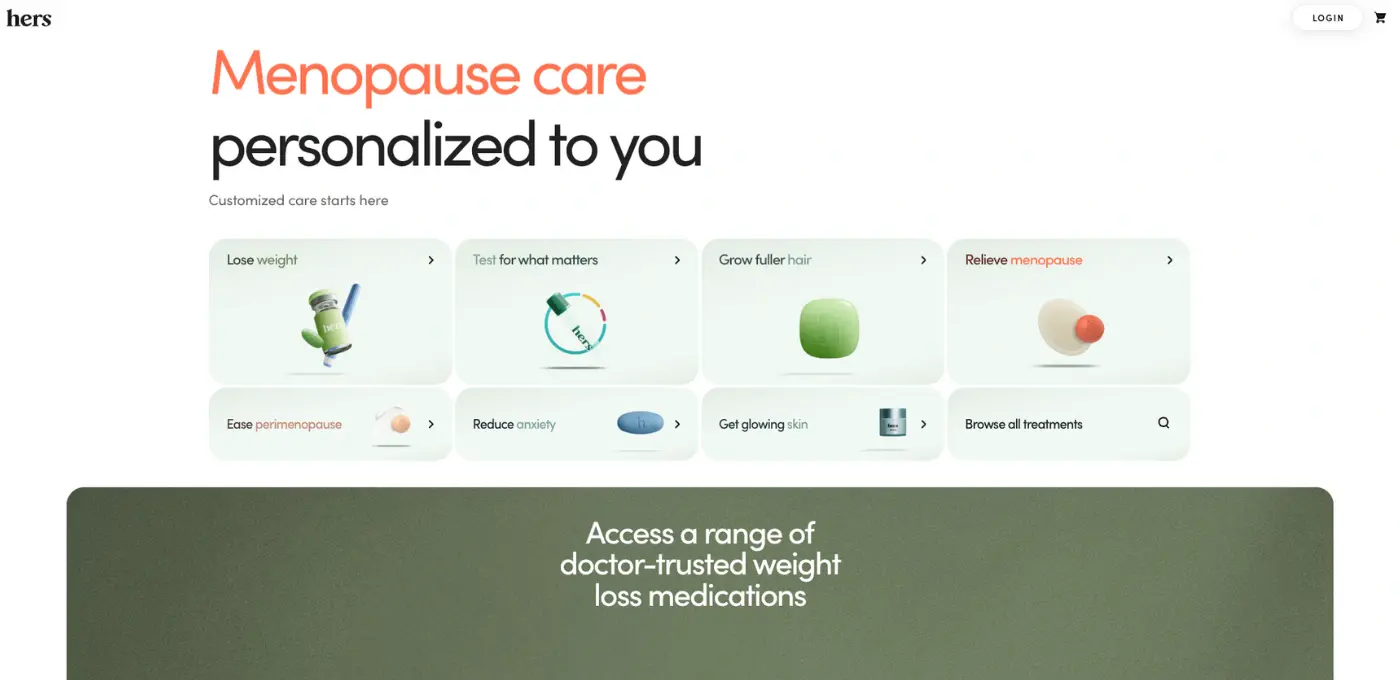
Hers operates as complete women's health platform offering prescription hair loss treatments (finasteride, minoxidil) alongside weight management, mental health, sexual wellness, and dermatology services. The platform emphasizes integrated multi-category care for women, with hair loss treatment coordinated within broader health optimization. Hers charges $49-$89/month for prescription hair loss medications through nurse practitioner-led evaluation, targeting women seeking medical intervention for androgenetic alopecia or hormonal hair thinning. The multi-category infrastructure enables addressing systemic factors contributing to hair loss.
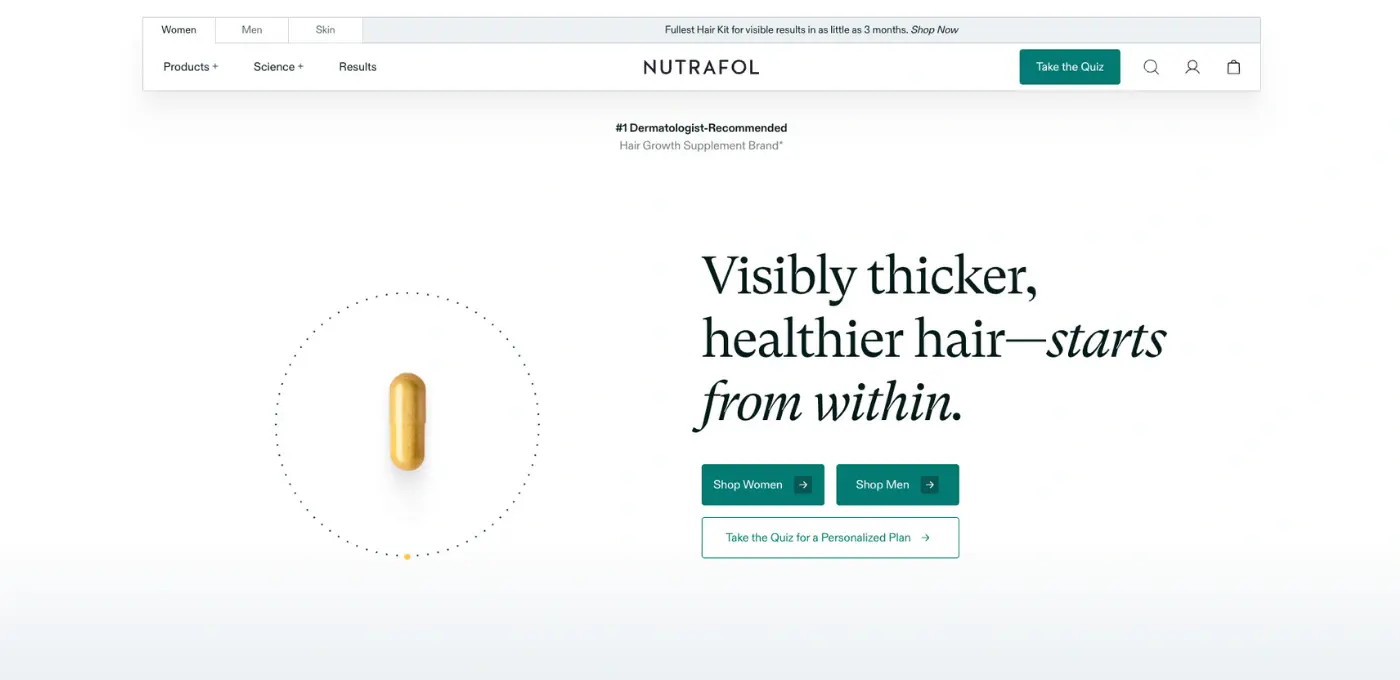
Source: Hers platform analysis 2025Nutrafol operates as nutraceutical supplement company selling proprietary botanical formulations for hair growth without prescription requirements. The platform charges $88-$98/month for supplement subscriptions targeting hair wellness through nutritional support, stress reduction, and inflammation management. Nutrafol positions itself as holistic natural alternative to pharmaceutical interventions, emphasizing whole-body approach to hair health through supplements, lifestyle recommendations, and wellness education. No prescription required; no medical evaluation conducted; no FDA-approved medication provided.
Source: Nutrafol platform analysis 2025This comparison examines fundamentally different approaches: Hers' prescription pharmaceutical model with FDA-approved medications versus Nutrafol's nutraceutical supplement model with botanical ingredients. The platforms serve different patient philosophies—medical intervention versus natural wellness—with different mechanisms of action, regulatory oversight, and evidence standards.
Treatment Approach & Mechanism of Action
Hers provides FDA-approved pharmaceutical treatments with established mechanisms of action and clinical evidence. Finasteride blocks 5-alpha-reductase enzyme reducing DHT levels that miniaturize hair follicles in androgenetic alopecia. Minoxidil increases blood flow to follicles and extends anagen phase promoting growth. Both medications have decades of clinical research demonstrating efficacy for hair regrowth with well-characterized pharmacology and regulatory approval for hair loss treatment. Medical evaluation ensures appropriate patient selection and safety monitoring.
Source: FDA finasteride and minoxidil approvalNutrafol provides proprietary botanical supplements combining saw palmetto, marine collagen, ashwagandha, curcumin, and other ingredients marketed for hair wellness. The supplement targets multiple pathways including DHT modulation, stress hormone reduction, inflammation management, and nutritional support. Nutrafol does not require FDA approval as dietary supplement, with less rigorous evidence standards than pharmaceutical drugs. Clinical studies exist but are often company-sponsored with methodological limitations compared to pharmaceutical trials. No prescription or medical evaluation required.
Source: Dietary supplement regulationEvidence quality differs substantially. Pharmaceutical treatments benefit from decades of independent research, FDA regulatory scrutiny, and established efficacy in controlled trials. Nutraceutical supplements have emerging evidence with shorter track records, company sponsorship of research, and less regulatory oversight. Women seeking proven medical intervention prioritize pharmaceutical approaches; women preferring natural holistic solutions may accept less rigorous evidence for supplement approaches.
Mechanism certainty also differs. Pharmaceutical DHT blockade and vasodilation have clear pharmacological mechanisms with measurable biological effects. Supplement mechanisms involve multiple hypothesized pathways with less direct evidence of specific hair follicle effects. The multi-ingredient formulation makes isolating active components difficult. Source: Hair loss treatment pharmacology
Pricing & Value Comparison
Hers charges $49-$89/month for prescription hair loss treatment including medication and medical oversight, with annual costs of $588-$1,068. The pricing includes nurse practitioner evaluation, prescription medication (finasteride and/or minoxidil), ongoing monitoring, and integration within multi-category health platform. The mid-range telehealth pricing reflects medical oversight requirements, FDA-approved medications, and complete platform infrastructure. No insurance accepted for hair loss services.
Source: Hers pricing 2025Nutrafol charges $88-$98/month for supplement subscriptions with annual costs of $1,056-$1,176. The premium supplement pricing reflects proprietary formulations, clinical research investment, brand positioning, and direct-to-consumer business model. No medical oversight included; no prescription medication provided. The pricing positions Nutrafol at pharmaceutical price points despite supplement classification. No insurance coverage available.
Source: Nutrafol pricing 2025Cost comparison reveals Nutrafol charges pharmaceutical prices for supplement products without medical oversight. Hers provides FDA-approved medications with medical evaluation at comparable or lower cost than Nutrafol supplements. Women paying $88-98/month for supplements could access proven pharmaceutical treatments with medical oversight for similar or less cost through Hers. The value proposition depends on whether patients prioritize FDA-approved medications or natural supplements.
Long-term cost considerations matter for 12-24 month treatment. Nutrafol's $1,056-1,176 annual cost exceeds many pharmaceutical options while providing supplements without regulatory approval requirements of medications. Patients should evaluate whether natural supplement approach justifies premium pricing versus proven pharmaceutical alternatives at comparable cost.
Source: Hair loss treatment costsMedical Oversight & Safety Evaluation
Hers requires medical evaluation by nurse practitioners before prescribing hair loss medications. Evaluation covers medical history, contraindications, pregnancy plans, hormonal factors, and appropriateness for pharmaceutical treatment. Women must meet medical criteria for finasteride or minoxidil prescribing with ongoing monitoring for side effects and treatment response. The medical oversight ensures safe appropriate use of prescription medications with contraindication screening and reproductive safety consideration. Pregnancy prevention counseling required for finasteride due to teratogenic risks. Source: Finasteride prescribing guidelines
Nutrafol requires no medical evaluation, prescription, or professional oversight. Customers self-select supplement products through online questionnaire without medical screening. No contraindication evaluation, drug interaction assessment, or reproductive safety counseling provided. The supplement classification exempts Nutrafol from prescription requirements and medical oversight regulations governing pharmaceutical treatments. Women with medical conditions, medications, or pregnancy concerns receive no professional evaluation. Source: Supplement self-selection risks
Safety evaluation differences create meaningful distinctions. Pharmaceutical treatments require medical assessment ensuring appropriate patient selection and avoiding contraindicated cases. Supplement approaches allow self-selection without professional screening potentially missing contraindications or drug interactions. Women with complex medical histories, multiple medications, or reproductive considerations benefit from Hers' medical evaluation versus Nutrafol's self-directed approach.
Ongoing monitoring also differs substantially. Hers provides continued access to medical providers for side effect management and treatment adjustments. Nutrafol operates customer service model without medical monitoring or provider access for health concerns. Source: Telehealth safety protocols
Evidence Base & Clinical Efficacy
Pharmaceutical treatments prescribed by Hers have extensive independent clinical evidence. Finasteride demonstrates significant hair regrowth in women with androgenetic alopecia in multiple randomized controlled trials with FDA regulatory approval. Minoxidil shows consistent efficacy across decades of research with well-established safety profiles and regulatory approval for female pattern hair loss. Meta-analyses confirm treatment benefits with effect sizes quantified in peer-reviewed literature. The evidence meets pharmaceutical regulatory standards with independent verification. Source: Cochrane review hair loss treatments
Nutrafol supplements have emerging evidence primarily from company-sponsored studies. Published research shows improvements in hair growth and density but with methodological limitations including sponsor bias, smaller sample sizes, and shorter duration than pharmaceutical trials. Independent replication remains limited. The supplement classification requires less rigorous evidence than pharmaceutical approval, with no FDA efficacy review required. Women seeking highest evidence certainty prioritize pharmaceutical options with independent validation. Source: Nutrafol clinical evidence review
Evidence certainty levels differ substantially between FDA-approved medications and dietary supplements. Pharmaceutical trials require independent verification, regulatory scrutiny, and pre-market efficacy demonstration. Supplement evidence relies more heavily on manufacturer research with less independent validation. Patients should understand these evidence quality differences when choosing approaches.
Clinical predictability also varies. Pharmaceutical treatments have established response rates and predictable timelines based on decades of clinical experience. Supplement outcomes show more individual variability with less characterized response patterns. Women seeking most predictable results may favor pharmaceutical approaches with extensive clinical track records. Source: Hair loss treatment outcomes
Patient Philosophy & Treatment Selection
Hers appeals to women seeking medical intervention for hair loss with pharmaceutical treatments and professional oversight. The platform suits women comfortable with prescription medications, valuing FDA regulatory approval, and preferring medical evaluation guiding treatment decisions. Women with clear androgenetic alopecia patterns or hormonal hair loss benefit from targeted pharmaceutical intervention addressing specific mechanisms. The multi-category infrastructure serves women wanting complete health management beyond isolated hair treatment. Source: Patient treatment preferences
Nutrafol appeals to women preferring natural holistic approaches emphasizing wellness and nutritional support over pharmaceutical intervention. The platform suits women uncomfortable with prescription medications, valuing botanical ingredients, and preferring self-directed health management without medical oversight. Women with general hair thinning or wellness-oriented philosophies may prefer supplement approaches targeting multiple wellness dimensions. The holistic positioning emphasizes whole-body health over targeted pharmaceutical action. Source: Natural health product preferences
Treatment philosophy differences often determine platform selection more than evidence or cost considerations. Women with strong preferences for pharmaceutical evidence and medical guidance naturally align with Hers. Women with strong preferences for natural supplements and holistic wellness naturally align with Nutrafol. Neither approach is universally superior—patient values and treatment philosophy guide appropriate selection.
Combination use represents another consideration. Some women use pharmaceutical treatments for proven efficacy while adding supplements for complementary wellness benefits. Hers and Nutrafol could be used together (with medical provider consultation) for combined pharmaceutical and nutraceutical approaches, though costs would exceed $137-187/month. Source: Combination treatment approaches
How We Tested Hers vs Nutrafol
Methodology & Clinical Evidence
This comparison synthesizes evidence from pharmaceutical hair loss treatment research, nutraceutical supplement literature, regulatory frameworks for medications versus supplements, and patient treatment preference studies.
FDA-approved hair loss medications (finasteride, minoxidil) have extensive independent clinical research demonstrating efficacy through randomized controlled trials meeting pharmaceutical regulatory standards. Source: FDA hair loss medication approval
Cochrane systematic reviews of hair loss treatments provide high-quality evidence synthesis for pharmaceutical interventions with meta-analyses quantifying treatment effects. Source: Cochrane hair loss treatments review
Dietary supplement regulation differs from pharmaceutical oversight with less rigorous evidence requirements and no FDA pre-market efficacy approval for supplements. Source: FDA dietary supplement regulation
Nutrafol clinical evidence includes company-sponsored studies showing hair growth improvements with emerging but less extensive independent validation than pharmaceutical treatments. Source: Nutrafol evidence review
Hair loss treatment pharmacology research establishes mechanisms of action for DHT blockade and follicle stimulation through pharmaceutical interventions. Source: Wiley hair loss pharmacology
Finasteride prescribing guidelines for women emphasize importance of pregnancy prevention counseling and medical evaluation for reproductive safety. Source: NCBI finasteride in women
Patient treatment preferences research shows treatment philosophy and comfort with pharmaceutical versus natural approaches strongly influence platform selection. Source: JMIR patient preferences
Natural health product preferences literature documents segment of patients prioritizing botanical ingredients and holistic wellness over pharmaceutical interventions. Source: Liebertpub natural health preferences
Combination treatment approaches represent emerging area with women using both pharmaceutical and supplement strategies for complete intervention. Source: Wiley combination hair treatments
Supplement safety considerations include potential for drug interactions and lack of professional screening in self-directed supplement use. Source: NCBI supplement safety
This analysis evaluates pharmaceutical versus supplement approaches across evidence quality, regulatory oversight, mechanism certainty, medical evaluation requirements, and patient philosophy alignment to guide appropriate platform selection.
Final Verdict: Hers vs Nutrafol
Final Verdict: Pharmaceutical Medical Treatment vs Nutraceutical Supplement Approach
Choose Hers if:
- You seek FDA-approved prescription medications with extensive independent clinical evidence
- You value medical oversight with nurse practitioner evaluation and safety monitoring
- You have clear androgenetic alopecia or hormonal hair loss requiring pharmaceutical intervention
- You are comfortable with prescription medications and their regulatory requirements
- You want multi-category women's health platform with coordinated care across conditions
- You prioritize evidence meeting pharmaceutical regulatory standards over supplement research
- You need professional evaluation for contraindications, drug interactions, or reproductive safety
Choose Nutrafol if:
- You prefer natural botanical supplements over prescription pharmaceutical medications
- You value holistic wellness philosophy targeting multiple health dimensions
- You want to avoid prescription requirements and medical oversight processes
- You are comfortable with self-directed treatment selection without professional evaluation
- You accept supplement evidence standards rather than pharmaceutical regulatory requirements
- You prioritize natural ingredients and complete wellness over targeted pharmaceutical action
- You have no medical complexity requiring professional contraindication screening
Bottom line: Hers and Nutrafol represent fundamentally different treatment philosophies: FDA-approved pharmaceutical intervention with medical oversight versus nutraceutical supplements with holistic wellness positioning. Hers provides proven medications (finasteride, minoxidil) with decades of independent research, regulatory approval, and professional evaluation at $49-89/month. Nutrafol provides proprietary botanical supplements with emerging company-sponsored evidence and self-directed selection at $88-98/month. The choice reflects patient philosophy more than objective superiority—women seeking medical intervention with established evidence choose Hers; women preferring natural holistic approaches choose Nutrafol. Notably, Nutrafol charges pharmaceutical price points ($1,056-1,176 annually) despite supplement classification, while Hers provides prescription medications with medical oversight for comparable or lower cost ($588-1,068 annually). Women should evaluate whether supplement philosophy justifies premium pricing versus proven pharmaceutical alternatives at similar cost with medical oversight included.
Editorial Note: Researched and edited by our editorial team. AI tools assist with initial research and drafting; all content is fact-checked and edited by humans before publication. Learn more about our editorial standards