Ivim Health and PlushCare represent different approaches to women's health telehealth - menopause specialist versus full primary care integration. Ivim Health focuses exclusively on hormone replacement therapy and menopause management through physicians at $1,800-3,000 annually (cash-pay), while PlushCare provides women's health within full-service primary care through insurance-accepting physicians at $400-1,000 annually for insured patients. Both offer menopause care, but Ivim provides compounded hormones and optimization protocols unavailable through PlushCare's standard primary care approach. This comparison examines whether Ivim Health's menopause specialization justifies substantial cost premiums over PlushCare's integrated care model for women navigating hormonal transitions.
Platform Overview & Women's Health Focus
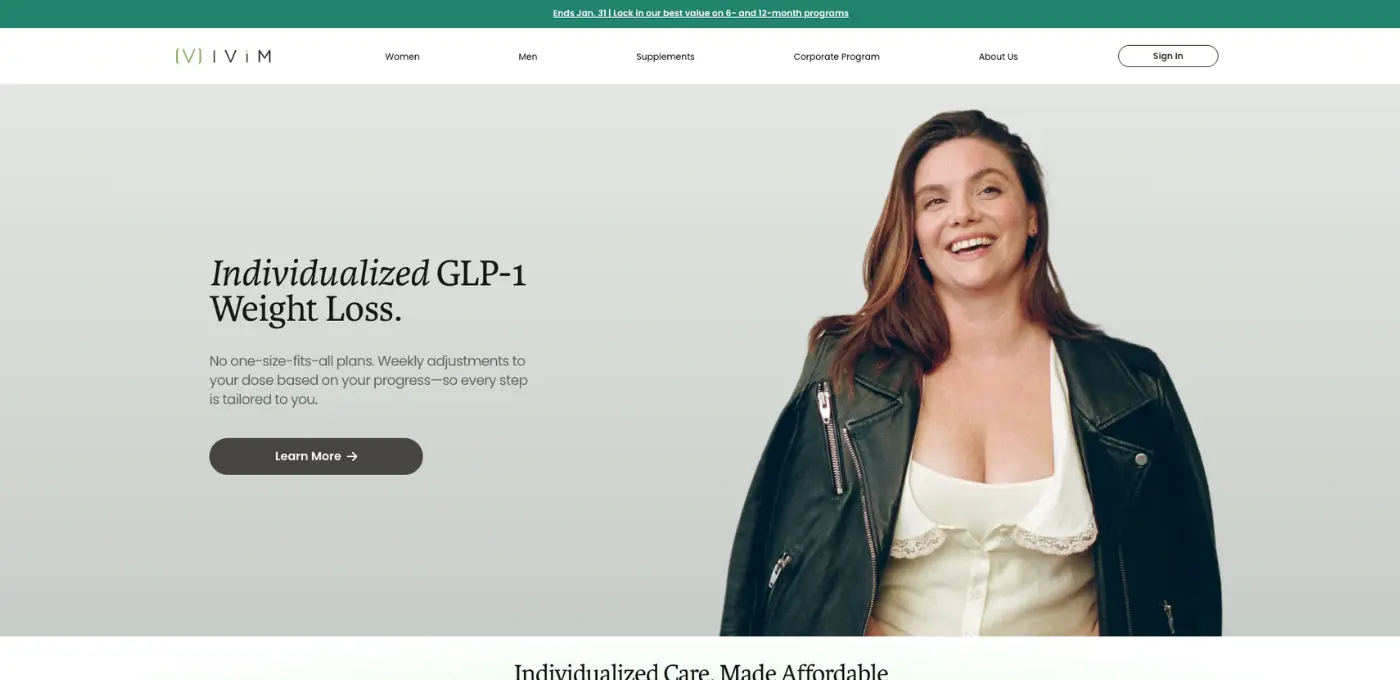
Ivim Health operates as a menopause-focused telehealth specialist providing hormone replacement therapy and menopause symptom management through board-certified physicians. The platform offers HRT options including bioidentical hormones, traditional hormone therapy, compounded formulations, and non-hormonal alternatives, targeting women navigating perimenopause and postmenopause transitions (typically ages 40-65). With approximately 3-4 years of history, Ivim Health positions itself as the menopause specialist in women's health telehealth.
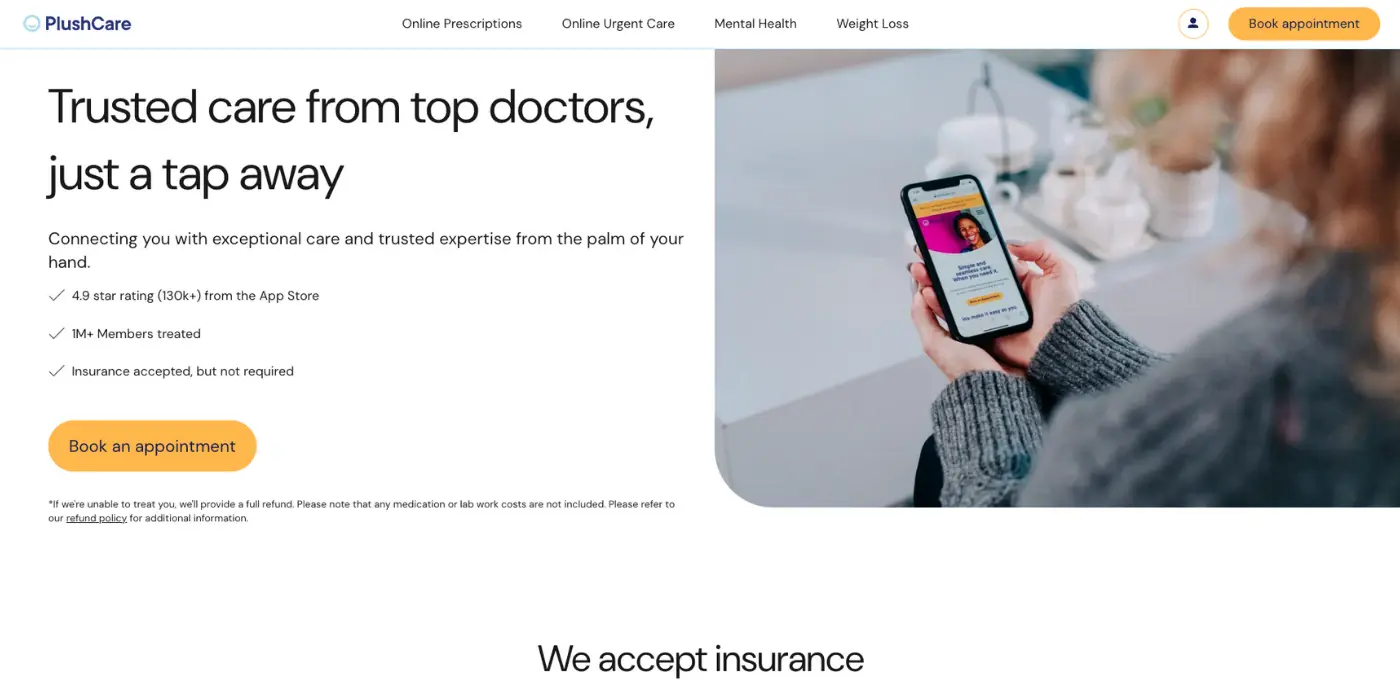
PlushCare functions as a primary care telehealth platform providing women's health services within full-service medical practice covering 50+ conditions including gynecological care, reproductive health, menopause management, preventive screening, and chronic disease management. The women's health service offers contraception prescriptions, UTI treatment, menopause care, wellness exams coordination, and general gynecology through board-certified physicians conducting synchronous video consultations. With 10+ years of history insurance acceptance, PlushCare operates as virtual primary care rather than women's health specialty platform.
The fundamental distinction centers on specialization versus breadth: Ivim Health delivers focused menopause expertise through specialist care optimized for perimenopause/postmenopause management, while PlushCare provides women's health within full-service primary care framework enabling medical coordination across multiple domains. This comparison examines whether Ivim Health's menopause specialization offers advantages over PlushCare's integrated primary care approach for women navigating hormonal transitions and broader health needs, according to FDA prescribing information, according to
FDA safe online prescription checklist.
Menopause & Hormone Therapy Options
Ivim Health offers full menopause treatment formulary including: (1) bioidentical hormone replacement therapy (estradiol, progesterone) in multiple delivery methods (pills, patches, creams, vaginal preparations), (2) traditional synthetic HRT options for insurance coverage optimization, (3) compounded hormone formulations for customized dosing and combination therapy, (4) non-hormonal alternatives including SSRIs for hot flashes, vaginal moisturizers, and lifestyle interventions, (5) testosterone supplementation for low libido when appropriate. Treatment selection guided by symptom assessment, risk factor evaluation, and hormone optimization protocols.
PlushCare provides menopause management through standard hormone replacement therapy prescriptions including bioidentical and synthetic options, though without compounded formulation capabilities or specialized menopause protocols. Physicians prescribe FDA-approved HRT (estradiol patches/pills, progesterone, combination products) based on patient preferences and contraindication screening. Non-hormonal options available including SSRIs, gabapentin for hot flashes, and vaginal estrogen for genitourinary symptoms. Treatment follows general primary care protocols rather than menopause-specific optimization approaches.
Clinical evidence for hormone therapy demonstrates significant efficacy: systemic estrogen reduces hot flashes by 75-90%, improves sleep quality, prevents bone loss, and ameliorates genitourinary symptoms according to
North American Menopause Society guidelines. Bioidentical hormones show equivalent efficacy to synthetic preparations with similar safety profiles when properly dosed. Compounded formulations enable dosing flexibility but lack FDA approval and standardized manufacturing oversight characterizing commercial products.
Ivim Health's menopause specialization provides advantages for women with: complex symptom presentations requiring treatment optimization, preference for compounded bioidentical formulations, need for hormone level monitoring and adjustment protocols, or desire for menopause-focused expertise rather than general primary care approach. PlushCare suits women seeking menopause management integrated with broader primary care needs, preferring FDA-approved standardized products, or prioritizing insurance coverage for consultations over specialty formulation access.
Medical Consultation & Specialist Expertise
Ivim Health provides menopause-focused consultations through board-certified physicians with training in hormone therapy and menopause medicine. Initial video consultations typically 30-45 minutes, covering menopause symptom assessment (hot flashes, night sweats, mood changes, sleep disruption, vaginal dryness, libido changes), hormone level evaluation when indicated, cardiovascular risk assessment, breast cancer screening history, and HRT selection. Physicians employ menopause-specific protocols for hormone dosing, delivery method selection, and symptom monitoring. Ongoing provider access through secure messaging and scheduled follow-up consultations for treatment optimization.
PlushCare offers women's health consultations through board-certified primary care physicians with general gynecology training but without specialized menopause certification. Video consultations (typically 15-30 minutes) address menopause symptoms within broader health context, prescribe standard HRT following established guidelines, and coordinate care with existing gynecologists when needed. The platform emphasizes integrated care across conditions rather than deep menopause specialization, enabling coordination between menopause management, chronic disease treatment, and preventive care within single provider relationship.
Menopause management complexity varies substantially: straightforward presentations responding well to standard HRT benefit adequately from general primary care approach, while complex cases (multiple failed treatments, significant cardiovascular risk requiring careful HRT selection, severe symptoms needing aggressive optimization, or preference for customized compounded protocols) benefit from menopause expertise. Ivim Health's focused training in hormone optimization, familiarity with advanced treatment strategies, and experience managing refractory symptoms provide advantages for complex presentations.
The consultation model advantage depends on individual needs: women with straightforward menopause symptoms seeking standard HRT within comprehensive primary care context benefit from PlushCare's integrated approach and insurance coverage, while those with complex hormone needs, treatment optimization requirements, or strong preference for menopause specialist expertise benefit from Ivim Health's dedicated focus despite potentially higher out-of-pocket costs and narrower service scope beyond menopause-specific needs, according to FDA prescribing information, according to
GoodRx ED medication pricing.
Pricing, Insurance & Cost Analysis
Ivim Health pricing (January 2026): Initial menopause consultation $149-199, follow-up consultations $99-129. Bioidentical HRT medications $75-150/month depending on formulation and delivery method. Compounded hormones $100-200/month. Treatment plans including consultation and medications typically $200-350/month initially, $150-250/month ongoing. Insurance not typically accepted for consultations (cash-pay model), though prescribed medications may be covered through pharmacy benefits for FDA-approved products. HSA/FSA accepted. Annual cost: approximately $1,800-3,000 for consultation and medication combined.
PlushCare women's health pricing: Video consultations $99-129 cash-pay, though insurance accepted with typical copays $10-50 depending on plan benefits. Menopause medications prescribed through standard pharmacies enabling insurance prescription coverage (copays vary widely, $10-100/month depending on plan and medication). For insured patients, effective annual costs often $400-1,000 including covered consultations and prescription copays. Uninsured patients pay approximately $1,200-2,000 annually for consultation and cash-pay medications.
Cost comparison reveals substantial variability based on insurance status: insured PlushCare patients benefit from consultation coverage and prescription benefits, potentially paying $800-1,800 less annually than Ivim Health's cash-pay model ($400-1,000 versus $1,800-3,000). However, Ivim Health's protocols and compounded formulation access may justify premium for women requiring treatment optimization exceeding PlushCare's standard care capabilities. Uninsured patients face more comparable costs ($1,800-3,000 for Ivim versus $1,200-2,000 for PlushCare), with Ivim's specialization providing better value for complex cases.
Insurance acceptance critically impacts value equations: women with health insurance covering telehealth and prescriptions benefit substantially from PlushCare's insurance participation, while those with limited coverage or high-deductible plans may find Ivim Health's transparent cash-pay pricing and care more attractive. The cost premium for menopause specialization ($600-1,000 annually for Ivim versus insured PlushCare) may be worthwhile for women with treatment-resistant symptoms or strong preference for hormone optimization expertise.
Platform Features & Service Integration
Ivim Health provides menopause-focused platform including mobile app and web access with symptom tracking tools, hormone level monitoring, menopause education library, provider messaging, and prescription management. The platform emphasizes menopause-specific features: hot flash tracking, sleep quality monitoring, mood assessment, vaginal symptom reporting, and treatment response evaluation. Customer support via email and chat with menopause care coordinators familiar with HRT protocols. Educational resources for perimenopause/postmenopause but limited for non-menopause women's health concerns.
PlushCare offers full-featured primary care platform with integrated women's health services including: full video consultation scheduling across specialties, in-depth medical records accessible to patients and providers, prescription management with pharmacy integration, lab test ordering and results review, provider messaging, and preventive care tracking. Women's health services integrated with overall medical management enabling coordination between gynecological care, chronic disease treatment, mental health support, and preventive screening within unified platform.
Service integration differences significantly impact experience: Ivim Health's menopause specialization provides superior depth for hormone management with symptom tracking and optimization tools, while PlushCare's integration enables coordinated care when menopause intersects with other health conditions (managing HRT interactions with cardiovascular medications, coordinating osteoporosis screening, addressing mood symptoms through integrated mental health services). For women managing multiple conditions beyond menopause, PlushCare's unified care model prevents fragmented treatment across platforms.
The platform advantage depends on health complexity: women focused primarily on menopause management without significant comorbidities benefit from Ivim Health's specialized features and dedicated focus, while those managing menopause alongside chronic diseases (diabetes, hypertension, depression) or requiring preventive care benefit from PlushCare's integrated approach coordinating all health needs within single provider relationship and unified platform rather than managing menopause separately from other medical care.
Platform Maturity & Long-Term Viability
Ivim Health operates with approximately 3-4 years of history as dedicated menopause specialist, serving growing patient population of women aged 40-65. The platform benefits from focused business model targeting substantial underserved market (millions of women navigating menopause annually), though financial backing and long-term sustainability less transparent than established competitors. Single-category focus creates both specialization advantages and business concentration risks - platform success depends entirely on menopause market rather than diversified service portfolio.
PlushCare represents established telehealth platform with 10+ years of history across diverse conditions, proven business model generating substantial revenue, infrastructure for multi-state telehealth operations. The platform's diversified service model provides business stability and long-term viability confidence, with women's health representing one component of broader primary care offering rather than sole focus creating risk concentration.
Long-term considerations matter substantially for chronic menopause management requiring multi-year treatment: platform stability ensures prescription continuity, provider network sustainability supports ongoing relationships, and financial viability prevents service disruption requiring emergency provider transitions. Women initiating HRT often continue treatment 5-10+ years; unexpected platform failure disrupts established hormone regimens potentially causing symptom recurrence and medical complications during transition periods.
PlushCare's established scale, diversified business model, financial transparency, and decade-long track record provide substantially greater confidence in long-term viability compared to Ivim Health's focused but less mature operation. While Ivim Health's menopause specialization offers clinical advantages, patients should consider whether premium expertise justifies accepting greater uncertainty for multi-year treatment requiring reliable platform continuity. For women confident in 2-3 year time horizons, Ivim suits specialized needs; for longer-term certainty, PlushCare offers greater stability, according to FDA prescribing information.
How We Compared PlushCare vs Ivim Health
Our Comparison Methodology
This comparison provides evidence-based analysis of Ivim Health and PlushCare for women's health and menopause management based on evaluation of clinical expertise, treatment options, cost efficiency, and care integration.
Pricing Analysis: Pricing reflects the rates last recorded in our provider database; providers change prices frequently, so confirm current pricing directly at checkout. Insurance coverage varies by plan; confirm with your insurer. Pricing subject to change; verify current rates during enrollment.
Service Verification: Platform comparisons based on evaluation of consultation processes, provider credential verification, menopause-specific feature assessment, and insurance acceptance confirmation.
This analysis is our own editorial work (most providers listed here pay ManyTreatments a commission when you buy through a link on this page; none pays for a placement, a rating, or a listing, and we do not further claim that commissions have never influenced anything, because that is our own conduct and we cannot evidence it) and aims to provide objective comparison enabling women to select menopause and women's health services matching their clinical needs, insurance status, and preferences for versus integrated care.
Final Verdict: PlushCare vs Ivim Health
Choose Ivim Health if: You need menopause expertise for complex hormone optimization, require compounded bioidentical formulations unavailable through standard prescribing, have treatment-resistant symptoms benefiting from menopause specialist protocols, can afford $1,800-3,000 annually for cash-pay care, and don't need integrated primary care coordination beyond menopause management. Best for women with challenging menopause presentations requiring expert hormone therapy optimization.
Choose PlushCare if: You have health insurance covering telehealth consultations and prescriptions (reducing costs to $400-1,000 annually), need menopause management integrated with comprehensive primary care services, have straightforward symptoms responding adequately to standard FDA-approved HRT, value long-term platform stability (10+ years of history), or manage multiple health conditions benefiting from coordinated care rather than fragmented menopause-only treatment. Best for insured women with uncomplicated menopause seeking integrated care.
Bottom line: Ivim Health and PlushCare serve different women's health needs - menopause expertise versus integrated primary care. Insurance status critically determines value: insured PlushCare patients save $800-2,000 annually while accessing adequate menopause care within framework, making Ivim premium difficult to justify unless complex hormone needs demand expertise. Uninsured patients or those with treatment-resistant symptoms may find Ivim Health's focus worth $600-1,000 premium for superior menopause optimization. Platform choice reflects priorities: depth of menopause specialization versus breadth of integrated primary care.
Editorial Note: Researched and edited by our editorial team. AI tools assist with initial research and drafting; all content is fact-checked and edited by humans before publication. Learn more about our editorial standards