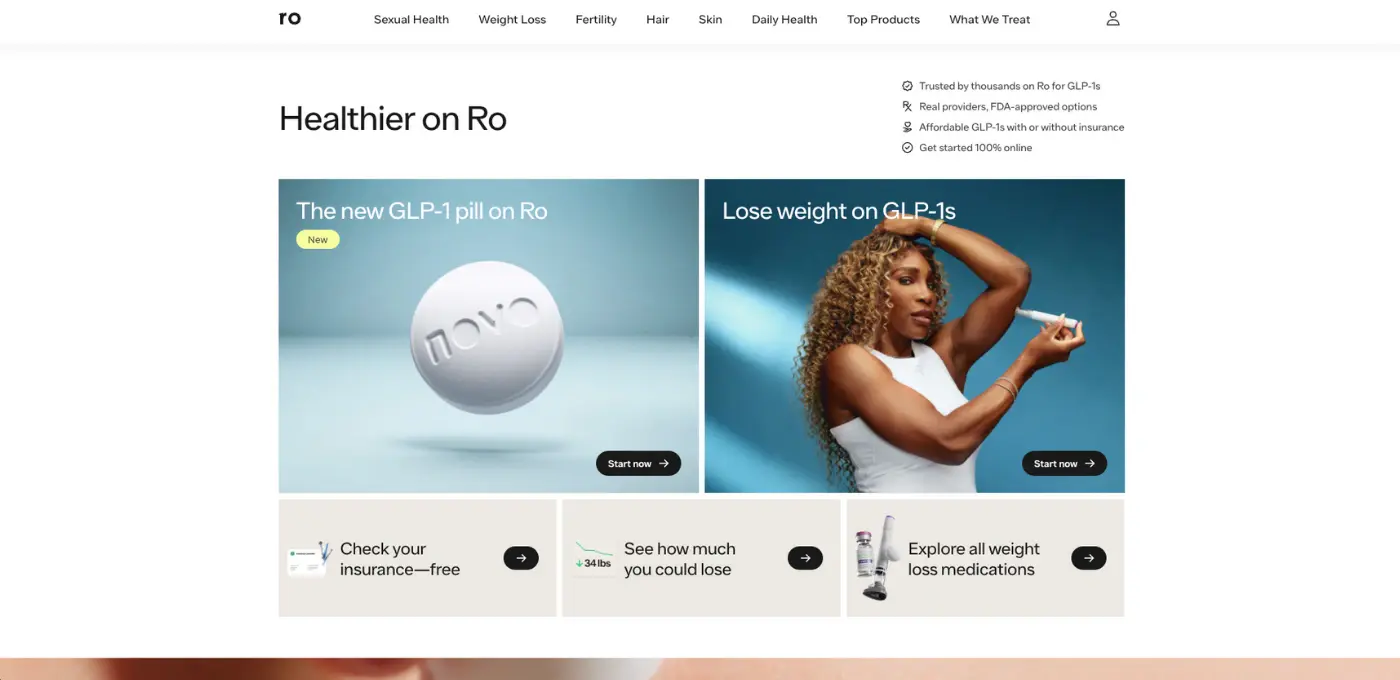
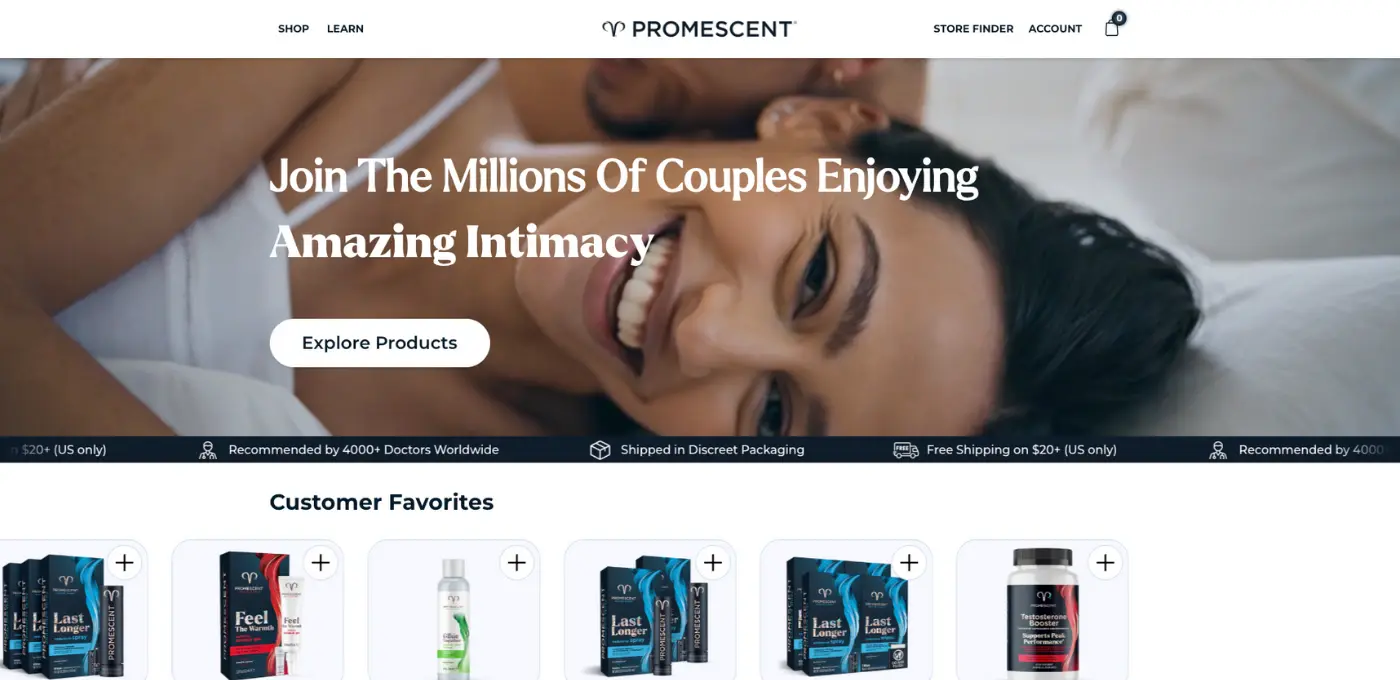
Choosing between Promescent and Ro for premature ejaculation treatment? Promescent offers OTC lidocaine delay spray ($20-48/month) with a company-reported 233% IELT improvement, 5-10 minute onset, and localized action. Ro provides prescription SSRIs (sertraline $20-50/month) with 2-4 fold IELT increases, continuous spontaneous benefit after 1-2 week onset, but systemic side effects. This comparison analyzes efficacy, costs, side effects, and when topical versus oral PE treatment is optimal choice.
Overview: OTC Topical Spray vs Prescription SSRI Treatment
Promescent and Ro (Roman) represent fundamentally different approaches to treating premature ejaculation - over-the-counter topical desensitizing spray versus prescription oral SSRI medications. Promescent manufactures FDA-compliant lidocaine-based delay spray applied directly to penis 5-10 minutes before intercourse, providing on-demand treatment without requiring physician consultation or prescription. Ro operates as
telehealth platform prescribing sertraline (Zoloft generic) for daily use or paroxetine for as-needed treatment, both FDA-approved antidepressants with ejaculatory delay as documented side effect.
The fundamental distinction lies in treatment mechanism and regulatory classification. Promescent uses 4-10% lidocaine formulation numbing penile sensitivity to delay ejaculation. The absorption technology (TargetZone™) allows lidocaine to penetrate skin layers while minimizing transfer to partner. Company-sponsored clinical studies report an average 64% increase in intravaginal ejaculatory latency time (IELT), from baseline 0.6 minutes to 2.3 minutes (individual results vary). Product is available direct-to-consumer without prescription as FDA-compliant topical anesthetic.
Ro prescribes off-label SSRIs exploiting well-documented ejaculatory delay side effect observed with these antidepressant medications. Sertraline taken daily (25-100mg) increases serotonin levels affecting ejaculatory reflex pathways, which delays ejaculation. Paroxetine is the SSRI most often described as having the strongest effect. While SSRIs are FDA-approved for depression and anxiety, their use for PE represents off-label prescribing based on clinical evidence rather than specific PE indication approval.
Patient demographics and preferences differ substantially. Promescent appeals to men seeking on-demand topical treatment without systemic medications, physician consultations, or daily pill regimens. The spray provides situational control - use only when needed before sexual activity. Ro serves patients preferring systemic pharmacological approach accepting daily medication regimen and potential systemic side effects (nausea, sexual dysfunction beyond ejaculatory delay, weight changes) in exchange for continuous PE improvement without pre-sex preparation.
Both approaches maintain appropriate regulatory status. Promescent operates as OTC medical device company meeting FDA requirements for topical anesthetics without requiring prescription. Ro employs board-certified physicians licensed to prescribe SSRIs following
HIPAA compliance standards. Neither treatment addresses underlying psychological causes of PE - both provide symptomatic management. Men with lifelong PE (since first sexual encounters) may have neurobiological hypersensitivity, while acquired PE often involves performance anxiety or relationship issues potentially benefiting from sex therapy alongside pharmaceutical interventions.
Cost Analysis: OTC Spray vs Prescription SSRI Medications
Promescent pricing reflects direct-to-consumer sales model without prescription or consultation fees. Standard Delay Spray (2.6oz bottle containing approximately 22 applications) costs $59.95, averaging $2.73 per use. Subscription pricing reduces cost to $47.96/bottle ($2.18/application). For men having sex 2-4 times weekly, monthly costs range $20-40 with subscription or $25-48 retail pricing. Product shelf life allows purchasing multiple bottles with bulk discounts - three-bottle packs cost $134.95 ($44.98/bottle, $2.05/application), according to FAIR Health telehealth cost data.
Ro prescription SSRI pricing includes physician consultation and medication costs. Initial psychiatric evaluation costs $15 (promotional pricing for PE treatment). Sertraline (generic Zoloft) costs $20-30/month for 25-50mg daily dosing or $30-45/month for 100mg dosing. Paroxetine (as-needed PE treatment) costs $30-50/month depending on dosage and frequency. Total first-month costs: $35-65 including consultation. Ongoing monthly costs: $20-50 for medication only with free automatic prescription refills.
Annual cost comparison reveals different value propositions based on sexual activity frequency. Promescent costs $240-576/year ($20-48/month × 12 months) with direct correlation to usage - higher frequency sexual activity increases costs proportionally. Ro daily sertraline totals $255-555/year ($15 initial consultation + $20-45/month × 12 months) regardless of sexual activity frequency - same monthly cost whether having sex twice weekly or daily.
Long-term cost considerations favor different approaches depending on usage patterns. Men having infrequent sex (1-2 times weekly) pay less with Promescent's per-use pricing: $110-220/year versus Ro's $255-555/year for daily medication. High-frequency sexual activity (daily or multiple times daily) favors Ro's flat monthly fee covering unlimited use versus Promescent's escalating per-application costs reaching $700-1,000+/year for daily users.
Hidden costs and value considerations differ between approaches. Promescent includes discreet packaging, travel-friendly bottle size, and no ongoing medical consultations required. Ro SSRIs require annual physician follow-up for prescription renewal, though consultation costs are minimal ($0-15/year). Generic sertraline is available at retail pharmacies for $4-10/month with GoodRx coupons potentially undercutting Ro pricing, though requiring in-person doctor visits versus telehealth convenience. Neither approach requires expensive supplies or equipment beyond the medications themselves.
How Treatments Work: Topical Desensitization vs Serotonergic Modulation
Promescent mechanism involves topical lidocaine penetrating penile skin to block sodium channels in sensory nerve endings, reducing tactile sensitivity and delaying ejaculatory threshold. The proprietary TargetZone™ absorption technology allows lidocaine to penetrate stratum corneum and reach subdermal nerve endings while creating barrier preventing transfer to partner's vaginal tissue during intercourse. Application 5-10 minutes before sex allows absorption time, with effects lasting 30-60 minutes providing ejaculatory delay window.
Lidocaine concentration (4-10% depending on formulation strength) determines desensitizing effect. Standard Promescent uses 9.0% lidocaine providing moderate desensitization balancing ejaculatory delay with maintained pleasure sensation. Excessive numbing from higher concentrations or over-application can impair erectile rigidity or eliminate pleasurable sensations entirely. Proper application technique - spraying 3-10 sprays to glans and frenulum, spreading evenly, allowing absorption time - optimizes efficacy while minimizing excessive numbness.
Ro SSRI mechanism targets central nervous system serotonergic pathways regulating ejaculatory reflex. Selective serotonin reuptake inhibitors increase synaptic serotonin concentrations by blocking presynaptic reuptake transporters. Elevated serotonin levels in specific brain regions (including lateral paragigantocellular nucleus controlling ejaculation) delays ejaculatory threshold through mechanisms not fully elucidated but consistently observed across SSRI class. Daily dosing provides continuous serotonin elevation versus as-needed dosing relying on acute effects.
Sertraline requires 1-2 weeks of daily use (25-100mg) for full ejaculatory delay effects as serotonin levels gradually increase to steady state. Immediate effects are minimal - first dose provides little PE benefit. Paroxetine demonstrates strongest ejaculatory delay effect and can be used as-needed 4-6 hours before intercourse (20-40mg) with acute serotonin elevation producing PE improvement for single sexual encounter. However, paroxetine carries higher side effect burden than sertraline including more pronounced sexual dysfunction and discontinuation symptoms.
Comparative mechanism analysis reveals opposing philosophies. Promescent provides peripheral desensitization directly at site requiring reduced sensitivity (penile glans and shaft) with minimal systemic effects. Ro SSRIs work centrally through brain neurotransmitter modulation affecting entire ejaculatory reflex pathway but causing systemic effects (nausea, fatigue, decreased libido beyond ejaculatory delay). Local versus systemic approaches offer different benefit-risk profiles suitable for different patient preferences and tolerability considerations.
Efficacy Data: Topical Anesthetics vs Off-Label SSRI Studies
Promescent clinical research includes published studies demonstrating efficacy for PE treatment. A 2018 study in Journal of Sexual Medicine showed men using 7.5% lidocaine spray increased IELT from baseline 0.6 minutes (36 seconds) to 2.3 minutes (138 seconds) - a 233% improvement. Approximately 75% of users reported subjective improvement in ejaculatory control. Partner satisfaction improved significantly with reduced frustration and increased sexual satisfaction scores. Study involved 54 couples with 4-week treatment period using validated PE assessment tools.
Additional company-sponsored Promescent research reports low rates of transfer to partners. Vaginal numbness in female partners occurred in only 7% of couples when proper absorption time (10 minutes) was allowed before intercourse. Condom use further reduces transfer risk to near-zero. Male users reported maintained erectile function and pleasurable sensation despite ejaculatory delay - important distinction from excessive numbing impairing sexual function. Adverse effects were minimal: transient burning sensation at application site in 5% of users, excessive numbness requiring dose reduction in 10%.
SSRI efficacy data for PE comes from extensive off-label use research published in peer-reviewed urology and sexual medicine journals. We do not quote a fold-change figure for these drugs because we have not verified one against a primary source.
Critical assessment of SSRI evidence requires acknowledging off-label status and side effect considerations. While efficacy for ejaculatory delay is well-established across numerous trials, FDA has not approved SSRIs specifically for PE indication. Dapoxetine represents the only SSRI developed specifically for PE (approved in Europe but not FDA-approved in US), designed for as-needed use with rapid onset. US patients rely on off-label use of depression-approved SSRIs (sertraline, paroxetine, fluoxetine).
Head-to-head comparison trials of topical lidocaine versus SSRIs show comparable efficacy in meta-analyses. Topical agents provide faster onset (minutes versus weeks for SSRIs), better on-demand flexibility, and fewer systemic side effects. SSRIs offer continuous benefit without pre-sex preparation, potentially stronger effects with daily paroxetine, but higher systemic side effect burden. Patient preference, tolerability, and lifestyle factors determine optimal choice rather than clear efficacy superiority.
Safety Profiles and Adverse Effects
Promescent side effects are primarily local and mild. Most common adverse event is transient burning or tingling sensation at application site affecting 5-10% of users, typically resolving within minutes. Excessive numbness reducing pleasurable sensation or impairing erectile function occurs in approximately 10% with dose reduction resolving issue. Allergic reactions to lidocaine are rare (<1%) presenting as localized rash or irritation. Partner vaginal numbness affects 7% of couples when inadequate absorption time (<10 minutes) is allowed before intercourse.
Systemic lidocaine toxicity from topical penile application is exceptionally rare given limited absorption and low total dose. Maximum recommended Promescent dose (10 sprays delivering approximately 55mg lidocaine) remains well below toxic systemic levels (>200mg). Intact penile skin limits absorption - mucous membrane application or broken skin increases absorption risk. Proper use according to instructions minimizes safety concerns with topical lidocaine having established safety profile from decades of clinical use in medical procedures.
SSRI side effects from Ro prescriptions include both sexual and non-sexual adverse events. Most common non-sexual side effects: nausea (20-30% of users, typically decreasing after first 2 weeks), fatigue (15-25%), headache (10-20%), dry mouth (10-15%), and weight gain (5-15% with long-term use). Sexual side effects beyond desired ejaculatory delay include decreased libido (15-30%), erectile dysfunction (10-25%), and anorgasmia or reduced orgasm intensity (20-40%). These additional sexual effects may undermine PE treatment goals.
SSRI discontinuation syndrome represents significant concern for daily users. Abrupt cessation of sertraline or particularly paroxetine causes withdrawal symptoms including dizziness, electric shock sensations ("brain zaps"), anxiety, irritability, and flu-like symptoms lasting days to weeks. Gradual tapering over 2-4 weeks minimizes withdrawal effects. As-needed paroxetine use avoids dependence issues but maintains acute side effect risks. Promescent carries no discontinuation syndrome or dependence concerns - users can stop anytime without withdrawal effects.
Long-term safety considerations favor topical approach over systemic medications. Promescent can be used for years or decades without tolerance development, dose escalation, or cumulative toxicity. SSRIs carry long-term risks including persistent sexual dysfunction (estimated 0.5-5% of users experience symptoms continuing months to years after discontinuation), metabolic effects contributing to weight gain and diabetes risk, and potential bone density reduction with chronic use. Most men tolerate SSRIs well, but subset experience significant quality of life impacts from side effects.
Usage Convenience and Lifestyle Factors
Promescent usage requires planning 10-15 minutes before sexual activity. Application process involves: shaking bottle, spraying 3-10 sprays to penile glans and frenulum (starting with lower dose), spreading evenly with finger, waiting 5-10 minutes for absorption, and wiping excess if desired. Total preparation time including absorption: 10-15 minutes. This advance planning may disrupt sexual spontaneity particularly in new relationships or unpredictable sexual encounters. Partners aware of spray use report minimal impact on foreplay and intimacy.
Discretion and portability favor Promescent. Small bottle (2.6oz, similar to travel-size toiletry) fits easily in overnight bag, medicine cabinet, or nightstand. Spray application is quiet without partner awareness if bathroom application is preferred. No prescription bottles, daily pill regimens, or pharmacy visits required maintaining privacy about PE treatment. Product packaging is nondescript without explicit sexual content - arrives in plain shipping boxes preserving discretion.
Ro SSRI approach eliminates pre-sex preparation and timing concerns. Daily sertraline provides continuous PE benefit enabling spontaneous sexual activity without planning, application, or waiting periods. This spontaneity advantage appeals to men in established relationships with frequent sexual activity or those finding pre-sex preparation psychologically burdensome or mood-disrupting. However, daily medication regimen requires adherence discipline and pharmacy refills introducing different logistical considerations.
Partner involvement and communication differ between approaches. Promescent application can be integrated into foreplay with partner participation potentially enhancing intimacy and shared responsibility for PE management. Some couples report spray use as bonding experience normalizing PE discussion. SSRIs are taken privately without partner involvement, though sexual side effects (decreased libido, ED) may negatively impact partner satisfaction despite improved ejaculatory control - trading one sexual problem for others.
Lifestyle compatibility varies by individual circumstances. Promescent suits men with intermittent sexual activity, business travel requiring portable discreet treatment, or preference avoiding daily medications. As-needed use aligns with sexual frequency - higher activity doesn't increase costs proportionally versus daily SSRI expenses regardless of sexual activity. Ro SSRIs suit men with regular frequent sexual activity valuing spontaneity, those comfortable with daily medication regimens, or individuals with comorbid depression/anxiety benefiting from SSRI mood effects alongside PE improvement, according to FAIR Health telehealth cost data, according to
NIMH mental health topics.
How We Compared Ro vs Promescent
Our Comparison Methodology
This comparison is based on comprehensive analysis of premature ejaculation treatment protocols, efficacy data, safety profiles, and cost structures from both platforms.
Clinical Evidence: Premature ejaculation treatment recommendations reference FDA drug approval documents for SSRIs.
Pricing Analysis: Pricing reflects the rates last recorded in our provider database; providers change prices frequently, so confirm current pricing directly at checkout.
Service Verification: Platform capabilities, prescription protocols, and OTC product availability were evaluated through detailed review and customer experience analysis.
How we get paid, plainly: most providers on this page pay ManyTreatments an affiliate commission when you buy through our links. No provider buys a position, a rating, or a listing here. We stop short of telling you commissions have never shaped anything on this site, since we cannot put evidence for that in front of you. Our goal is to provide evidence-based comparison to help you make informed PE treatment decisions.
Final Verdict: Ro vs Promescent
Choose Promescent for on-demand topical PE treatment with localized action and no prescription required. Lidocaine spray costs $20-48/month for typical use, increases IELT 233% (0.6 to 2.3 minutes average), and works within 5-10 minutes of application. Side effects are mild and local (transient burning 5-10%, excessive numbness 10%) without systemic effects. Best for men prioritizing a localized, non-systemic option, preferring situational control over daily medications, having infrequent sexual activity (1-3 times weekly), or wanting discreet portable treatment. No physician consultation, prescription, or waiting period required.
Choose Ro for systemic SSRI treatment providing continuous spontaneous PE improvement without pre-sex preparation. Daily sertraline costs $255-555/year regardless of sexual frequency, produces 2-4 fold IELT improvements (1 to 2-4 minutes), and enables spontaneous sexual activity after 1-2 week onset period. Best for men with frequent regular sexual activity (daily or near-daily), those valuing spontaneity over pre-sex application, patients comfortable with daily medication regimens, or individuals with comorbid depression/anxiety benefiting from SSRI mood effects. Accept higher side effect burden (nausea, fatigue, sexual dysfunction beyond ejaculatory delay) for continuous benefit.
For typical PE patients having sex 2-4 times weekly, Promescent offers superior side effect profile and comparable efficacy to SSRIs without systemic medication burden. Reserve Ro SSRIs for high-frequency sexual activity justifying flat monthly costs, patients requiring spontaneous continuous benefit, or those with comorbid psychiatric conditions benefiting from antidepressant effects. Both approaches demonstrate documented efficacy - choose based on lifestyle, sexual frequency, and side effect tolerance rather than efficacy differences.
Frequently Asked Questions
Is Promescent or Ro more effective for treating premature ejaculation?
Clinical evidence shows comparable efficacy with both approaches achieving 2-4 fold increases in intravaginal ejaculatory latency time (IELT). Promescent lidocaine spray increases IELT from baseline 0.6 minutes to 2.3 minutes (233% improvement) with 75% of users reporting improved control. Ro sertraline produces 2-4 fold IELT improvements (baseline 1 minute to 2-4 minutes), while paroxetine shows stronger 5-10 fold increases. Key differences: Promescent works immediately (5-10 minute onset) for on-demand use, while Ro SSRIs require 1-2 weeks daily use for full effects (sertraline) or 4-6 hours pre-planning (as-needed paroxetine). Neither is clearly "more effective" - efficacy is comparable with different mechanisms, onset times, and usage patterns suiting different patient preferences.
Which costs less: Promescent or Ro for premature ejaculation treatment?
Cost advantage depends on sexual activity frequency. Promescent costs $20-48/month for 2-4 uses weekly ($240-576/year) with per-use pricing. Ro costs $20-50/month for daily sertraline regardless of sexual frequency ($255-555/year including initial $15 consultation). For infrequent sex (1-2 times weekly), Promescent costs less at $110-220/year versus Ro's $255-555/year. For high-frequency activity (daily or multiple times daily), Ro provides better value at flat $255-555/year versus Promescent's escalating costs reaching $700-1,000+/year for daily users. Men having sex 3-4 times weekly pay similar costs ($240-400/year) with either approach. Calculate based on your sexual frequency: infrequent activity favors Promescent, frequent activity favors Ro.
Does Promescent have fewer side effects than Ro SSRIs for PE treatment?
Yes - Promescent has significantly fewer and milder side effects than Ro SSRIs. Promescent adverse effects are local and mild: transient burning at application site (5-10%), excessive numbness requiring dose adjustment (10%), and partner vaginal numbness with inadequate absorption time (7%). No systemic effects, sexual dysfunction beyond intended use, or discontinuation syndrome. Ro SSRIs cause systemic effects including nausea (20-30%), fatigue (15-25%), decreased libido (15-30%), erectile dysfunction (10-25%), anorgasmia (20-40%), and weight gain (5-15%). SSRI discontinuation causes withdrawal symptoms (dizziness, "brain zaps," anxiety) requiring tapering. For men prioritizing a localized, non-systemic option and avoiding systemic medications, Promescent represents safer choice. SSRIs justify side effect burden for patients requiring continuous spontaneous PE improvement without pre-sex preparation.
Can I use Promescent and Ro SSRIs together for better premature ejaculation results?
Combining Promescent topical spray with Ro daily sertraline has no commonly reported drug interactions, though clinical evidence for additive benefit is limited - confirm any combination with your prescribing clinician. The mechanisms differ (peripheral desensitization versus central serotonergic modulation) theoretically allowing synergistic effects. Some urologists recommend combination therapy for refractory PE cases inadequately controlled by single modality. However, most men achieve satisfactory results with monotherapy - try either Promescent or Ro individually first before combining. Combination increases costs ($475-795/year for moderate use frequency) and side effect exposure. Reserve combination approach for confirmed single-treatment failures requiring maximum ejaculatory delay. Most PE patients respond adequately to either topical lidocaine or SSRI alone without needing both.
Which works faster: Promescent or Ro for treating premature ejaculation?
Promescent works significantly faster with 5-10 minute onset versus Ro SSRIs requiring days to weeks. Promescent application 5-10 minutes before intercourse provides immediate ejaculatory delay for that sexual encounter with effects lasting 30-60 minutes. Ro daily sertraline requires 1-2 weeks of daily dosing for full PE benefits as serotonin levels reach steady state - first few doses provide minimal effect. Ro as-needed paroxetine requires 4-6 hours pre-planning before intercourse for acute serotonin elevation producing PE improvement. For immediate on-demand PE treatment, Promescent provides fastest onset. For continuous spontaneous benefit without pre-sex preparation, Ro daily sertraline works after initial 1-2 week loading period but maintains effects indefinitely with ongoing use.
Will my partner notice if I use Promescent or Ro SSRIs for premature ejaculation?
Promescent may be noticed during application phase but not during intercourse if proper technique is used. Discreet bathroom application 10 minutes before sex allows privacy. Partner vaginal numbness occurs in only 7% of couples when adequate absorption time is allowed. Most partners report no sensation differences. Ro SSRIs are taken privately without partner awareness during use, though sexual side effects (decreased libido, erectile dysfunction, reduced orgasm intensity) may be noticed by partner as separate sexual concerns. Some men experience overall sexual dysfunction improvement with SSRIs if anxiety reduction enhances arousal, while others find libido suppression problematic. Partner communication about PE treatment approach (topical versus oral medication) can enhance mutual understanding and support regardless of method chosen.
Editorial Note: Researched and edited by our editorial team. AI tools assist with initial research and drafting; all content is fact-checked and edited by humans before publication. Learn more about our editorial standards