Choosing between Ro and Sesame for weight loss or telehealth services means deciding between fundamentally different healthcare delivery models - one offering comprehensive, integrated specialty programs with all-inclusive pricing, the other providing transparent marketplace access to independent providers with unbundled fees. This evidence-based comparison analyzes both platforms across GLP-1 medication access, pricing structures, medical support quality, treatment protocols, and patient experience to help you select the approach that aligns with your preferences for care coordination, cost predictability, and provider relationships.
Overview: Specialty Weight Loss Platform vs Multi-Service Marketplace
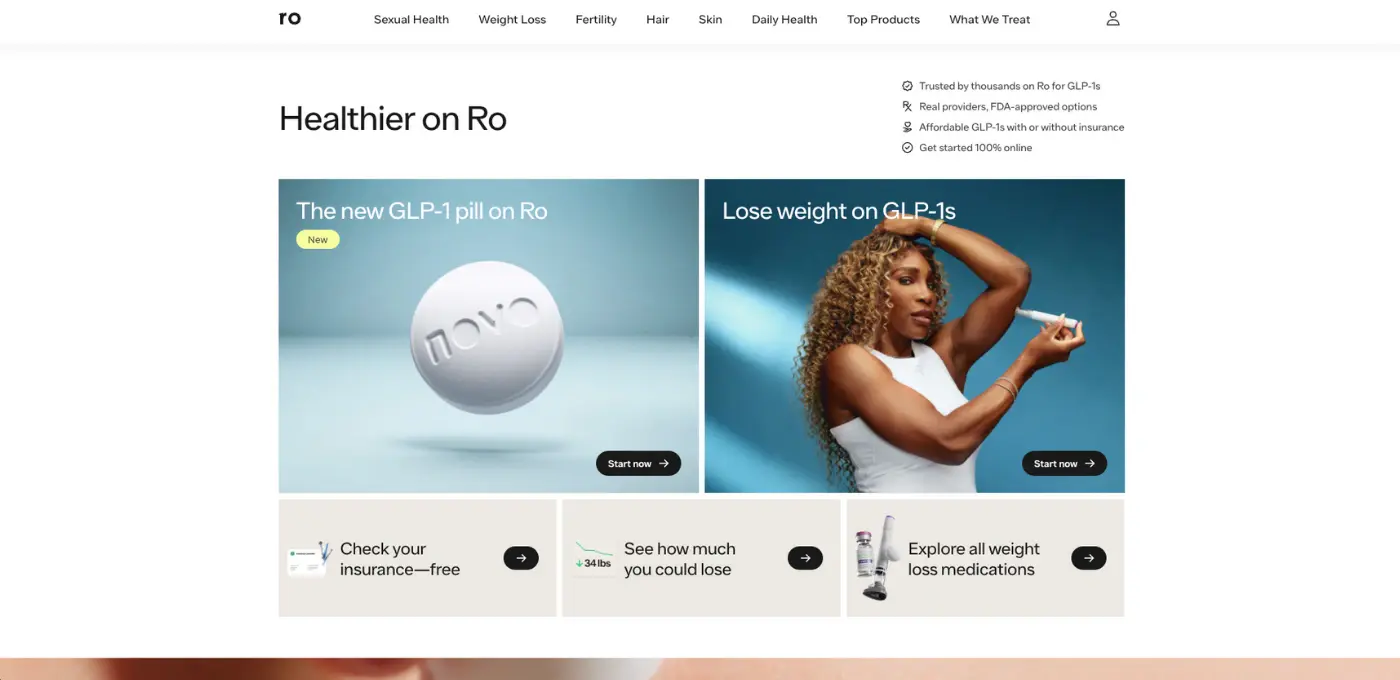
Ro and Sesame represent fundamentally different approaches to healthcare delivery, despite both offering GLP-1 weight loss medications. Ro operates as an integrated telehealth platform specializing in chronic conditions including weight management, hair loss, erectile dysfunction, and skin care. With $876 million in Series D funding (March 2023) and operations in all 50 states, Ro has built end-to-end infrastructure controlling the patient journey from consultation through medication delivery through its wholly-owned pharmacy network, according to
FDA semaglutide safety information.
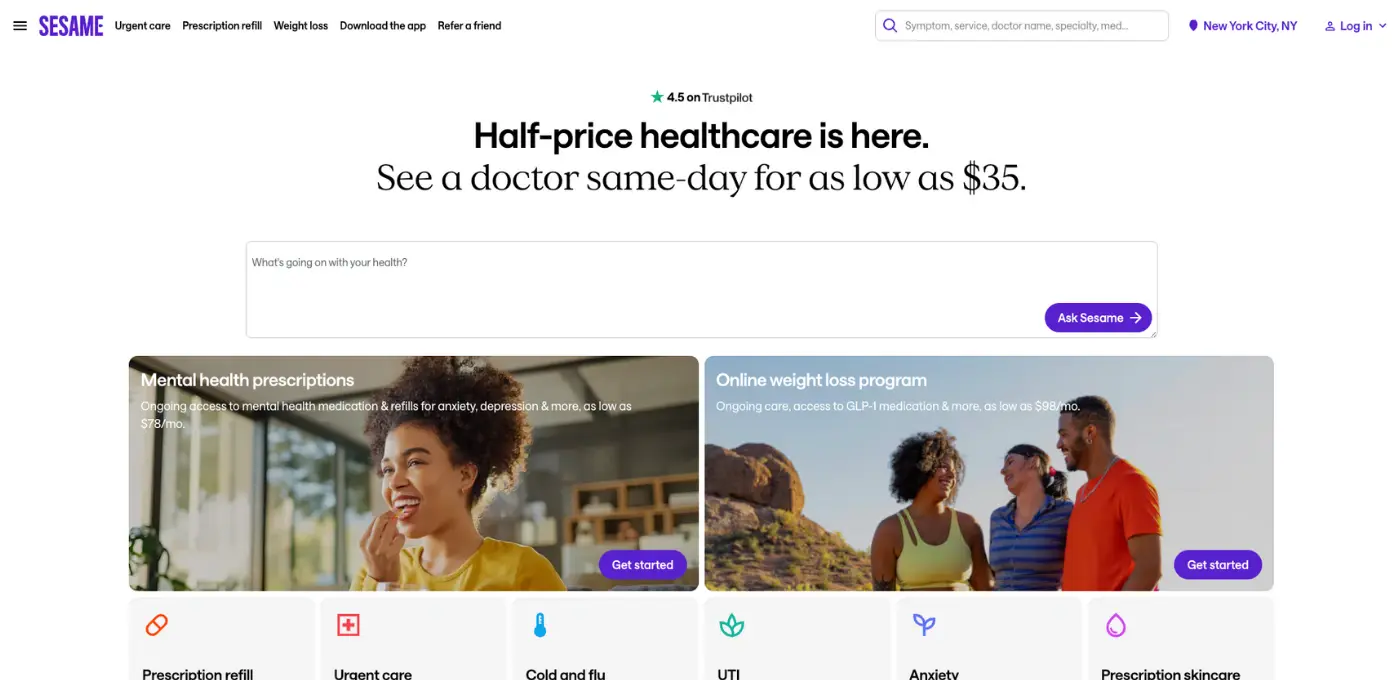
Sesame functions as a healthcare marketplace connecting patients with independent providers who set their own prices and treatment protocols. Rather than employing physicians directly, Sesame provides transparent pricing for cash-pay medical services including primary care, specialty consultations, lab work, and prescriptions. The platform facilitates connections between patients and licensed providers without intermediating treatment decisions, creating a fundamentally different economic and clinical model.
For weight loss specifically, Ro offers a structured program called Ro Body featuring FDA-approved GLP-1 medications (semaglutide, tirzepatide) with standardized protocols, coaching support, and proprietary tracking tools. The medical team follows evidence-based titration schedules aligned with FDA registration trials, ensuring consistent clinical approaches across their provider network. Monthly costs range from $145-$1,145 depending on medication type and dosage tier.
Sesame's weight loss offerings vary by individual provider, with consultations starting at $29-$79 and prescriptions (when written) filled through the patient's choice of pharmacy. Providers on the platform maintain clinical autonomy, meaning treatment approaches, follow-up protocols, and medication preferences differ based on who you see. This marketplace model offers pricing transparency and provider choice but less standardization than vertically integrated platforms.
The comparison ultimately reflects a choice between specialized, end-to-end care management (Ro) versus flexible, provider-driven healthcare shopping (Sesame). Ro excels for patients wanting broad weight loss programs with integrated support systems and predictable monthly costs including medication. Sesame suits those prioritizing provider selection, transparent pricing, and the flexibility to separate consultation costs from prescription fulfillment. Both serve the growing market for cash-pay GLP-1 access, but through distinctly different business and clinical models.
Pricing Structures: All-Inclusive Programs vs Marketplace Fees
Ro operates on an all-inclusive monthly subscription model for weight loss, with pricing determined by medication type and dosage. Ro Body now bills membership and FDA-approved medication separately rather than charging one monthly price for compounded semaglutide, so confirm both figures at checkout. Brand-name Wegovy ranges from $186-$580/month depending on dosage tier. Compounded tirzepatide starts at $343/month, while brand-name Zepbound costs $1,145/month for highest doses. These monthly fees include medication, provider consultations, ongoing monitoring, coaching support, and medication delivery - representing bundled pricing for comprehensive care.
Sesame uses transparent, per-transaction pricing where patients pay separate fees for consultations and prescriptions. Weight loss consultations cost $29-$79 depending on the provider, with video visits, messaging options, and follow-up frequencies varying by clinician. If a prescription is written, patients fill it through their preferred pharmacy (GoodRx, Amazon Pharmacy, local pharmacies), paying retail or discount prices separately. This unbundled model means total costs vary significantly based on provider choice, prescription decisions, and pharmacy selection.
Your first-year cost at Ro now depends on which FDA-approved medication you are prescribed and which membership length you choose, so price it directly rather than from an older compounded figure. Sesame's first-year cost might range from $1,200-$3,600 depending on consultation frequency, the provider's prescription choices, and pharmacy costs - but this requires patients to coordinate multiple vendors and potentially negotiate prescription pricing.
Ro's bundled pricing provides predictability and convenience, particularly valuable for patients wanting to avoid surprise bills or coordination hassles. The monthly subscription includes medication regardless of market price fluctuations, protecting patients from supply chain volatility. However, patients cannot shop around for cheaper medication sources or skip support services they may not value.
Sesame's marketplace model offers flexibility and potential cost savings for engaged patients willing to coordinate care. Consultation fees are transparent upfront, and patients control where they fill prescriptions, enabling comparison shopping. However, total costs become less predictable, and patients bear responsibility for ensuring prescription continuity and appropriate follow-up. The unbundled approach suits budget-conscious consumers comfortable managing multiple healthcare relationships but may frustrate those preferring seamless, all-in-one solutions.
Treatment Offerings: Specialty Programs vs Provider-Dependent Options
Ro provides structured, specialty-focused treatment programs built around specific chronic conditions. For weight loss, the Ro Body program offers FDA-approved medications (Wegovy, Zepbound) and no longer offers compounded semaglutide or tirzepatide. The platform follows standardized dosing protocols based on FDA registration trials: semaglutide starts at 0.25mg weekly and titrates to 2.4mg over 16-20 weeks, while tirzepatide begins at 2.5mg and increases to 5-15mg based on response and tolerability. This protocolized approach ensures consistent clinical care regardless of which Ro-affiliated provider manages your case, according to
FDA semaglutide safety information.
Ro also offers integrated treatment programs for hair loss (finasteride, minoxidil, custom formulations), erectile dysfunction (sildenafil, tadalafil), premature ejaculation (sertraline, paroxetine), skin care (tretinoin, hydroquinone), and hormonal conditions. Each specialty features clinical protocols, condition-specific consultations, and outcome tracking through proprietary patient dashboards. The vertically integrated model means Ro controls medication sourcing, quality standards, and fulfillment timelines.
Sesame operates as a marketplace featuring 300,000+ independent providers offering diverse services including primary care, specialty consultations, mental health therapy, diagnostic testing, and prescriptions. For weight loss specifically, patients browse provider profiles showing pricing, credentials, and patient reviews, then book consultations with clinicians who maintain full treatment autonomy. One provider might prefer FDA-approved GLP-1s only, while another offers compounded alternatives or adjunctive therapies like metformin or phentermine, according to
GoodRx medication pricing data.
This provider-driven model means treatment consistency varies significantly on Sesame. Patients benefit from clinician choice and potentially access providers with specific expertise or philosophies aligned with their preferences. However, they also assume responsibility for vetting provider credentials, understanding treatment rationales, and ensuring continuity if switching clinicians. Sesame doesn't standardize protocols or intermediate clinical decisions - it facilitates marketplace transactions between patients and independent practitioners.
The treatment comparison ultimately reflects depth versus breadth. Ro delivers deep expertise in specific chronic conditions through standardized, evidence-based programs with integrated support. Sesame offers broad access to diverse providers and services but without clinical standardization or condition-specific infrastructure. Patients wanting weight loss programs with predictable protocols favor Ro; those prioritizing provider choice and flexibility across various health needs lean toward Sesame.
Medical Consultations: Integrated Care Teams vs Independent Providers
Ro provides medical consultations through employed or closely affiliated providers who work within Ro's clinical protocols. The initial weight loss consultation involves in-depth medical history review, eligibility screening for GLP-1 medications, discussion of risks and benefits, and treatment plan development. Follow-up consultations occur at protocol-defined intervals (typically monthly for first 3 months, then quarterly) to assess efficacy, manage side effects, and adjust dosing. Patients access providers through secure messaging, asynchronous video consultations, and scheduled check-ins - all included in the monthly subscription fee.
Ro's care model emphasizes longitudinal relationships with clinical teams rather than transactional consultations. The platform assigns patients to specific providers who follow their progress over time, reviewing weight trends, lab results (when ordered), and subjective response data. Health coaches provide additional support between medical consultations, covering nutrition strategies, exercise planning, and behavioral modifications. This integrated team approach mirrors traditional specialty clinics adapted for virtual delivery.
Sesame connects patients with independent providers who set their own consultation structures. Weight loss consultations typically cost $29-$79 per visit, with patients selecting providers based on credentials, pricing, patient reviews, and availability. Initial consultations may last 15-30 minutes and address medical history, medication eligibility, and treatment options. Follow-up frequency and format depend entirely on the individual provider's practice patterns - some may recommend monthly video visits, while others prefer quarterly check-ins or asynchronous messaging.
Provider continuity on Sesame depends on patient preference and provider availability. Patients can continue seeing the same clinician for follow-ups or switch providers between visits, offering flexibility but potentially sacrificing longitudinal care relationships. Sesame doesn't provide care coordination between visits or between different providers - patients manage their healthcare journey, including scheduling follow-ups, tracking outcomes, and ensuring prescription refills.
The consultation model comparison highlights trade-offs between integration and autonomy. Ro's team-based approach ensures consistent monitoring, proactive side effect management, and built-in support systems - ideal for patients wanting wide-ranging management. Sesame's marketplace model offers provider choice and transparent per-visit pricing, suiting patients comfortable self-directing care and willing to coordinate follow-up independently. Neither model accepts insurance for consultations, but Ro's bundled pricing contrasts with Sesame's itemized fees.
Safety Protocols and Platform Features
Ro implements structured safety protocols throughout the weight loss treatment journey. Initial eligibility screening excludes patients with contraindications including personal/family history of medullary thyroid carcinoma, multiple endocrine neoplasia syndrome type 2, severe gastrointestinal disease, or pregnancy/breastfeeding. The platform requires BMI ≥27 with weight-related comorbidity or BMI ≥30 for GLP-1 eligibility, aligning with FDA indications. During treatment, Ro monitors for adverse events through regular check-ins, standardized questionnaires, and patient-initiated messaging for concerning symptoms.
Ro's medication sourcing follows strict quality standards. FDA-approved medications come from licensed wholesale distributors. Ro no longer offers compounded semaglutide or tirzepatide for weight loss (verified on Ro's own site, September 2026). Ro still sells compounded products in other categories, such as Ro Sparks for erectile dysfunction, which Ro discloses are not FDA-approved and do not undergo FDA safety, effectiveness, or manufacturing review. The platform maintains chain-of-custody documentation, verifies supplier credentials, and uses temperature-controlled shipping to ensure medication integrity. Ro's owned pharmacy network allows direct quality oversight that marketplace models cannot match, according to
FDA compounding regulations.
Sesame's safety approach depends on individual provider practices, as the marketplace doesn't standardize clinical protocols. Providers maintain independent responsibility for patient screening, contraindication assessment, and safety monitoring. The platform verifies provider licenses and credentials but doesn't intermediate treatment decisions or monitor clinical outcomes. Patients receive safety information from their chosen provider, with protocols varying based on clinician training, specialty, and practice philosophy.
For prescription fulfillment through Sesame, patients control pharmacy selection, meaning medication sourcing depends on whether they choose chain pharmacies (Walgreens, CVS), online platforms (Amazon Pharmacy, GoodRx), or independent pharmacies. This introduces variability in medication sourcing, compounding practices (if applicable), and quality verification. Patients assume greater responsibility for ensuring prescription legitimacy and proper storage.
From a platform features perspective, Ro provides proprietary tools including weight tracking dashboards, medication reminders, educational content libraries, and secure provider messaging - all designed for weight loss management. Sesame offers provider search filters, appointment scheduling, medical record storage, and prescription management tools but without condition-specific functionality. The feature comparison reflects Ro's vertical integration versus Sesame's horizontal marketplace approach.
Expected Results and Patient Experience
Ro patients using FDA-approved GLP-1 medications can expect weight loss results consistent with registration trial data. Semaglutide 2.4mg (Wegovy) produced mean weight loss of 14.9% over 68 weeks in the STEP 1 trial published in the New England Journal of Medicine, with 86.4% of patients losing ≥5% body weight. Tirzepatide 15mg (Zepbound) demonstrated mean weight loss of 20.9% over 72 weeks in the SURMOUNT-1 trial, with 91% achieving ≥5% weight loss. These results assume consistent medication adherence and lifestyle modifications as implemented in clinical trials, according to
FDA semaglutide safety information.
Compounded versions of semaglutide and tirzepatide are no longer available through Ro. Where you find them elsewhere, they are not FDA-approved and are not reviewed by the FDA for safety, effectiveness, or quality, and lack the clinical trial validation behind brand-name medications. Patients should expect similar efficacy assuming equivalent dosing and bioavailability, though individual responses may vary based on compounding pharmacy quality and formulation differences. Ro's clinical team adjusts dosing based on individual response, potentially achieving comparable outcomes to brand-name drugs at lower costs.
Patient experience on Ro emphasizes end-to-end support and convenience. The platform handles consultation scheduling, medication delivery, progress tracking, and coaching support through a unified interface. Patients report high satisfaction with responsive provider communication (average response time <4 hours) and seamless prescription refills. However, some users note limited provider choice and occasional supply chain delays for specific medications during national shortages. The all-inclusive model simplifies healthcare logistics but constrains flexibility.
Sesame patients' results depend entirely on their chosen provider's treatment approach, prescription decisions, and follow-up protocols. Patients seeing experienced obesity medicine specialists may achieve outcomes comparable to integrated platforms through evidence-based prescribing and appropriate monitoring. However, inconsistent follow-up, inadequate side effect management, or suboptimal dosing adjustments may compromise results. The marketplace model places greater responsibility on patients to ensure adequate care quality and treatment continuity.
Patient experience on Sesame emphasizes transparency and control. Users appreciate upfront pricing, provider selection options, and the ability to separate consultation costs from prescription fulfillment. Reviews highlight positive experiences with responsive individual providers but also note frustration when coordinating care across multiple vendors. The platform works well for engaged patients comfortable self-advocating and managing healthcare relationships but may overwhelm those preferring turnkey solutions. Sesame's flexibility comes with increased complexity compared to Ro's integrated approach.
How We Compared Ro vs Sesame Care
Our Comparison Methodology
This comparison is based on comprehensive analysis of clinical protocols, pricing structures, service models from both platforms.
Clinical Evidence: Weight loss efficacy data cite FDA registration trials for semaglutide (NEJM STEP 1) and tirzepatide (NEJM SURMOUNT-1).
Pricing Analysis: Pricing reflects the rates last recorded in our provider database; providers change prices frequently, so confirm current pricing directly at checkout.
Service Verification: Platform capabilities, provider credentials, and treatment protocols were evaluated through detailed review of service offerings.
Our analysis is our own editorial work. Most of the providers compared here pay ManyTreatments a commission when you buy through a link on this page. Nobody pays us for a placement, a rating, or a listing, and we are not going to add that commissions have never influenced anything, because that is a claim about our own conduct we cannot show you evidence for. Our goal is to provide evidence-based comparison to help you make informed weight loss treatment decisions.
Final Verdict: Ro vs Sesame Care
Choose Ro if you prioritize comprehensive, all-inclusive weight loss programs with integrated medical care, coaching support, proprietary tracking tools, and predictable monthly costs. Ro excels for patients wanting turnkey solutions with standardized protocols, consistent monitoring, seamless medication delivery, and longitudinal care relationships. The platform is ideal for those willing to pay premium pricing ($145-$1,145/month) for convenience and full support without coordinating multiple healthcare vendors. Ro suits patients who value specialty expertise in chronic condition management and prefer unified platforms handling all aspects of care.
Choose Sesame if you prioritize transparent pricing, provider selection flexibility, and lower upfront consultation costs ($29-$79 per visit). Sesame excels for budget-conscious patients comfortable coordinating care independently, separating consultation from prescription fulfillment, and managing multiple healthcare relationships. The marketplace model suits engaged consumers wanting to compare providers, optimize prescription sourcing through preferred pharmacies, and maintain autonomy over treatment decisions. Choose Sesame if you're willing to accept less standardization and more coordination responsibility in exchange for pricing transparency and provider choice.
The bottom line: Ro delivers full weight loss programs through vertical integration, predictable costs, and built-in support systems - ideal for patients wanting seamless, all-inclusive care management. Sesame offers flexible, transparent access to independent providers with unbundled pricing - perfect for self-directed patients comfortable coordinating care across multiple vendors. Neither accepts insurance for weight loss services, but they serve different patient preferences regarding support intensity, pricing predictability, and care coordination models. Your choice depends on whether you prioritize broad support and convenience (Ro) or flexibility, transparency, and potential cost optimization (Sesame).
Frequently Asked Questions
Should I choose Ro or Sesame for GLP-1 weight loss medications?
Choose Ro if you want an all-inclusive weight loss program with standardized protocols, integrated coaching, monthly subscriptions covering medication and consultations ($145-$1,145/month depending on medication), and seamless care coordination. Ro excels for patients prioritizing convenience, comprehensive support, and predictable costs without coordinating multiple healthcare vendors. Choose Sesame if you prefer selecting your own provider, transparent per-visit pricing ($29-$79 consultations), flexibility to fill prescriptions through your preferred pharmacy, and lower upfront costs. Sesame suits budget-conscious patients comfortable managing care independently and coordinating between consultation and prescription fulfillment.
Which platform offers better pricing for semaglutide weight loss treatment?
Total costs depend on medication type and care coordination preferences. Ro now charges a membership fee and FDA-approved medication separately rather than one bundled price for compounded semaglutide, so confirm both at checkout before estimating an annual cost. Sesame consultations cost $29-$79 per visit (typically 4-12 visits first year), plus separate prescription costs through your chosen pharmacy. If you secure compounded semaglutide at $300-$400/month retail (using GoodRx or similar), Sesame's first-year total might be $1,500-$5,000 depending on consultation frequency and pharmacy pricing. Ro offers more predictable costs and convenience; Sesame provides potential savings if you minimize consultations and optimize prescription sourcing, but requires more coordination.
Does Ro or Sesame provide better medical support during weight loss treatment?
Ro provides more comprehensive, structured support with dedicated care teams, monthly check-ins (included in subscription), health coaching between medical consultations, proprietary progress tracking tools, and 24/7 secure messaging. The integrated model ensures consistent monitoring and proactive side effect management. Sesame's support quality depends entirely on your chosen provider - some offer excellent longitudinal care with regular follow-up, while others provide minimal monitoring between scheduled visits. Sesame doesn't include coaching or care coordination between consultations. Choose Ro if you want built-in support systems and predictable monitoring; choose Sesame if you prefer selecting providers based on their specific support approach and are comfortable coordinating care independently.
Can I use Sesame for initial consultation then fill my GLP-1 prescription elsewhere?
Yes, this is Sesame's standard model. After a weight loss consultation ($29-$79), if your provider determines you're eligible and writes a prescription, you fill it through any pharmacy you choose - chain pharmacies (CVS, Walgreens), online platforms (Amazon Pharmacy, GoodRx, Alto), compounding pharmacies, or local independent pharmacies. You can compare pricing and select based on cost, convenience, and availability. This flexibility allows prescription shopping but requires coordinating refills and ensuring supply continuity independently. Ro prescriptions are filled exclusively through Ro's owned pharmacy network with medication included in monthly subscription costs, eliminating separate prescription coordination.
Which platform is better for long-term weight management?
Ro is better structured for long-term weight management with integrated support systems, longitudinal provider relationships, progress tracking dashboards, coaching for behavior change, and standardized follow-up protocols. The subscription model encourages consistent engagement, and the care team monitors outcomes over time. Clinical evidence suggests GLP-1 medications require ongoing treatment, and Ro's infrastructure supports indefinite continuation with appropriate medical supervision. Sesame works for long-term management if you establish a consistent relationship with a single provider and proactively schedule follow-ups, but the marketplace model doesn't build in the longitudinal care infrastructure that Ro provides. Patients needing structured accountability and full support favor Ro; self-directed patients comfortable long-term medication management can succeed with Sesame.
Do Ro and Sesame prescribe the same weight loss medications?
Both platforms can facilitate prescriptions for semaglutide and tirzepatide (subject to provider discretion), but with different approaches. Ro offers FDA-approved versions (Wegovy, Zepbound) through standardized protocols following registration trial dosing schedules, and no longer offers compounded alternatives. All Ro patients receive the same evidence-based titration regardless of which affiliated provider manages their care. Sesame providers maintain full prescribing autonomy - some prescribe FDA-approved medications only, others offer compounded versions, and some include adjunctive treatments like metformin, phentermine, or naltrexone/bupropion. Medication availability through Sesame depends on your chosen provider's preferences and your pharmacy's stock. Ro guarantees medication access through its owned pharmacy; Sesame prescriptions may face supply constraints at retail pharmacies during national shortages.
Editorial Note: Researched and edited by our editorial team. AI tools assist with initial research and drafting; all content is fact-checked and edited by humans before publication. Learn more about our editorial standards