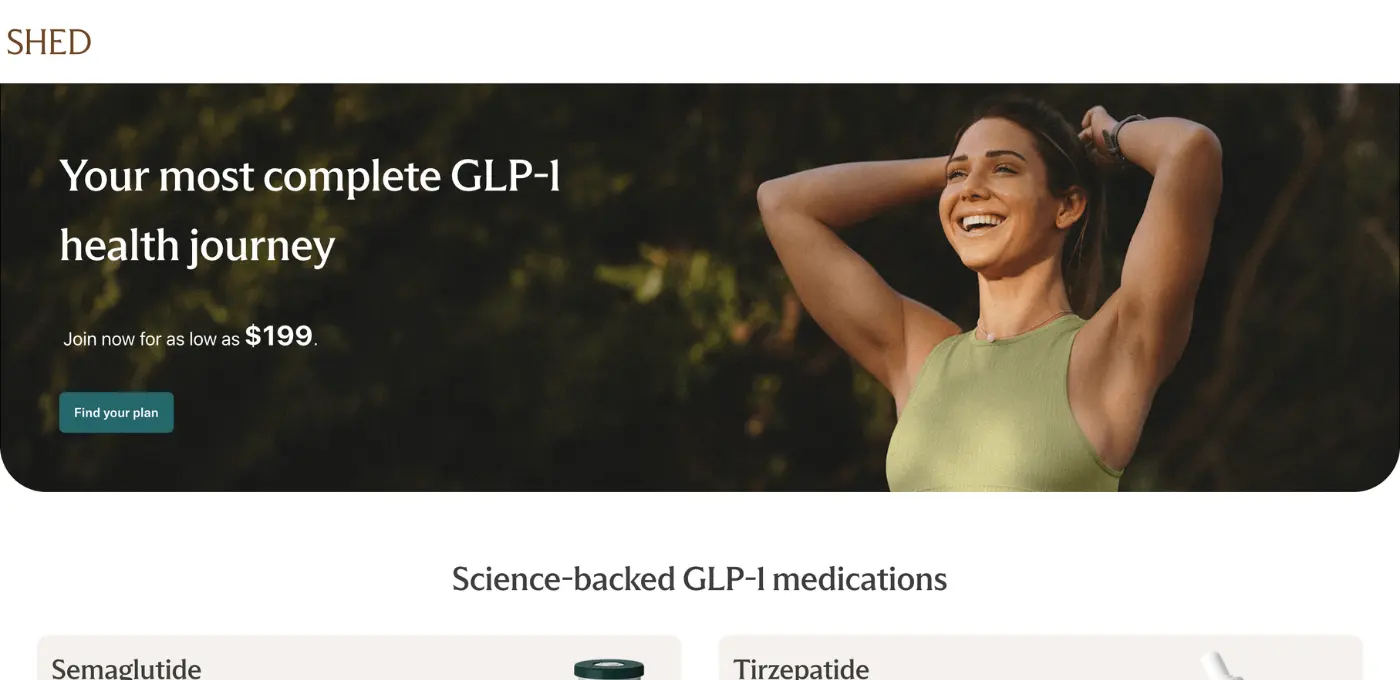

Is Shed Legit? What Their 120-Day Weight Loss Guarantee Actually Means
Trust & Safety Review
Shed, based in Lehi, Utah, advertises a 120-day weight loss guarantee: lose 5% of your weight in 120 days or your money back, subject to eligibility, required check-ins and adherence to the program. With a reported 150,000+ members and multiple GLP-1 formats (injections, drops, lozenges, and oral tablets), Shed offers more medication delivery options than most competitors. We read their published guarantee terms and pricing.
Our editorial rating9/10
Founded2023
Categories1 treatments
Shed Pros & Cons
Pros
- ✓Multiple medication formats beyond just injections
- ✓120-day money-back guarantee if you do not lose 5%
- ✓Shed reports a member base above 150,000
- ✓Both compounded and FDA-approved brand-name options
- ✓Flexible treatment plans with doctor guidance
Cons
- ✗Weight loss is the only treatment category
- ✗Two-month minimum commitment required
- ✗Cash-pay only, no insurance accepted
- ✗Compounded medications are not FDA-approved as finished products
Medical Disclaimer: Content is for informational purposes only - not medical advice. Consult a licensed healthcare provider before any treatment. Learn more
Try Shed Today
Semaglutide From $159/mo - 120-Day Money-Back Guarantee
- Compounded semaglutide as low as $159/mo, tirzepatide from $239/mo
- 120-day money-back guarantee - refund if you don't lose 5%, per Shed's terms
- 100% online visit and checkout - prescription shipped straight to your door
- Health coaching support included alongside your GLP-1 program

About This Comparison
Our Editorial Standards
This weight loss provider comparison is independently researched by our editorial team. We compare telehealth services based on publicly available information including pricing, available treatments, and service areas. Our ratings are editorial judgments, not tallies of reviews.
Independent Research: We do not accept payment for rankings or favorable reviews
Affiliate Disclosure: We may earn commissions from qualifying purchases at no extra cost to you
Regular Updates: Content is reviewed and updated monthly for accuracy
Licensed Providers Only: All listed services employ US-licensed healthcare providers
Not Medical Advice: This comparison is for informational purposes only. We are not healthcare providers. Always consult with a licensed physician before starting any treatment. Read our full medical disclaimer and editorial policy.
Independent ResearchNo paid placements
Fact-Checked InformationVerified against official sources
Regularly UpdatedLast updated August 22, 2026
Licensed Providers OnlyAll listed services are US-licensed

Who Owns Shed and Are They a Real Company?
Shed (operating at shed.com, also known as tryshed.com and shedrx) is a telehealth company founded in 2023 and headquartered in Lehi, Utah. The company focuses exclusively on GLP-1 weight loss treatments, distinguishing itself from broader telehealth platforms that spread across dozens of therapeutic areas. With over 150,000 members nationwide reported by the company, Shed has scaled rapidly in the competitive GLP-1 telehealth market. Their singular focus on weight management allows them to build deeper clinical protocols and patient support systems than general-purpose competitors.
Shed operates as a legitimate business entity registered in Utah, with a verifiable physical presence in Lehi - a hub for technology and healthcare startups along Utah's Silicon Slopes corridor. You can look up Shed on the Better Business Bureau and in Utah state business registrations. Unlike some telehealth startups that operate through shell entities or offshore structures, Shed's corporate transparency is straightforward and verifiable through standard business lookup tools.
Shed reports over 150,000 members nationwide. We do not quote third-party review statistics we cannot verify; you can check current reviews on Trustpilot and Google Reviews, and our own 9.0 (Excellent) rating reflects our editorial assessment.
Shed advertises a 120-day money-back guarantee if you do not lose 5% of your weight, subject to eligibility, required check-ins and adherence to the program.
How Does Shed Work? Step-by-Step Process
Shed's process begins with an online health assessment that collects your medical history, current medications, weight loss goals, and relevant health markers. This questionnaire is designed to screen for contraindications to GLP-1 medications, including a history of medullary thyroid carcinoma, multiple endocrine neoplasia syndrome type 2, or pancreatitis - all conditions the FDA flags as contraindications for semaglutide-based treatments. The assessment typically takes 10 to 15 minutes and can be completed from any device.
After submitting your assessment, a US-licensed physician reviews your information and determines whether GLP-1 therapy is appropriate for your clinical profile. This is not an automated approval system - each case receives individual physician evaluation as required by state medical board regulations. If approved, your prescriber selects the appropriate medication format and dosing schedule based on your health profile. Shed offers multiple GLP-1 formats including injectable semaglutide, sublingual drops, lozenges, and oral tablets, giving physicians flexibility to match the delivery method to patient preferences and clinical needs.
Once prescribed, your medication is dispensed through licensed US compounding pharmacies that operate under FDA compounding guidelines and state pharmacy board oversight. Medications ship directly to your door in temperature-controlled packaging when required for injectable formulations. Shed also offers brand-name options including Wegovy and Zepbound for patients who prefer FDA-approved branded medications over compounded alternatives, making them one of the few telehealth platforms offering both pathways.
Ongoing care includes regular check-ins with your prescribing physician, dose adjustments as needed, and access to Shed's support team. If you do not lose 5% of your weight within the 120-day guarantee period and you have met the eligibility, check-in and adherence conditions, Shed's terms provide for a refund.
Shed's treatment model aligns with clinical evidence showing that GLP-1 receptor agonists like semaglutide produce average weight loss of 15 to 20% of body weight over 68 weeks, as demonstrated in the landmark STEP 1 trial published in the New England Journal of Medicine. By offering multiple medication formats, Shed can accommodate patients who may have difficulty with self-injection, potentially improving long-term adherence to treatment protocols.
Are Shed's Doctors Real and Licensed?
All prescriptions through Shed are written by US-licensed physicians who hold active medical licenses in the states where they practice. This is a non-negotiable requirement under Federation of State Medical Boards (FSMB) guidelines, which mandate that physicians must be licensed in the state where the patient is located at the time of the telehealth consultation. Shed's compliance with these regulations means every prescribing physician can be independently verified through state medical board databases.
You can verify any physician's credentials through the American Board of Medical Specialties (ABMS) verification service or your state's medical board online lookup tool. These public databases show a physician's license status, board certifications, any disciplinary actions, and education history. Legitimate telehealth platforms like Shed should have no issue with patients independently verifying their prescribers - and this verification step is something we recommend for any online healthcare service.
The telehealth consultation model Shed uses has been validated by extensive regulatory evolution since 2020, when the DEA and state medical boards expanded telehealth prescribing authority. For weight management medications like GLP-1 agonists, asynchronous telehealth consultations (where the physician reviews your records without a live video call) are permitted in most states, provided the consultation meets established standards of care. Shed's physician review process must meet these same standards regardless of whether the interaction is synchronous or asynchronous.
Shed's focus exclusively on GLP-1 weight loss means their physicians develop specialized expertise in this medication class rather than prescribing across dozens of therapeutic areas. This specialization model is consistent with best practices in medicine - physicians who focus on specific treatment areas tend to develop deeper pattern recognition for contraindications, side effect management, and dose optimization. The American Medical Association has recognized telehealth specialization as a legitimate and effective model for delivering focused care.
Is Shed FDA-Approved? Pharmacy and Medication Quality
It is important to distinguish between the FDA approval status of medications and the regulatory status of the telehealth platform itself. The FDA does not approve or regulate telehealth companies directly - it regulates medications and the pharmacies that dispense them. Shed offers both FDA-approved brand-name GLP-1 medications (Wegovy and Zepbound) and compounded semaglutide preparations, giving patients a choice between branded and compounded options based on availability, preference, and budget.
Brand-name medications like Wegovy (semaglutide) and Zepbound (tirzepatide) have undergone the full FDA approval process, including large-scale clinical trials demonstrating safety and efficacy. Wegovy was approved by the FDA in June 2021. In the 68-week trial described in its label, 1,961 adults with obesity or with overweight and a weight-related condition were randomized, and the group on Wegovy lost an average of 14.9% of body weight against 2.4% on placebo (Wegovy prescribing information). Zepbound (tirzepatide) received FDA approval for weight management in November 2023.
Shed's compounded semaglutide is prepared by licensed US compounding pharmacies operating under Section 503A or 503B of the Federal Food, Drug, and Cosmetic Act. Section 503A pharmacies compound medications based on individual prescriptions, while 503B outsourcing facilities can produce larger batches under more stringent FDA oversight including current Good Manufacturing Practice (cGMP) requirements. Both pathways are legal and regulated, though they involve different levels of federal oversight.
The availability of multiple GLP-1 formats through Shed - injections, sublingual drops, lozenges, and oral tablets - reflects the versatility of compounding pharmacies to prepare medications in alternative delivery systems. While injectable semaglutide has the most extensive clinical trial data, alternative delivery formats can improve patient adherence for those uncomfortable with self-injection. Each compounding pharmacy in Shed's network must maintain state pharmacy licensure and comply with United States Pharmacopeia (USP) standards for sterile and non-sterile compounding.
Shed's decision to offer both compounded and brand-name options is notable because it gives patients and physicians maximum flexibility. When brand-name supply is constrained (as has occurred periodically with both Wegovy and Zepbound), compounded alternatives ensure treatment continuity. When supply normalizes, patients can transition to brand-name formulations if preferred. This dual-pathway approach gives you a choice between compounded and brand-name options.
What Do Real Patients Say About Shed?
Shed reports over 150,000 members nationwide, and you can cross-reference current patient reviews on independent platforms including Trustpilot and Google Reviews. We do not quote third-party review statistics we cannot verify.
Positive reviews commonly highlight several themes: the convenience of the online process, the variety of GLP-1 medication formats available, the responsiveness of the care team, and meaningful weight loss results. The availability of non-injection formats (sublingual drops, lozenges, and oral tablets) is frequently cited by patients who had previously avoided GLP-1 treatment due to needle aversion.
Critical reviews, which represent a minority but deserve attention, most commonly cite shipping delays, difficulty reaching customer support during peak demand periods, and side effects associated with GLP-1 medications themselves (nausea, constipation, and decreased appetite are commonly reported class effects). It is important to note that side effects mentioned in negative reviews are generally consistent with the known side effect profile of GLP-1 receptor agonists documented in clinical trials rather than quality issues specific to Shed.
When evaluating patient reviews for any telehealth service, we recommend looking for specific details rather than generic praise or complaints. Reviews that mention specific medication formats, dosing timelines, and measurable weight loss outcomes tend to be more reliable indicators of genuine patient experience. Shed's review corpus includes a high proportion of detailed, specific accounts, which increases confidence in the authenticity of the overall rating.
The 150,000-plus member count reported by Shed represents substantial real-world usage data. At this scale, systematic problems with medication quality, physician care, or business practices would generate visible patterns in public reviews and regulatory complaints. The absence of significant regulatory actions or widespread consumer complaints, combined with the sustained high review average, provides reasonable confidence in the platform's operational integrity.
What Shed's 120-Day Weight Loss Guarantee Actually Says
Shed's guarantee, as stated on its site, is: lose 5% of your weight in 120 days or your money back. Shed's own footnotes add that the guarantee is subject to medical eligibility and program requirements, including required check-ins and adherence to your treatment plan, and point you to the full terms and conditions.
It is a refund policy, not a promise about your results. The threshold is 5% of your starting weight, and the guarantee governs whether you can get your money back, not what you will lose.
When comparing Shed with competitors, compare the conditions rather than the headline: the 5% threshold, the 120-day window, and the eligibility, check-in and adherence requirements decide whether you can actually claim a refund.
How Much Does Shed Cost and Are There Hidden Fees?
Shed's plans range from $199 to $499 per month, with pricing that varies based on the specific GLP-1 medication format and whether you choose compounded or brand-name options. The lower end of the range typically corresponds to compounded formulations (sublingual drops, lozenges, or oral tablets), while the higher end includes brand-name medications like Wegovy or Zepbound, which carry significantly higher wholesale costs. This pricing structure is transparent and competitive within the telehealth GLP-1 market, where comparable services generally range from $150 to $600 per month.
The monthly fee at Shed is structured as an all-inclusive price that covers the telehealth consultation, physician evaluation, prescription, medication, and shipping. This bundled approach eliminates the surprise charges that can plague unbundled telehealth models, where patients might pay separately for the consultation, prescription, medication, and each follow-up visit. Before subscribing, confirm the exact inclusions for your specific plan, as pricing and bundled services can change.
Compared to the retail cost of brand-name GLP-1 medications without insurance, Shed's pricing represents significant savings. Wegovy's list price exceeds $1,300 per month, and Zepbound's list price is approximately $1,060 per month without insurance or manufacturer coupons. Even Shed's highest tier at $499 per month represents a 50 to 60% discount relative to retail pricing for brand-name options, while the compounded alternatives at the lower price points offer even greater savings for patients paying out of pocket.
Shed's 120-day money-back guarantee also factors into the pricing equation. If you do not lose 5% of your weight in 120 days and you meet the eligibility, check-in and adherence conditions, a refund reduces your net cost.
When evaluating cost, consider the total program duration needed to achieve your goals. Clinical trials for semaglutide show that weight loss typically continues for 12 to 16 months before plateauing, with the most rapid loss occurring in months 3 through 9 (STEP 1 trial data). Budget accordingly for at least 6 to 12 months of treatment to give the medication adequate time to produce meaningful results. Stopping GLP-1 therapy prematurely is the most common reason patients fail to achieve their weight loss goals.
Does Shed Accept Insurance or HSA/FSA?
Like most telehealth GLP-1 platforms, Shed primarily operates on a direct-pay model where patients pay the subscription fee out of pocket rather than billing insurance directly. This is common in the compounded medication space because most insurance plans do not cover compounded formulations of semaglutide - insurance coverage for GLP-1 medications is generally limited to FDA-approved brand-name versions prescribed through traditional healthcare channels.
However, Shed's plans may be eligible for reimbursement through Health Savings Accounts (HSA) or Flexible Spending Accounts (FSA), which allow you to use pre-tax dollars for qualified medical expenses. GLP-1 weight loss medications prescribed by a licensed physician for a documented medical condition (such as obesity or overweight with comorbidities) generally qualify as eligible HSA/FSA expenses under IRS guidelines. Using pre-tax dollars effectively reduces your out-of-pocket cost by your marginal tax rate - typically 22 to 32% for most taxpayers.
For patients interested in brand-name options (Wegovy or Zepbound) through Shed, there may be pathways to submit claims to your insurance for the medication component, depending on your specific plan and coverage. Some insurance plans have begun covering GLP-1 medications for weight management following the expanded FDA indications and CMS coverage decisions. Check with both Shed's support team and your insurance provider to understand your specific coverage options before assuming you must pay entirely out of pocket.
It is worth noting that the economics of GLP-1 therapy extend beyond the monthly subscription cost. Obesity-related healthcare costs average over $1,800 per year more than costs for individuals at healthy weight, according to CDC data. Achieving and maintaining clinically significant weight loss through a program like Shed can reduce long-term healthcare expenditures, prescription medication needs for comorbid conditions, and associated costs.
What Is Shed's Cancellation and Refund Policy?
Shed operates on a subscription model, and understanding the cancellation terms before enrolling is important for any recurring payment commitment. Patients can typically cancel their subscription through their account dashboard or by contacting Shed's support team. As with any subscription service, review the specific terms of service at the time of enrollment, as policies can evolve and the most current terms will govern your account.
The 120-day weight loss guarantee is Shed's advertised refund mechanism. If you do not lose 5% of your weight in 120 days and you have met the eligibility, check-in and adherence requirements, Shed's terms provide for a refund.
When considering cancellation timing, keep in mind that GLP-1 medications require consistent use over months to achieve optimal results. The clinical evidence shows that semaglutide's weight loss effects are progressive, with the most significant results appearing after 3 to 6 months of continuous treatment. Canceling after just one or two months may not give the medication sufficient time to produce meaningful results, and premature discontinuation is the most common reason patients report dissatisfaction with GLP-1 programs across all platforms.
If you experience side effects that make continuing treatment untenable, communicate with your Shed physician before canceling. GLP-1 side effects like nausea are most common during the dose-escalation phase and often resolve with slower titration, temporary dose reduction, or switching between medication formats. Shed's multiple format options (injections, sublingual, lozenges, tablets) provide flexibility that many competitors lack - switching from injectable to sublingual delivery, for example, may resolve injection-site issues while maintaining therapeutic benefit.
Before enrolling, document the specific guarantee terms, cancellation process, and any minimum commitment periods. Screenshot or save the terms of service page, and keep confirmation emails for your records. This is standard consumer protection advice for any subscription healthcare service and ensures you have clear documentation if you need to exercise the cancellation or guarantee provisions later.
What Are the Side Effects of Shed's GLP-1 Treatments?
GLP-1 receptor agonist side effects are a medication class issue, not a Shed-specific issue, and understanding this distinction is critical for evaluating any GLP-1 telehealth provider. The most commonly reported side effects of semaglutide and tirzepatide include nausea (affecting approximately 44% of patients in clinical trials), diarrhea (30%), vomiting (24%), constipation (24%), and abdominal pain (20%), according to data from the STEP 1 clinical trial and the FDA prescribing information.
These gastrointestinal side effects are most prevalent during the dose-escalation phase, when the body is adjusting to the medication, and typically diminish significantly after the first 4 to 8 weeks of treatment. Shed's physicians manage this through gradual dose titration - starting at a low dose and incrementing slowly - which is consistent with FDA-recommended dosing protocols. The availability of multiple medication formats at Shed (injections, sublingual, lozenges, tablets) also provides additional tools for managing tolerability, as different delivery methods may produce different side effect profiles for individual patients.
Serious but rare side effects of GLP-1 medications include pancreatitis, gallbladder disease, and potential thyroid effects. The FDA requires a boxed warning on semaglutide products regarding the risk of thyroid C-cell tumors observed in rodent studies, although this risk has not been confirmed in humans. Shed's initial health screening is designed to identify patients with contraindications including personal or family history of medullary thyroid carcinoma or multiple endocrine neoplasia syndrome type 2, who should not use GLP-1 medications.
One advantage of Shed's physician-supervised model is ongoing side effect management. Unlike direct-to-consumer medication purchases, Shed's subscription includes access to your prescribing physician for dose adjustments and clinical guidance throughout treatment. If you experience persistent nausea, your physician can slow the titration schedule, adjust the dose, or switch to a different GLP-1 format. This active management approach is consistent with best practices outlined by the American Gastroenterological Association for managing GLP-1 gastrointestinal effects.
Patients should also be aware that discontinuing GLP-1 medications typically leads to weight regain. Published studies show that patients regain approximately two-thirds of lost weight within one year of stopping semaglutide (Wilding et al., 2022). This is not a Shed-specific limitation but a characteristic of the medication class, and it underscores the importance of discussing long-term treatment planning with your Shed physician rather than viewing GLP-1 therapy as a short-term solution.
How Does Shed Protect Your Privacy and Data?
As a telehealth provider handling protected health information (PHI), Shed is subject to the Health Insurance Portability and Accountability Act (HIPAA), which establishes national standards for protecting patient health data. HIPAA compliance requires administrative safeguards (workforce training, access controls), physical safeguards (facility security), and technical safeguards (encryption, audit controls) for all systems that process, store, or transmit PHI. Any telehealth platform operating in the United States must meet these baseline requirements.
Shed's online platform collects sensitive information including your medical history, current medications, weight data, and payment information. Under HIPAA's Security Rule, this data must be encrypted both in transit (when being transmitted between your device and Shed's servers) and at rest (when stored on their systems). The HHS Office for Civil Rights actively enforces HIPAA requirements and publishes a public breach portal where any significant data breaches affecting 500 or more individuals must be reported.
You can verify Shed's data protection practices by reviewing their privacy policy and terms of service, which should detail what information is collected, how it is used, who it is shared with, and what security measures are in place. Under HIPAA, you also have the right to request an accounting of disclosures - a record of who your health information has been shared with and why. Legitimate telehealth providers should honor these requests promptly and transparently.
For patients concerned about data privacy, practical steps include using a strong unique password for your Shed account, enabling two-factor authentication if available, and being cautious about accessing your account on public Wi-Fi networks. The National Institute of Standards and Technology (NIST) recommends these baseline cybersecurity practices for any online account containing sensitive information. Additionally, monitor your account for any unauthorized access and report suspicious activity immediately.
Shed's pharmacy partners are also independently subject to HIPAA requirements and state pharmacy board privacy regulations. The chain of custody for your prescription information - from Shed's platform to the prescribing physician to the dispensing pharmacy - must maintain HIPAA compliance at every step. This multi-layered regulatory oversight provides reasonable assurance that your health data is protected throughout the treatment process, though no system is immune to all security risks.
Is Shed Worth It? Our Final Verdict
After thorough evaluation, Shed presents a compelling option in the telehealth GLP-1 weight loss market, distinguished by its breadth of medication format options and a 120-day money-back guarantee if you do not lose 5% of your weight (eligibility and adherence conditions apply). The company's exclusive focus on GLP-1 weight loss - rather than spreading across multiple therapeutic areas - suggests operational depth and clinical specialization.
The pricing range of $199 to $499 per month is competitive within the telehealth GLP-1 market, particularly considering the all-inclusive nature of the subscription and the availability of both compounded and brand-name medications. For patients paying out of pocket, the lower-tier compounded options provide access to GLP-1 therapy at a fraction of the retail cost of brand-name alternatives.
Shed's strongest differentiators are its medication format variety (injections, sublingual drops, lozenges, and oral tablets), its dual availability of compounded and brand-name GLP-1 options, and the conditional 120-day money-back guarantee. These features address three of the most common barriers to GLP-1 treatment: needle aversion, medication supply disruptions, and financial uncertainty about whether the treatment will work. For patients who have hesitated to try GLP-1 therapy due to any of these concerns, Shed's model is specifically designed to lower those barriers.
Before enrolling, confirm the specific terms of the 120-day weight loss guarantee, understand the cancellation process, and verify that your prescribing physician holds appropriate licensure through the FSMB or state medical board databases. These verification steps are recommended for any telehealth service, not specific to concerns about Shed, and represent standard consumer protection practices in digital healthcare.
For individuals with a BMI of 30 or above (or 27-plus with weight-related comorbidities) who are considering GLP-1 therapy, Shed offers a physician-supervised program with multiple medication formats. The 120-day money-back guarantee, combined with the flexibility of multiple medication formats and the option to choose between compounded and brand-name formulations, makes Shed a strong contender if you want format choice and a refund path. As with any medical treatment, the best results come from consistent adherence to the prescribed protocol and open communication with your care team.
Frequently Asked Questions
Is Shed legitimate or a scam?
Shed is a legitimate telehealth company founded in 2023 and headquartered in Lehi, Utah, with a reported 150,000+ members. The company operates with US-licensed physicians, uses licensed compounding pharmacies, and advertises a 120-day money-back guarantee if you do not lose 5% of your weight (eligibility and adherence conditions apply). You can verify their business registration through Utah state records and check their profile on the Better Business Bureau.
What GLP-1 medications does Shed offer?
Shed offers one of the broadest GLP-1 medication selections in telehealth, including compounded semaglutide in multiple formats (injections, sublingual drops, lozenges, and oral tablets) as well as brand-name FDA-approved options like Wegovy (semaglutide) and Zepbound (tirzepatide). This variety allows physicians to match the medication format to each patient's preferences and clinical needs, and provides continuity of care when supply disruptions affect specific formulations.
How does Shed's 120-day weight loss guarantee work?
Shed's published terms offer a money-back refund if you do not lose 5% of your weight in 120 days, subject to medical eligibility, program requirements, required check-ins and adherence to your treatment plan. It is a refund policy, not a promise about your results. Read the full terms and conditions on Shed's site before you count on it.
How much does Shed cost per month?
Shed's plans range from $199 to $499 per month, with pricing varying based on whether you choose compounded or brand-name medications and which delivery format you select. The monthly fee is all-inclusive, covering the physician consultation, prescription, medication, and shipping. Compared to the retail price of brand-name Wegovy (over $1,300 per month) or Zepbound (approximately $1,060 per month), even Shed's highest tier represents significant savings for patients paying out of pocket.
Are Shed's compounded medications safe?
Shed's compounded medications are prepared by licensed US compounding pharmacies operating under FDA compounding guidelines (Section 503A or 503B of the Federal Food, Drug, and Cosmetic Act). These pharmacies must maintain state licensure, follow USP compounding standards, and undergo regular inspections. While compounded medications do not undergo the same individual product FDA approval process as brand-name drugs, the pharmacies themselves are regulated entities with established quality and safety requirements.
Can I use my HSA or FSA to pay for Shed?
GLP-1 weight loss medications prescribed by a licensed physician for obesity or overweight with comorbidities generally qualify as eligible HSA and FSA expenses under IRS guidelines. Using pre-tax HSA or FSA funds effectively reduces your cost by your marginal tax rate, which is typically 22 to 32% for most taxpayers. Contact your HSA/FSA administrator to confirm eligibility, and keep your Shed receipts and prescription documentation for tax purposes.
What are the common side effects of Shed's GLP-1 treatments?
The most common side effects are gastrointestinal and include nausea (approximately 44% of patients), diarrhea (30%), vomiting (24%), and constipation (24%), based on clinical trial data for semaglutide. These effects are typically most pronounced during the initial dose-escalation phase and tend to diminish after 4 to 8 weeks. Shed's physicians manage side effects through gradual dose titration and can switch between medication formats (injection, sublingual, lozenge, or tablet) to improve tolerability for individual patients.
How long does it take to see results with Shed?
Most patients begin noticing weight loss within the first 4 to 6 weeks of GLP-1 therapy, with the most significant results appearing between months 3 and 9 of continuous treatment. Clinical trial data from the STEP 1 study showed average weight loss of approximately 15% of body weight over 68 weeks of semaglutide treatment.
Sources & References
Our comparisons are informed by official sources and regulatory guidelines. We encourage readers to verify information with authoritative sources.
- Better Business BureauBBB accreditation and consumer complaint records for US businesses
- Trustpilot
- FDA - Semaglutide Postmarket Safety InformationFDA postmarket safety data for semaglutide weight loss and diabetes medications
- FSMB - Federation of State Medical BoardsState medical board licensing verification and physician lookup
- FDA - Compounding Questions and AnswersMedical research and clinical information
- NEJM - STEP 1 Trial (Semaglutide 2.4 mg)Landmark trial: 14.9% weight loss in 1,961 patients over 68 weeks
- ABMS - American Board of Medical SpecialtiesBoard certification standards for physicians
- American Medical AssociationAMA clinical guidelines and telemedicine prescribing standards for licensed physicians
- U.S. Food and Drug AdministrationOfficial FDA website covering drug approvals, safety information, and regulatory guidance
- FDA Wegovy Prescribing InformationOfficial FDA-approved semaglutide prescribing information
- FDA - Drug Compounding Laws and PoliciesFederal laws and FDA policies governing drug compounding
- Trustpilot - Customer Review PlatformIndependent platform for verified customer reviews across telehealth and health service companies
- IRS Publication 502 - Medical Expense DeductionsIRS guide to deductible medical and dental expenses
- CDC - Adult Obesity Facts and DataCDC surveillance data on adult obesity rates by state, age, and demographic group
- American Gastroenterological AssociationAGA clinical practice guidelines including GLP-1 receptor agonist use in obesity management
- PubMed - Semaglutide Long-Term Outcomes (Wilding 2022)Wilding et al. 2022 study on sustained weight loss outcomes with semaglutide
- HHS - HIPAA Privacy StandardsHealth Insurance Portability and Accountability Act privacy regulations
- HHS - HIPAA Compliance and EnforcementHHS Office for Civil Rights guidance on HIPAA compliance requirements for healthcare providers
- National Institute of Standards and Technology (NIST)NIST federal technology standards including cybersecurity frameworks for healthcare data
Editorial Note: Researched and edited by our editorial team. AI tools assist with initial research and drafting; all content is fact-checked and edited by humans before publication. Learn more about our editorial standards
Ready to Get Started?
Semaglutide From $159/mo - 120-Day Money-Back Guarantee
- Compounded semaglutide as low as $159/mo, tirzepatide from $239/mo
- 120-day money-back guarantee - refund if you don't lose 5%, per Shed's terms
- 100% online visit and checkout - prescription shipped straight to your door
- Health coaching support included alongside your GLP-1 program
Compare Shed to Alternatives
See how Shed stacks up against other popular telehealth providers. Compare pricing, services, and our editorial ratings to find the best option for your needs.



Medical Disclaimer: This review is for informational purposes only and does not constitute medical advice. All information presented is based on publicly available data and our independent research. Always consult with a qualified healthcare provider before making decisions about your health or treatment options.