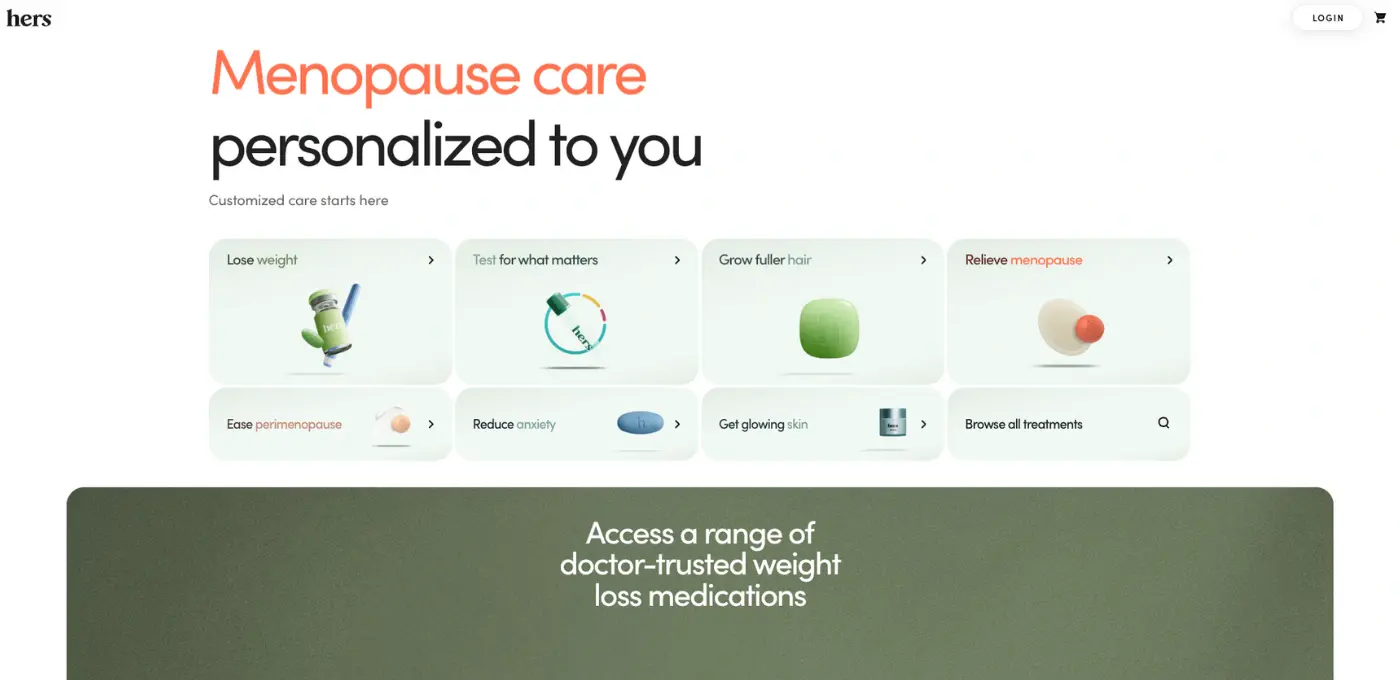
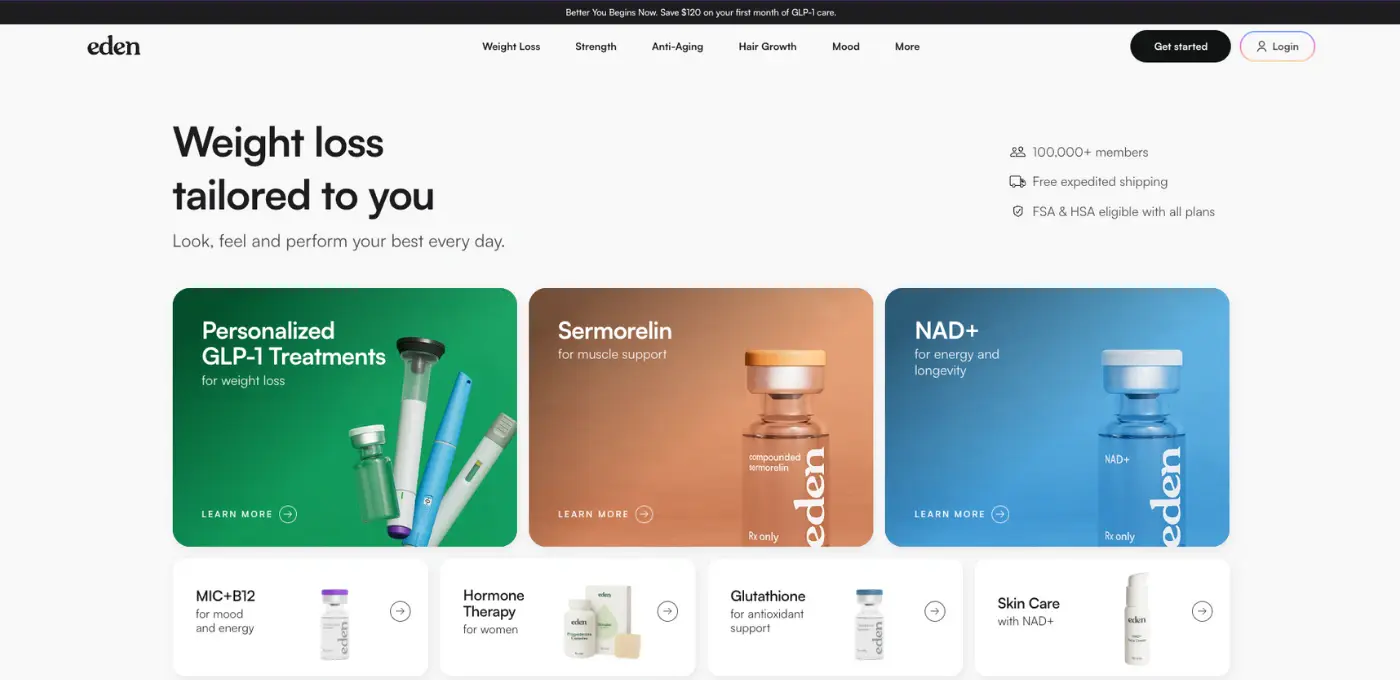
hers and Eden take contrasting approaches to women's weight loss: hers as a multi-category wellness platform offering weight loss alongside hair, skin, and reproductive health treatments, pricing semaglutide at $199/mo with oral GLP-1 options from $149/mo, while Eden works on weight loss alone. Eden's most recent price on file with us is $129/mo, dating to May 2026, and its weight loss listing no longer appears in our rankings. This evidence-based comparison examines pricing, women-specific expertise, treatment quality, and which platform delivers better value for women seeking significant weight reduction through semaglutide or tirzepatide.
Overview: Women's Wellness Platform vs Weight Loss Specialist
hers and Eden occupy different strategic positions in women's health telehealth. hers operates as a women's wellness platform offering treatments across multiple categories: weight loss, sexual health, hair loss, skincare, mental health, and birth control. The platform launched as the women's counterpart to hims, leveraging the same infrastructure and brand recognition. Eden focuses exclusively on weight loss through GLP-1 receptor agonists for both men and women, positioning as an alternative to multi-category platforms.
The fundamental difference lies in service breadth versus specialization depth. hers built its business on making stigmatized women's health treatments accessible through discreet online consultations, initially emphasizing hair loss and sexual wellness before expanding into weight management and other categories. Multi-category platforms benefit from cross-selling and consolidated care but may lack deep expertise in specific treatment areas. Eden argues concentrated focus on weight loss optimization produces better patient outcomes.
Both platforms employ board-certified healthcare providers and operate under HIPAA-compliant telemedicine regulations. According to
Federation of State Medical Boards guidelines, appropriate patient-provider relationships can be established through telehealth for obesity treatment when proper medical evaluation and ongoing monitoring occur. hers conducts streamlined consultations emphasizing treatment access across multiple categories, while Eden emphasizes full weight loss assessments integrating metabolic evaluation and nutritional planning.
This comparison examines how the established multi-category women's health leader stacks up against the weight loss specialist across dimensions critical to women seeking significant weight reduction: pricing competitiveness, treatment protocols, support quality, medical oversight, and long-term outcomes. For women specifically pursuing weight loss, the question becomes whether hers' brand recognition and multi-category convenience deliver better value than Eden's concentrated weight loss expertise, or whether focus justifies choosing a single-purpose platform over a wellness brand.
Cost Analysis: Multi-Category Premium vs Single-Focus Value
hers pricing for weight loss mirrors the hims structure with costs varying by medication type. Oral GLP-1 options begin at $149/mo for women who prefer not to start with injections. Semaglutide is priced flat at $199/mo rather than stepped by dose, and hers describes its GLP-1 range as including name-brand FDA-approved options without price markups. These prices include provider consultations, prescription management, and medication delivery.
Eden employs competitive pricing designed to undercut generalist platforms while maintaining support. Eden's custom-dosed compounded semaglutide and tirzepatide last appeared in our data at $129/mo in May 2026. Set against the $199/mo hers charges for semaglutide, that is roughly $70 a month less, on a figure now more than a year old and attached to a listing we no longer rank. Eden's pricing includes nutritional counseling with registered dietitians, weight tracking tools, and ongoing support specifically focused on weight loss optimization.
Over a 12-month weight loss journey, cost differences compound significantly. Twelve months of the hers pen at $199/mo works out near $2,388 for medication alone, and close to $4,066 in the first year once the separate membership is counted, against about $1,548 at Eden's recorded price.
However, hers offers multi-category bundling unavailable at platforms. Women treating hair loss, acne, or other wellness concerns alongside weight management can consolidate care: hair loss treatments from $12.67/mo for minoxidil 2%, birth control from $12/mo, and mental health care from $49/mo, plus weight loss from $149/mo, all within a single platform and provider relationship. Hers' integrated, multi-condition model trades convenience against higher per-category costs.
Both platforms accept HSA/FSA payment for qualifying medical expenses. According to
IRS Publication 502, prescription medications for obesity (BMI ≥30) or overweight (BMI ≥27) with weight-related comorbidities qualify for health savings account reimbursement. Neither accepts insurance directly for GLP-1 weight loss treatment, standard across the telehealth industry. Eden's lower baseline pricing provides better value for weight-loss-focused women, while hers' multi-category access offers convenience for those managing multiple wellness concerns through a single platform.
Medication Options and Support: Broad Portfolio vs Weight Loss Optimization
hers offers tiered weight loss treatment starting with oral medications for women preferring non-injection options or who do not meet GLP-1 criteria. Metformin comes up most often for women dealing with polycystic ovary syndrome or insulin resistance, where it is prescribed off-label alongside its diabetes indication. A licensed provider decides whether it fits your case. Naltrexone-bupropion, sold as Contrave, works through appetite suppression. Neither platform publishes a price for it in our data. According to
FDA approval data, this combination produces average weight loss of roughly 4% over 12 months (individual results vary), less than GLP-1s but appropriate for women with contraindications to injectable medications.
The core hers weight loss offering is FDA-approved: oral Wegovy at $149/mo, the Wegovy pen at $199/mo and Zepbound at $299/mo, with no compounded GLP-1 listed anywhere on its weight loss page as of September 12, 2026. A Weight Loss Membership is billed separately on top, $39 the first month and $149/mo after. Semaglutide follows dose escalation from 0.25mg weekly to maximum 2.4mg weekly, while tirzepatide escalates from 2.5mg to 15mg weekly. The platform provides both formulations, enabling providers to recommend the option best suited to individual circumstances. Clinical evidence from
STEP trials showing semaglutide produces 14.9% average weight loss and
SURMOUNT trials demonstrating tirzepatide averaged up to 20.9% weight loss underpins these prescriptions.
Eden concentrates exclusively on GLP-1 medications for both men and women, offering compounded semaglutide and tirzepatide but not oral alternatives. The platform argues women seeking substantial weight loss should utilize the most effective medications rather than trying less potent options first. Providers conduct evaluations to determine GLP-1 appropriateness, select between medication options based on weight loss goals and tolerance concerns, and develop integrated treatment plans incorporating nutritional strategies optimized for women's physiology.
Treatment personalization differs between platforms. hers operates with standardized protocols minimizing consultation time - women receive medications at predetermined doses with adjustments based primarily on tolerance and side effects. Eden emphasizes individualized planning addressing factors particularly relevant to women: hormonal influences on weight and appetite, menstrual cycle effects on GLP-1 tolerance, nutrition needs during different life stages (perimenopause, postpartum), and psychological factors affecting eating patterns. According to Obesity Medicine Association guidelines, women-specific considerations improve treatment outcomes when appropriately addressed.
hers lists name-brand FDA-approved medications and nothing compounded, while Eden's listing names compounded semaglutide and tirzepatide only. Brand-name Wegovy carries a list price near $1,300-$1,400 monthly without insurance, but the manufacturer's own direct-pay pharmacy program is priced well under that, so ask which route applies before budgeting off the list figure. That gap has narrowed sharply, since FDA-approved semaglutide now starts at $149/mo direct from these platforms and compounded pricing no longer undercuts it by the margins quoted in 2024 and 2025. According to
FDA regulations on compounding, the shortage listings that opened this market are closed, tirzepatide coming off in December 2024 and semaglutide in February 2025. What is left is a prescription compounded for you against a clinical need your prescriber has documented. Eden describes its pharmacies as both 503A and 503B and does not name them.
Patient Journey: Quick Access vs Structured Evaluation
hers consultations follow the platform's rapid-access model established across all service categories. Women full online questionnaires covering weight history, BMI, previous diet attempts, medical conditions, current medications, and weight loss goals. The intake process takes 10-15 minutes and feeds into asynchronous provider review. Board-certified physicians or nurse practitioners evaluate submissions within 24 hours, approving appropriate candidates for treatment. Video consultations are available for additional fees though most proceed through text-based pathways.
The hers approach prioritizes convenience and speed. Women appreciate quick treatment access without scheduling appointments or navigating traditional healthcare bureaucracy. The platform provides basic dosing instructions and side effect information but less intensive education about managing weight loss during different menstrual phases, navigating plateaus, or addressing emotional eating patterns.
Eden implements thorough intake evaluations aligned with weight loss specialization and women's specific needs. Initial consultations include metabolic assessment, discussion of hormonal factors affecting weight (PCOS, thyroid function, perimenopause), evaluation of previous weight loss attempts and barriers specific to women's experiences, and collaborative goal-setting accounting for realistic timelines. Providers spend more time explaining how GLP-1 medications interact with female physiology, what to expect regarding appetite changes during menstrual cycles, and how to optimize results through nutrition and lifestyle strategies.
The onboarding at Eden includes access to registered dietitians who provide meal planning guidance tailored to women's nutritional needs, strategies to minimize GLP-1 side effects through food timing and composition, maintaining adequate protein and calcium intake despite reduced appetite, and addressing common challenges like social eating pressures and emotional triggers.
Follow-up care intensity differs substantially. hers conducts check-ins aligned with prescription refills, primarily assessing tolerance and determining dose escalation readiness. The platform operates reactively - women initiate contact when questions arise rather than receiving proactive outreach. Eden schedules regular follow-ups including weight checks, discussion of non-scale victories (energy, mobility, clothing fit), side effect management particularly around menstrual cycles, and treatment optimization. The monitoring accounts for women-specific factors affecting weight loss success.
Medical Oversight: Standard Screening vs Women-Focused Surveillance
hers implements appropriate safety screening for GLP-1 medications, asking about contraindications including personal or family history of medullary thyroid cancer, multiple endocrine neoplasia syndrome, pancreatitis history, pregnancy, and breastfeeding. According to FDA boxed warnings, these represent absolute contraindications to semaglutide and tirzepatide. The platform excludes inappropriate candidates and provides standard safety information about symptoms requiring immediate medical attention, though screening does not specifically address women-specific concerns beyond pregnancy.
Baseline laboratory testing is not routinely required or facilitated through hers for weight loss treatment. The platform relies on patient-reported medical history rather than objective lab data. Women with PCOS, thyroid disorders, insulin resistance, or other metabolic conditions would benefit from pre-treatment metabolic panels, hormone testing, and lipid profiles that hers does not systematically include. Women wanting baseline assessment must coordinate separately with primary care providers or request labs independently.
Eden recommends baseline labs particularly for women with hormonal or metabolic conditions, though specific requirements vary by individual circumstances. The platform can facilitate lab orders through Quest Diagnostics or LabCorp for complete metabolic panel, lipase, hemoglobin A1c, thyroid function tests (TSH, free T4, free T3), hormone panels if relevant, and lipid profiles. Providers review results and address any abnormalities before prescribing. This approach aligns with Endocrine Society recommendations for baseline metabolic assessment in obesity pharmacotherapy.
Ongoing monitoring protocols reflect platform focus differences. hers tracks basic parameters: weight change, tolerance to current dose, gastrointestinal side effects, and readiness for dose escalation. The monitoring does not specifically account for menstrual cycle effects on GLP-1 tolerance or hormonal fluctuations affecting weight and appetite. Eden conducts more systematic surveillance including regular weight measurements, tracking of menstrual patterns and medication tolerance variations, monitoring for cycle-related side effect changes, and periodic reassessment of metabolic parameters for women with underlying conditions.
Eden describes its pharmacies as both 503A and 503B and does not name them. hers has no compounded GLP-1 on its weight loss menu to name a facility for. According to
FDA regulations on 503B facilities, registered 503B outsourcing facilities must meet current good manufacturing practice standards and are inspected by the FDA, while 503A pharmacies are licensed by state boards and are not subject to those requirements. Eden does not publish its compounding partners, so you cannot independently verify which facility would fill a compounded prescription.
Weight Loss Results: Brand Recognition vs Women-Focused Support
Weight loss outcomes depend primarily on reaching therapeutic medication doses, adherence, and lifestyle factors rather than platform choice. Eden provides compounded semaglutide and tirzepatide while hers prescribes the FDA-approved originals, which averaged 14.9% (STEP 1) and up to 20.9% (SURMOUNT-1) body weight loss in trials; compounded versions are not FDA-approved and have not been reviewed by the FDA for safety, effectiveness, or quality, and individual results vary. Individual results vary based on starting weight, metabolic factors including hormonal influences, behavioral adherence, and tolerance enabling dose escalation.
hers patients report weight loss results generally consistent with clinical trial data when able to tolerate therapeutic doses. Reviews describe 25-50+ pound reductions over 6-12 months for adherent users, aligning with
STEP trial outcomes.
Eden users describe similar magnitude weight loss but reviews emphasize feeling better supported throughout the process with women-specific guidance. Patients frequently mention dietitian consultations addressing concerns about maintaining adequate nutrition while breastfeeding, managing GLP-1 side effects around menstrual cycles, navigating weight loss during perimenopause, and addressing emotional eating patterns.
Treatment persistence significantly affects long-term outcomes. Research shows
GLP-1 discontinuation rates of 50-70% by 12 months in real-world settings due to side effects, cost concerns, or perceived inadequate results. Platforms providing better education about women-specific challenges, side effect management accounting for hormonal fluctuations, and realistic expectation-setting for women's typical weight loss patterns may improve persistence. Eden's focused support potentially reduces discontinuation versus hers' generalized approach.
Long-term value extends beyond initial weight loss to post-medication maintenance. Both platforms face the challenge that
significant weight regain occurs when GLP-1 medications stop without sustainable lifestyle habits. Eden's emphasis on building women-specific healthy behaviors - managing stress eating, navigating social pressures, maintaining nutrition during different life phases - may provide better foundation for post-treatment maintenance. hers' medication-focused approach may leave women less prepared for transitioning off pharmacotherapy, though self-directed individuals may succeed independently regardless of platform.
How We Compared Hers vs Eden
Our Comparison Methodology
This comparison is based on comprehensive analysis of clinical protocols, pricing structures, service models, and treatment approaches from both platforms.
Clinical Evidence: Weight loss treatment recommendations reference FDA-approved GLP-1 medication information (FDA Wegovy Label) and clinical efficacy data from The New England Journal of Medicine.
Pricing Analysis: Pricing reflects the rates last recorded in our provider database; providers change prices frequently, so confirm current pricing directly at checkout.
Service Verification: Platform capabilities, provider credentials, medication sourcing, and treatment protocols were evaluated through detailed review of service offerings and models.
This comparison is written by our own editorial team, and ManyTreatments is paid an affiliate commission by most of the providers listed here when you buy through a link on this page. Payment for placement, for a rating, or for a listing is not something we accept. What we will not claim is that commissions have never influenced anything, because that would be a statement about our own conduct we cannot evidence. Our goal is to provide evidence-based comparison to help you make informed weight loss treatment decisions.
Final Verdict: Hers vs Eden
Choose hers if: You need women's health treatments across multiple categories (weight loss, hair loss, acne, sexual health, birth control) and value managing everything through a single platform despite higher per-category costs. The multi-category approach works well for women treating several wellness concerns simultaneously who prefer consolidated provider relationships and unified account management. hers also makes sense if brand recognition and established scale provide you comfort, even though the weight loss service specifically may not match specialist competitors in women-focused support quality or cost competitiveness.
Choose Eden if: Weight loss is your primary or sole health concern and you want expertise with women-specific focus, full support, and competitive pricing exclusively optimized for weight loss outcomes. Eden's recorded $129/mo undercuts the $199/mo hers charges for semaglutide, and its custom dosing, free consults and round-the-clock messaging suit a single-goal approach. Do treat that $129 as a May 2026 reading rather than a live quote. Across a year those two rates differ by roughly $840, enough to make Eden worth a direct price check if weight reduction is your main aim.
The Bottom Line: hers excels at multi-category convenience for women juggling various wellness needs, while Eden dominates in weight loss value with women-focused expertise. If you primarily want weight loss treatment as a woman, Eden delivers better pricing, deeper women-specific guidance, and focused knowledge about hormonal and life-stage factors affecting success. A yearly gap that size counts for more than brand familiarity, with the caveat that hers is the one carrying a currently verified price. Only choose hers for weight loss if you genuinely need their other women's health services and are willing to pay a premium for consolidated multi-category access.
Frequently Asked Questions
Which platform offers better pricing for women seeking GLP-1 weight loss?
Eden provides consistently lower costs: Eden's compounded semaglutide and tirzepatide were last on file at $129/mo in May 2026. hers lists FDA-approved semaglutide at $199/mo for the pen and $149/mo for the oral kit, plus a Weight Loss Membership charged separately at $39 the first month and $149/mo after (checked September 12, 2026). Once the hers membership is counted the annual gap is wider than the sticker prices suggest, and Eden's figure is the older reading on a listing that has since left our rankings. Eden also includes women-focused nutritional counseling and support in base pricing that hers does not provide at the same depth. However, hers offers multi-category bundling for women treating hair loss, acne, or other wellness concerns alongside weight management, which may justify higher per-category costs if you need multiple services.
Does either platform specialize in women-specific weight loss challenges?
Eden pays closer attention to women-specific factors affecting weight loss including hormonal influences (PCOS, thyroid, perimenopause), menstrual cycle effects on GLP-1 tolerance and appetite, nutritional needs during different life stages, and psychological factors particularly relevant to women. The platform's dietitians and providers address concerns like managing side effects around periods, maintaining nutrition while breastfeeding, and navigating weight loss during hormonal transitions. hers operates with more generalized protocols that do not specifically account for women's unique physiological and hormonal considerations beyond basic pregnancy screening. If women-specific expertise matters to you, Eden delivers substantially more value. If you want straightforward medication access without the extra support, hers works adequately.
Can I get other women's health treatments at Eden like I can at hers?
No, Eden focuses exclusively on weight loss for both men and women and does not offer treatments for hair loss, acne, sexual health, birth control, or other women's wellness categories that hers provides. If you want weight loss treatment alongside other women's health services, you would need multiple platforms - for example, hers for hair loss and skincare plus Eden for weight loss - or consolidate everything at hers despite higher weight loss costs. The multi-category convenience at hers appeals to women managing several wellness concerns through a single platform. Weight-loss-focused women without other telehealth needs get better value from Eden's single-service focus and lower pricing.
Are the medications the same quality at both platforms?
Only Eden offers compounded semaglutide and tirzepatide here; hers prescribes the FDA-approved originals. Eden describes its pharmacies as both 503A and 503B and does not name them, so you cannot check which facility would fill your prescription. Compounded GLP-1s are not FDA-approved and are not reviewed by the FDA for safety, effectiveness, or quality. The clearest difference is regulatory: an FDA-approved product has been reviewed for safety, effectiveness and quality, and a compounded one has not. The platforms differ in women-specific support, pricing, and service rather than medication quality itself.
Which platform provides better support for managing side effects as a woman?
Eden offers fuller support for managing GLP-1 side effects with attention to women-specific patterns. The platform helps women understand how side effects may vary with menstrual cycles, provides nutritional strategies tailored to women's needs for managing nausea and maintaining adequate nutrition, and addresses concerns particularly relevant to women like staying hydrated during periods or managing symptoms while breastfeeding. hers provides standard side effect information and access to providers but does not specifically address hormonal influences on medication tolerance or women-specific management strategies. For basic side effect management, either platform works. For women wanting guidance that accounts for their physiology, Eden delivers better support.
Should I choose based on brand recognition or women's-health expertise?
This depends on what you value more: hers offers brand recognition as part of the established hims/hers family, multi-category convenience if you need treatments beyond weight loss, and established scale. Eden provides weight loss expertise with a women-specific focus, richer support addressing hormonal and life-stage factors, and lower costs for GLP-1 medications. If you are treating multiple wellness concerns and value consolidated care despite higher per-category costs, hers makes sense. If weight loss is your primary goal, Eden's recorded rate came in around $840 a year below the hers injection tier, which makes it worth pricing directly to see whether that still holds. Brand recognition does not equal better outcomes for weight loss specifically where focused expertise and women-specific knowledge matter.
Editorial Note: Researched and edited by our editorial team. AI tools assist with initial research and drafting; all content is fact-checked and edited by humans before publication. Learn more about our editorial standards