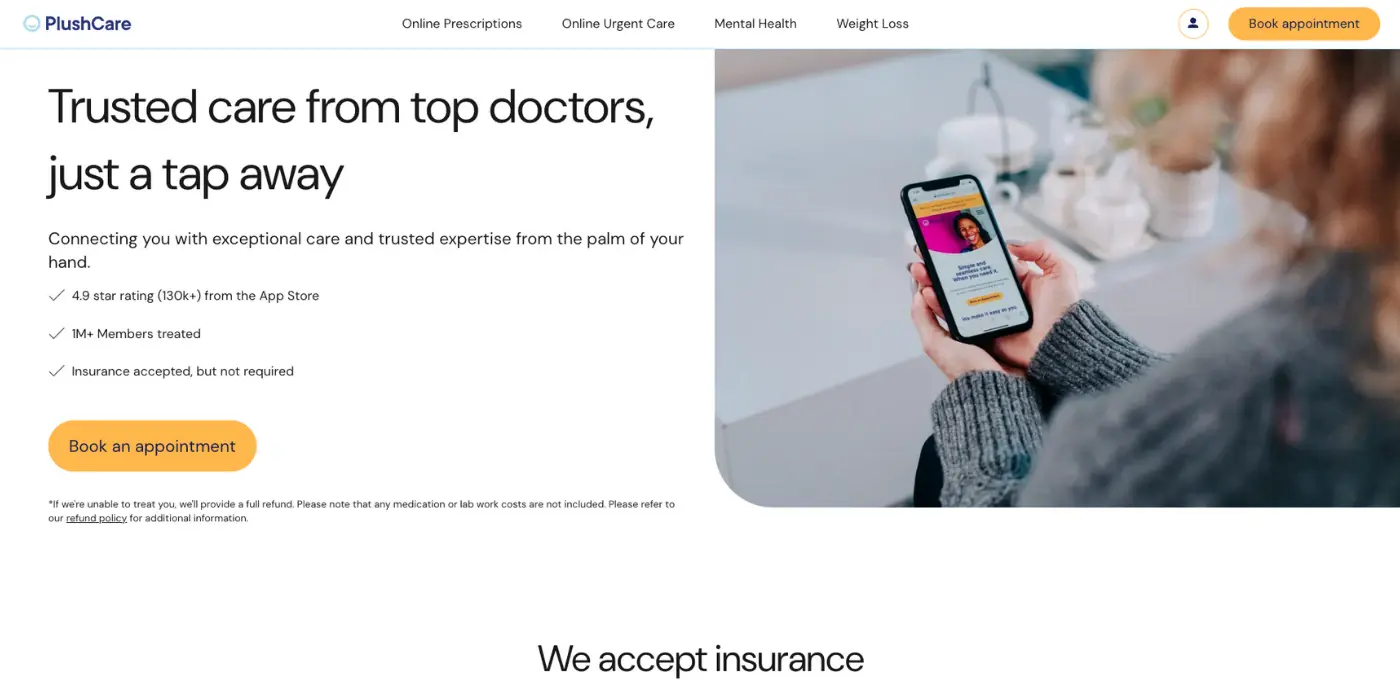
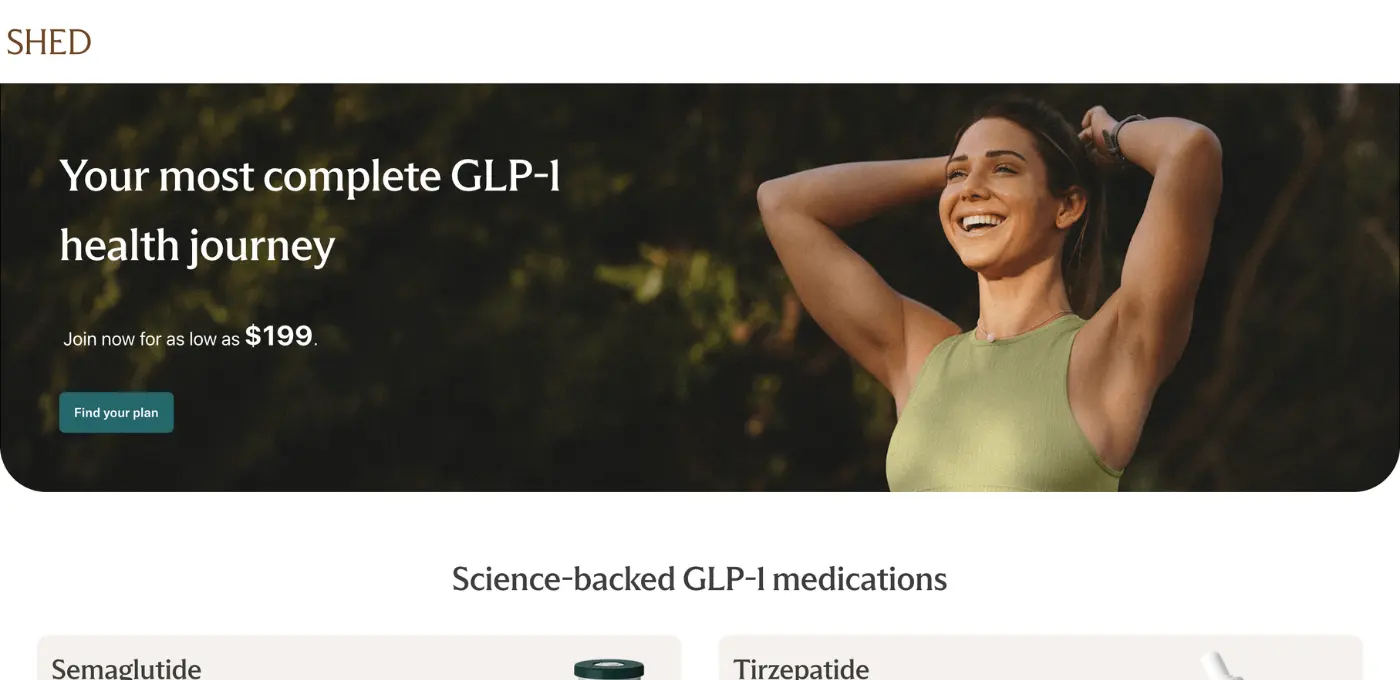
PlushCare is a comprehensive primary care platform that accepts insurance, while Shed is a GLP-1 weight loss platform with a conditional 120-day money-back guarantee. If insurance coverage matters, this comparison is critical.
Platform Overview
PlushCare is a primary care telehealth platform that has expanded into GLP-1 weight loss treatment, offering visit-based pricing last recorded at $129 per visit plus medication costs (May 2026) and accepting insurance for many services - PlushCare isn't currently shown in our weight loss provider rankings, so confirm current pricing directly. Unlike GLP-1 specialists, PlushCare operates as an everyday primary care provider that can address weight loss alongside annual physicals, chronic disease management, mental health referrals, and other primary care needs. The platform's insurance acceptance is a significant differentiator for patients who want to apply coverage toward their weight loss treatment costs. PlushCare's network of board-certified physicians provides standard-of-care prescribing for GLP-1 medications. The FDA's GLP-1 approval framework applies to PlushCare's prescribing protocols as with all licensed providers.
Shed is a GLP-1 weight loss specialist that does not accept insurance but delivers a more specialized weight loss program from $159 per month on a 12-month term (tirzepatide from $239, as of August 2026), with built-in weight loss coaching and a 120-day money-back guarantee if you do not lose 5% of your weight, subject to eligibility, required check-ins and adherence to the program. Shed's specialist model allows deeper weight-loss-specific program design than a primary care generalist platform like PlushCare can provide. The
CDC's weight management research supports the specialist model Shed employs, particularly for patients whose primary health goal is meaningful, sustained weight reduction.
Pricing Comparison
PlushCare's visit-based model (last recorded at $129 per visit, May 2026) can reduce consultation costs for eligible patients - particularly if your insurance covers telehealth visits, in which case your out-of-pocket cost could be far lower - though medication costs are separate. Insurance coverage for weight loss treatment varies by plan, but patients with employer-sponsored coverage that includes GLP-1 treatment or telehealth visits may find PlushCare dramatically reduces their out-of-pocket costs. If you have no insurance coverage, PlushCare's pricing is competitive but the specialist coaching and refund term at Shed may represent better value.
NIH research on access barriers identifies cost as the single largest obstacle to GLP-1 treatment initiation.
Shed's from-$159 per month pricing (12-month term) runs on a different billing model than PlushCare's per-visit charges, so totals aren't directly comparable, but the included coaching and the 120-day refund term if you do not lose 5% of your weight, with eligibility, check-in and adherence conditions are things PlushCare's primary care model does not include. If you are paying out of pocket, that refund path is part of the calculation, while PlushCare provides GLP-1 access within a primary care framework without a comparable term. If you cannot use insurance and are paying the full cost, weigh Shed's guarantee conditions and coaching against PlushCare's lower pricing.
Medication Options and Quality
PlushCare's primary care model means it can prescribe both branded GLP-1 medications (Wegovy, Ozempic, Zepbound) and compounded versions, potentially including insurance-covered branded options that are unavailable through most telehealth-only platforms. Access to branded medications through insurance channels is a significant advantage for covered patients, as branded GLP-1 drugs undergo more rigorous manufacturing standards than compounded alternatives. PlushCare physicians also manage the prior authorization process for insurance coverage of branded medications, which most GLP-1 telehealth specialists are not equipped to handle.
NEJM semaglutide trial data applies equally to branded and properly compounded formulations.
Shed provides semaglutide and tirzepatide through licensed compounding pharmacies, with medication management integrated into the weight loss coaching program. The platform does not accept insurance and does not prescribe branded GLP-1 medications, focusing instead on high-quality compounded options at the weight loss program price point. Shed's medication management is effective and appropriate for most patients, and tirzepatide's 20%+ average weight loss in
NEJM trials demonstrates the clinical power of the medications it prescribes.
Medical Team and Support
PlushCare's network of board-certified physicians provides primary care-level support that extends well beyond weight loss management. Patients can address weight loss alongside other health conditions, get referrals, order labs, and receive full-scope primary care through the same platform. This breadth of clinical support is valuable for patients whose weight is linked to other manageable conditions. However, the weight-loss-specific coaching depth at PlushCare is limited compared to specialist platforms - the primary care model prioritizes breadth over weight-loss-specific depth. Published research suggests that weight-loss-specific behavioral support produces better adherence than general primary care follow-up.
Shed's medical support combines licensed physician and nurse practitioner clinical oversight with weight loss coaches who are the primary ongoing contact for program patients. This coaching model provides structured behavioral support that primary care providers are not designed or resourced to deliver. The
American Association of Clinical Endocrinology explicitly recommends combined pharmacological and behavioral treatment as the standard for obesity management - a model Shed has built into every patient's program through its coaching infrastructure.
Weight Loss Approach and Programs
PlushCare's weight loss approach follows primary care best practices, which include GLP-1 prescribing for appropriate patients, lifestyle counseling, and referral to additional support resources as needed. The primary care model is not specialized - weight loss is one of many conditions PlushCare manages, and the program depth is calibrated for a general patient population rather than weight-loss-intensive program design. Patients who want seamless integration of their weight loss treatment into broader primary care management will find PlushCare's model the most convenient option.
Shed's weight loss approach pairs GLP-1 medication with coaching and a 120-day money-back guarantee if you do not lose 5% of your weight, subject to eligibility, required check-ins and adherence to the program. The program is structured, goal-directed, and specifically designed for patients whose primary health objective is meaningful weight reduction through GLP-1 treatment.
User Experience and Satisfaction
PlushCare users appreciate the convenience of full-service primary care through a telehealth interface, and those with insurance coverage particularly value the ability to apply their benefits to weight loss treatment. The platform's user experience is polished and its physician network is large, meaning appointment availability is generally good. Patients managing multiple health conditions find the consolidated primary care model extremely convenient. Some patients note that the weight-loss-specific coaching and program management features are less developed than specialist platforms, which is an expected limitation of the primary care model.
Reviewers describe a focused experience shaped by the coaching model. The platform's weight-loss-specific design means progress tracking, coaching interactions, and program milestones are all purpose-built for the treatment goal. If you are paying out of pocket, Shed's coaching model and refund term are a different package from PlushCare's primary care approach.
How We Compared PlushCare vs Shed
Our Comparison Methodology
This comparison is based on analysis of pricing structures and service models from both platforms.
Clinical Evidence: Weight loss treatment recommendations reference FDA-approved GLP-1 medication information (FDA Wegovy Label) and clinical efficacy data from The New England Journal of Medicine.
Pricing Analysis: Pricing reflects the rates last recorded in our provider database; providers change prices frequently, so confirm current pricing directly at checkout.
Service Verification: Platform capabilities, provider credentials, and service quality were evaluated through detailed review of service offerings.
How we get paid, plainly: most providers on this page pay ManyTreatments an affiliate commission when you buy through our links. No provider buys a position, a rating, or a listing here. We stop short of telling you commissions have never shaped anything on this site, since we cannot put evidence for that in front of you. Our goal is to provide evidence-based comparison to help you make informed weight loss treatment decisions.
Final Verdict: PlushCare vs Shed
Choose PlushCare if: You have insurance coverage that can be applied to GLP-1 treatment, want access to branded Wegovy or Zepbound through insurance prior authorization, or need full primary care management alongside your weight loss treatment. PlushCare's insurance acceptance and primary care breadth make it the stronger choice for insured patients.
Choose Shed if: You are paying out of pocket for weight loss treatment and want a specialist program with a conditional 120-day money-back guarantee. Shed's 120-day money-back guarantee if you do not lose 5% of your weight, subject to eligibility, required check-ins and adherence to the program and hands-on coaching are weight-loss-specific features PlushCare's primary care approach does not include.
Bottom line: PlushCare and Shed serve complementary patient profiles. Insured patients should explore PlushCare's coverage options first, as insurance can dramatically reduce the net cost advantage. If you are uninsured and paying out of pocket, Shed's specialist program with its refund term is the more structured option.
Editorial Note: Researched and edited by our editorial team. AI tools assist with initial research and drafting; all content is fact-checked and edited by humans before publication. Learn more about our editorial standards