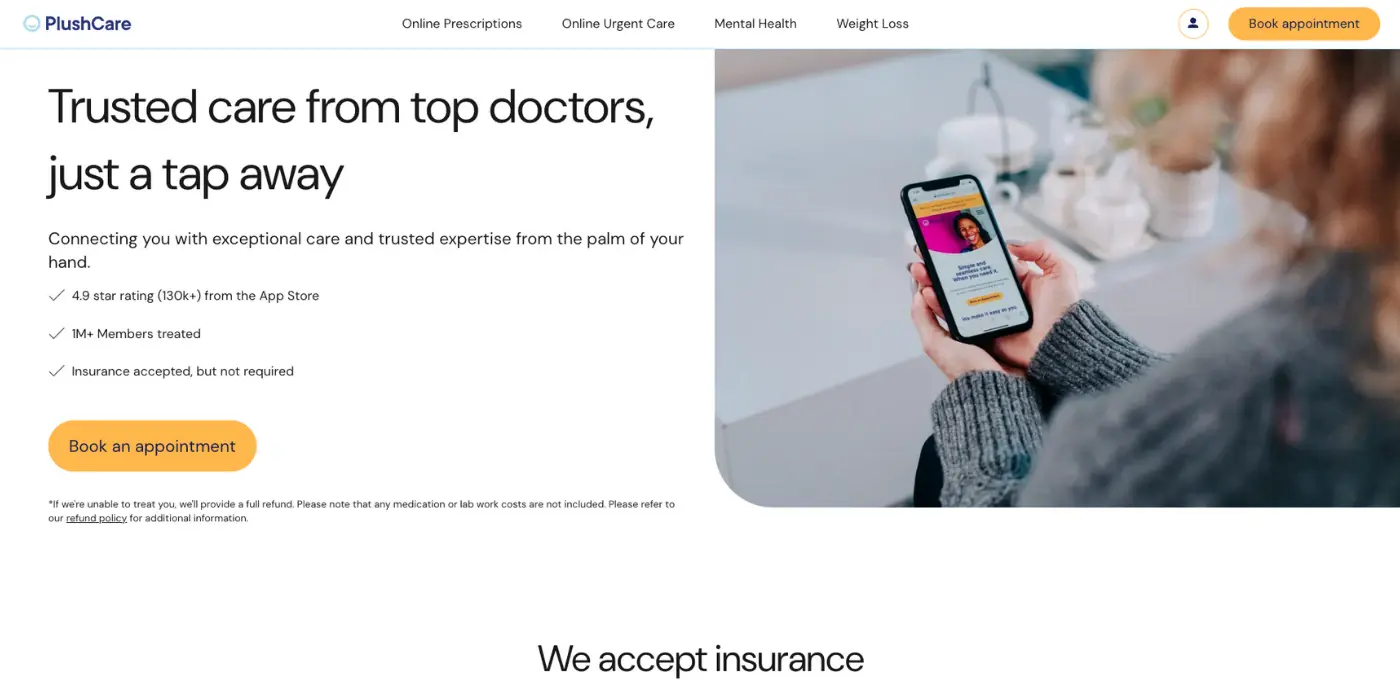
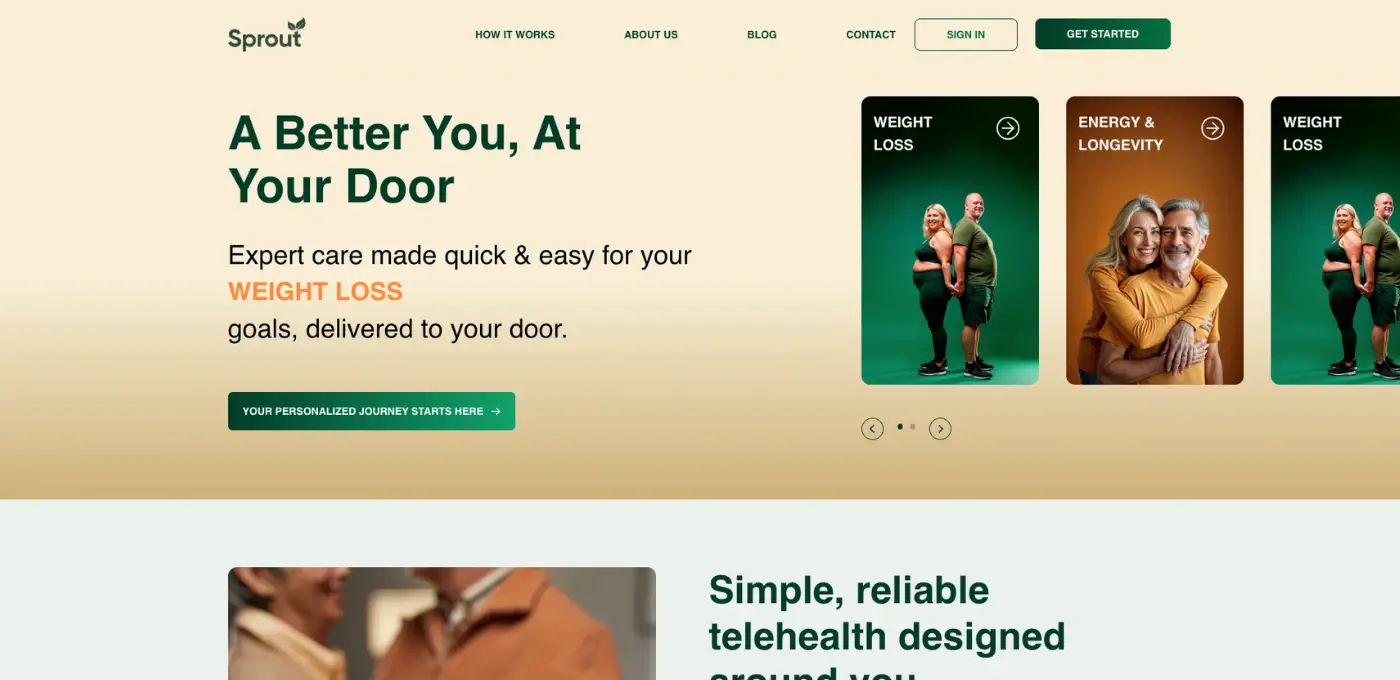
PlushCare and Sprout represent different approaches to weight loss telehealth - physician-led primary care with insurance integration versus value-tier basic GLP-1 access. PlushCare offers board-certified physician consultations via video, integrated chronic disease management, and major insurance acceptance within a full primary care model at $149-299/month, while Sprout provides straightforward compounded GLP-1 access from $149/month for semaglutide and $199/month for tirzepatide, verified September 17, 2026, through basic asynchronous consultations. This comparison analyzes how insurance coverage, healthcare integration needs, and medical complexity decide which platform delivers better value for your weight loss treatment.
Platform Overview
PlushCare launched in 2014 as a primary care telehealth platform offering virtual urgent care, chronic disease management, mental health services, prescription management, and specialty consultations across a broad range of medical conditions. With 10+ years of history and focus on replacing traditional in-person primary care visits with high-quality virtual consultations, PlushCare positions itself as a full-service healthcare platform rather than a specialty provider.
The platform emphasizes same-day or next-day appointments with board-certified physicians via video consultations, acceptance of most major health insurance plans, and ability to manage a wide range of acute and chronic conditions from common colds to diabetes management to weight loss treatment. PlushCare serves all genders across multiple age groups with full-service primary care rather than specialized focus. For weight loss treatment, PlushCare charges $149-299/month depending on medication tier and insurance coverage, according to
GoodRx medication pricing data.
Sprout is a weight loss telehealth platform built around compounded GLP-1 access without premium service layers. We can't verify its founding date, operating history or funding from our data, so we won't rank it on track record. What our listing shows is compounded semaglutide from $149/mo and compounded tirzepatide from $199/mo, verified September 17, 2026, with basic clinical support but no lifestyle programming or primary care integration, according to
FDA semaglutide safety information.
The platform offers asynchronous consultations with nurse practitioners or physicians, compounded GLP-1 medications (semaglutide and tirzepatide options), and basic ongoing support focused on medication management. Sprout starts semaglutide at $149/mo and tirzepatide at $199/mo, verified September 17, 2026, with no published rate for higher doses, and serves multiple states with a straightforward transactional care model.
Service Scope and Healthcare Integration
PlushCare Primary Care: PlushCare offers full-spectrum primary care services including urgent care for acute illnesses, chronic disease management for conditions like diabetes and hypertension, mental health services, prescription refills, specialist referrals, lab order coordination, and preventive care. This scope enables integrated healthcare management where weight loss treatment coordinates with overall health status, existing medications, and chronic condition management.
For weight loss specifically, PlushCare physicians can integrate GLP-1 treatment with diabetes management, adjust blood pressure medications as weight changes, coordinate mental health considerations affecting eating behaviors, and manage the full spectrum of weight-related comorbidities within unified care model.
According to American Academy of Family Physicians guidelines, obesity management requires integration with primary care for comorbidity management, medication reconciliation, and longitudinal health monitoring - exactly PlushCare's model.
Sprout Single-Category Weight Loss Focus: Sprout offers exclusively weight loss treatment with compounded GLP-1 medications, providing no additional health categories or primary care services beyond basic GLP-1 access. The platform focuses on straightforward medication management - eligibility screening, prescription authorization, dosage escalation, and refill management - without lifestyle programming, comorbidity coordination, or integration with broader healthcare needs.
This narrow focus enables competitive pricing while maintaining basic quality standards, but eliminates healthcare integration benefits. Patients managing diabetes, hypertension, or other weight-related conditions must coordinate medications and treatment adjustments independently across multiple providers. Those taking multiple prescription medications cannot get medication reconciliation within single platform. For patients without comorbidities or complex health needs, this focused approach suffices. For those requiring integrated chronic disease management, the single-category limitation creates care coordination gaps.
Provider Model and Consultation Format
PlushCare Physician Video Consultations: PlushCare exclusively employs board-certified physicians with primary care training and licenses in multiple states. The platform offers synchronous video consultations as standard care model, enabling real-time diagnostic assessment, medication adjustments, health discussions during appointments. Physicians can order labs, provide specialist referrals, diagnose new conditions, and manage complex medication regimens within their full scope of practice.
For weight loss treatment, PlushCare physicians bring primary care perspective - considering how GLP-1s affect existing conditions, interact with other medications, and require monitoring for comorbidities. The physician-led video consultation model allows thorough medical history taking, physical assessment discussion, and full treatment planning. This approach particularly benefits patients with complex medical histories, multiple chronic conditions, or need for integrated healthcare management, according to
FDA semaglutide safety information.
Sprout Asynchronous Basic Consultations: Sprout employs nurse practitioners or physicians for asynchronous consultations focused on GLP-1 eligibility screening and medication management. The platform uses questionnaire-based assessment without standard video visits, enabling efficient processing but limiting health assessment. Providers review patient submissions and authorize prescriptions without routine real-time consultation, according to
CDC obesity classification criteria.
This transactional model works adequately for straightforward GLP-1 eligibility and dosage management but provides less clinical oversight than physician video consultations. Patients cannot discuss complex medical histories in depth during real-time appointments or receive integrated health counseling. For straightforward weight loss cases without comorbidities, this basic support level suffices. For patients needing coordinated chronic disease management or complex medication reconciliation, the limited consultation model creates gaps in comprehensive care.
Pricing and Insurance Coverage
PlushCare Insurance-Integrated Pricing: PlushCare accepts most major health insurance plans including Medicare, reducing out-of-pocket costs for consultations to typical copay amounts ($10-50 per visit depending on plan). For uninsured patients, physician consultations cost $99-129 per visit. Weight loss medication costs run $149-299/month for compounded GLP-1s, typically not covered by insurance but consultation costs covered.
This insurance integration provides significant value for insured patients - in-depth physician consultations for copay amounts rather than full cash-pay fees. Patients can use PlushCare as primary care provider with insurance benefits, accessing weight loss treatment within broader healthcare relationship. The ability to coordinate weight loss with diabetes management, blood pressure treatment, or other covered services under insurance creates additional value beyond standalone weight loss pricing.
Sprout Cash Pricing: Sprout charges cash-pay, starting at $149/mo for compounded semaglutide and $199/mo for compounded tirzepatide, verified September 17, 2026, which sits above the cheapest cash-pay options ($49-99/month) and below the coaching-heavy programs ($200-400+/month). Those rates cover basic consultations and medication at the starting dose, insurance acceptance is limited, and the service is primarily cash-pay.
Sprout's starting rates land inside PlushCare's $149-299 cash-pay range rather than below it, so Sprout is not automatically the cheaper path, and it comes without physician video consultations or primary care integration. Sprout also publishes nothing about what a higher dose costs, so ask for your quoted rate before you compare. If you are uninsured or on a high-deductible plan and want only basic weight loss treatment, Sprout is the simpler service to buy. If you are insured and could see a PlushCare physician for a copay while coordinating several health needs, Sprout's limited insurance acceptance and single-category focus cut its value.
Platform Maturity and Healthcare Quality
PlushCare Established Healthcare Infrastructure: With 10+ years of history since 2014 launch, PlushCare has developed mature healthcare delivery systems, strong regulatory compliance infrastructure, and proven ability to maintain quality standards. The platform maintains relationships with major insurance carriers, navigates complex healthcare regulations, and operates licensed physician networks across all 50 states with established credentialing and quality oversight systems.
PlushCare's longevity demonstrates business model sustainability, ability to maintain physician networks, and capacity to deliver consistent healthcare quality through market changes. The platform has established customer support systems, proven handling of insurance billing complexity, and track record managing clinical quality concerns. For patients seeking long-term primary care relationship including weight loss treatment, this maturity provides confidence in continued service availability and healthcare quality maintenance.
Sprout's Track Record Is Not Something We Can Verify: We can't confirm Sprout's founding date or how long it has been operating, so we won't rank it on maturity in either direction. Ask the company directly how long it has been shipping, and how it has handled regulatory change and supply, before you plan a long course around it.
Sprout's entry rates leave more margin for quality maintenance than ultra-budget competitors do, but they still buy efficiency rather than full clinical infrastructure. Weight loss treatment typically requires 12-24+ months of continuous medication access, which makes reliability an important consideration. Sprout's operating history is not something we can verify, so treat continuity as an open question and ask the company about it directly, according to
FDA GLP-1 safety warnings.
Clinical Support and Comorbidity Management
PlushCare Integrated Comorbidity Management: PlushCare provides clinical support for managing weight-related comorbidities within primary care model. Physicians can adjust diabetes medications as weight loss improves glycemic control, reduce blood pressure medications as cardiovascular risk factors improve, coordinate mental health treatment affecting eating behaviors, and manage the full spectrum of conditions influenced by weight changes.
This integrated management proves particularly valuable for patients with type 2 diabetes, hypertension, sleep apnea, or other weight-related conditions requiring medication adjustments as weight changes. Physicians can order labs to monitor metabolic markers, provide specialist referrals when needed, and coordinate full-service care plans addressing multiple interconnected health issues. The ability to manage weight loss within broader primary care relationship enables optimization of overall health outcomes beyond simple weight reduction.
Sprout Basic Weight Loss Support: Sprout offers standard provider messaging for medication adjustments and side effect reporting but provides minimal comorbidity management care coordination beyond basic GLP-1 monitoring. The platform focuses on weight loss medication management without integrated chronic disease care, lifestyle programming, or coordination with other health conditions, according to
FDA semaglutide safety information.
For patients experiencing medication side effects or needing dosage adjustments, Sprout provides adequate basic support. However, patients with diabetes requiring medication reduction as glycemic control improves, those with hypertension needing blood pressure medication adjustments, or individuals with multiple comorbidities must coordinate these changes through separate healthcare providers. This fragmented approach increases administrative burden and limits clinical optimization compared to integrated primary care models that manage all interconnected conditions within unified platform.
How We Compared PlushCare vs Sprout Health
This comparison analyzes PlushCare and Sprout based on service scope, provider credentials, healthcare integration, insurance coverage, maturity, and clinical support models.
Pricing Analysis:
- PlushCare: $149-299/month with insurance coverage for physician consultations, comprehensive primary care integration
- Sprout: cash-pay, compounded semaglutide from $149/mo and compounded tirzepatide from $199/mo, verified September 17, 2026, for basic GLP-1 access without integration
- Cost difference varies significantly based on insurance status, need for integrated care, and the dose Sprout quotes you, since it publishes only starting prices
Service Differentiation:
- PlushCare: Comprehensive primary care platform with physician-led video consultations and insurance integration
- Sprout: single-category GLP-1 access with basic asynchronous support
- Healthcare integration vs value-focused positioning
Quality Considerations:
- Maturity: 10+ years for PlushCare; not verifiable from our data for Sprout
- Provider model: Board-certified physicians with video visits vs basic asynchronous consultations
- Insurance value: Major carrier acceptance vs primarily cash-pay model
Final Verdict: PlushCare vs Sprout Health
Choose PlushCare if: You have health insurance that covers telehealth visits, need weight loss coordinated with diabetes or other chronic condition management, want board-certified physician consultations via video for care, require integrated primary care services alongside weight loss treatment, have complex medical history or multiple medications requiring coordinated oversight, value 10+ year of track record and established healthcare quality systems, or prioritize clinical support and insurance benefits over cost minimization.
Choose Sprout if: You are uninsured or on a high-deductible plan and want a published cash starting price, need only basic GLP-1 medication management without comorbidity coordination, have straightforward health without chronic conditions requiring integrated care, can manage with an asynchronous consultation model, want compounded semaglutide from $149/mo or compounded tirzepatide from $199/mo (verified September 17, 2026), accept that Sprout's operating history is not something we can verify, and are willing to ask what your own dose costs.
Bottom line: PlushCare and Sprout serve different needs - physician-led primary care with insurance integration versus value-tier basic weight loss service. PlushCare delivers more if you are insured, through coverage of physician consultations, integrated comorbidity management, clinical support, and a proven 10+ year track record. Sprout offers a published cash starting price, $149/mo for compounded semaglutide and $199/mo for compounded tirzepatide, verified September 17, 2026, for basic weight loss treatment, with adequate quality but limited integration and no published rate for higher doses. The right choice depends on insurance status, need for integration with chronic disease management, and medical complexity rather than a simple cost comparison. For a straightforward case paid in cash, Sprout is adequate. For a complex case or an insured one, PlushCare delivers better overall healthcare value through integration.
Editorial Note: Researched and edited by our editorial team. AI tools assist with initial research and drafting; all content is fact-checked and edited by humans before publication. Learn more about our editorial standards