MyStart Health and Sesame Care represent fundamentally different approaches to accessible weight loss treatment - one an ultra-budget startup offering compounded semaglutide at $169-219/month with minimal infrastructure and less than one year of history, the other an established healthcare marketplace connecting patients with independent providers at $350-700/month total costs with variable care quality. This detailed comparison analyzes pricing models, clinical support, medication formularies, and track records to help you evaluate extreme budget startup risk versus marketplace model flexibility for weight loss treatment.
Platform Overview
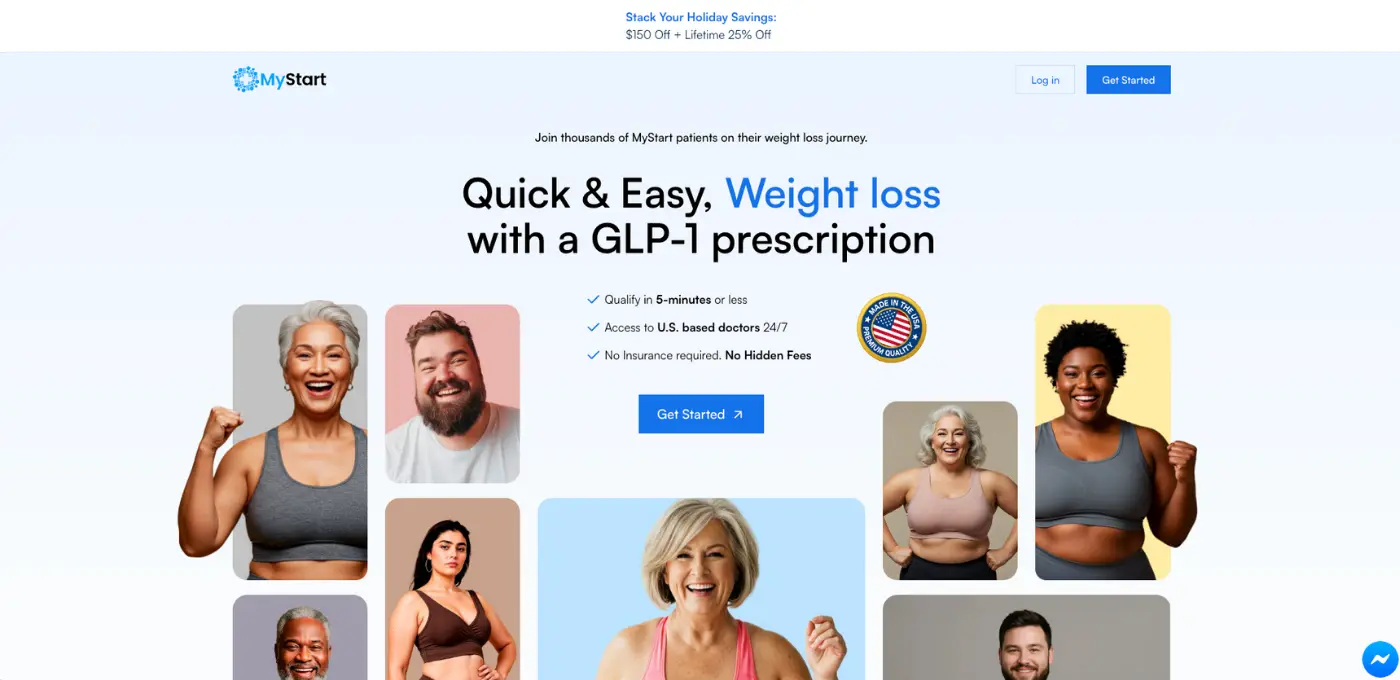
MyStart Health launched in 2023 as an ultra-budget weight loss telehealth platform attempting to deliver semaglutide prescriptions at the absolute lowest price point in the market. With less than one year of history, zero clinical staff listings, no lifestyle support, and prices starting at $169/month for compounded semaglutide, MyStart Health represents the extreme budget tier of telehealth weight management - prioritizing affordability above all other considerations including clinical supervision, education, and stability.
The platform offers exclusively semaglutide prescriptions through a purely transactional model with no medical weight management coaching, no nutritional guidance systems, no exercise programming, and minimal follow-up protocols. MyStart Health operates with the smallest known clinical footprint in the weight loss telehealth sector, raising significant questions about whether the operation can sustain itself, keep clinical quality consistent, and stay in business as a healthcare provider.
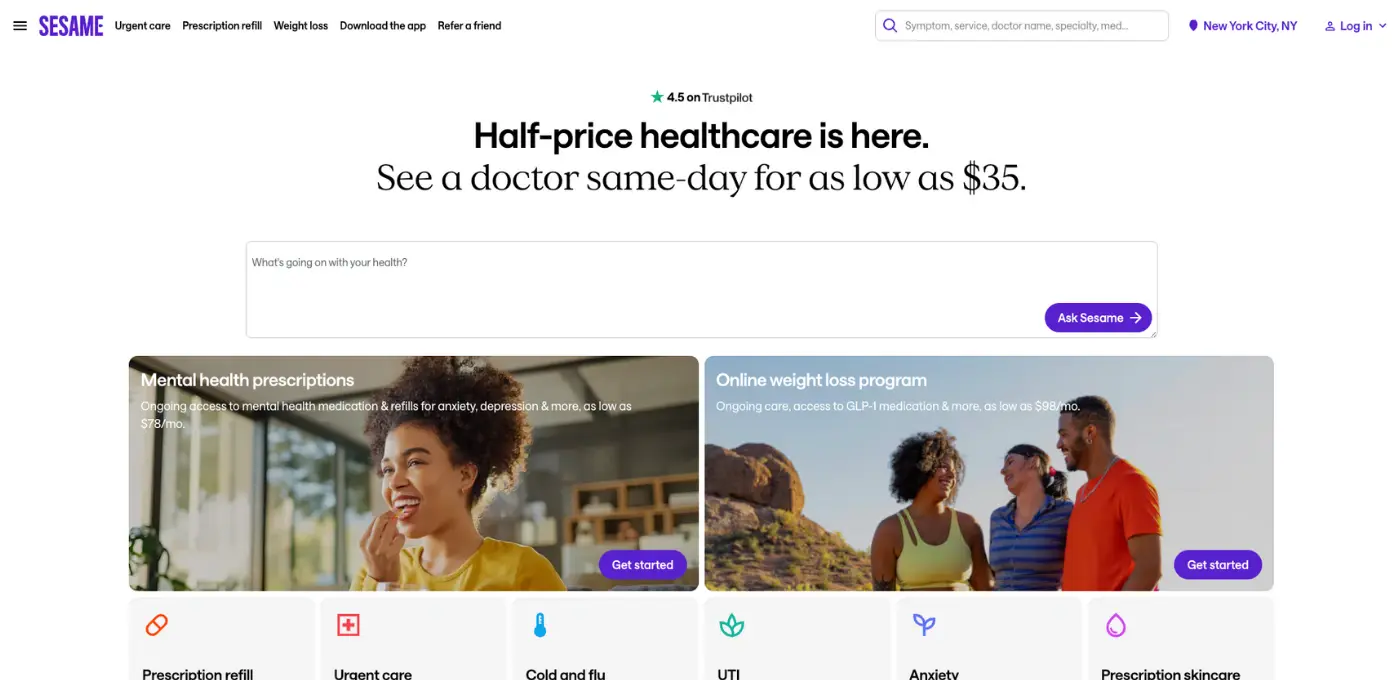
Sesame Care launched in 2019 as a marketplace-model healthcare platform connecting patients directly with individual providers for cash-pay services across multiple specialties. Unlike weight loss platforms, Sesame Care functions as a provider directory where independent clinicians list weight management consultations starting at $25-50 for initial visits, with medication costs and follow-up care negotiated separately with each provider.
For weight loss treatment specifically, Sesame Care offers access to hundreds of independent providers who may prescribe GLP-1 medications including semaglutide and tirzepatide, but with no standardized treatment protocols, no platform-level clinical review, no coordinated care pathways, and highly variable provider expertise. The marketplace model creates significant variability in clinical quality, medication costs ($300-600/month typically), and treatment approaches depending entirely on which individual provider a patient selects from the directory.
Pricing and Service Model Comparison
MyStart Health Ultra-Budget Pricing: MyStart Health charges $169-219/month for compounded semaglutide prescriptions with zero additional services included. This all-in pricing covers consultation, prescription, compounded medication, and shipping - representing the absolute lowest baseline cost in the weight loss telehealth market. However, the pricing reflects the absence of any clinical support: no medical coaching, no nutritional guidance, no lifestyle programming, and minimal follow-up care.
The platform offers no premium service tiers, no medication alternatives beyond compounded semaglutide, and no pathway to FDA-approved formulations. The ultra-low pricing strategy requires extreme efficiency that newer platforms often cannot sustain beyond initial funding rounds, raising questions about long-term price stability and service continuity for patients beginning multi-year weight loss treatment journeys.
Sesame Care Variable Marketplace Pricing: Sesame Care operates on a completely different model where patients pay providers directly for each service component separately. Initial weight loss consultations range from $25-50, with follow-up visits typically $40-80 depending on the individual provider. However, medication costs are entirely separate - patients must obtain GLP-1 prescriptions through external pharmacies at standard retail or compounded pharmacy pricing ($300-600/month for semaglutide, $500-900/month for tirzepatide).
Total monthly costs in the Sesame Care marketplace model typically range from $350-700+ depending on medication choice, provider consultation fees, and frequency of follow-up visits. While initial consultation costs are low, the unbundled pricing structure means patients face multiple separate transactions, unpredictable total costs, and significant price variation depending on which provider they select and which pharmacy they use for medication fulfillment.
Financial Implications: MyStart Health delivers the lowest upfront monthly cost at $169-219/month all-inclusive, creating a $180-530/month savings compared to typical Sesame Care total costs of $350-700/month. For patients with extreme budget constraints prioritizing minimum baseline cost, MyStart Health provides clear savings. However, these savings come with zero clinical support and maximum risk for a platform with less than one year history. Sesame Care costs more but provides access to experienced independent providers (though with no quality standardization) and flexibility in medication sourcing. Neither platform offers clinical support, lifestyle programming, or coordinated care pathways found in premium platforms - patients selecting either option are accepting minimal clinical oversight in exchange for lower costs.
Clinical Support and Care Coordination
MyStart Health Minimal Support Model: MyStart Health provides essentially transactional medical care with initial prescriber consultation and quarterly follow-ups focused exclusively on prescription renewal rather than full weight management. The platform offers zero medical coaching staff, no nutritional guidance systems, no behavioral health integration, no exercise programming, and no patient education resources beyond basic medication instructions.
Clinical oversight appears limited to prescription authorization and basic safety screening, with no evidence of coordinated multidisciplinary care, no systematic monitoring protocols, and no proactive patient support between quarterly medication renewals. For patients requiring guidance on nutrition strategies, exercise programming, behavioral modification, or side effect management, MyStart Health provides no infrastructure - patients must seek these services independently elsewhere at additional cost.
Sesame Care Provider-Dependent Support: Sesame Care's marketplace model creates extreme variability in clinical support quality depending entirely on which individual provider a patient selects. Some providers listed on Sesame Care may offer weight management including nutritional counseling and lifestyle coaching, while others provide only basic prescription services with minimal follow-up. There is no platform-level standardization, no quality assurance protocols, and no coordinated care pathways in place.
Patients must independently evaluate provider credentials, treatment philosophies, and support offerings through provider profiles and reviews. Follow-up care frequency, communication protocols, and support availability vary completely by individual provider, with some offering strong ongoing support and others providing only transactional prescription refills. The lack of platform-level clinical oversight means patients bear full responsibility for assessing provider quality and coordinating their own care.
Support Infrastructure Reality: MyStart Health offers consistently minimal support - patients know they will receive only transactional prescription services with nothing clinical layered on top. Sesame Care offers unpredictable support quality ranging from to minimal depending entirely on provider selection, with no platform guarantees. Neither option provides the systematic clinical support, multidisciplinary care teams, or coordinated lifestyle programming found in weight loss platforms charging $300-500/month. Patients prioritizing clinical support and structured programming should recognize that both MyStart Health and Sesame Care represent minimal-support models, though Sesame Care at least offers the possibility of finding experienced providers who provide deeper care.
Medication Access and Formulary Options
MyStart Health Compounded-Only Formulary: MyStart Health offers exclusively compounded semaglutide with no FDA-approved medication options, no tirzepatide access (compound or approved), and no alternative GLP-1 medications. The compounded-only formulary limits patient choice and provides no pathway to FDA-approved Wegovy or other brand-name medications regardless of clinical need, insurance coverage, or patient preference.
This single-medication strategy creates several limitations: patients who experience inadequate results with semaglutide cannot access tirzepatide alternatives, patients who prefer FDA-approved medications for quality assurance cannot obtain them through MyStart Health, and patients with insurance coverage for brand-name GLP-1 medications cannot utilize their benefits through this platform. The formulary inflexibility reflects the platform's extreme cost-cutting approach but limits clinical optimization for individual patient needs.
Sesame Care Provider-Dependent Formulary: Sesame Care providers can prescribe any FDA-approved or compounded GLP-1 medication based on their individual clinical judgment, potentially including semaglutide (Wegovy, compounded), tirzepatide (Zepbound, compounded), liraglutide (Saxenda), and other weight loss medications. However, medication access depends entirely on which provider a patient selects - some providers may offer formulary options while others prescribe only specific medications.
Patients must independently verify medication options with their selected provider before beginning treatment. Additionally, patients bear responsibility for medication fulfillment - obtaining prescriptions through external pharmacies at whatever pricing those pharmacies charge. This creates medication cost unpredictability and requires patients to navigate pharmacy options, insurance coverage, and compounding pharmacy selection independently without platform guidance or coordinated medication delivery systems.
Formulary Flexibility Analysis: Sesame Care offers significantly greater potential medication flexibility with provider-dependent access to both FDA-approved and compounded options across multiple GLP-1 medications. MyStart Health's compounded semaglutide-only approach severely limits clinical optimization. However, Sesame Care's flexibility comes with complexity - patients must independently verify medication options, coordinate pharmacy fulfillment, and manage medication costs separately from consultation fees. For patients specifically seeking tirzepatide access, budget-optimized FDA-approved medication options, or flexibility to transition between formulations based on clinical response, Sesame Care's marketplace model provides possibilities unavailable through MyStart Health. For patients accepting compounded semaglutide as their only option in exchange for minimum cost, MyStart Health's simplified single-medication approach reduces complexity.
Pay-Per-Visit Versus a Flat Monthly Number
As of August 2026, Sesame Care starts weight loss at $59/mo plus the cost of medication (9.2 Outstanding); MyStart Health's own record shows a flat $222/mo (8.7 Very Good), though MyStart Health isn't currently shown in our weight-loss provider rankings and that price was last verified in May 2026.
Sesame Care's structure means your total cost depends on which medication you're prescribed, while MyStart Health's advertised price, per its last-recorded listing, was meant to lock regardless of dose changes.
Sesame Care is also active across five categories with us, from mental health to womens health, while weight loss, MyStart Health's only category with us, isn't currently in our rankings.
Technology Platform and User Experience
MyStart Health Minimal Digital Experience: MyStart Health operates with a basic website focused exclusively on patient intake and prescription fulfillment. The platform offers no mobile application, no patient portal for ongoing care management, no integrated tracking systems for weight progress or medication adherence, and no digital tools for nutrition logging, exercise tracking, or lifestyle habit formation. The technology approach is purely transactional - facilitating initial consultation and quarterly prescription renewals without ongoing engagement.
Communication systems appear limited to email or phone for prescription-related matters, with no asynchronous messaging platforms, no chat support, and no digital tools for between-visit questions or side effect management. For patients expecting modern digital health tools, tracking systems, or integrated lifestyle management platforms, MyStart Health provides essentially no technology beyond basic prescription processing, according to
FDA GLP-1 safety warnings.
Sesame Care Marketplace Technology: Sesame Care operates a functional marketplace platform allowing patients to search provider directories, filter by specialty and location (or telehealth), view provider profiles with credentials and pricing, read patient reviews, and book appointments directly. The platform provides basic appointment scheduling, payment processing, and appointment confirmations, but ongoing care management occurs directly between patients and individual providers through whatever communication methods those providers use.
There is no standardized patient portal, no platform-level health tracking systems, and no integrated care coordination tools. After initial appointment booking, patients communicate directly with their selected provider through that provider's preferred methods (phone, email, personal patient portal if they have one). The technology focuses on marketplace discovery and initial connection rather than ongoing care delivery - the platform facilitates finding and booking providers but does not attempt full-spectrum digital health management.
Digital Experience Comparison: Both platforms offer minimal ongoing digital engagement. MyStart Health provides basic prescription processing without lifestyle tracking or patient engagement tools. Sesame Care provides marketplace discovery and appointment booking but no standardized care management platform. Neither offers the mobile applications, integrated tracking systems, automated medication delivery coordination, or digital lifestyle programming found in premium weight loss platforms. Patients prioritizing digital health tools, mobile app experiences, or integrated tracking systems will find both platforms lacking - these are minimal-technology models focused on basic service delivery rather than digital health innovation.
How We Compared Sesame Care vs MyStart Health
Our Comparison Methodology
This comparison analyzes pricing structures, clinical support models, medication formularies, and company backgrounds to evaluate MyStart Health and Sesame Care as weight loss treatment options. Our analysis prioritizes clinically-relevant differences that impact treatment safety, effectiveness, and patient experience.
Clinical Evidence: Weight loss treatment recommendations reference FDA Wegovy prescribing information for semaglutide 2.4mg, FDA Zepbound prescribing information for tirzepatide weight management, The Obesity Medicine Association Clinical Practice Statement for evidence-based treatment protocols, and Endocrine Society Obesity Guidelines for multidisciplinary care standards.
Pricing Analysis: Platform pricing verified through direct website review December 2024-January 2026. MyStart Health pricing confirmed at $169-219/month all-inclusive. Sesame Care consultation pricing ranges verified through marketplace provider listings ($25-80 per visit typical), with medication costs based on standard retail and compounded pharmacy pricing for GLP-1 medications. Total cost calculations include consultation fees, medication costs, and typical follow-up visit frequency.
Clinical Support Assessment: Support infrastructure evaluated through platform website review, disclosed clinical team information, stated care protocols, and comparison to Obesity Medicine Association standards for weight management. Analysis considers availability of medical coaching, nutritional guidance, behavioral health integration, exercise programming, and systematic monitoring protocols.
Formulary Verification: Medication offerings confirmed through platform websites and provider marketplace listings. MyStart Health formulary limited to compounded semaglutide only. Sesame Care medication access based on individual provider prescribing practices with no platform-standardized formulary.
Operational Assessment: Company history, funding status, leadership disclosure, clinical staffing, and market longevity evaluated through Crunchbase funding data, LinkedIn company profiles, website transparency, and public operational disclosures. Risk assessment considers longevity signals for multi-year treatment journeys.
Limitations: MyStart Health minimal disclosure limits in-depth platform assessment. Sesame Care marketplace model creates inherent quality variability - our analysis cannot predict individual provider service quality. Patients must independently evaluate provider credentials and care approaches. Neither platform provided formal response to methodology review. This analysis reflects weight loss treatment specifically and does not evaluate other healthcare services offered through Sesame Care marketplace.
Last updated: January 2026
Final Verdict: Sesame Care vs MyStart Health
Choose MyStart Health if: You have extreme budget constraints requiring the absolute lowest possible monthly cost ($169-219/month) and accept zero clinical support, maximum risk as a <1 year startup with an uncertain future, and compounded semaglutide-only formulary with no medication alternatives. This option is appropriate only for patients comfortable with purely transactional medical care, minimal provider oversight, and significant risk of platform closure or service disruption during multi-year weight loss treatment. The ultra-low pricing provides substantial savings but reflects the absence of nearly all clinical support and infrastructure found in full weight loss platforms.
Choose Sesame Care if: You prefer selecting your own independent provider from a marketplace of experienced clinicians, need potential access to multiple GLP-1 medication options (including tirzepatide) unavailable through MyStart Health, and value stability from an established 5+ year platform. Accept higher total costs ($350-700/month typically) and recognize that care quality varies completely by individual provider selection - you must independently evaluate provider credentials, treatment approaches, and support offerings. Appropriate for patients willing to invest time coordinating care with independent providers and managing separate medication fulfillment in exchange for greater medication flexibility and lower risk than newest ultra-budget startup platforms.
Bottom line: MyStart Health and Sesame Care represent fundamentally different models at opposite ends of the telehealth weight loss spectrum. MyStart Health offers absolute minimum cost through extreme simplicity - transactional prescription services with zero clinical support and maximum startup risk. Sesame Care offers a marketplace connecting patients with independent providers at higher costs but with an established platform, medication flexibility, and possibilities for better clinical support depending on provider selection. Neither provides the clinical support, coordinated lifestyle programming, or multidisciplinary care teams found in premium platforms. The decision depends primarily on budget constraints versus risk tolerance: patients with extreme budget limitations may accept MyStart Health's uncertainty and minimal support for $180-530/month savings, while patients prioritizing stability, medication options, and possibilities for better clinical oversight should choose Sesame Care despite higher costs and care coordination complexity. For most patients seeking reliable, supported weight loss treatment, both options represent compromises - full-service platforms charging $300-500/month deliver substantially better clinical depth and support worth considering despite higher costs.
Editorial Note: Researched and edited by our editorial team. AI tools assist with initial research and drafting; all content is fact-checked and edited by humans before publication. Learn more about our editorial standards