complete analysis comparing UrWay Health and Skinny.Rx across pricing, features, treatments, and user experience.
Platform Overview
UrWay Health launched in 2023 as a budget-tier weight loss platform emphasizing low-cost medication access through streamlined asynchronous care models and minimal provider overhead. The platform charges $99-$149/month for weight loss services including GLP-1 medications, positioning itself in the budget tier above ultra-budget competitors but substantially below mid-tier and premium platforms. With approximately 1-2 years of history, UrWay Health operates with limited track record and emerging business model fundamentals that have not yet proven long-term sustainability.
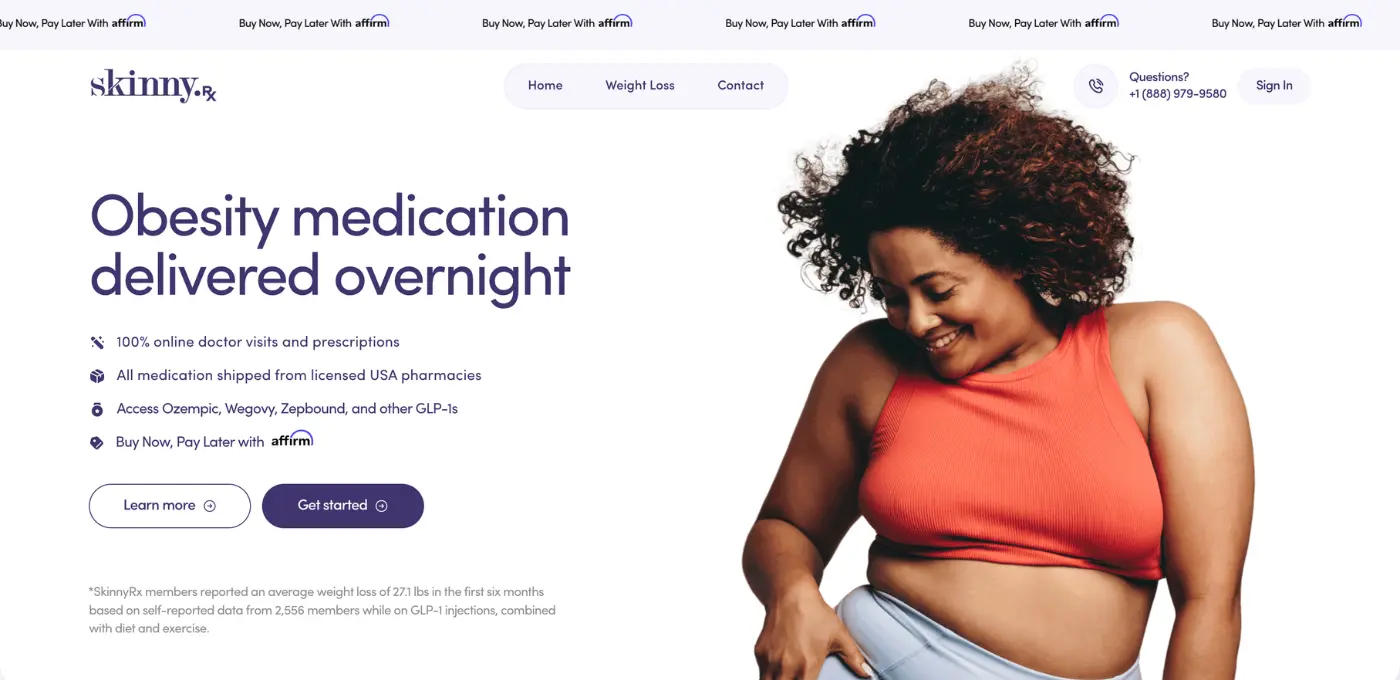
Skinny.rx launched in 2023 as an ultra-budget weight loss-only platform emphasizing extreme cost minimization over clinical quality or business sustainability. The platform offers the lowest pricing in telehealth weight loss ($49-$99/month) through minimal provider oversight, basic asynchronous care models, and infrastructure operating at or below break-even margins. With less than 2 years of history and no evidence of profitability or venture funding, Skinny.rx presents the highest risk in the weight loss telehealth category while appealing exclusively to cost-focused consumers willing to accept minimal clinical support and platform sustainability concerns.
This comparison examines two budget-focused startups launched the same year with similar maturity but different pricing strategies: UrWay Health's budget-tier approach ($99-149/month) versus Skinny.rx's ultra-budget extreme cost minimization ($49-99/month). The $600-900 annual cost difference reflects service quality, provider oversight, and infrastructure investment tradeoffs between these emerging platforms.
Clinical Quality & Provider Oversight Comparison
UrWay Health employs nurse practitioners and physician assistants for weight loss prescribing, operating through asynchronous questionnaire-based evaluations with limited synchronous consultation. The platform provides basic medical history screening, contraindication evaluation, and medication selection through standardized protocols designed for efficiency. Provider oversight is minimal compared to physician-led platforms but exceeds Skinny.rx's bare-minimum approach. UrWay Health conducts initial evaluations covering BMI, medical conditions, medication use, and treatment goals, though evaluation depth remains limited compared to complete physician-led assessments. Source: Telehealth clinical quality standards
Skinny.rx employs minimal provider oversight with basic asynchronous questionnaires and no evidence of physician involvement in prescribing decisions. The platform uses nurse practitioners or physician assistants with no disclosed specialization in obesity medicine, operating through automated approval systems that prioritize speed and cost minimization over clinical evaluation depth. Skinny.rx provides no evidence of full contraindication screening, drug interaction evaluation, or cardiovascular risk assessment beyond basic automated questionnaire logic. Clinical quality represents the primary cost-cutting mechanism enabling ultra-budget pricing. Source: Telehealth clinical protocols analysis
The clinical quality gap is moderate: Both platforms operate with mid-level provider models and asynchronous care, but UrWay Health provides more structured evaluation protocols and clinical oversight than Skinny.rx's bare-minimum approach. Neither platform offers physician-led care, specialist expertise, or in-depth clinical evaluation. Patients with complex medical histories, multiple conditions, or cardiovascular risk factors should consider higher-tier platforms with physician oversight rather than either of these budget-focused options.
Medication safety protocols differentiate these platforms modestly. UrWay Health conducts structured contraindication screening, basic drug interaction evaluation, and cardiovascular risk assessment through standardized protocols. Skinny.rx operates minimal safety evaluation through basic automated questionnaire screening with limited contraindication assessment. Both platforms present higher clinical risk than physician-led services, but UrWay Health's more structured protocols provide moderately better safety evaluation than Skinny.rx's minimal approach.
Source: FDA GLP-1 medication safety guidelinesPricing & Sustainability Analysis
UrWay Health charges $99-$149/month for weight loss services with medication included, representing budget-tier pricing substantially below mid-tier ($150-200/month) and premium platforms ($200-400/month) but above ultra-budget options. Annual costs reach $1,188-$1,788, positioning UrWay Health in the budget tier where unit economics remain uncertain. The pricing reflects reduced provider overhead, asynchronous care models, and infrastructure minimization, though margins appear less razor-thin than Skinny.rx's unsustainable levels. No insurance accepted for weight loss services.
Source: UrWay Health pricing structure 2025Skinny.rx charges $49-$99/month for weight loss services with medication included, representing the lowest pricing available in telehealth weight loss. Annual costs reach only $588-$1,188, creating $600-900 savings versus UrWay Health. The ultra-budget pricing reflects minimal provider oversight, bare-minimum infrastructure, and unit economics operating at or below break-even. The extreme cost minimization creates significant sustainability concerns, with pricing appearing unsustainable long-term without venture subsidies or dramatic cost structure advantages not evident in public information. Source: Telehealth economics analysis 2025
Cost-benefit analysis reveals incremental tradeoffs. Skinny.rx offers $600-900 annual savings but delivers absolute minimum clinical oversight and highest risk in the category. UrWay Health charges $50-75/month more but provides moderately better clinical protocols, slightly more structured provider oversight, and marginally improved sustainability prospects. Neither platform offers physician-led care, specialist expertise, or proven maturity. The cost difference is modest compared to mid-tier platform gaps, making clinical quality and sustainability differences the primary decision factors.
Business sustainability assessment reveals concerns for both platforms. UrWay Health's $99-149/month pricing with medication included leaves limited margin for provider costs, infrastructure investment, and business development, though margins appear less razor-thin than Skinny.rx. Neither platform has disclosed profitability, funding status, or long-term business model viability. Both present risks that patients should consider when evaluating whether modest cost savings justify accepting uncertain platform sustainability. Source: Digital health business sustainability
Platform Infrastructure & Quality
UrWay Health operates basic telehealth infrastructure with asynchronous messaging, patient portal, prescription management, and medication fulfillment partnerships. Platform functionality covers essential weight loss treatment operations without advanced features like multi-category coordination, healthcare data integration, or wide-ranging patient monitoring systems. Infrastructure investment reflects budget-tier positioning, prioritizing core functionality over advanced capabilities. Customer support operates through asynchronous channels with response times typically measured in hours to 1-2 days. Source: Telehealth platform capabilities analysis
Skinny.rx operates minimal infrastructure with bare-essential functionality for questionnaire evaluation, prescription processing, and medication fulfillment. Platform capabilities are limited to absolute necessities with no investment in advanced features, end-to-end support systems, or infrastructure quality beyond minimum requirements. Customer support is minimal with delayed response times and limited availability. Infrastructure reflects extreme cost minimization philosophy, investing only in capabilities required for basic medication access. Source: Telehealth infrastructure benchmarks
Infrastructure quality differences are modest but meaningful. UrWay Health provides functional platform with adequate core capabilities, while Skinny.rx operates bare-minimum infrastructure with frequent usability limitations. Neither platform offers sophisticated infrastructure comparable to established players, but UrWay Health's moderately better platform quality creates improved user experience versus Skinny.rx's minimal approach. Patients seeking polished platform experience should consider established platforms; patients accepting basic functionality may tolerate either budget option.
Reliability and platform stability reflect infrastructure investment levels. UrWay Health operates with adequate reliability for core functions, though less proven than established platforms with years of history. Skinny.rx's minimal infrastructure investment creates higher technical risk, with platform stability concerns beyond what budget-conscious patients might anticipate. Both platforms lack track record of established competitors, but UrWay Health presents moderately lower technical risk than Skinny.rx's bare-minimum approach. Source: Digital health quality
Ongoing Clinical Support & Treatment Management
UrWay Health provides basic ongoing support through asynchronous messaging with nurse practitioner or physician assistant access for questions, side effect concerns, or dose adjustment requests. Response times typically range from several hours to 1-2 business days. Support quality is limited compared to physician-led platforms but exceeds Skinny.rx's minimal approach. The platform offers structured protocols for dose titration and side effect management, though implementation relies on mid-level providers following standardized guidelines rather than specialist physician judgment. Source: Telehealth patient support analysis
Skinny.rx provides minimal ongoing support with basic asynchronous messaging and severely limited provider access. The platform operates through heavily automated systems with provider involvement minimized to reduce costs. Response times are often delayed beyond 48 hours, and support comes from generic staff rather than prescribing providers in many cases. Side effect management and dose adjustment protocols are minimal, relying on automated systems rather than clinical judgment. Patients experiencing complications or requiring treatment modifications face significant support limitations. Source: Telehealth support quality benchmarks
Ongoing support quality differences affect treatment outcomes. Weight loss medications require careful dose titration, side effect management, and treatment adjustments over 12-24 months for optimal results. UrWay Health's basic but structured ongoing support provides moderately better foundation for treatment success versus Skinny.rx's minimal approach. Neither platform offers comprehensive support comparable to physician-led services, but UrWay Health's moderately better protocols reduce discontinuation risk versus Skinny.rx. Source: GLP-1 medication adherence research
Treatment flexibility and modification capabilities are limited on both platforms. UrWay Health can adjust treatment plans through mid-level provider clinical judgment, though options remain constrained by standardized protocols and formulary limitations. Skinny.rx operates rigid standardized protocols with minimal flexibility for treatment modifications beyond basic dose adjustments. Neither platform offers broad treatment modification capabilities of physician-led services, but UrWay Health provides moderately more flexibility than Skinny.rx's minimal approach.
Platform Risk & Long-term Viability Assessment
UrWay Health presents moderate risk reflecting limited history (1-2 years), unproven business model sustainability, and no disclosed profitability or funding. The platform's budget-tier pricing ($99-149/month) leaves limited margin for long-term operations, though margins appear less razor-thin than ultra-budget competitors. Risk factors include: potential platform discontinuation if business model proves unsustainable, substantial price increases to achieve profitability, or service quality reduction to improve unit economics. The platform has not established track record sufficient to demonstrate long-term viability.
Skinny.rx presents the highest risk in the weight loss telehealth category reflecting ultra-budget pricing ($49-99/month) that appears unsustainable without venture subsidies or exceptional cost advantages, less than 2 years of history, no disclosed profitability or funding, and extreme cost minimization creating questions about basic business viability. Risk factors include: high probability of platform discontinuation, dramatic price increases required to achieve sustainable margins, further service quality reduction to improve economics, or acquisition by larger platform seeking budget-tier market entry. Patients should consider ultra-budget platforms as potentially temporary rather than long-term solutions. Source: Telehealth business model analysis
Comparative risk assessment reveals both platforms present substantial concerns, but UrWay Health's moderately higher pricing and more structured operations suggest marginally better sustainability prospects than Skinny.rx's extreme cost minimization approach. Neither platform offers security of established competitors with proven business models and years of history. Patients choosing either platform should have contingency plans for potential platform discontinuation, substantial price increases, or service quality changes.
Long-term treatment implications require consideration. Weight loss medication treatment typically continues 12-24+ months for optimal results and maintenance. Platform discontinuation mid-treatment creates substantial disruption requiring provider transitions, prescription transfers, and potential treatment interruptions. Patients beginning long-term treatment should carefully evaluate sustainability risks before committing to platforms with uncertain viability. The modest $600-900 annual savings from choosing Skinny.rx over UrWay Health may not justify accepting higher risk and potential treatment disruption. Source: Obesity treatment duration research
How We Compared UrWay Health vs Skinny.Rx
Our Comparison Methodology
This comparison is based on analysis of pricing structures and service models from both platforms.
This analysis evaluates budget-focused platforms across clinical quality, sustainability, infrastructure capabilities, ongoing support, and long-term viability to provide full guidance for cost-conscious patients weighing incremental cost-quality tradeoffs between budget-tier and ultra-budget options.
Final Verdict: UrWay Health vs Skinny.Rx
Final Verdict: Budget-Tier Basic Service vs Ultra-Budget Extreme Minimization
Choose UrWay Health if:
- You can afford $99-149/month for budget-tier weight loss treatment
- You have straightforward uncomplicated case without significant medical complexity
- You value moderately better clinical protocols and ongoing support over extreme cost minimization
- You prefer marginally improved sustainability prospects over absolute lowest pricing
- You want functional platform infrastructure with adequate core capabilities
- You can accept mid-level provider model but want more structured protocols than ultra-budget options
- You seek better foundation for 12-24 month treatment success versus bare-minimum approach
Choose Skinny.rx if:
- You have extreme budget constraints under $100/month and cannot afford UrWay Health's pricing
- You have straightforward simple case with no comorbidities or cardiovascular risk factors
- You prioritize absolute lowest cost ($600-900 annual savings) over all clinical and considerations
- You accept bare-minimum clinical protocols, minimal ongoing support, and highest risk
- You tolerate severely limited infrastructure and customer support
- You are willing to accept highest platform discontinuation risk and potential treatment disruption
- You need only temporary short-term treatment access rather than sustained long-term care
Bottom line: UrWay Health and Skinny.rx represent budget-tier and ultra-budget approaches from similar-maturity startups launched the same year (2023). UrWay Health's $99-149/month pricing provides moderately better clinical protocols, improved ongoing support, better infrastructure, and marginally improved sustainability versus Skinny.rx's $49-99/month extreme cost minimization. The $600-900 annual cost difference is modest while quality improvements are meaningful for medication safety and treatment success. Most cost-conscious patients should choose UrWay Health's better value proposition rather than Skinny.rx's false economy of bare-minimum service with maximum risk. However, neither platform offers physician-led care, proven maturity, or appropriate service for patients with medical complexity. Patients who can afford mid-tier ($150-200/month) or premium platforms ($200-400/month) should strongly consider those options for substantially better clinical quality, security, and long-term viability. Both budget-focused startups present risks requiring contingency plans for potential platform discontinuation, price increases, or service quality changes during long-term weight loss treatment.
Editorial Note: Researched and edited by our editorial team. AI tools assist with initial research and drafting; all content is fact-checked and edited by humans before publication. Learn more about our editorial standards