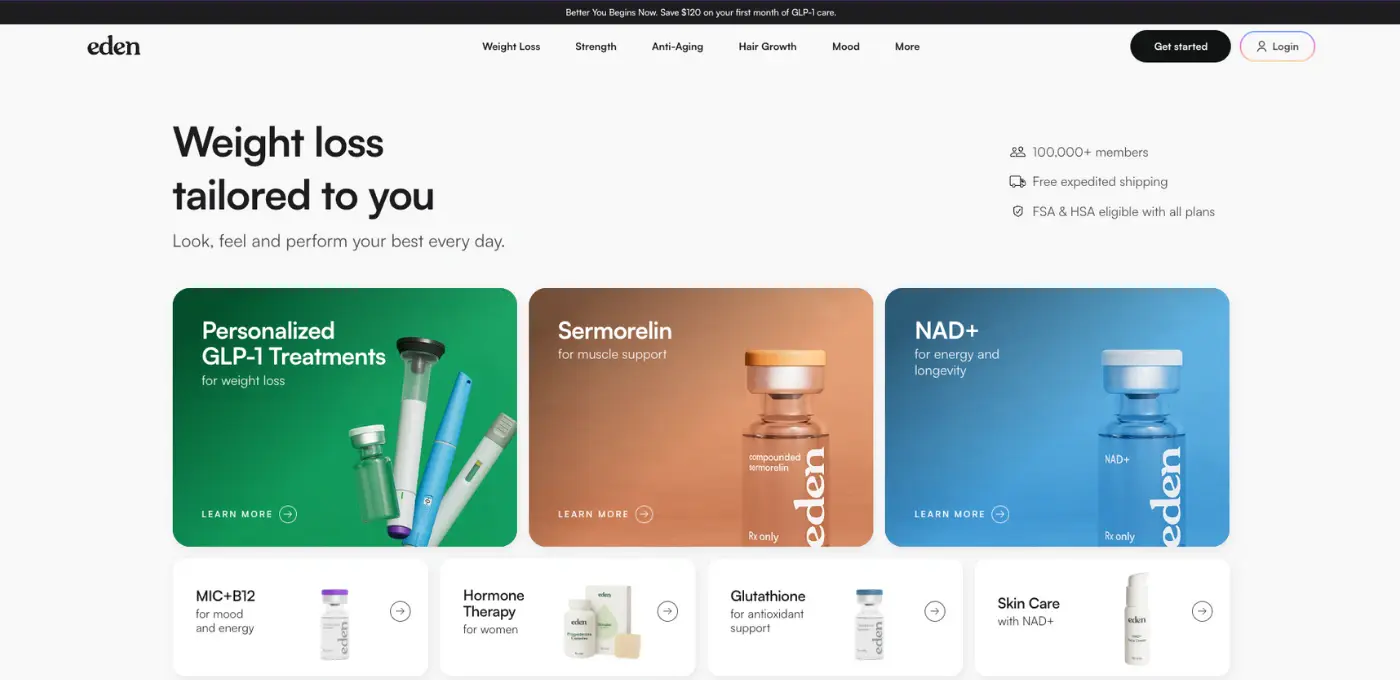
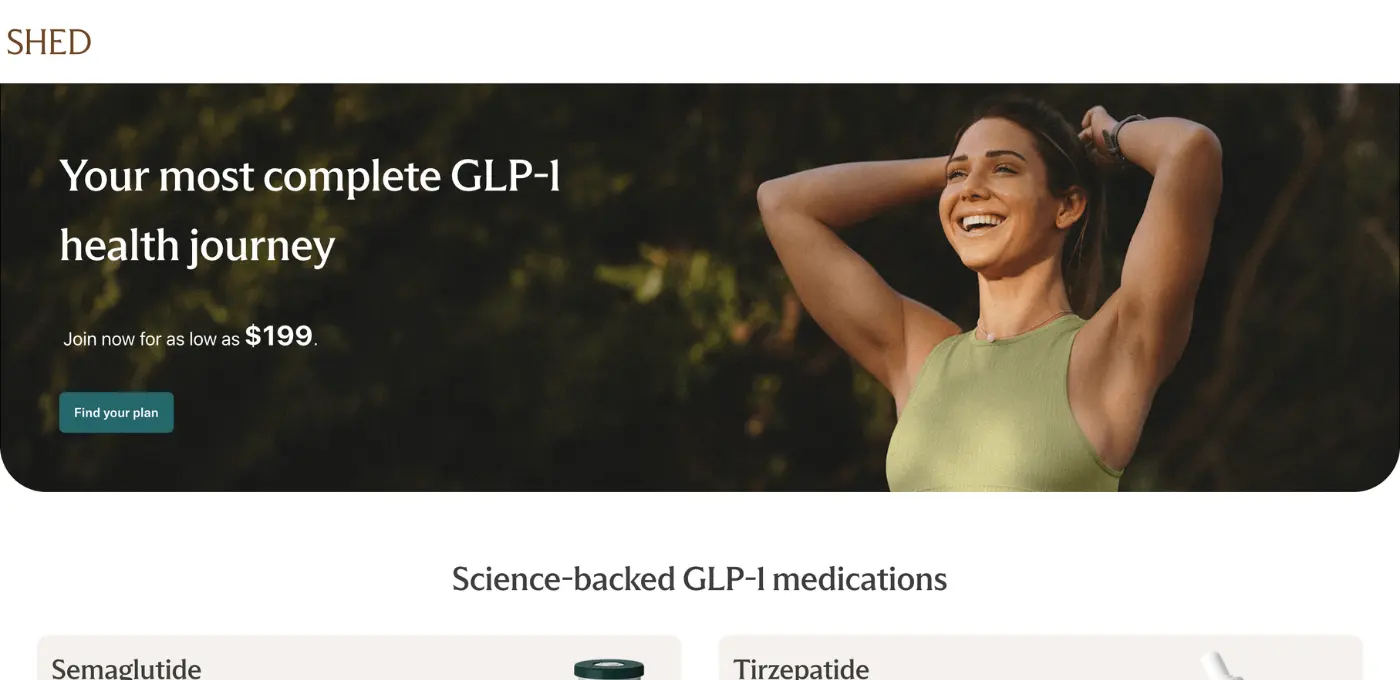
Eden and Shed both specialize in GLP-1 weight loss treatment but take different approaches. Eden offers a Price Lock Guarantee and serves ED/hair loss too, while Shed centers on GLP-1 weight loss with four medication formats and a conditional 120-day money-back guarantee (lose 5% of your weight or get a refund, subject to eligibility and program adherence). We compared pricing, guarantees, and patient outcomes.
Platform Overview
Eden is a GLP-1 specialist telehealth platform operating since 2021, positioning itself as a premium weight loss solution for patients who want broad coaching alongside their medication. Eden is active in our weight loss provider rankings at $129 per month, a price last verified in May 2026, so confirm the current rate directly - and it emphasizes a high-touch clinical model with dietitians, behavioral coaches, and physician oversight. The platform has built a reputation among patients seeking structured support, and its care team model draws on evidence that combined lifestyle and pharmacological intervention produces superior outcomes compared to medication alone, as documented in
clinical trials published by NEJM.
Shed is a GLP-1 weight loss specialist founded with a singular focus on semaglutide and tirzepatide-based programs, offering plans from $159 per month on a 12-month term (tirzepatide from $239/month), as of August 2026. Shed also advertises a 120-day money-back guarantee if you do not lose 5% of your weight, subject to eligibility, required check-ins and adherence to the program. Shed's approach aligns with FDA-approved GLP-1 treatment frameworks and emphasizes sustained results over quick fixes, making it a strong contender for patients who want accountability with their GLP-1 treatment.
Pricing Comparison
Eden is active in our weight loss provider rankings at $129 per month, a price last verified in May 2026, so confirm current plan tiers and medication inclusions directly. The higher end of Eden's pricing reflects its premium coaching model, which bundles dietitian access and behavioral support into the program cost. While this represents strong value for patients who actively engage with coaching resources, patients who primarily need medication management without intensive coaching may find they are paying for services they underutilize. Eden does not publicly advertise a comparable money-back guarantee.
Shed's pricing from $159 per month on a 12-month term (tirzepatide from $239/month) is competitive across the GLP-1 telehealth market, and its 120-day money-back guarantee if you do not lose 5% of your weight (eligibility and adherence conditions apply) adds a refund path Eden does not advertise. The
CDC notes that even a 5-10% reduction in body weight produces significant health improvements. For budget-conscious patients, Shed's entry-level pricing is lower than Eden's floor.
Medication Options and Quality
Eden offers both semaglutide and tirzepatide through licensed compounding pharmacies, so both compounded options sit on one platform. Compounded semaglutide and tirzepatide are not FDA-approved and have not been reviewed by the FDA for safety, effectiveness, or quality. The platform works with FDA-registered compounding facilities, and its prescribing physicians titrate dosing based on individual patient response. In the SURMOUNT-1 trial, participants taking tirzepatide lost an average of up to 20.9% of body weight over 72 weeks; that trial studied the FDA-approved brand-name product, not a compounded version (individual results vary), as reported by
NEJM research on tirzepatide efficacy. Eden's pharmacy partnerships are a key quality marker that patients should verify during their intake process.
Shed similarly provides access to both semaglutide and tirzepatide, prescribed by licensed medical providers following a thorough intake evaluation. The platform's medication protocols follow established GLP-1 dosing guidelines and include regular check-ins to assess tolerability and adjust doses as needed. Shed's clinical team monitors for common side effects including nausea and gastrointestinal discomfort, which affect roughly 30-40% of GLP-1 users according to FDA medication labeling. Both semaglutide and tirzepatide options at Shed are sourced through compliant pharmacy channels.
Medical Team and Support
Eden's clinical model is one of its strongest selling points. The platform employs a multi-disciplinary team including physicians, nurse practitioners, registered dietitians, and behavioral health coaches. Patients are assigned to a care team rather than seeing rotating providers, which promotes continuity and stronger therapeutic relationships. Research published in JAMA confirms that ongoing behavioral support significantly improves weight loss maintenance beyond the initial treatment period. Eden's dietitian access is particularly valuable for patients managing co-morbidities like type 2 diabetes or hypertension alongside their weight loss goals.
Shed provides weight loss coaching as a core feature of its program, distinguishing it from bare-bones telehealth platforms that simply prescribe medication with minimal follow-up. Coaches work with patients on behavioral strategies, goal setting, and adherence support throughout the program. Medical oversight is provided by licensed physicians and nurse practitioners who monitor patient progress and adjust prescriptions as needed. The
American Association of Clinical Endocrinology guidelines recommend combined pharmacological and behavioral treatment for optimal obesity management, a model Shed's program is designed around.
Weight Loss Approach and Programs
Eden takes an integrative approach to weight loss that combines GLP-1 pharmacotherapy with structured lifestyle coaching. The platform's programs include nutritional guidance, physical activity recommendations, and behavioral modification techniques drawn from cognitive behavioral therapy principles. Eden's program design reflects the consensus position of major obesity medicine organizations that medication alone produces inferior long-term outcomes compared to combined treatment. Patients on Eden's premium tiers receive the most intensive support, including regular check-ins with their assigned dietitian and coach. This model is particularly effective for patients with a history of weight cycling or prior unsuccessful diet attempts.
Shed pairs GLP-1 medication with coaching and advertises a 120-day money-back guarantee if you do not lose 5% of your weight, subject to eligibility, required check-ins and adherence to the program. The platform's protocols are calibrated to achieve clinically meaningful weight loss within the program timeline, with coaching support focused on maximizing patient adherence to both medication and lifestyle modifications.
User Experience and Satisfaction
Eden patients generally report high satisfaction with the platform's coaching quality and the attentiveness of their assigned care team. The onboarding process is thorough, including a detailed health history intake and goal-setting session with a coach before medication is prescribed. The platform's app and patient portal receive positive reviews for ease of use and communication features. Some patients note that Eden's higher price point can be a barrier, particularly for those on long-term weight maintenance programs where the cost accumulates significantly over time. Eden's premium positioning means it attracts patients who are highly motivated and willing to invest in an extensive program.
Shed users frequently cite the weight loss guarantee as a major factor in their decision to choose the platform. The guarantee reduces anxiety about whether the investment will produce results, and patients report that the coaching team is responsive and proactive about checking in on progress. The platform's interface is straightforward and access to the care team is described as readily available. As with most GLP-1 programs, patients may experience an adjustment period with side effects in the first 4-8 weeks, and Shed's coaching team plays an active role in helping patients manage this phase. The
NIH notes that adherence support is critical during the early medication phase.
How We Compared Eden vs Shed
Our Comparison Methodology
This comparison is based on analysis of pricing structures and service models from both platforms.
Clinical Evidence: Weight loss treatment recommendations reference FDA-approved GLP-1 medication information (FDA Wegovy Label) and clinical efficacy data from The New England Journal of Medicine.
Pricing Analysis: Pricing reflects the rates last recorded in our provider database; providers change prices frequently, so confirm current pricing directly at checkout.
Service Verification: Platform capabilities, provider credentials, and service quality were evaluated through detailed review of service offerings.
This comparison is written by our own editorial team, and ManyTreatments is paid an affiliate commission by most of the providers listed here when you buy through a link on this page. Payment for placement, for a rating, or for a listing is not something we accept. What we will not claim is that commissions have never influenced anything, because that would be a statement about our own conduct we cannot evidence. Our goal is to provide evidence-based comparison to help you make informed weight loss treatment decisions.
Final Verdict: Eden vs Shed
Choose Eden if: You want a premium, multi-disciplinary weight loss program with dietitian access and behavioral coaching. Eden is best suited for patients with complex health histories, co-morbidities, or a history of weight cycling who benefit from intensive clinical support alongside their GLP-1 medication.
Choose Shed if: You want a GLP-1 program with a 120-day money-back guarantee if you do not lose 5% of your weight (eligibility and adherence conditions apply) and coaching support at a more accessible price point. Shed suits you if you are motivated and want a refund term written into the program.
Bottom line: Both Eden and Shed are credible GLP-1 weight loss platforms that go beyond simple prescription services. Eden wins on coaching depth and clinical team breadth, while Shed adds a conditional money-back guarantee. The deciding factor is whether you prioritize full clinical support (Eden) or a conditional refund term (Shed).
Editorial Note: Researched and edited by our editorial team. AI tools assist with initial research and drafting; all content is fact-checked and edited by humans before publication. Learn more about our editorial standards