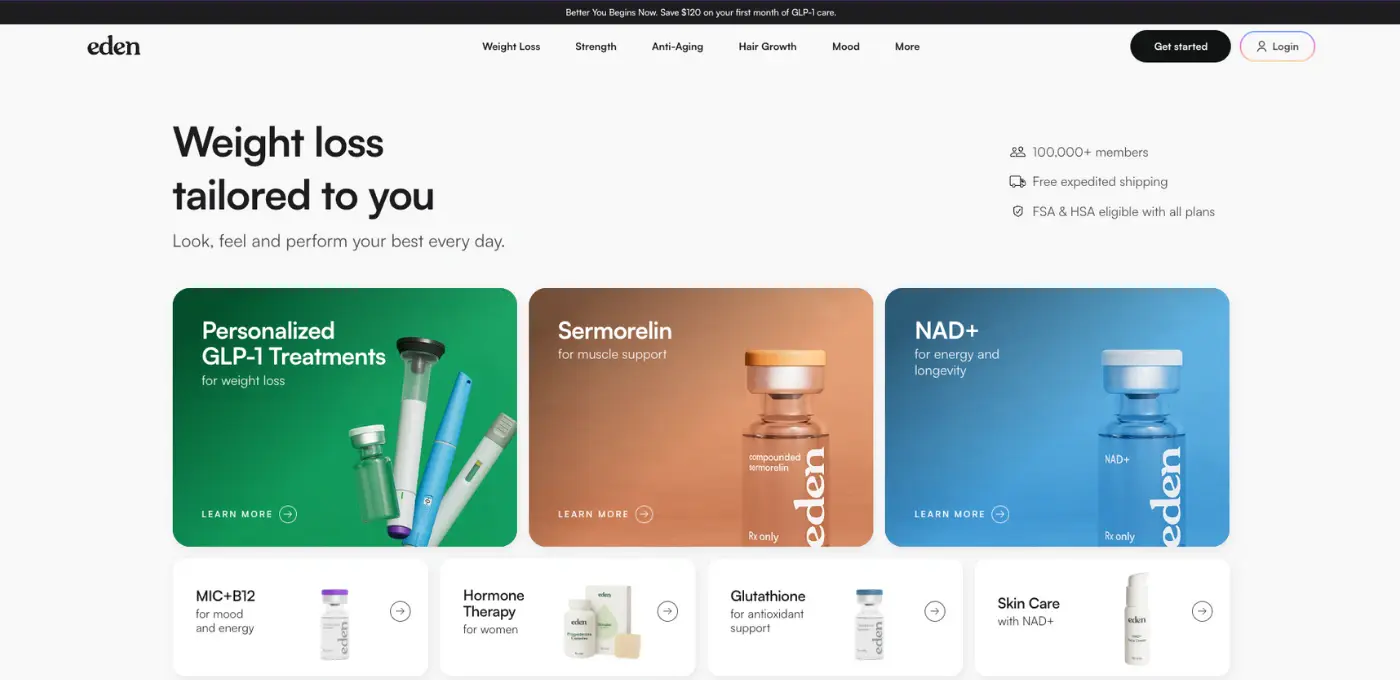
Choosing between Henry Meds and Eden for GLP-1 weight loss medications? Both are cash-pay compounded GLP-1 platforms, and neither is currently shown in our weight-loss provider rankings. Their last-recorded prices in our database are a flat $149/month for Henry Meds and $129/month for Eden (both May 2026 - confirm current pricing directly with each platform). This comparison analyzes pricing, the brand-name medications' published trial results (14.9% to 20.9% average in STEP 1 and SURMOUNT-1; individual results vary, and compounded versions were not studied in these trials), and service models.
Overview: Competing GLP-1 Weight Loss Platforms
Henry Meds and Eden represent competing
telehealth platforms specializing in GLP-1 receptor agonist medications for weight loss, specifically compounded semaglutide and tirzepatide. With brand-name Wegovy and Zepbound listing at $1,000-1,400/month without insurance and facing shortages at the time, both platforms emerged to provide affordable access to compounded formulations at significantly reduced prices during the GLP-1 shortage the FDA has since declared resolved (December 2024 for tirzepatide, February 2025 for semaglutide).
Henry Meds launched in 2022 with a focus on GLP-1 weight loss medication access through transparent cash-pay pricing. The last price recorded in our provider database is a flat $149/month covering medication, supplies, and shipping, with a free evaluation - you pay only if prescribed (May 2026). Henry Meds isn't currently shown in our weight-loss rankings, so confirm current pricing directly with Henry Meds.
Eden also centers on compounded GLP-1 access. Its listing highlights custom-dosed compounded semaglutide and tirzepatide, free consults with US doctors, 24/7 messaging, and cancel-anytime terms. Eden's last-recorded price in our database is $129/month (May 2026). Eden isn't currently shown in our weight-loss rankings either, so confirm current pricing directly with Eden.
Both platforms employ board-certified physicians licensed to practice telemedicine and follow
HIPAA compliance standards for patient privacy. Neither platform accepts insurance - both operate exclusively on cash-pay model. Eligibility criteria align with
FDA indications for GLP-1 weight loss medications: BMI ≥30 or BMI ≥27 with weight-related comorbidities (hypertension, diabetes, sleep apnea, cardiovascular disease).
The fundamental distinction lies in service philosophy and pricing strategy. Henry Meds offers streamlined medication access at competitive pricing with standard medical supervision, appealing to cost-conscious consumers seeking GLP-1 medications without ancillary services. Eden provides premium-priced weight management program integrating medication with intensive coaching and lifestyle modification support, targeting consumers willing to pay additional costs for guidance and accountability.
Pricing Breakdown: Standard vs Premium Service Tiers
Henry Meds' listing uses transparent all-inclusive pricing: the last-recorded rate in our provider database is a flat $149/month covering medication, supplies, and shipping, with a free evaluation - you pay only if prescribed (May 2026). We don't have verified per-dose tier pricing for Henry Meds, so confirm dose-level costs directly before enrolling.
Eden's last-recorded price in our database is $129/month (May 2026). Its listing highlights custom dosing, free consults with US doctors, 24/7 messaging, and cancel-anytime terms rather than a published tier ladder. We can't verify per-dose or service-tier pricing from our data, so confirm current rates directly with Eden.
On last-recorded monthly prices, Eden's $129/month sits about $20/month below Henry Meds' flat $149/month - roughly $240 over a year if both figures held. Both date to May 2026, though, and neither platform is currently shown in our weight-loss rankings, so treat any annual projection as an estimate and confirm live pricing with each platform first.
Whether Eden's coaching and meal planning are worth having depends on how much structure you want, not on a price premium: on last-recorded figures Eden's $129/month sits below Henry Meds' $149/month. Structured coaching, meal planning, and behavioral support may help you stay consistent. In their registration trials the brand-name GLP-1s produced substantial average weight loss (14.9% to 20.9% in STEP 1 and SURMOUNT-1; individual results vary, and compounded versions were not studied in these trials) without intensive lifestyle programs layered on, so weigh coaching as a service you either want or don't rather than as something that changes what the medication does.
Additional costs affect affordability. Henry Meds' listing is a single subscription price without supplementary products or services. Eden may recommend supplements, meal replacement products, or upgraded coaching tiers that add to your monthly total. On last-recorded figures Eden's $129/month is the lower base price, so if add-ons matter to you, ask each platform what your total would look like at your dose before comparing the headline numbers.
GLP-1 Medications: Semaglutide and Tirzepatide Formulations
Both platforms offer compounded semaglutide. Semaglutide functions as a glucagon-like peptide-1 (GLP-1) receptor agonist, mimicking a natural gut hormone that regulates appetite, slows gastric emptying, and improves insulin sensitivity. The brand-name product
Wegovy is FDA-approved for chronic weight management at a BMI of 30 or above, or 27 or above with a weight-related condition. In the STEP 1 trial, participants taking semaglutide 2.4mg weekly lost
an average of 14.9% of body weight over 68 weeks (brand-name trial data; individual results vary, and compounded versions were not studied in these trials). What these platforms sell is a different product: compounded semaglutide is not FDA-approved and has not been reviewed by the FDA for safety, effectiveness, or quality.
Henry Meds and Eden both provide compounded tirzepatide. Tirzepatide functions as a dual GLP-1 and GIP (glucose-dependent insulinotropic polypeptide) receptor agonist. In the SURMOUNT-1 trial published in the New England Journal of Medicine, participants taking tirzepatide 15mg weekly lost
an average of 20.9% of body weight over 72 weeks (brand-name trial data; individual results vary, and compounded versions were not studied in these trials). Zepbound is FDA-approved for chronic weight management and Mounjaro for type 2 diabetes; compounded tirzepatide is not FDA-approved and has not been reviewed by the FDA for safety, effectiveness, or quality.
Compounded formulations differ from brand-name FDA-approved products in regulatory status and manufacturing. Compounding pharmacies prepare medications to order, an approach the FDA permitted more broadly under enforcement discretion during the drug shortages it declared resolved in 2024-2025. With those shortages resolved, compounding now depends on a clinical need specific to you and documented by your prescriber rather than on the shortage exception. Compounded semaglutide and tirzepatide are not FDA-approved and have not been reviewed by the FDA for safety, effectiveness, or quality. Purity, potency, and sterility depend on the standards of the facility that prepares your medication rather than on FDA manufacturing oversight.
Dosing protocols follow standard titration schedules to minimize gastrointestinal side effects. Semaglutide starts at 0.25mg weekly for 4 weeks, increasing to 0.5mg, 1mg, 1.7mg, and final maintenance dose of 2.4mg weekly over 16-20 weeks. Tirzepatide begins at 2.5mg weekly, increasing to 5mg, 7.5mg, 10mg, 12.5mg, and maximum 15mg weekly over 20-24 weeks. Gradual dose escalation allows GI tolerance development and identifies minimum effective dose for individual patients.
Neither platform names the pharmacy or outsourcing facility that compounds its medication, so you cannot compare what you would actually receive from each. Compounded products are prepared to each facility's own standards and are not reviewed by the FDA for safety, effectiveness, or quality, which makes the identity and record of that facility the part that matters most and the part neither platform discloses. Pricing differences track the service models each platform sells. Ask each one who compounds your prescription and what testing that facility runs before you decide.
Medical Oversight and Support Services
Henry Meds medical supervision includes initial physician consultation via telehealth video or phone call evaluating medical history, current medications, weight loss goals, and contraindication screening. Physicians review cardiovascular health, thyroid function, history of pancreatitis or medullary thyroid cancer (contraindications for GLP-1 use), and assess appropriateness for medication-assisted weight loss. Monthly asynchronous check-ins track weight loss progress, side effect monitoring, and dose adjustments.
Laboratory testing requirements vary by platform and individual risk factors. Henry Meds recommends baseline and periodic monitoring of thyroid function (TSH), kidney function (creatinine, eGFR), liver enzymes (ALT, AST), lipid panel, and hemoglobin A1C for patients with diabetes. Lab orders are provided for patients to complete at local facilities with results reviewed by physicians for medication safety monitoring. Patients with pre-existing conditions require more intensive laboratory surveillance.
Eden medical supervision mirrors standard telehealth consultation with board-certified physicians assessing eligibility and prescribing GLP-1 medications. The platform's differentiation lies in added health coaching layer - coaches provide weekly video or phone consultations focused on nutrition education, meal planning, exercise programming, stress management, and behavioral modification strategies. Coaches are typically certified health coaches or registered dietitians rather than physicians.
Monthly medication management includes dose titration guidance, side effect troubleshooting, and prescription renewals. Both platforms provide patient access to medical teams via secure messaging for questions between scheduled consultations. Response times vary, with urgent medical concerns directed to on-call physicians. Telehealth prescribing is governed by the medical board of the state you are in, and neither platform replaces comprehensive primary care if you have complex medical conditions.
Nutritional counseling approaches differ between platforms. Henry Meds provides general nutrition guidance and educational resources about healthy eating during GLP-1 treatment, emphasizing adequate protein intake and nutrient-dense foods to preserve lean muscle mass during rapid weight loss. Eden offers meal planning with specific calorie targets, macronutrient distributions, and recipe suggestions tailored to individual preferences and dietary restrictions. The intensive coaching justifies Eden's premium pricing for consumers seeking structured accountability.
Side Effects and Safety Considerations
GLP-1 medications produce similar side effect profiles regardless of platform prescribing them. Gastrointestinal effects are most common: nausea (20-50% of patients), diarrhea (20-30%), constipation (10-25%), vomiting (10-20%), and abdominal pain (5-15%). Most GI symptoms occur during dose escalation and improve with continued use as tolerance develops. Slow titration schedules minimize side effects, with dosing held or reduced if intolerable symptoms occur.
Serious adverse events require immediate medical attention and medication discontinuation. Acute pancreatitis occurs in approximately 0.2-0.3% of GLP-1 users, presenting as severe abdominal pain radiating to back with nausea and vomiting. Gallbladder disease including cholecystitis and cholelithiasis affects 1-2% of patients undergoing rapid weight loss. Hypoglycemia risk increases in patients taking concurrent diabetes medications (insulin, sulfonylureas) requiring dose adjustments of other medications.
FDA black box warnings address thyroid C-cell tumor risk observed in rodent studies, though human relevance remains uncertain. GLP-1 medications are contraindicated in patients with personal or family history of medullary thyroid carcinoma or Multiple Endocrine Neoplasia syndrome type 2. Cardiovascular effects are generally favorable with GLP-1s reducing heart attack and stroke risk in trials, though rare cases of increased heart rate require monitoring in patients with cardiac conditions, according to
NEJM semaglutide clinical trial (STEP 1).
Mental health considerations include depression and suicidal ideation reported in post-marketing surveillance, leading to FDA investigation though causal relationship is unclear. Rapid weight loss itself can affect mood and mental health. Patients with history of depression, anxiety, or eating disorders require careful monitoring during GLP-1 treatment. The medications should not be used in pregnant or breastfeeding women due to unknown fetal effects.
Platform differences in side effect management reflect service model variations. Henry Meds provides standard medical team access for side effect troubleshooting via messaging and scheduled consultations. Eden's health coaches offer more frequent touch points for symptom monitoring and lifestyle modifications to minimize GI distress (dietary adjustments, meal timing, hydration strategies). Neither platform replaces emergency medical care - severe symptoms require immediate evaluation by emergency services or primary care physicians.
Expected Weight Loss Results and Timeline
Semaglutide weight loss results from clinical trials provide realistic expectations. The STEP 1 trial demonstrated average 14.9% body weight reduction (approximately 33 pounds for 220-pound individual) after 68 weeks of semaglutide 2.4mg weekly injections. One-third of participants achieved ≥20% weight loss, while two-thirds lost ≥15%. Results vary significantly between individuals based on baseline weight, metabolic factors, medication adherence, and lifestyle behaviors, according to
FDA semaglutide safety information.
Tirzepatide produced larger average weight loss than semaglutide in their respective registration trials. The SURMOUNT-1 study showed average 20.9% body weight loss with tirzepatide 15mg weekly after 72 weeks, measured against placebo rather than against semaglutide (brand-name trial data; individual results vary, and compounded versions were not studied in these trials). Tirzepatide typically costs more than semaglutide, and neither platform's current tirzepatide pricing is in our verified data, so compare dose-level costs directly.
Weight loss timeline follows predictable pattern with most rapid loss in first 3-6 months of treatment, then gradual continued loss until plateau at 12-18 months. Weight loss typically begins during the initial titration months and builds as doses reach maintenance levels (individual results vary). Months 4-12 show continued loss averaging 1-3 pounds weekly. Maintenance phase focuses on sustaining achieved weight loss rather than continued reduction.
What a platform gives you is the prescription, the dosing plan, and the support around it. Neither Henry Meds nor Eden names the facility that compounds its semaglutide or tirzepatide, so neither can show you how its version compares with the other's, and the trials above studied the brand-name products rather than compounded ones. Differences in coaching intensity, nutritional support, and behavioral programming may influence how consistently you take the medication, which is the part you control.
Long-term weight maintenance represents critical challenge as GLP-1 medications suppress appetite and slow gastric emptying only during active treatment. The STEP 1 trial extension showed patients regaining approximately two-thirds of lost weight within one year of stopping semaglutide. Lifelong treatment or transition to sustainable lifestyle changes before discontinuation are essential for maintaining results. Neither Henry Meds nor Eden provides guarantees of permanent weight loss - medication facilitates initial loss, but maintenance requires ongoing commitment to healthy behaviors.
How We Compared Henry Meds vs Eden
Our Comparison Methodology
This comparison is based on comprehensive analysis of clinical protocols, pricing structures, service models, and treatment approaches from both platforms.
Clinical Evidence: Weight loss treatment recommendations reference FDA-approved GLP-1 medication information (FDA Wegovy Label) and clinical efficacy data from The New England Journal of Medicine.
Pricing Analysis: Pricing reflects the rates last recorded in our provider database; providers change prices frequently, so confirm current pricing directly at checkout.
Service Verification: Platform capabilities, provider credentials, medication sourcing, and treatment protocols were evaluated through detailed review of service offerings and models.
How we get paid, plainly: most providers on this page pay ManyTreatments an affiliate commission when you buy through our links. No provider buys a position, a rating, or a listing here. We stop short of telling you commissions have never shaped anything on this site, since we cannot put evidence for that in front of you. Our goal is to provide evidence-based comparison to help you make informed weight loss treatment decisions.
Final Verdict: Henry Meds vs Eden
Choose Henry Meds if you want one flat bundled price and a free evaluation: its last-recorded rate in our provider database is $149/month with medication, supplies, and shipping included, and you pay only if prescribed (May 2026). Choose Eden if its custom-dosed approach, free consults with US doctors, and 24/7 messaging fit how you want to be supported: its last-recorded price is $129/month (May 2026), the lower of the two on recorded figures.
Neither platform is currently shown in our weight-loss provider rankings, so treat both prices as last-recorded rather than live and confirm current rates directly before enrolling. Both prescribe compounded GLP-1 medications, which are not FDA-approved and have not been reviewed by the FDA for safety, effectiveness, or quality.
The medications, not the platforms, drive results: semaglutide averaged 14.9% body weight loss over 68 weeks in STEP 1, and tirzepatide up to 20.9% over 72 weeks in SURMOUNT-1 (brand-name trial data; individual results vary, and compounded versions were not studied in these trials). Talk to a licensed provider about which medication fits your health profile.
Frequently Asked Questions
How much cheaper is Henry Meds compared to Eden for GLP-1 weight loss medications?
On the prices last recorded in our database (May 2026), Eden is the lower-priced platform: $129/month versus Henry Meds' flat $149/month - about $240 less over 12 months if both held. Henry Meds' listing bundles medication, supplies, and shipping with a free evaluation where you pay only if prescribed; Eden's highlights custom dosing, free consults, and 24/7 messaging. Neither platform is currently shown in our weight-loss rankings, so confirm current pricing with both before deciding on cost.
Do I get better weight loss results with Eden's coaching compared to Henry Meds standard support?
Coaching is a service, not a different medication. In their FDA registration trials the brand-name GLP-1s produced substantial average weight loss (14.9% to 20.9% in STEP 1 and SURMOUNT-1; individual results vary, and compounded versions were not studied in these trials) without an intensive lifestyle program attached. Eden's health coaching, meal planning, and weekly check-ins may help you stay consistent with dosing and eating if structure is what you struggle with; Henry Meds offers monthly monitoring and general nutrition guidance instead. Worth noting that on our last-recorded prices Eden is the cheaper of the two at $129/month against $149/month, so its coaching is not a premium tier you pay extra for. Neither platform can tell you what your own result will be, and neither names the facility that compounds its medication. Talk to a licensed provider about what fits your health profile.
Are the GLP-1 medications from Henry Meds and Eden the same quality and effectiveness?
Neither platform gives you enough information to answer that. Henry Meds and Eden both describe their compounding as done by a 503A pharmacy or a 503B outsourcing facility without naming the facility, so you cannot verify the tier or look up its record. Compounded semaglutide and tirzepatide are not FDA-approved and have not been reviewed by the FDA for safety, effectiveness, or quality, and they were not studied in the trials that support Wegovy and Zepbound, so no published trial tells you what a particular compounded version does. Purity, potency, and sterility come down to the standards of the facility that prepares it, which is the one thing neither platform discloses. What you can actually compare is price, dosing format, and how much support you get. Ask both who compounds your prescription, and talk to a licensed provider about which medication fits your health profile.
Should I choose semaglutide or tirzepatide for maximum weight loss results?
Tirzepatide demonstrates superior weight loss efficacy in clinical trials - up to 20.9% average body weight reduction over 72 weeks in SURMOUNT-1 versus semaglutide's 14.9% over 68 weeks in STEP 1 (brand-name trial data; individual results vary). Tirzepatide's dual GLP-1/GIP receptor agonism produces stronger appetite suppression and metabolic effects. However, tirzepatide typically costs more and may cause more frequent GI side effects during titration. For patients seeking maximum weight loss willing to accept higher costs and potentially more side effects, tirzepatide represents optimal choice. For budget-conscious individuals or those prioritizing tolerability, semaglutide provides substantial weight loss (approximately 33 pounds for 220-pound person) at lower cost. Both medications require lifelong use or successful lifestyle transition for weight maintenance after discontinuation.
Does insurance cover GLP-1 medications from Henry Meds or Eden?
No - neither Henry Meds nor Eden accepts insurance for GLP-1 weight loss medications. Both platforms operate exclusively on cash-pay model with transparent subscription pricing. Compounded semaglutide and tirzepatide are not covered by insurance as they are not FDA-approved products (they are prepared by compounding pharmacies, not the brand manufacturers). Even brand-name Wegovy and Zepbound face limited insurance coverage with many plans excluding weight loss medications or requiring prior authorization documentation. Medicare explicitly prohibits coverage of weight loss drugs. For patients with insurance coverage of brand-name GLP-1s, platforms like Ro that work with insurance may offer better value, since your copay could be far lower than cash-pay rates. Henry Meds and Eden serve patients without insurance coverage or those unable to afford brand-name medications.
What happens if I stop taking GLP-1 medications from Henry Meds or Eden?
Weight regain occurs in most patients after stopping GLP-1 medications as appetite suppression and metabolic effects reverse within weeks. In the STEP 1 trial extension, participants regained approximately two-thirds of lost weight within a year of discontinuing semaglutide (individual results vary). The medications facilitate initial weight loss by reducing hunger and slowing gastric emptying, but do not permanently alter metabolism or appetite regulation. Successful long-term maintenance requires either lifelong GLP-1 treatment (at each platform's current subscription rates indefinitely) or transition to sustainable lifestyle changes before discontinuation. Neither Henry Meds nor Eden provides post-treatment support for medication-free weight maintenance. Patients should view GLP-1s as tools enabling initial substantial weight loss while establishing healthier eating patterns and exercise habits necessary for maintaining results after stopping medication.
Editorial Note: Researched and edited by our editorial team. AI tools assist with initial research and drafting; all content is fact-checked and edited by humans before publication. Learn more about our editorial standards