complete analysis comparing Keeps and Nurx across pricing, features, treatments, and user experience.
Platform Overview
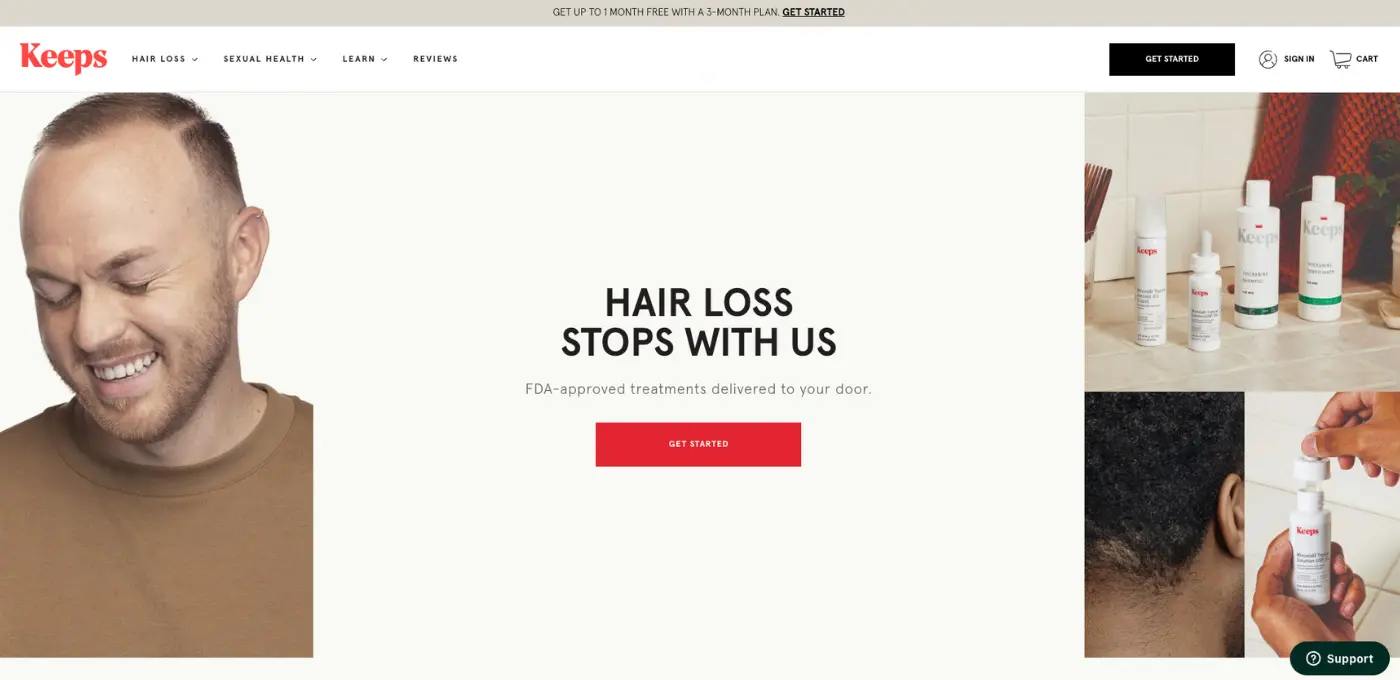
Keeps launched in 2017 as men's hair loss specialist offering prescription finasteride and minoxidil through asynchronous telemedicine consultations. The platform focuses exclusively on male pattern baldness treatment, providing FDA-approved medications through a subscription model; Keeps doesn't publish a standard price in our provider database, so confirm current rates directly. Keeps operates nationwide through partnership with licensed physicians who review patient medical histories and photographs to prescribe appropriate hair loss interventions. The service positions itself as affordable, alternative to traditional dermatology visits, targeting men seeking evidence-based pharmacological treatment for androgenetic alopecia without requiring in-person appointments.
Nurx launched as reproductive health platform in 2015 before expanding into hair loss, primary care, and dermatology services. The platform serves both men and women, offering finasteride, minoxidil, and spironolactone prescriptions through asynchronous medical consultations with nurse practitioners and physicians. Nurx positions itself as digital health service addressing multiple clinical needs through single platform account, with hair loss treatment representing one category among birth control, PrEP, STI testing, and skincare services. Nurx doesn't publish a standard hair loss price in our provider database; quarterly medical provider check-ins come included in subscription fees, so confirm current pricing directly.
This comparison examines single-category service (Keeps) versus multi-category health platform (Nurx) for hair loss treatment. The platforms differ fundamentally in scope - Keeps concentrates exclusively on male androgenetic alopecia while Nurx integrates hair loss treatment within broader telehealth offerings serving diverse patient populations. Selection depends on gender (Keeps serves men only), preference for versus care models, and value placed on platform breadth versus focused expertise.
Specialized vs Multi-Category Service Models
Keeps maintains exclusive focus on men's hair loss treatment, dedicating entire platform infrastructure and clinical protocols to androgenetic alopecia management. This specialization enables streamlined onboarding process specifically designed for hair loss patients, with medical questionnaires optimized for cardiovascular screening (finasteride considerations) and treatment history assessment. The platform's provider network consists exclusively of physicians experienced in male pattern baldness treatment, ensuring clinical expertise concentrated in single therapeutic area. Educational resources focus entirely on hair loss mechanisms, treatment expectations, and combination therapy strategies rather than diluting content across multiple health categories. Source: Telemedicine models
Nurx operates multi-category health platform where hair loss treatment exists alongside reproductive health, sexual wellness, primary care, and dermatology services. This model allows patients to manage multiple health needs through unified account, potentially coordinating care across categories like hormonal birth control and anti-androgen therapy for women. However, the breadth of services means clinical protocols must accommodate diverse conditions, potentially resulting in less specialized intake processes compared to single-focus platforms. Patients seeking only hair loss treatment navigate platform designed to serve broader health needs, which may include educational content and features less relevant to androgenetic alopecia specifically. Source: Multi-category telehealth platforms
The versus generalist distinction affects patient experience significantly. Keeps patients encounter platform entirely devoted to their specific concern, with every feature optimized for hair loss management - progress photo tracking, treatment expectation timelines specific to finasteride/minoxidil, and customer support trained exclusively in androgenetic alopecia questions. Nurx patients benefit from potential care coordination across multiple health needs but experience platform designed to serve diverse populations with varying clinical requirements. For patients committed solely to hair loss treatment, Keeps' specialization may provide more focused experience; for those managing multiple health conditions, Nurx's full model offers administrative efficiency through consolidated care. Source: Patient experience in vs platforms
Pricing Structures and Treatment Costs
Keeps prices hair loss treatments through subscription tiers covering minoxidil foam alone, finasteride tablets, and combination therapy with both medications; it doesn't publish a standard price in our provider database, so confirm current tier rates directly. These prices include provider consultations, prescription management, and medication delivery with no additional consultation fees or hidden charges. The platform offers 3-month and 6-month supply options providing modest discounts (approximately 10-15%) for advance payment, though subscriptions remain easily pausable or cancellable. Keeps maintains consistent pricing nationwide with no geographic variation, accepting most major insurance plans for prescription coverage (though many patients pay out-of-pocket given affordable baseline pricing).
Source: Keeps pricing structure 2025Nurx doesn't publish a standard hair loss price in our provider database - pricing depends on medication selection and formulation, with consultation fees typically included in the subscription model, so confirm current rates directly. The platform operates bundled pricing where quarterly medical provider check-ins come included rather than charged separately, though this integrated approach means patients pay for clinical oversight even if established on stable treatment regimens. Nurx accepts insurance for prescription medications but consultation fees often fall outside standard coverage, resulting in mixed insurance benefit depending on plan specifics. The multi-category platform occasionally offers promotional pricing for new patients or bundled service discounts when combining hair loss treatment with other Nurx categories.
Source: Nurx pricing structure 2025Neither platform publishes a standard hair loss price in our provider database, so a direct cost comparison requires current quotes from both - including any additional consultation charges or quarterly review requirements. Insurance coverage affects total costs substantially; patients with prescription drug benefits may find Nurx's broader insurance partnerships advantageous, while those paying out-of-pocket often benefit from Keeps' straightforward subscription pricing. Long-term treatment costs favor platforms with lowest baseline subscription fees given hair loss therapy typically continues indefinitely to maintain results.
Source: Prescription drug pricing analysisClinical Evaluation and Provider Interaction Models
Keeps employs asynchronous evaluation model where patients complete medical questionnaire covering cardiovascular history (relevant for finasteride), current medications, and treatment goals before submitting scalp photographs demonstrating hair loss pattern. Licensed physicians review submitted information typically within 24-48 hours, prescribing appropriate medications if medically suitable or requesting additional information if contraindications exist. The platform does not offer synchronous video consultations, instead relying on messaging-based communication for follow-up questions or treatment adjustments. This asynchronous approach prioritizes convenience and cost efficiency over real-time provider interaction, suitable for straightforward androgenetic alopecia cases where clinical discussion rarely changes treatment approach. Source: Asynchronous telemedicine effectiveness
Nurx similarly utilizes asynchronous consultation model with nurse practitioners and physicians reviewing patient medical histories, photographs, and questionnaires to prescribe hair loss medications. The platform emphasizes quarterly check-ins where providers review treatment progress and patient-submitted progress photographs to assess medication effectiveness. These scheduled touchpoints aim to ensure appropriate treatment continuation and catch potential side effects, though they occur via messaging rather than synchronous appointments. Nurx providers can prescribe finasteride, minoxidil, and spironolactone (for women) based on clinical appropriateness, with treatment plans adjusted through asynchronous communication rather than scheduled video visits. Source: Nurse practitioner telemedicine protocols
The clinical evaluation models differ minimally in practical terms - both platforms employ photograph-based assessment and messaging communication rather than real-time consultations. Keeps' physician-only model versus Nurx's inclusion of nurse practitioners affects prescriptive authority in some states, though both credential types appropriately manage routine hair loss prescriptions. The quarterly check-in structure at Nurx provides scheduled treatment review touchpoints that Keeps leaves to patient initiative, potentially benefiting patients who value structured follow-up versus those preferring prescription refills without mandatory provider reassessment. Neither platform offers diagnostic evaluation like in-person dermatology appointments with scalp examination or laboratory testing for underlying causes beyond androgenetic alopecia.
Gender-Specific Treatment Approaches
Keeps exclusively serves male patients seeking treatment for male pattern baldness, with entire clinical protocol designed around men's androgenetic alopecia presentation and testosterone-related hair loss mechanisms. This gender limitation stems from the platform's focus on finasteride (FDA-approved only for men) as primary treatment modality, combined with male-specific marketing and educational content. The specialization means men encounter platform entirely relevant to their demographic, with treatment expectations, progress timelines, and educational resources specifically addressing male pattern baldness characteristics. However, this exclusivity completely excludes women seeking hair loss treatment, limiting platform accessibility to half the population experiencing androgenetic alopecia. Source: Male pattern hair loss treatment
Nurx serves both men and women, prescribing gender-appropriate hair loss medications including finasteride for men, spironolactone (anti-androgen) for women, and minoxidil for both sexes. This inclusive model accommodates female pattern hair loss treatment through appropriate pharmaceutical interventions while maintaining male patient access to standard finasteride therapy. The platform's multi-category structure particularly benefits women managing multiple health needs simultaneously - for example, coordinating hormonal birth control with anti-androgen therapy for both hair loss and hormonal acne. Clinical protocols adapt to gender-specific considerations like pregnancy contraindication management for women taking spironolactone and testosterone level monitoring for men on finasteride. Source: Female pattern hair loss treatment
Gender inclusivity represents significant differentiation point between platforms. Women experiencing androgenetic alopecia or hormonal hair loss cannot access Keeps at all, limiting platform utility to male demographic exclusively. Nurx's gender-inclusive model accommodates broader patient population seeking similar telemedicine convenience for hair loss treatment, particularly advantageous for women who benefit from broad platform addressing reproductive health alongside dermatological concerns. Men choosing between platforms find minimal clinical difference in available treatments (both offer finasteride and minoxidil), making gender factor relevant primarily for households where multiple family members might utilize single platform for various health needs. Source: Gender considerations in telehealth access
Treatment Evidence Base and Medication Selection
Keeps offers FDA-approved pharmaceutical treatments exclusively - finasteride (1mg daily) and minoxidil (5% foam) representing gold-standard interventions with decades of clinical evidence supporting efficacy in male pattern baldness. The platform explicitly focuses on medications demonstrating strong clinical trial data showing hair count increases and slowing of androgenetic alopecia progression. This evidence-based approach excludes supplements, laser devices, or alternative treatments lacking FDA approval, positioning Keeps as pharmaceutical-focused service for patients specifically seeking proven pharmacological intervention. Educational content emphasizes realistic expectations based on clinical trial outcomes: approximately 80-90% of men maintain or increase hair count with finasteride, while minoxidil produces visible improvement in roughly 60% of users. Source: Finasteride clinical efficacy
Nurx similarly prioritizes FDA-approved medications - finasteride and minoxidil for men, spironolactone and minoxidil for women - grounding treatment recommendations in established clinical evidence. The platform occasionally offers compounded formulations combining multiple active ingredients (like minoxidil with tretinoin or biotin), though these combinations lack the strong FDA approval process of individual medications. Nurx's educational resources emphasize evidence-based treatment while acknowledging supplement and alternative therapy interest among patients, maintaining focus on prescription medications as primary intervention. The platform's inclusion of spironolactone for women expands evidence-based options beyond Keeps' male-only formulary, providing anti-androgen therapy supported by dermatological literature for female pattern hair loss. Source: Spironolactone for female hair loss
Both platforms anchor treatment recommendations in pharmaceutical evidence rather than alternative or complementary therapies. The medication formularies overlap substantially for male patients (finasteride and minoxidil available through both services), with pricing and convenience factors determining platform selection rather than medication access differences. Nurx's ability to prescribe spironolactone for women represents clinical capability Keeps cannot match given gender-specific platform design. Neither service offers diagnostic workup to identify underlying causes of hair loss beyond androgenetic alopecia - patients with suspected thyroid disorders, nutritional deficiencies, or autoimmune causes require traditional medical evaluation rather than direct-to-consumer telemedicine platforms. Source: Hair loss differential diagnosis
How We Compared Keeps vs Nurx
Methodology & Clinical Evidence
This comparison synthesizes publicly available information about Keeps and Nurx service models, pricing structures, clinical protocols, and medication formularies as of our latest content review. Analysis incorporates platform marketing materials, terms of service, provider credential disclosures, and medication pricing from official websites. Clinical effectiveness assessments reference FDA approval data for finasteride, minoxidil, and spironolactone in androgenetic alopecia treatment, with efficacy expectations derived from landmark clinical trials establishing these medications as evidence-based interventions. Gender-specific treatment considerations incorporate endocrinology literature regarding anti-androgen therapy for women and DHT inhibition for men. Cost comparisons reflect advertised subscription pricing without accounting for individual insurance variables, promotional discounts, or geographic pricing variations. Provider interaction model descriptions derive from published platform consultation protocols and patient experience reports. The versus multi-category service distinction represents structural platform difference observable through feature sets, medication formularies, and target patient populations. This analysis does not constitute medical advice; patients should consult licensed healthcare providers to determine appropriate hair loss treatment based on individual medical history, contraindications, and diagnostic evaluation of hair loss etiology.
Final Verdict: Keeps vs Nurx
Final Verdict: Focus vs Full Platform
Keeps and Nurx represent divergent telemedicine philosophies - single-focus service versus multi-category platform - with optimal selection depending on patient demographics and healthcare breadth preferences. Keeps delivers exclusively male-focused hair loss treatment through streamlined, platform optimizing every feature for androgenetic alopecia management, while Nurx operates gender-inclusive, multi-category service where hair loss treatment coexists with reproductive health, sexual wellness, and dermatology offerings.
Men seeking only hair loss treatment find similar clinical outcomes between platforms (both prescribe finasteride and minoxidil with comparable efficacy), with selection hinging on current pricing (neither publishes a standard rate in our provider database, so compare quotes directly), insurance integration priorities, and value placed on versus generalist platform design. Women cannot access Keeps at all, making Nurx or other gender-inclusive platforms mandatory for female pattern hair loss treatment.
The versus distinction extends beyond marketing - Keeps' entire infrastructure concentrates on male pattern baldness, delivering highly focused patient experience, while Nurx's breadth accommodates diverse health needs through unified account potentially valuable for patients managing multiple conditions simultaneously. Neither platform excels at complex diagnostic evaluation beyond typical androgenetic alopecia, limiting utility for patients requiring medical workup to identify underlying hair loss causes.
Treatment evidence bases overlap substantially, with both services prioritizing FDA-approved pharmaceuticals over alternative therapies. Optimal platform selection requires considering gender (mandatory factor), healthcare breadth preferences (versus multi-category), pricing structures relative to insurance coverage, and value placed on concentrated expertise versus service integration.
Choose Keeps if:
- You are male seeking hair loss treatment (Nurx serves both genders)
- You prefer platform entirely dedicated to androgenetic alopecia management
- You prioritize a streamlined, hair-only subscription for your prescriptions
- You value physician-led evaluation over multi-category generalist approach
- You have no other health conditions requiring coordinated multi-category treatment
- You prefer streamlined single-purpose platform without broader healthcare features
Choose Nurx if:
- You are female seeking hair loss treatment (Keeps serves men only - mandatory factor)
- You manage multiple health needs benefiting from unified platform (reproductive health, sexual wellness, dermatology)
- You value full-service care coordination across health categories
- You prefer broader insurance integration potentially reducing out-of-pocket costs
- You appreciate quarterly check-in structure for scheduled treatment review
- You seek gender-inclusive platform serving diverse patient populations
Bottom line: Keeps and Nurx serve different patient populations through fundamentally different service models - male hair loss expertise versus full gender-inclusive healthcare platform. Women must choose Nurx or alternatives given Keeps' male-only model. Men choosing between platforms find minimal clinical outcome differences, making selection primarily about pricing preferences, platform specialization value, and whether multi-category healthcare coordination provides utility beyond isolated hair loss treatment. Keeps excels for men wanting focused expertise at competitive pricing; Nurx excels for patients (especially women) seeking telehealth addressing multiple health needs through unified account. Neither replaces traditional dermatology for complex diagnostic cases requiring medical evaluation beyond straightforward androgenetic alopecia.
Editorial Note: Researched and edited by our editorial team. AI tools assist with initial research and drafting; all content is fact-checked and edited by humans before publication. Learn more about our editorial standards