complete analysis comparing Keeps and PlushCare across pricing, features, treatments, and user experience.
Platform Overview
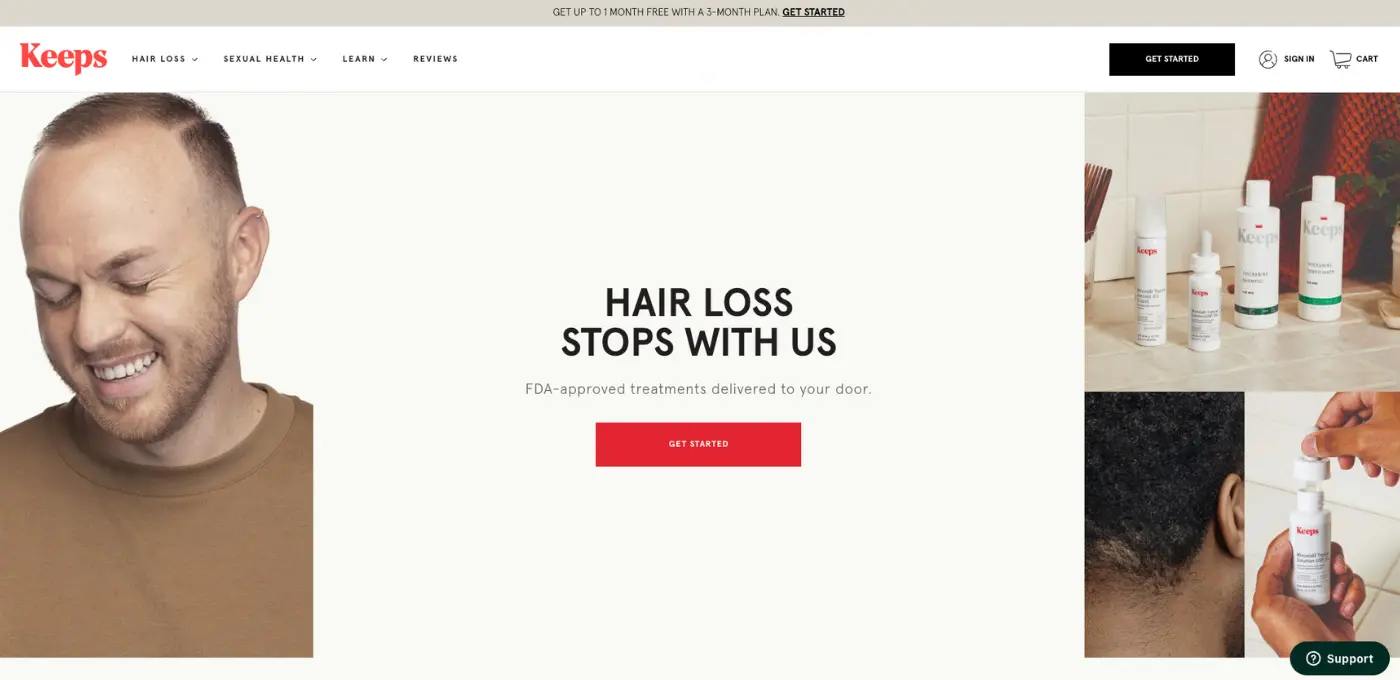
Keeps launched in 2017 as specialized men's hair loss platform offering prescription finasteride and minoxidil through asynchronous telemedicine model. The platform focuses exclusively on male pattern baldness treatment with streamlined evaluation process optimized for androgenetic alopecia assessment. Keeps physicians review patient questionnaires and scalp photographs without requiring synchronous video appointments, prescribing FDA-approved medications through an efficient messaging-based consultation model (Keeps doesn't publish a standard price in our provider database). The approach targets men seeking convenient access to evidence-based hair loss pharmaceuticals without traditional dermatology appointment overhead or multi-category health platform complexity.
PlushCare operates full primary care telemedicine platform serving both men and women across diverse medical conditions including hair loss, chronic disease management, mental health, acute illness, and preventive care. The platform employs board-certified physicians providing synchronous video consultations (typically 15-minute appointments) for diagnostic evaluation and treatment planning across medical spectrum. Hair loss treatment represents one clinical offering among primary care services, with providers prescribing finasteride, minoxidil, and other medications as clinically appropriate during real-time video visits. PlushCare accepts most major insurance plans and charges visit fees (last recorded $129 per visit without insurance, May 2026) rather than subscription model, positioning as virtual primary care clinic rather than specialized hair loss service.
This comparison examines fundamentally different telemedicine models: Keeps' asynchronous hair loss service versus PlushCare's synchronous primary care platform. The platforms differ in clinical scope (vs generalist), consultation format (messaging-based vs video appointments), pricing structure (subscription vs per-visit), and provider interaction depth (asynchronous review vs real-time diagnostic consultation). Selection depends on whether patients seek focused hair loss prescription access medical evaluation within broader primary care relationship.
Consultation Models: Asynchronous vs Synchronous Care
Keeps utilizes asynchronous consultation model where patients complete medical questionnaires, upload scalp photographs, and submit treatment requests without scheduled appointments. Licensed physicians review submitted information within 24-48 hours, prescribing finasteride and minoxidil if medically appropriate or requesting additional information if contraindications exist. The asynchronous approach eliminates appointment scheduling, wait times, and real-time conversation requirements - patients receive prescriptions via platform messaging without video interaction. This model prioritizes convenience and cost efficiency for straightforward androgenetic alopecia cases where photograph-based assessment and medical history screening sufficiently determine treatment appropriateness. Source: Asynchronous telemedicine models
PlushCare employs synchronous video consultation model requiring scheduled appointments with board-certified physicians. Patients book 15-minute video visits where providers conduct real-time clinical interviews, visual assessments, and diagnostic discussions before prescribing treatments. The synchronous format enables bidirectional conversation, clarification questions, differential diagnosis consideration, and full medical evaluation beyond photograph review. Physicians can assess patient concerns holistically, identify potential underlying causes of hair loss, coordinate with existing medical conditions, and provide treatment recommendations during face-to-face (virtual) interaction. This consultation depth comes with appointment scheduling requirements, defined visit windows, and higher per-encounter costs compared to asynchronous models. Source: Synchronous telemedicine effectiveness
The consultation format distinction significantly impacts patient experience and clinical thoroughness. Asynchronous care at Keeps maximizes convenience - patients submit information anytime without appointment coordination - but limits provider interaction to one-way review rather than bidirectional diagnostic conversation. Synchronous care at PlushCare requires appointment scheduling and visit time but enables in-depth clinical evaluation, real-time questions, and diagnostic depth impossible through photograph review alone. Patients with straightforward male pattern baldness seeking prescription access often find asynchronous model sufficient; those desiring medical evaluation, differential diagnosis, or complex clinical discussions benefit from synchronous video consultations. Source: Patient preferences in telemedicine formats
Pricing Models: Subscription vs Fee-Per-Visit
Keeps operates a subscription pricing model with medication-dependent rates, though it doesn't publish a standard price in our provider database - confirm current rates directly, as Keeps isn't currently shown in our hair loss provider rankings. These monthly fees include both medications and provider oversight with no additional consultation charges - initial evaluation and ongoing prescription management fall within subscription cost. The predictable monthly pricing creates straightforward budgeting for long-term hair loss treatment, with patients paying consistent fees regardless of provider communication frequency. Keeps accepts some insurance for prescription drugs but primarily operates as self-pay subscription service with transparent pricing independent of insurance status. Annual treatment costs depend on the medication combination selected.
Source: Keeps pricing structure 2025PlushCare charges per-visit fees, last recorded at $129 per visit (May 2026) when paying without insurance; PlushCare isn't currently shown in our hair loss provider rankings. With insurance, patients pay their plan's standard copay, which could be far lower, as PlushCare accepts most major insurance including Medicare. The fee-per-visit model means hair loss consultations require payment for each appointment - initial evaluation, follow-up visits, prescription renewals beyond automated refills all incur separate charges. Medication costs additional through patient's pharmacy or mail-order service. Total first-year costs vary substantially based on insurance coverage and visit frequency, but at the last recorded $129 per visit, an initial consultation plus quarterly follow-ups would run about $645 per year, excluding medication expenses.
Source: PlushCare pricing structure 2025Pricing model differences create distinct cost structures for long-term care. Keeps' subscription approach bundles medications and oversight into predictable monthly fees advantageous for patients committed to ongoing treatment without insurance coverage complications. PlushCare's per-visit model costs more for uninsured patients but potentially less for those with insurance reducing appointment fees to copay levels. Medication costs at PlushCare purchased separately through traditional pharmacies, allowing insurance formulary coverage but adding prescription expense beyond consultation fees. Over multi-year treatment horizons typical for hair loss management, Keeps' subscription model often produces lower total costs for self-pay patients, while PlushCare may cost less for patients with excellent insurance coverage offsetting higher visit fees.
Source: Telemedicine pricing model comparisonClinical Scope: Specialized vs Primary Care Integration
Keeps maintains exclusive focus on male androgenetic alopecia treatment without broader medical services. The platform prescribes only finasteride and minoxidil for hair loss, operating single-purpose infrastructure optimized for this narrow clinical indication. Providers review hair loss medical history, cardiovascular contraindications for finasteride, and pattern baldness characteristics without conducting health assessments or managing comorbid conditions. This specialization limits care coordination with other health issues but enables streamlined prescribing for straightforward pattern baldness. Patients requiring broader medical evaluation, laboratory testing for underlying hair loss causes, or integration with complex medical histories need traditional healthcare relationships beyond Keeps' scope.
Source: Specialized telemedicine limitationsPlushCare provides primary care services including but extending far beyond hair loss treatment. Physicians can order laboratory tests, diagnose underlying medical conditions affecting hair loss (thyroid disorders, nutritional deficiencies, hormonal imbalances), coordinate treatment with existing medications and conditions, and provide medical care beyond isolated prescription writing. The primary care integration enables identification of hair loss causes requiring intervention beyond finasteride/minoxidil, management of medication interactions with existing prescriptions, health optimization. Patients receive care from licensed physicians capable of addressing full medical spectrum, with hair loss treatment coordinated within broader health management rather than isolated single-indication service. Source: Primary care telemedicine scope
The clinical scope distinction affects which patients benefit most from each platform. Men with straightforward male pattern baldness, no complex medical history, and clear treatment goals find Keeps' focus sufficient and efficient. Patients desiring evaluation to rule out underlying causes (thyroid disease, autoimmune conditions, nutritional deficiencies), those with complex medication regimens requiring interaction review, or those seeking ongoing primary care relationship benefit from PlushCare's medical breadth. Keeps excels at efficient prescription access for typical androgenetic alopecia; PlushCare excels at diagnostic evaluation and coordinated care for complex presentations or patients wanting integrated medical management beyond isolated hair loss treatment. Source: Matching telemedicine models to patient needs
Provider Credentials and Expertise Concentration
Keeps employs licensed physicians specializing in men's hair loss treatment through repeated exposure to male pattern baldness cases. The concentrated practice in single condition creates expertise depth - Keeps physicians evaluate hundreds of androgenetic alopecia cases, developing pattern recognition and treatment optimization experience in narrow therapeutic area. However, these providers function within limited scope focused exclusively on finasteride/minoxidil prescribing without broader dermatologic training medical practice. The specialization produces efficient evaluation for typical presentations but limits diagnostic breadth for atypical hair loss patterns requiring broader medical knowledge. Source: Telemedicine provider specialization
PlushCare employs board-certified family medicine and internal medicine physicians with medical training clinical scope. These providers practice full-spectrum primary care including but not limited to hair loss treatment, bringing diagnostic training and clinical experience across medical specialties. While individual physicians may see fewer hair loss cases than Keeps specialists, they possess broader diagnostic capabilities to identify uncommon causes, complex presentations, and systemic conditions manifesting as hair loss. The medical education enables patient assessment, though individual hair loss case volume may be lower than platforms focused exclusively on androgenetic alopecia. Source: Primary care physician training and scope
The provider expertise trade-off involves depth versus breadth: Keeps physicians develop concentrated hair loss expertise through volume repetition in narrow indication, while PlushCare physicians bring medical training with broader diagnostic capabilities but potentially less hair loss case concentration. For typical male pattern baldness, Keeps' focused expertise suffices and may provide efficiency advantages. For complex presentations, atypical patterns, or cases potentially involving systemic disease, PlushCare's broadly trained primary care physicians offer diagnostic depth and medical knowledge breadth exceeding hair loss platforms. Patient clinical complexity and diagnostic needs should guide provider model selection. Source: Specialist vs generalist telemedicine effectiveness
Insurance Integration and Payment Flexibility
Keeps operates primarily as self-pay subscription service with transparent out-of-pocket pricing. The platform accepts some insurance plans for prescription drug coverage but consultation and platform fees typically fall outside insurance benefits. Most patients pay the advertised subscription rates directly without insurance claims or reimbursement processes. This simplified payment model creates predictable costs but offers limited insurance benefit for patients with health coverage. The subscription structure suits patients comfortable with self-pay direct-to-consumer model or those with insurance plans providing minimal telemedicine or prescription drug benefits.
Source: Direct-to-consumer telemedicine payment modelsPlushCare maintains insurance integration accepting most major plans including Blue Cross Blue Shield, UnitedHealthcare, Aetna, Cigna, Medicare, and others. Patients with insurance typically pay their plan's standard specialist copay rather than full visit fees, substantially reducing out-of-pocket costs. The platform processes insurance claims directly, enabling patients to utilize existing health benefits for telemedicine visits. This integration makes PlushCare cost-effective for insured patients whose coverage includes telemedicine benefits, though uninsured patients face full per-visit charges (last recorded $129 per visit). The insurance acceptance expands accessibility for patients preferring traditional insurance-based healthcare rather than direct-pay models.
Source: PlushCare insurance coverage 2025Insurance integration dramatically affects relative cost competitiveness between platforms. Patients without insurance or with high-deductible plans paying full out-of-pocket costs typically find Keeps' subscription model more affordable for ongoing hair loss treatment. Patients with insurance providing low copays for specialist visits often pay less through PlushCare, since copay-priced quarterly visits plus pharmacy-covered medications could total less than a year of subscription fees. Insurance benefits determination requires reviewing individual plan telemedicine coverage, specialist copay amounts, and prescription drug formularies. Keeps advantages self-pay patients; PlushCare advantages well-insured patients with telemedicine benefits. Source: Insurance vs self-pay telemedicine cost analysis
How We Compared Keeps vs PlushCare
Methodology & Clinical Evidence
This comparison synthesizes publicly available information about Keeps and PlushCare service models, consultation formats, pricing structures, and clinical scope as of our latest content review. Analysis incorporates platform marketing materials, provider credential disclosures, pricing schedules, insurance acceptance policies, and terms of service from official websites. Clinical effectiveness assessments reference FDA approval data for finasteride and minoxidil in male pattern hair loss treatment, with efficacy expectations derived from landmark clinical trials establishing these medications as evidence-based interventions. Consultation model comparisons incorporate telemedicine literature evaluating asynchronous versus synchronous care formats, patient satisfaction research, and clinical outcome studies. Cost analyses reflect advertised pricing without accounting for individual insurance variables, promotional discounts, or pharmacy pricing variations for medications purchased separately. The versus full primary care distinction represents structural difference observable through provider credentials, clinical scope statements, and service offerings. This analysis does not constitute medical advice; patients should consult licensed healthcare providers to determine appropriate hair loss treatment based on individual medical history, underlying conditions, and diagnostic evaluation requirements.
Final Verdict: Keeps vs PlushCare
Final Verdict: Convenience vs Full Medical Evaluation
Keeps and PlushCare represent fundamentally different telemedicine approaches to hair loss treatment - asynchronous prescription service versus synchronous primary care platform. Optimal selection depends on clinical complexity, desire for diagnostic depth, insurance coverage, and preference for convenient prescription access versus thorough medical evaluation.
Keeps excels for men with straightforward male pattern baldness seeking efficient, affordable access to FDA-approved medications without appointment scheduling medical evaluation. The asynchronous model, focus, and all-inclusive subscription pricing provide maximum convenience and cost-effectiveness for typical androgenetic alopecia cases where photograph-based assessment suffices. Patients comfortable with self-pay direct-to-consumer model and those without insurance benefit most from Keeps' streamlined approach.
PlushCare excels for patients desiring thorough medical evaluation, diagnostic investigation of potential underlying causes, or integration of hair loss treatment within broader primary care relationship. The synchronous video consultation format enables clinical assessment, differential diagnosis, laboratory testing, and medical management beyond isolated prescription writing. Patients with excellent insurance coverage reducing visit fees to copay levels often pay less through PlushCare than Keeps subscriptions over multi-year treatment horizons. The platform serves both men and women with full primary care capabilities.
Clinical complexity represents key selection factor: straightforward male pattern baldness requires only the focused evaluation Keeps provides efficiently, while atypical presentations, sudden onset, or suspected systemic causes necessitate PlushCare's full diagnostic capabilities. Insurance coverage dramatically affects relative costs - uninsured patients typically save substantially with Keeps' subscription model, while well-insured patients may pay less through PlushCare's per-visit fees covered by insurance benefits.
Choose Keeps if:
- You have straightforward male pattern baldness without complex medical history
- You prioritize convenient prescription access without appointment scheduling requirements
- You prefer asynchronous care completed on your timeline rather than scheduled video visits
- You pay out-of-pocket without insurance (subscription model typically less expensive)
- You want hair loss focus without broader medical services
- You seek lowest-cost entry point for FDA-approved hair loss medications
- You value predictable monthly subscription pricing over per-visit fee structure
Choose PlushCare if:
- You desire medical evaluation investigating potential underlying causes
- You prefer diagnostic conversation with board-certified physician via video
- You have excellent insurance coverage providing low copays for specialist visits
- You seek integrated primary care relationship managing hair loss within broader health context
- You have atypical hair loss patterns, sudden onset, or complex medical history requiring diagnostic depth
- You value ongoing physician-patient relationship with scheduled follow-up appointments
- You are female seeking hair loss treatment (Keeps serves men only)
Bottom line: Keeps and PlushCare serve different patient needs through distinct telemedicine models - convenient prescription access versus comprehensive primary care evaluation. Men with typical androgenetic alopecia and limited insurance benefit most from Keeps' efficient subscription approach; patients desiring diagnostic depth, those with complex presentations, and well-insured individuals seeking integrated medical care benefit from PlushCare's physician consultation model. Neither replaces board-certified dermatologist evaluation for complex diagnostic cases, but both provide legitimate paths to evidence-based hair loss treatment matching different patient preferences, clinical needs, and financial circumstances.
Editorial Note: Researched and edited by our editorial team. AI tools assist with initial research and drafting; all content is fact-checked and edited by humans before publication. Learn more about our editorial standards