complete analysis comparing Nurx and Nutrafol across pricing, features, treatments, and user experience.
Platform Overview
Nurx operates multi-category telemedicine platform serving men and women across reproductive health, sexual wellness, dermatology, and hair loss treatment. The platform prescribes FDA-approved pharmaceutical interventions including finasteride for men, spironolactone for women, and minoxidil for both sexes through asynchronous consultations with nurse practitioners and physicians. Hair loss treatment exists as one service category among birth control, PrEP, STI testing, and primary care offerings, with prescriptions starting around $30-45 monthly. Nurx positions itself as full digital health service addressing multiple clinical needs through unified account, with hair loss management integrated within broader telehealth ecosystem.
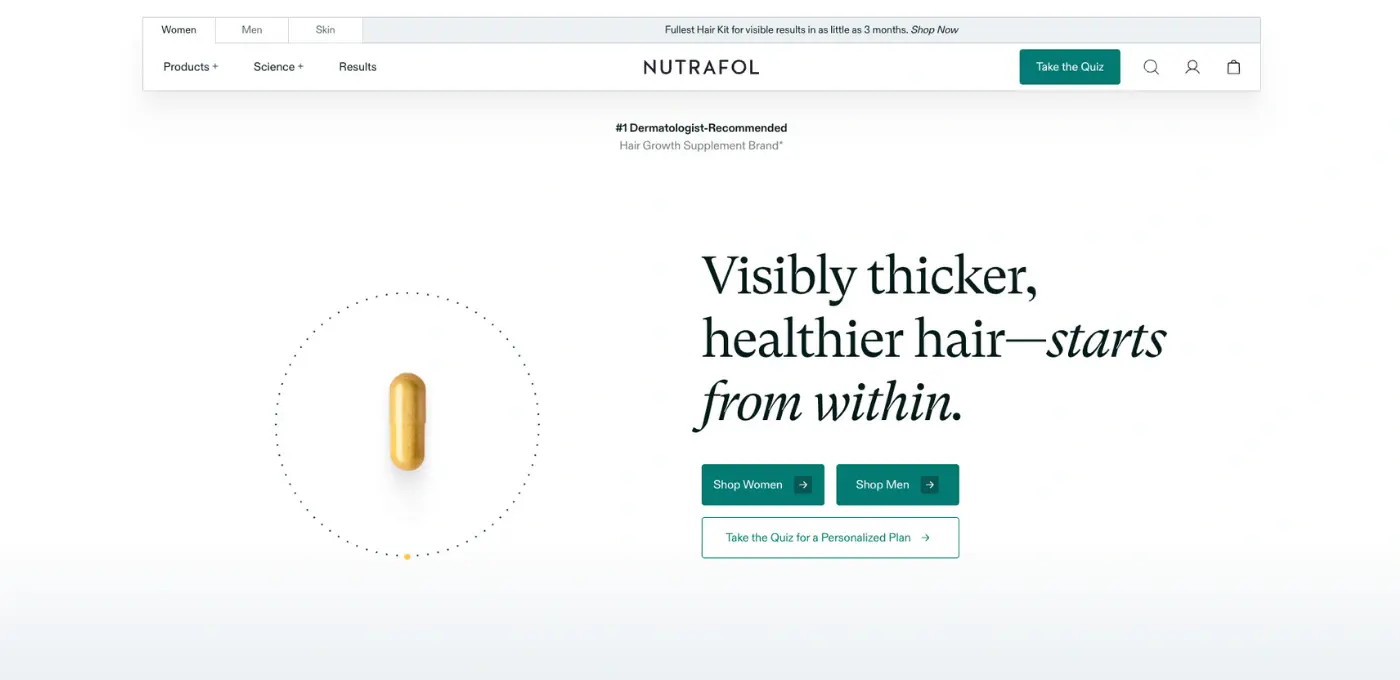
Nutrafol operates as nutraceutical supplement company selling proprietary botanical formulations marketed for hair growth support without prescription requirements. The company positions its products as natural, science-backed alternatives to pharmaceutical interventions, selling monthly supplement subscriptions at $88-98 for gender-specific formulations (Women, Men, Women's Balance, Postpartum). Nutrafol emphasizes whole-body wellness approach addressing inflammation, stress, hormones, and nutrition through ingredient combinations including ashwagandha, saw palmetto, marine collagen, and various vitamins. The company operates direct-to-consumer model without medical provider involvement, targeting consumers preferring supplement-based approaches over prescription medications for hair loss management.
This comparison examines fundamentally different hair loss treatment philosophies: Nurx's pharmaceutical prescription model using FDA-approved medications versus Nutrafol's nutraceutical supplement approach using botanical ingredients. The platforms differ in treatment mechanism (pharmaceutical intervention vs nutritional support), regulatory oversight (prescription medications vs dietary supplements), clinical evidence standards (FDA approval vs company-sponsored research), and medical supervision requirements (provider consultation vs direct-to-consumer). Selection depends on treatment philosophy preferences, evidence standard expectations, and comfort with pharmaceutical versus supplement-based approaches.
Treatment Approach: Pharmaceutical vs Nutraceutical
Nurx prescribes FDA-approved pharmaceutical treatments with established mechanisms of action: finasteride (1mg daily) inhibits 5-alpha reductase enzyme reducing DHT conversion responsible for androgenetic alopecia in men; spironolactone (anti-androgen) blocks testosterone receptors treating hormonal hair loss in women; minoxidil (topical vasodilator) prolongs anagen phase and increases follicle size in both sexes. These medications undergo rigorous FDA approval processes requiring double-blind placebo-controlled clinical trials demonstrating safety and efficacy. The pharmaceutical approach targets specific biological mechanisms causing androgenetic alopecia with quantifiable hair count improvements documented in peer-reviewed literature. Treatment requires medical provider evaluation and prescription oversight.
Nutrafol provides dietary supplements containing botanical extracts, vitamins, and minerals marketed for supporting hair growth through multiple pathways including reducing inflammation, balancing hormones, managing stress, and providing nutritional building blocks. The proprietary formulations include ingredients like ashwagandha (adaptogen for stress), saw palmetto (natural 5-alpha reductase inhibitor), marine collagen (protein source), tocotrienols (vitamin E), and curcumin (anti-inflammatory). As dietary supplements, Nutrafol products do not require FDA approval for efficacy claims and undergo less stringent regulatory oversight than pharmaceutical drugs. The company conducts some clinical studies on its formulations but lacks the extensive multi-decade evidence base supporting FDA-approved medications.
Source: Nutrafol clinical studiesThe treatment approach distinction reflects fundamentally different philosophies: pharmaceutical intervention targeting specific disease mechanisms with established efficacy data versus wellness support addressing multiple factors potentially affecting hair health. Nurx's medications demonstrate hair count increases in controlled clinical trials with predictable dose-response relationships, while Nutrafol's supplements provide nutritional support with less definitive evidence of direct hair growth stimulation in androgenetic alopecia. Patients prioritizing evidence-based pharmaceutical interventions typically prefer Nurx's prescription model; those preferring natural approaches or seeking complementary wellness support may choose Nutrafol's supplement formulations. The approaches are not mutually exclusive - some patients use both pharmaceutical treatments and nutritional supplements concurrently. Source: Pharmaceutical vs supplement approaches to hair loss
Evidence Base and Clinical Support
Nurx medications carry clinical evidence from published trials: finasteride and minoxidil are FDA-approved for hair loss, and spironolactone has been studied for female pattern hair loss. FDA approval requires rigorous evidence standards including large-scale randomized controlled trials, safety monitoring, and reproducible efficacy data. The pharmaceutical evidence enables realistic expectation-setting based on clinical trial outcomes rather than anecdotal reports.
Nutrafol conducts company-sponsored clinical studies on its proprietary formulations, including published research showing increased hair growth in women using Nutrafol supplements versus placebo groups. However, the evidence base differs in scope from pharmaceutical trials - company-funded studies on proprietary formulations versus independent replication of active ingredients, shorter study durations, and regulatory standards permitting dietary supplement marketing without FDA efficacy approval. Individual ingredients like saw palmetto show some 5-alpha reductase inhibition in laboratory studies, but clinical translation to measurable hair growth in androgenetic alopecia remains less definitive than pharmaceutical interventions. Dietary supplement regulations permit structure-function claims without requiring FDA review of efficacy evidence.
Source: Dietary supplement regulation vs pharmaceuticalsThe evidence quality distinction affects treatment confidence levels: Nurx's FDA-approved medications provide predictable efficacy based on strong independent research and regulatory scrutiny, while Nutrafol's supplements offer nutritional support with emerging but less established evidence for directly treating androgenetic alopecia. Patients requiring maximum evidence certainty for hair loss intervention typically select pharmaceutical options; those comfortable with supplement approaches or seeking complementary wellness support may find Nutrafol's formulations appealing. Neither approach guarantees results - hair loss treatment shows individual variation regardless of intervention type - but pharmaceutical evidence provides clearer statistical expectations for population-level responses. Source: Evidence standards in hair loss treatment
Pricing and Long-Term Cost Considerations
Nurx charges approximately $30-45 monthly for hair loss prescriptions depending on medication selection, with consultation fees typically bundled into subscription model. Finasteride or minoxidil alone costs lower end of range, while combination therapies or specialty formulations reach higher pricing tiers. The platform includes quarterly provider check-ins within subscription costs, creating predictable monthly expenses for pharmaceutical treatment. Annual costs reach approximately $360-540 for single medications or $540-660 for combination therapy, positioning Nurx mid-market for telemedicine hair loss services. Insurance acceptance varies by plan - prescription drug coverage may offset medication costs while consultation fees often fall outside standard benefits.
Source: Nurx pricing structure 2025Nutrafol charges $88 monthly for standard formulations (Women, Men) and $98 monthly for specialty versions (Women's Balance, Postpartum), with subscription discounts available for 3-month or 6-month advance purchases (typically 10-15% savings). Annual costs reach $1,056 for standard formulations ($88 x 12) without bulk discounts, substantially higher than pharmaceutical telemedicine pricing. As dietary supplements, Nutrafol purchases rarely qualify for insurance coverage or HSA/FSA reimbursement, creating exclusively out-of-pocket expense. The premium supplement pricing reflects direct-to-consumer branding, extensive marketing, and proprietary formulation positioning rather than commodity pharmaceutical pricing.
Source: Nutrafol pricing structure 2025Long-term cost comparison heavily favors Nurx's pharmaceutical model: $360-660 annually versus Nutrafol's $1,056+ annually represents substantial difference over multi-year treatment horizons typical for hair loss management. The Nutrafol premium reflects supplement industry pricing dynamics where branded formulations command higher margins than generic pharmaceutical alternatives. Patients prioritizing cost-effectiveness typically select pharmaceutical options providing FDA-approved efficacy at lower price points. Nutrafol's pricing suits consumers valuing natural approaches enough to accept premium costs, or those using supplements complementary to - rather than replacement for - pharmaceutical treatments. Source: Hair loss treatment cost analysis
Medical Supervision vs Direct-to-Consumer Model
Nurx requires medical provider consultation - nurse practitioners or physicians review patient medical histories, assess hair loss patterns through photographs and questionnaires, and prescribe medications based on clinical appropriateness. The platform conducts cardiovascular screening for finasteride contraindications, pregnancy planning assessment for women, and medication interaction reviews. Quarterly check-ins provide ongoing medical oversight, treatment adjustment opportunities, and side effect monitoring. This supervised model ensures appropriate patient selection, contraindication screening, and professional guidance throughout treatment. Prescription requirement creates access barrier requiring medical evaluation but provides safety oversight absent in direct-to-consumer supplement models. Source: Telemedicine prescription requirements
Nutrafol operates direct-to-consumer model without medical provider involvement - customers purchase supplements online without consultation, prescription, or ongoing medical supervision. The supplement status eliminates prescribing barriers, enabling immediate purchase without medical evaluation or screening for contraindications. This accessibility advantage allows self-directed treatment without appointment coordination or provider communication. However, the lack of medical oversight means no professional assessment of hair loss causes, no screening for underlying conditions requiring medical treatment, and no guidance on appropriateness for individual clinical situations. The model suits consumers comfortable with self-directed supplement use but provides no safety net for identifying cases requiring medical intervention. Source: Direct-to-consumer supplement models
The supervision distinction affects patient safety and clinical appropriateness: Nurx's medical oversight catches contraindications, identifies underlying medical causes requiring treatment, and provides professional treatment guidance, while Nutrafol's direct model maximizes accessibility but eliminates clinical safeguards. Patients with complex medical histories, multiple medications, or uncertain hair loss etiology benefit from Nurx's supervised approach. Those with straightforward situations and comfort with self-directed supplement use may prefer Nutrafol's frictionless purchasing. The supervision requirement protects pharmaceutical safety but creates access friction; direct-to-consumer convenience eliminates oversight but suits motivated self-care consumers.
Source: Medical supervision in hair loss treatmentGender Inclusivity and Formulation Options
Nurx serves both men and women with gender-appropriate pharmaceutical interventions: finasteride (1mg) for male pattern baldness, spironolactone for female androgenic hair loss, and minoxidil for both sexes. The platform adapts clinical protocols to gender-specific considerations including pregnancy contraindication management for women taking spironolactone, reproductive planning discussions for finasteride, and hormonal factor assessment in female hair loss evaluation. Gender-inclusive model accommodates diverse patient populations seeking similar telemedicine convenience, with medication selection tailored to biological appropriateness rather than universal formulations. The multi-category platform particularly benefits women managing multiple health needs simultaneously - coordinating hormonal birth control with anti-androgen therapy, for example. Source: Gender-specific hair loss treatment
Nutrafol offers gender-specific supplement formulations marketed for different patient populations: Nutrafol Women (standard female formula), Nutrafol Men (male-targeted blend), Women's Balance (perimenopause/menopause), and Postpartum (post-pregnancy recovery). The formulation differences reflect varying ingredient ratios and additions rather than fundamentally different treatment mechanisms - saw palmetto concentrations vary by gender, stress adaptogens adjusted by life stage, and collagen types selected for target demographics. The gender-specific marketing creates perception of tailored approaches though core ingredients overlap substantially across formulations. Both men and women can access Nutrafol products, with formulation selection based on demographic targeting rather than medical prescription requirements.
Source: Nutrafol product formulations 2025Both platforms accommodate male and female patients, though through different mechanisms: Nurx uses medical provider assessment to prescribe gender-appropriate pharmaceutical treatments, while Nutrafol uses marketing segmentation to direct consumers to formulations positioned for their demographics. The Nurx approach ensures biological appropriateness through clinical evaluation; the Nutrafol approach relies on consumer self-selection among marketed options. Neither model excludes gender groups - accessibility differences stem from prescription requirements versus direct purchase rather than demographic restrictions. Source: Gender considerations in hair loss products
How We Compared Nurx vs Nutrafol
Methodology & Clinical Evidence
This comparison synthesizes publicly available information about Nurx and Nutrafol service models, treatment approaches, pricing structures, and evidence bases as of our latest content review. Analysis incorporates platform marketing materials, product formulations, clinical study publications, and regulatory classification differences between prescription medications and dietary supplements. Clinical effectiveness assessments reference FDA approval standards for pharmaceutical treatments and available published research on Nutrafol formulations. The pharmaceutical versus nutraceutical distinction represents fundamental regulatory and evidence standard differences between prescription drugs requiring FDA efficacy approval and dietary supplements permitting structure-function claims without agency pre-market review. Cost comparisons reflect advertised pricing without accounting for individual insurance variables, bulk purchase discounts, or promotional offers. Gender-specific treatment considerations incorporate endocrinology and dermatology literature on androgenetic alopecia presentations. This analysis does not constitute medical advice; patients should consult licensed healthcare providers to determine appropriate hair loss treatment based on individual medical history, underlying conditions, and diagnostic evaluation requirements.
Final Verdict: Nurx vs Nutrafol
Final Verdict: Pharmaceutical Evidence vs Natural Wellness Approach
Nurx and Nutrafol represent fundamentally different hair loss treatment philosophies - FDA-approved pharmaceutical interventions with established efficacy evidence versus natural botanical supplements marketed for holistic wellness support. Optimal selection depends on treatment philosophy preferences, evidence standard expectations, budget considerations, and comfort with medical supervision versus self-directed supplement use.
Nurx excels for patients prioritizing evidence-based pharmaceutical treatments with predictable efficacy from decades of peer-reviewed research. The FDA-approved medications (finasteride, minoxidil, spironolactone) demonstrate hair count increases in large-scale clinical trials with well-documented safety profiles and medical provider oversight. The supervised telemedicine model ensures appropriate patient selection, contraindication screening, and ongoing clinical guidance throughout treatment. Lower costs ($360-660 annually) provide significant financial advantage over premium supplement pricing for patients committed to long-term hair loss management.
Nutrafol excels for consumers preferring natural botanical approaches, valuing wellness-oriented treatment philosophy, or seeking nutritional support complementary to pharmaceutical interventions. The direct-to-consumer model eliminates prescription requirements and medical appointment coordination, maximizing accessibility for motivated self-care consumers. Gender-specific formulations and marketing appeal to patients uncomfortable with pharmaceutical interventions or desiring whole-body wellness approaches addressing stress, inflammation, and nutrition alongside hair health.
The fundamental trade-off involves evidence certainty versus natural philosophy: Nurx provides maximum efficacy confidence through FDA-approved treatments with strong clinical trial data, while Nutrafol offers botanical alternatives with emerging but less definitive evidence for treating androgenetic alopecia. Cost differences are substantial - Nutrafol costs nearly double Nurx prescriptions annually - making financial consideration significant for multi-year treatment commitment. Neither approach guarantees results, and some patients use both concurrently despite limited evidence supporting combination therapy benefits.
Choose Nurx if:
- You prioritize FDA-approved pharmaceutical treatments with established efficacy evidence
- You want medical provider oversight, contraindication screening, and clinical guidance
- You seek most cost-effective option for long-term treatment ($360-660 annually)
- You prefer evidence-based interventions with predictable population-level response rates
- You have insurance potentially covering prescription medications reducing out-of-pocket costs
- You require gender-appropriate treatment selection through clinical evaluation (especially women)
- You value professional supervision monitoring treatment response and side effects
Choose Nutrafol if:
- You prefer natural botanical approaches over pharmaceutical interventions
- You value wellness philosophy addressing nutrition, stress, and inflammation
- You accept premium pricing ($1,056+ annually) for supplement formulations
- You want direct-to-consumer access without prescription requirements or medical appointments
- You seek complementary nutritional support alongside (not replacing) pharmaceutical treatments
- You prioritize natural ingredient marketing over pharmaceutical evidence standards
- You are comfortable with self-directed treatment without medical supervision
Bottom line: Nurx and Nutrafol serve different patient philosophies through fundamentally different treatment models - pharmaceutical prescription care versus botanical supplement wellness. Patients prioritizing evidence-based efficacy, medical supervision, and cost-effectiveness typically select Nurx's FDA-approved medications. Those valuing natural approaches, wellness philosophy, and direct-to-consumer convenience despite premium pricing may prefer Nutrafol's botanical formulations. The approaches are not mutually exclusive - some patients use both pharmaceutical treatments for direct hair growth stimulation and supplements for nutritional support - though combination therapy adds substantial cost without established evidence of synergistic benefit beyond pharmaceutical treatment alone.
Editorial Note: Researched and edited by our editorial team. AI tools assist with initial research and drafting; all content is fact-checked and edited by humans before publication. Learn more about our editorial standards