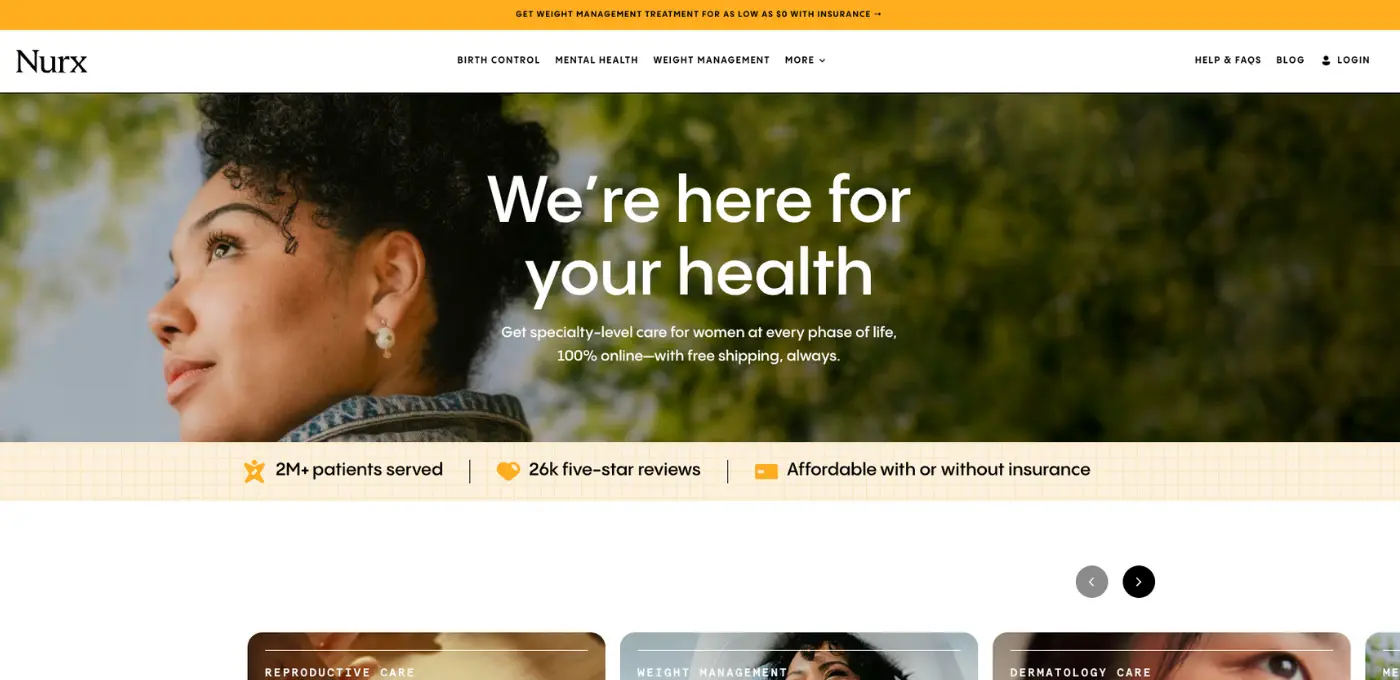
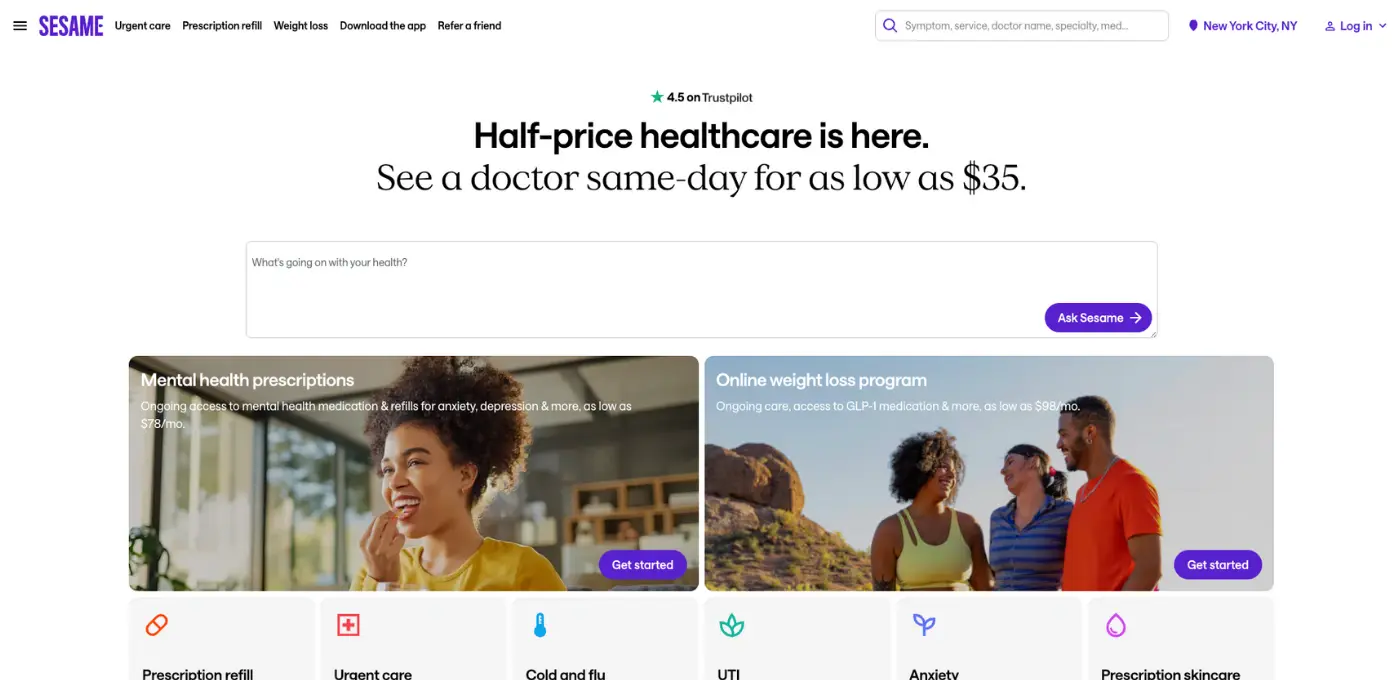
Nurx and Sesame Care represent fundamentally different healthcare delivery models - one a direct specialty women's health telehealth provider delivering integrated care through employed clinical teams with standardized protocols and platform accountability, the other a healthcare marketplace connecting patients with independent providers who each control their own clinical approaches, pricing, and quality without platform-level coordination or quality assurance. This detailed comparison analyzes business models, pricing structures, women's health specialization, care coordination capabilities, and quality assurance differences to help patients evaluate direct specialty provider with integrated women's health services versus marketplace facilitator offering independent provider access with complete variability in expertise and treatment approaches.
Platform Overview
Nurx launched in 2015 as a women's health specialist telehealth platform focused on reproductive health, birth control access, and female-specific healthcare needs. With 9+ years of history and deep specialization in women's health, Nurx has established itself as a leading specialty provider offering asynchronous consultations, integrated care across multiple women's health categories (reproductive health, dermatology, migraine treatment, mental health, weight loss), and convenient prescription delivery designed specifically for female patients, according to FDA prescribing information.
The platform emphasizes women's health expertise with providers specializing in reproductive medicine, hormonal health, and female-specific medical considerations. Nurx operates as a direct-to-patient specialty telehealth platform delivering integrated women's health services through its own clinical team with standardized care protocols, quality assurance systems, and coordinated treatment pathways designed around female patient needs.
Sesame Care launched in 2019 as a healthcare marketplace connecting patients directly with individual independent providers for cash-pay services across multiple specialties. Unlike dedicated telehealth platforms with employed clinical teams, Sesame Care functions as a directory and booking platform where independent physicians, nurse practitioners, and healthcare providers list their services at transparent cash-pay prices starting from $25-50 for initial consultations.
The marketplace model means Sesame Care itself does not provide healthcare - it connects patients with independent providers who each set their own prices, treatment approaches, service quality, and availability. For weight loss treatment specifically, patients can find hundreds of independent providers offering GLP-1 consultations and prescriptions, but with no platform-level standardization, no coordinated care pathways, no quality assurance protocols, and complete variability in clinical expertise, medication costs, and treatment philosophies depending on which individual provider a patient selects.
Business Model and Service Delivery
Nurx Direct Specialty Platform: Nurx operates as a direct telehealth provider with employed or contracted clinical teams delivering standardized women's health services through platform-controlled care protocols. The company takes responsibility for clinical quality, treatment consistency, medication fulfillment, patient support, and service delivery across all patients. Nurx designs treatment pathways, establishes clinical protocols, ensures quality standards, and maintains accountability for patient outcomes, according to
FDA safe online prescription checklist.
Patients interact with Nurx as the healthcare provider - the platform manages consultations, prescribes medications through its clinical team, coordinates prescription fulfillment, provides ongoing support, and maintains care continuity. Quality assurance, treatment protocols, and clinical oversight are standardized across all patients receiving services through the platform. The direct provider model means consistent service quality, coordinated care, and platform accountability for clinical outcomes.
Sesame Care Marketplace Facilitator: Sesame Care operates as a marketplace platform connecting patients with independent providers but does not deliver healthcare services itself. The company functions as booking infrastructure and payment processor - individual providers are responsible for all clinical care, treatment decisions, quality standards, and patient outcomes. Sesame Care facilitates discovery and payment but does not control clinical protocols, ensure quality consistency, or standardize treatment approaches.
Patients interact with independent providers directly after booking through Sesame Care - the individual provider prescribes medications, determines treatment approaches, manages follow-up care, and bears responsibility for clinical outcomes. Service quality, treatment philosophies, medication costs, and care coordination vary completely by provider selection. Some providers may offer broad care while others provide only basic prescription services. The marketplace model means no standardization, no quality guarantees, and patient responsibility for evaluating provider credentials and capabilities.
Model Comparison: Nurx delivers standardized women's health services through direct provider model with platform accountability for clinical quality, treatment consistency, and patient outcomes across all users. Sesame Care facilitates connections to independent providers with no standardization, no quality assurance, and complete provider-dependent variability in service quality and treatment approaches. For patients seeking consistent women's health expertise, standardized care protocols, and platform accountability, Nurx offers integrated specialty services. For patients wanting to select individual providers, negotiate pricing directly, and accept variability in exchange for potentially lower consultation costs, Sesame Care provides marketplace flexibility despite clinical uncertainty.
Pricing Structure and Cost Comparison
Nurx Transparent Specialty Pricing: Nurx operates with clear upfront pricing for each service category. Birth control consultations cost $15 with prescription costs varying by contraceptive method ($15-60/month for pills, $150-200 for injections). Weight loss GLP-1 medications range from $149/month for compounded semaglutide to $297/month for compounded tirzepatide, all-inclusive with consultation, medication, and shipping. Migraine treatment costs $89 consultation plus medication costs. Mental health consultations start at $99.
The pricing structure provides transparency - patients know total costs upfront including both consultation fees and medication costs bundled into monthly subscription pricing for most services. All consultation fees, prescriptions, and medication delivery are coordinated through single platform with standardized pricing across all patients. No surprise costs, no provider-dependent fee variability, and no separate negotiations for different service components.
Sesame Care Variable Marketplace Pricing: Sesame Care providers set individual pricing with typical consultation fees ranging from $25-80 for initial weight loss appointments and $40-60 for follow-ups, but varying significantly by provider. Medication costs are entirely separate - patients must obtain prescriptions through external pharmacies at whatever prices those pharmacies charge ($300-600/month typical for compounded semaglutide, $500-900/month for tirzepatide through standard compounding pharmacies).
Total monthly costs in Sesame Care model typically range from $350-700+ depending on provider consultation fees ($25-80 per visit), follow-up visit frequency (monthly, quarterly, or as-needed), and medication costs through separate pharmacies. Pricing is unpredictable - each provider sets different consultation fees, follow-up requirements vary, and pharmacy costs fluctuate. Patients manage multiple separate transactions (provider payment, pharmacy payment) with no coordinated pricing or bundled service costs.
Pricing Comparison: Nurx offers lower total costs for women's health services at $149-297/month all-inclusive for weight loss with transparent upfront pricing and bundled service delivery. Sesame Care total costs typically run $350-700/month with lower initial consultation fees ($25-80) but separate medication costs ($300-600/month) and unpredictable provider-dependent pricing. For budget-conscious patients seeking transparent women's health pricing, Nurx delivers $200-450/month savings versus typical Sesame Care total costs. However, Sesame Care's marketplace model allows finding individual providers with varying price points - some may offer lower consultation fees though medication costs remain similar requiring external pharmacy coordination.
Women's Health Specialization
Nurx Women's Health Platform: Nurx exclusively focuses on women's health with every service, provider, and treatment pathway designed specifically for female patients. Providers specialize in women's health with deep expertise in reproductive medicine, hormonal health, contraceptive management, pregnancy planning, and female-specific medical considerations. The platform offers interconnected women's health services - birth control, hormonal acne treatment, migraine management, weight loss with pregnancy planning coordination, PrEP, STI testing, and sexual wellness.
Women's health specialization means providers understand how women's health conditions interconnect - hormonal acne relationship with menstrual cycles, migraine patterns tied to hormones, weight loss coordination with contraception (critical given GLP-1 pregnancy contraindications), and extensive approach to female-specific health needs. Treatment protocols account for pregnancy planning, hormonal factors, menstrual cycle impacts, and female-specific considerations across all services. The exclusive women's health focus ensures deep expertise unavailable through generalist providers.
Sesame Care General Provider Marketplace: Sesame Care marketplace includes providers across all specialties serving all genders with no platform-level women's health focus. Patients can search for providers offering women's health services, but provider expertise, women's health specialization depth, and female-specific treatment considerations vary completely by individual provider selection. Some marketplace providers may have women's health expertise while others practice general primary care without specialized women's health training.
The marketplace includes no standardized women's health protocols, no platform-level expertise in reproductive medicine or hormonal health, and no coordinated women's health care pathways. Patients must independently evaluate which providers have women's health specialization, verify provider credentials in female-specific care, and assess whether providers consider hormonal factors, pregnancy planning, or female-specific medical considerations. The generalist marketplace means some providers may offer excellent women's health care while others provide basic services without specialized women's health expertise.
Specialization Comparison: Nurx delivers guaranteed women's health specialization with every provider exclusively focusing on female patients, deep expertise in reproductive medicine and hormonal health, and integrated care pathways designed around women-specific needs. Sesame Care offers no women's health specialization guarantee - care quality and expertise depend entirely on individual provider selection with no platform-level women's health focus. For female patients seeking women's health expertise, hormonal health integration, and providers deeply familiar with female-specific medical considerations, Nurx offers consistent specialization. For patients willing to research individual providers and accept variability in exchange for marketplace flexibility, Sesame Care provides possibilities for finding women's health specialists but no guarantees, according to FDA prescribing information.
Care Coordination and Service Integration
Nurx Integrated Platform Services: Nurx delivers coordinated care across multiple interconnected women's health services through single integrated platform. Patients can manage birth control, hormonal acne treatment, migraine medications, weight loss treatment, and sexual wellness through unified account with providers who access thorough health history and coordinate treatment across conditions. The integration allows comprehensive women's health management - providers understand how patient's birth control affects acne, how weight loss treatment requires contraception coordination, and how conditions interconnect.
Medication delivery, prescription refills, provider messaging, and health records are centralized through single platform. Providers can review patient's full-spectrum women's health profile when prescribing new treatments, coordinate medication interactions, and provide integrated care rather than siloed single-condition management. The platform coordinates prescription fulfillment, manages medication delivery, tracks treatment adherence, and maintains care continuity across multiple women's health categories simultaneously.
Sesame Care Fragmented Provider Relationships: Sesame Care marketplace creates fragmented care where patients book separate appointments with different independent providers for different conditions. No care coordination exists between providers - a patient seeing one provider for weight loss and another for dermatology receives completely disconnected care with no information sharing, no coordination of treatment approaches, and no integrated health management.
Patients must independently coordinate care across providers, manage separate medication prescriptions through different pharmacies, track multiple provider relationships, and ensure providers are aware of other treatments they're receiving. There is no centralized health record, no integrated medication management, and no platform-level care coordination. Each provider relationship is independent transaction - patients bear full responsibility for coordinating their own care, sharing health information between providers, and managing multiple disconnected healthcare relationships.
Coordination Comparison: Nurx offers integrated women's health platform with coordinated care across multiple services, unified health records, centralized medication management, and providers who access comprehensive patient health profiles when making treatment decisions. Sesame Care creates fragmented care with disconnected provider relationships, no care coordination, and patient responsibility for managing multiple independent healthcare transactions. For patients managing multiple women's health conditions who value integrated care coordination, Nurx delivers superior platform integration. For patients seeking single-issue consultations without need for coordinated care, Sesame Care's marketplace model may suffice despite fragmentation.
Platform Quality Assurance and Reliability
Nurx Platform Accountability: Nurx operates as direct healthcare provider with platform responsibility for clinical quality, treatment consistency, and patient outcomes. The company establishes clinical protocols, maintains quality assurance systems, ensures provider credentialing and training, monitors patient outcomes, and bears accountability for service delivery quality across all patients. With 9+ years of history, $100M+ funding, and a proven track record, Nurx demonstrates sustainable specialty women's health operations, according to
FDA safe online prescription checklist.
The direct provider model means Nurx implements quality standards, monitors treatment outcomes, addresses patient concerns, and maintains consistent service quality through platform-level oversight. Patients have recourse to platform for quality issues, standardized care protocols ensure treatment consistency, and platform accountability means Nurx incentivizes maintaining high-quality women's health services to sustain business operations and reputation.
Sesame Care Limited Platform Responsibility: Sesame Care operates as marketplace facilitator with no responsibility for clinical quality, treatment approaches, or patient outcomes - individual providers bear all clinical accountability. The platform does not establish clinical protocols, ensure quality standards, monitor treatment consistency, or oversee provider clinical decisions. Sesame Care focuses on marketplace infrastructure and payment processing rather than healthcare delivery quality.
Patients must independently evaluate provider quality through reviews, credentials, and personal research. No platform-level quality assurance ensures clinical consistency, treatment efficacy, or provider expertise. Some marketplace providers may deliver excellent care while others provide substandard services - Sesame Care does not differentiate or ensure quality thresholds. The marketplace model means patient responsibility for assessing provider quality and accepting clinical risk based on individual provider selection.
Quality and Reliability Assessment: Nurx offers platform accountability with quality assurance systems, standardized clinical protocols, 9+ years proven operations, and direct responsibility for patient outcomes across all services. Sesame Care provides marketplace with no quality guarantees, no standardized protocols, provider-dependent clinical quality, and limited platform accountability for healthcare delivery. For patients prioritizing consistent quality, proven reliability, and platform accountability for women's health services, Nurx delivers superior assurance. For patients comfortable evaluating individual providers and accepting variability in exchange for marketplace flexibility, Sesame Care offers alternatives despite quality uncertainty.
How We Compared Nurx vs Sesame Care
Our Comparison Methodology
This comparison analyzes business models, pricing structures, women's health specialization, care coordination, and quality assurance to evaluate Nurx and Sesame Care as healthcare options. Our analysis prioritizes understanding fundamental differences between direct specialty telehealth providers and healthcare marketplaces that impact treatment consistency, quality assurance, and patient experience.
Clinical Evidence: Weight loss treatment recommendations reference FDA Wegovy prescribing information for semaglutide, FDA Zepbound prescribing information for tirzepatide.
Women's Health Clinical Standards: Women's health service evaluation references American College of Obstetricians and Gynecologists (ACOG) guidelines for reproductive health, North American Menopause Society recommendations for hormonal health, and Centers for Disease Control contraceptive guidance for birth control standards.
Healthcare Marketplace Analysis: Marketplace model assessment references National Academy of Medicine frameworks for healthcare quality, Agency for Healthcare Research and Quality (AHRQ) care coordination standards, and telehealth quality research on direct provider versus marketplace platform models for evaluating quality assurance differences.
Pricing Analysis: Nurx pricing verified through direct website review and service documentation January 2026 with transparent upfront costs for each service category. Sesame Care marketplace pricing analyzed through provider listings showing typical consultation fee ranges ($25-80), with medication costs based on standard compounding pharmacy and retail pharmacy pricing for GLP-1 medications requiring separate fulfillment.
Service Model Verification: Business model differences confirmed through platform descriptions, service delivery approaches, provider relationship structures, and comparison of direct telehealth provider accountability versus marketplace facilitator roles.
Operational Assessment: Nurx history (9+ years), funding ($100M+), and women's health specialization evaluated through Crunchbase data and public disclosures. Sesame Care marketplace model (5+ years operational) assessed through platform infrastructure, provider network scale, and marketplace facilitation approach.
Limitations: Sesame Care marketplace model creates inherent quality variability - our analysis cannot predict individual provider service quality, clinical expertise, or treatment approaches since these vary completely by provider selection. Pricing comparisons reflect typical marketplace costs but individual providers may charge different fees. Neither platform provided formal response to methodology review. This analysis reflects fundamental business model differences between direct specialty provider and healthcare marketplace.
Last updated: January 2026
Final Verdict: Nurx vs Sesame Care
Choose Nurx if: You are a female patient seeking women's health expertise through direct specialty telehealth provider with standardized care protocols, platform accountability for clinical quality, transparent all-inclusive pricing ($149-297/month for weight loss), integrated care coordination across multiple women's health services, and providers exclusively focused on female-specific medical considerations including reproductive medicine and hormonal health. You value consistent service quality through platform oversight, want coordinated care across interconnected women's health conditions (birth control, hormonal acne, migraine treatment, weight loss), and prefer transparent bundled pricing over managing multiple separate provider relationships and pharmacy transactions. Appropriate for women prioritizing women's health care, treatment consistency, and integrated platform services.
Choose Sesame Care if: You want marketplace flexibility to select individual independent providers with potentially lower initial consultation costs ($25-80 range), are comfortable independently evaluating provider credentials and quality without platform guarantees, accept fragmented care across disconnected provider relationships, and are willing to manage separate consultations, prescriptions, and pharmacy fulfillment transactions. You are willing to invest time researching providers, accept higher total costs ($350-700/month typically for weight loss including medications) despite lower consultation fees, and prefer direct provider selection over standardized platform services. Appropriate for patients comfortable with marketplace uncertainty, willing to coordinate their own fragmented care, and accepting provider-dependent quality variability.
Bottom line: Nurx and Sesame Care represent fundamentally different healthcare delivery models - one a direct specialty women's health provider with platform accountability, standardized protocols, and integrated care coordination, the other a marketplace facilitator connecting patients with independent providers without quality assurance or care coordination. Nurx delivers women's health expertise with guaranteed provider focus on female patients, transparent bundled pricing providing $200-450/month savings versus typical marketplace costs, integrated care across multiple women's health services, and platform accountability for clinical quality and treatment consistency. Sesame Care offers marketplace access to independent providers with lower consultation fees ($25-80) but higher total costs when including separate medication expenses ($350-700/month typical), fragmented care requiring patient coordination across disconnected providers, provider-dependent quality without platform guarantees, and no women's health specialization assurance. For female patients seeking women's health care with reproductive medicine expertise, hormonal health integration, coordinated treatment across multiple conditions, and consistent quality through platform oversight, Nurx delivers superior women-focused specialty telehealth with integrated services and transparent pricing. For patients prioritizing marketplace provider selection flexibility and willing to accept quality variability, fragmented care, higher total costs, and responsibility for evaluating individual provider credentials, Sesame Care provides marketplace alternatives despite lacking the specialized women's health focus, care coordination, and quality assurance that direct specialty platforms offer.
Editorial Note: Researched and edited by our editorial team. AI tools assist with initial research and drafting; all content is fact-checked and edited by humans before publication. Learn more about our editorial standards