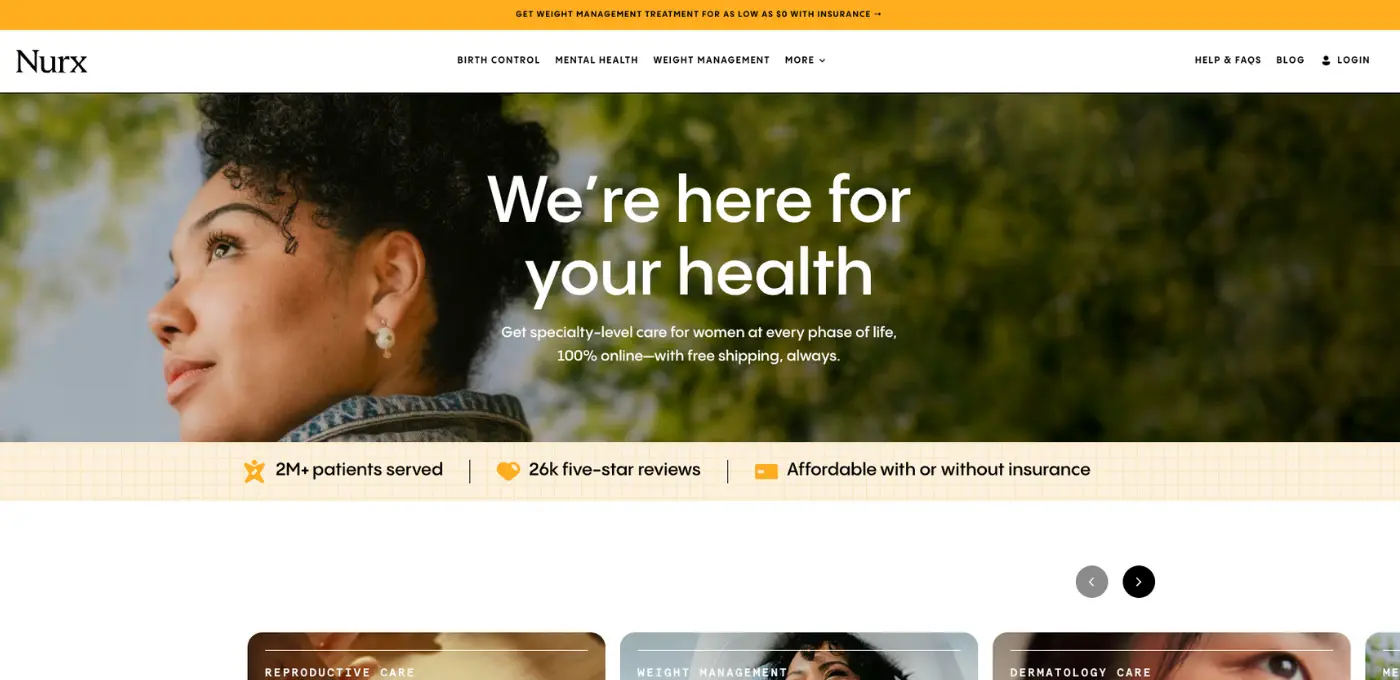
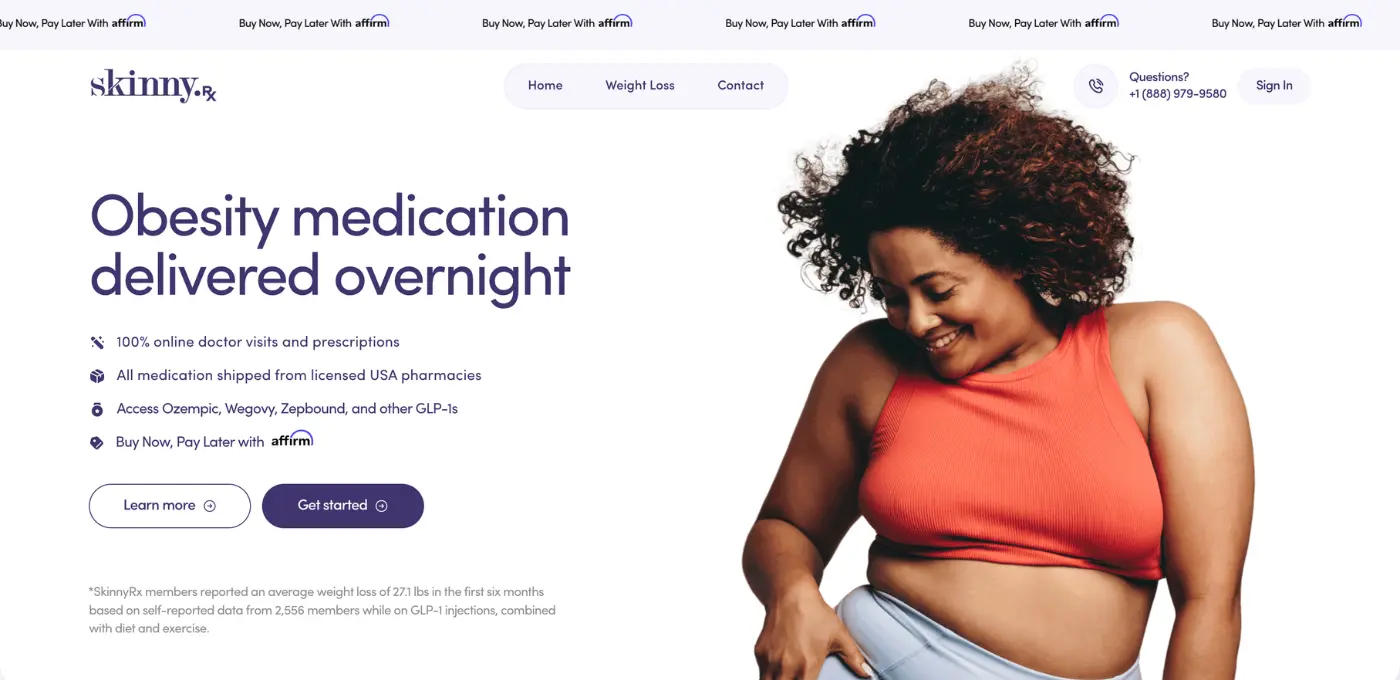
Nurx and Skinny.rx represent opposite ends of the weight loss telehealth spectrum - women's health specialization with reproductive medicine coordination versus ultra-budget transactional GLP-1 access. Nurx offers integrated care across birth control, hormonal health, and weight management at $149-297/month, while Skinny.rx provides basic compounded semaglutide access at $49-99/month. This comparison analyzes whether Nurx's women's health expertise and clinical coordination justify $1,200-2,376/year premium over Skinny.rx's cost-optimized approach, helping female patients decide between integrated reproductive medicine care and budget-focused single-category treatment.
Platform Overview
Nurx launched in 2015 as a women's health specialist telehealth platform initially focused on birth control access, later expanding into broader women's health categories including migraine treatment, dermatology, mental health, weight loss, and sexual wellness. With 9+ years of history, significant venture funding, and a focused mission on women's healthcare access, Nurx has established itself as a leading specialty telehealth provider serving primarily female patients across multiple interconnected health categories.
The platform emphasizes discreet, convenient access to medications and treatments that women historically faced barriers obtaining, including emergency contraception, PrEP for HIV prevention, genital herpes treatment, and now GLP-1 weight loss medications. Nurx operates with licensed healthcare providers across all 50 states, offering asynchronous consultations, home delivery of medications, and specialty-specific care pathways designed around women's health needs rather than general primary care models. For weight loss treatment, Nurx charges $149-297/month depending on medication tier and dosage escalation.
Skinny.rx launched in 2023 as an ultra-budget weight loss telehealth startup focused exclusively on GLP-1 medication access at the lowest possible price point. With less than 2 years of history, minimal public funding information, and a singular focus on cost-optimized weight loss treatment, Skinny.rx positions itself as the most affordable GLP-1 option in the telehealth market at $49-99/month for compounded semaglutide, according to
FDA compounding regulations.
The platform offers basic asynchronous consultations with nurse practitioners or physicians, direct-to-consumer shipping of compounded GLP-1 medications, and minimal ongoing support beyond medication refills. Skinny.rx serves patients across multiple states with focus on transactional efficiency rather than full care coordination, lifestyle programming, or specialty expertise in women's health or metabolic medicine.
Service Scope and Specialization
Nurx Women's Health Specialization: Nurx offers services across seven interconnected women's health categories: birth control and emergency contraception, migraine treatment, genital herpes and PrEP, skin care and anti-aging treatments, mental health medications, weight loss with GLP-1s, and sexual wellness. This integrated approach allows coordination between reproductive health needs, hormonal considerations, and weight management goals - particularly valuable for women managing PCOS, hormonal imbalances affecting weight, or contraception choices influenced by metabolic health, according to
FDA semaglutide safety information.
The platform's weight loss program integrates with broader women's health expertise, offering provider coordination between contraception management (critical given pregnancy risks with GLP-1s), hormonal health considerations, and metabolic medicine. Nurx providers can address how weight loss medications interact with birth control efficacy, menstrual cycle changes during weight loss, and reproductive health planning - clinical integration impossible with single-category platforms. This specialization particularly benefits women seeking weight loss treatment alongside reproductive medicine needs, according to
Kaiser Family Foundation coverage analysis.
Skinny.rx Ultra-Budget Weight Loss Focus: Skinny.rx offers exclusively weight loss treatment with compounded semaglutide, with no additional health categories, specialty services, or integrated care coordination. The platform provides basic medical consultations focused solely on GLP-1 eligibility screening, prescription authorization, and medication refills without lifestyle programming, nutritional counseling, or coordination with other health needs.
This narrow focus enables aggressive cost optimization but eliminates clinical integration benefits. Patients managing multiple health conditions, taking other medications, or needing reproductive health coordination must coordinate care independently across multiple platforms. For women specifically, Skinny.rx providers cannot address contraception interactions, hormonal considerations, or reproductive medicine integration - requiring separate women's health providers for care coordination that Nurx offers within single platform.
Pricing and Cost Structure
Nurx Pricing Model: Nurx charges $149-297/month for weight loss treatment depending on medication tier (compounded semaglutide vs tirzepatide) and dosage escalation schedule. This pricing includes medical consultations, ongoing provider access, medication costs, and shipping with no separate consultation fees. The platform accepts insurance for consultations but not for compounded GLP-1 medications, requiring out-of-pocket payment for prescriptions.
For women using multiple Nurx services, the platform offers bundled coordination benefits rather than formal package discounts - single provider team managing birth control, migraine treatment, and weight loss medications with integrated clinical oversight. This coordination reduces administrative burden and enables better clinical decision-making around medication interactions and reproductive health considerations. Annual costs for weight loss alone range $1,788-3,564 depending on medication tier and dosage progression.
Skinny.rx Ultra-Budget Pricing: Skinny.rx charges $49-99/month for compounded semaglutide access - among the lowest GLP-1 pricing in the telehealth market. This aggressive pricing reflects minimal overhead, basic consultation models, no lifestyle programming, and focus on transactional efficiency rather than care. The platform includes consultation fees within monthly pricing but offers no additional services or clinical integration.
Annual costs range $588-1,188 for compounded semaglutide - representing $1,200-2,376/year savings compared to Nurx's pricing. However, these cost savings come with significant tradeoffs: no women's health specialization, no reproductive medicine coordination, minimal ongoing clinical support, and uncertainty about long-term sustainability given ultra-low pricing and new market entry. For patients needing only basic GLP-1 access without additional health coordination, the cost difference is substantial. For women needing reproductive health integration, the savings may not offset coordination complexity.
Women's Health Integration and Clinical Coordination
Nurx Reproductive Medicine Integration: Nurx's women's health specialization provides critical clinical coordination for female patients pursuing weight loss treatment. GLP-1 medications carry significant pregnancy risks requiring reliable contraception, and weight loss itself affects menstrual regularity, hormonal balance, and fertility. Nurx providers can coordinate contraception methods accounting for GLP-1 use, adjust hormonal treatments as weight changes, and manage reproductive health planning within integrated care model.
This integration proves particularly valuable for women with PCOS (where weight loss and contraception management are interconnected), those managing hormonal migraines affected by weight changes, or patients needing PrEP coordination alongside metabolic treatment. The platform's providers understand women's health context beyond basic weight loss eligibility - considering menstrual cycle impacts, hormonal contraception interactions, and reproductive health goals in treatment planning.
According to ACOG guidelines, obesity management in women requires coordination with reproductive health services, contraception counseling, and preconception planning - exactly the integration Nurx offers.
Skinny.rx Single-Category Limitations: Skinny.rx offers no women's health specialization, reproductive medicine coordination, or integrated care planning beyond basic weight loss eligibility screening. Providers assess GLP-1 candidacy based on BMI, medical history, and contraindications but cannot coordinate contraception needs, hormonal health considerations, or reproductive medicine planning within their service scope.
Women using Skinny.rx must independently coordinate contraception management with separate providers, ensure birth control reliability given GLP-1 pregnancy risks, and manage any menstrual cycle changes or hormonal impacts from weight loss through different healthcare channels. This fragmented care increases administrative burden and clinical risk - particularly for women with PCOS, hormonal imbalances, or complex reproductive health needs where weight management and hormonal treatments require integrated oversight. The $100-200/month cost savings come with complete loss of women's health specialization and clinical coordination benefits.
Platform Maturity and Service Reliability
Nurx Established Infrastructure: With 9+ years of history since 2015 launch, Nurx has developed mature systems, regulatory compliance infrastructure, and proven service delivery capabilities. The platform has navigated multiple regulatory challenges around prescription medication access, maintains licenses across all 50 states, and has established supply chain relationships ensuring medication availability and consistent quality standards.
Nurx's maturity shows in consistent service delivery, established customer support systems, proven handling of insurance billing complexity, and track record managing compounded medication quality concerns. The platform has survived multiple telehealth market contractions, regulatory crackdowns, and funding environment changes - demonstrating business model sustainability and resilience. For patients committing to multi-year weight loss treatment, this track record provides confidence in continued service availability and quality maintenance.
Skinny.rx Startup Uncertainty: With less than 2 years of history since 2023 launch, Skinny.rx represents unproven business model sustainability and risk. The platform's ultra-low pricing ($49-99/month) raises questions about long-term financial viability, quality maintenance under cost pressure, and ability to sustain operations through inevitable regulatory changes or compounded medication supply challenges.
New telehealth startups frequently fail within first 2-3 years due to regulatory compliance costs, inability to scale customer support efficiently, or unsustainable pricing models that cannot support quality operations.
FDA's increased scrutiny of compounded GLP-1s announced in 2024 creates regulatory uncertainty where maturity and compliance infrastructure become critical. Patients choosing Skinny.rx accept significant risk of service disruption, quality deterioration under cost pressure, or complete business failure mid-treatment - risks established platforms like Nurx have already demonstrated ability to navigate.
Clinical Support and Ongoing Care
Nurx Integrated Clinical Support: Nurx provides ongoing access to licensed healthcare providers through asynchronous messaging, medication adjustment support, side effect management guidance, and coordination with other health services. While not offering live video visits or dedicated health coaching, the platform's providers can address clinical questions within 24-48 hours and coordinate care across multiple health categories for patients using multiple Nurx services, according to
FDA GLP-1 safety warnings.
The women's health specialization means providers understand context beyond basic GLP-1 management - recognizing menstrual cycle impacts, hormonal considerations, and reproductive health implications of weight loss treatment. This expertise proves valuable when addressing side effects, adjusting dosages around menstrual cycles, or coordinating medication timing with other women's health treatments. Nurx also provides educational resources specific to women's weight loss considerations and hormonal health impacts, according to
FDA semaglutide safety information.
Skinny.rx Minimal Ongoing Support: Skinny.rx offers basic provider messaging for medication refills and clinical emergencies but provides minimal proactive support, lifestyle guidance, care coordination. The platform's ultra-low pricing reflects minimal clinical support infrastructure - providers focused on prescription authorization and basic safety monitoring rather than ongoing treatment optimization or side effect management.
Patients experiencing GLP-1 side effects, needing dosage adjustments, or managing treatment complications must navigate these challenges with minimal provider engagement. The lack of women's health expertise means providers cannot address hormonal considerations, menstrual cycle impacts, or reproductive health concerns - requiring patients to seek external specialists for care. For straightforward cases with minimal complications, this basic support may suffice. For patients needing active clinical management or women with complex hormonal health considerations, the minimal support model creates gaps in care quality and treatment optimization.
How We Compared Nurx vs Skinny.Rx
This comparison analyzes Nurx and Skinny.rx based on service scope, pricing models, women's health specialization, clinical integration, and maturity. Analysis incorporates clinical research on obesity management in women requiring reproductive health coordination, regulatory guidance on compounded medication quality, and considerations for long-term weight loss treatment sustainability.
Clinical Evidence:
- ACOG Committee Opinion on Obesity and Reproduction - Guidelines emphasizing reproductive health coordination in women's weight management
- FDA's Concerns with Unapproved GLP-1 Drugs Used for Weight Loss - Regulatory framework for quality and safety oversight
- Endocrine Society Guidelines on Obesity Management - Clinical standards for obesity treatment
Pricing Analysis:
- Nurx: $149-297/month ($1,788-3,564/year) for compounded GLP-1s with women's health integration
- Skinny.rx: $49-99/month ($588-1,188/year) for basic GLP-1 access without specialty coordination
- Cost difference: $1,200-2,376/year savings with Skinny.rx but loss of women's health specialization
Service Differentiation:
- Nurx offers integrated women's health platform with reproductive medicine coordination across 7 health categories
- Skinny.rx provides ultra-budget single-category GLP-1 access with minimal clinical support
- Women's health specialization vs cost optimization positioning
Quality Considerations:
- Maturity: 9+ years (Nurx) vs <2 years (Skinny.rx)
- Clinical integration: Women's health coordination vs single-category transactional model
- Sustainability: proven business model vs unproven ultra-low pricing sustainability
Final Verdict: Nurx vs Skinny.Rx
Choose Nurx if: You are a woman seeking weight loss treatment with reproductive health considerations, need contraception coordination alongside GLP-1 use, want integrated women's health care across multiple categories, require provider expertise in hormonal health and metabolic medicine, value maturity and proven service sustainability, or have PCOS, menstrual irregularities, or other conditions requiring coordinated care.
Choose Skinny.rx if: You need only basic GLP-1 access without additional health services, have no women's health coordination needs or reproductive medicine considerations, want the lowest possible GLP-1 pricing regardless of service limitations, can manage fragmented care across multiple providers independently, accept uncertainty from new market entrant, and prioritize cost savings over integrated clinical support.
Bottom line: Nurx and Skinny.rx represent fundamentally different approaches - women's health specialization with integrated reproductive medicine coordination versus ultra-budget transactional GLP-1 access. Nurx charges $100-200/month premium for women's health expertise, contraception coordination, hormonal health integration, and proven sustainability. Skinny.rx offers significant cost savings but eliminates women's health specialization and clinical integration benefits critical for female patients. For women needing reproductive medicine coordination, PCOS management, or integrated hormonal health care, Nurx's premium pricing delivers essential clinical value. For patients seeking only basic GLP-1 access without women's health considerations, Skinny.rx's ultra-low pricing may suffice despite minimal support and uncertainty.
Editorial Note: Researched and edited by our editorial team. AI tools assist with initial research and drafting; all content is fact-checked and edited by humans before publication. Learn more about our editorial standards