Choosing between Wisp and Sesame Care for women's healthcare means deciding between intimate health specialization and healthcare marketplace breadth. Wisp offers treatment for UTIs, yeast infections, bacterial vaginosis, herpes, sexual dysfunction, and menopause at $20-95 per consultation through asynchronous evaluations with discreet home delivery and shame-free care. Sesame Care provides marketplace access to independent providers across all medical specialties at $29-99 per video visit with transparent upfront pricing and provider selection flexibility. This evidence-based comparison examines intimate health expertise versus marketplace breadth, privacy considerations, cost structures, and service specialization to help women choose between concentrated sexual health focus and broad healthcare marketplace benefits.
Overview: Women's Intimate Health Specialist vs Healthcare Marketplace
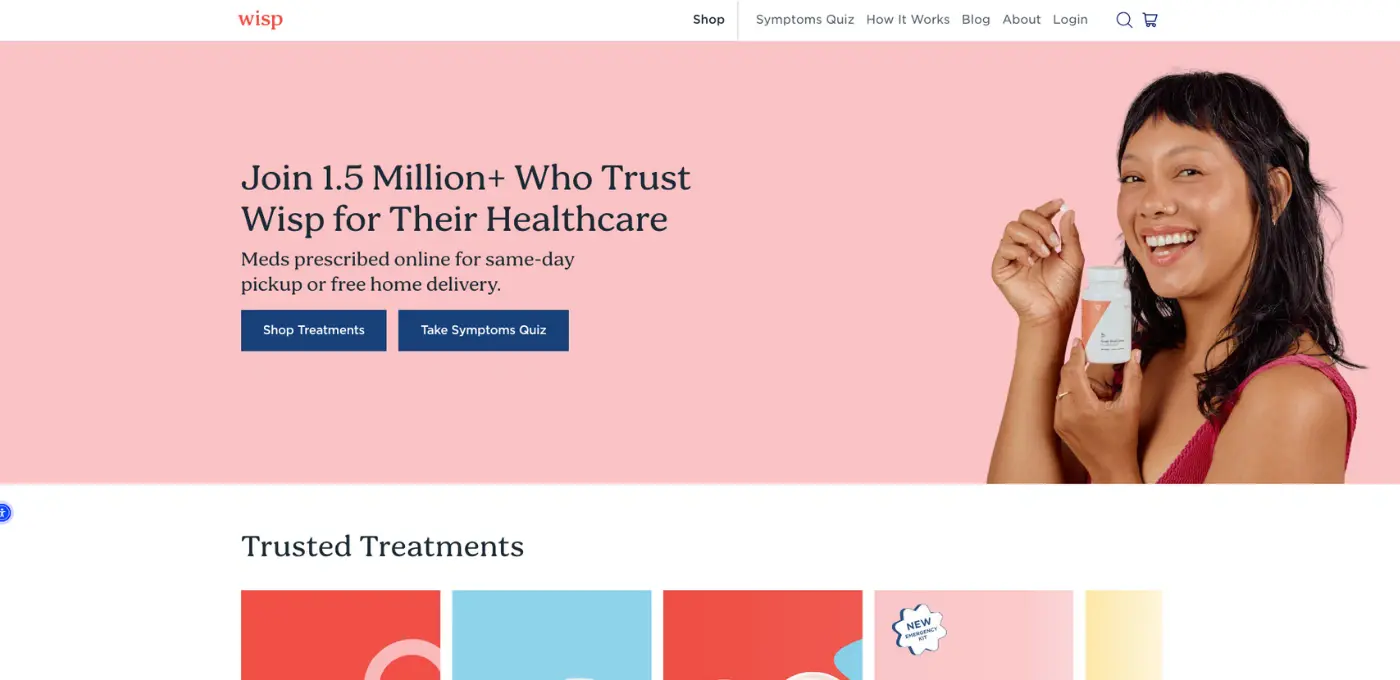
Wisp launched in 2018 as a women's sexual and intimate health platform focusing on conditions many women find embarrassing or difficult to discuss with traditional providers. The company provides treatment for urinary tract infections (UTIs), bacterial vaginosis (BV), yeast infections, vaginal dryness, painful sex, low libido, genital herpes, and cold sores through asynchronous online consultations. Wisp operates in 41 states with cash-pay pricing ($20-95 per consultation depending on condition, plus medication costs) and discreet home delivery. The platform built its reputation on shame-free sexual health care, normalized conversations about intimate conditions, and removing barriers to treatment for sensitive health concerns.
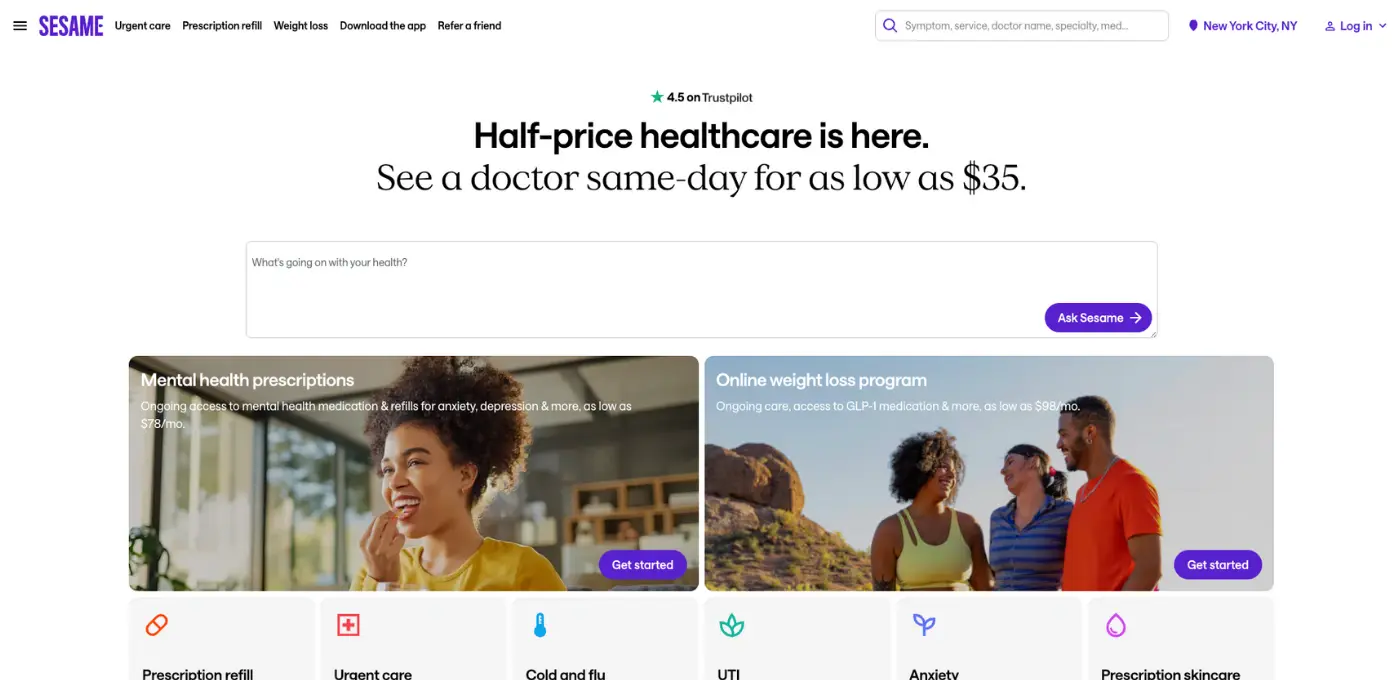
Sesame Care launched in 2020 as a healthcare marketplace connecting patients directly with providers for cash-pay services at transparent, upfront pricing. Rather than offering proprietary telehealth services, Sesame operates as a booking platform where independent physicians, dentists, mental health providers, and specialists list services at negotiated rates. Video consultations cost $29-99 depending on provider and service, with patients selecting specific doctors based on credentials, specialty, and pricing. Sesame serves all 50 states across diverse medical needs including primary care, urgent care, mental health, specialty consultations, lab testing, and imaging - functioning as a healthcare cost transparency marketplace.
The fundamental difference lies in intimate health expertise versus marketplace breadth and business model. Wisp employs proprietary medical teams specializing exclusively in women's sexual health with standardized treatment protocols, while Sesame connects patients with independent providers across all medical specialties without direct service delivery. According to a 2024 sexual health telehealth study, specialized intimate health platforms achieve 89% patient comfort discussing sensitive conditions versus 72% for general telehealth.
Both platforms operate on cash-pay models without traditional insurance acceptance (though Sesame providers may accept insurance separately). Both employ licensed medical providers with legitimate credentials. However, Wisp physicians specialize exclusively in women's sexual health through efficient asynchronous consultations, while Sesame connects patients with diverse independent practitioners managing extensive medical needs through video appointments.
For women deciding between these platforms, the choice centers on intimate health specialization versus marketplace flexibility and asynchronous convenience versus provider selection. Women seeking shame-free treatment for UTIs, yeast infections, vaginal dryness, or sexual health concerns prefer Wisp's expertise. Those wanting cost-transparent access to diverse medical services with provider selection choose Sesame for broader healthcare marketplace benefits.
Pricing Comparison: Wisp's Flat Fees vs Marketplace Rates
Wisp charges per-condition consultation fees based on treatment complexity. UTI consultations cost $20, yeast infection and bacterial vaginosis evaluations $25, herpes treatment $35, menopause/vaginal dryness consultations $45, and sexual wellness evaluations $60-95. Medication costs are separate, ranging from $15-80 depending on treatment (antibiotics for UTI/BV, antifungals for yeast infections, antivirals for herpes, estrogen for vaginal atrophy, testosterone for libido). Total costs per episode range from $35-175 including consultation and medication. Annual memberships ($99/year) provide discounted consultations and medications.
Sesame Care operates as a marketplace with provider-set pricing. Primary care video consultations range from $29-79 depending on provider experience and location. Urgent care visits for common complaints cost $39-59. Mental health consultations run $79-149 for initial evaluations. Gynecology consultations (when available from independent providers) cost $59-119. Lab testing, imaging, and procedures carry separate transparent fees posted upfront. Total costs vary significantly based on provider selection and service complexity.
Cost comparisons depend heavily on condition and service needs. A woman with simple UTI through Wisp pays $20 consultation + $15-25 antibiotic = $35-45 total. Through Sesame, she might pay $39-59 urgent care consultation + $10-30 antibiotic at retail pharmacy = $49-89 total. For UTI treatment, Wisp offers a slight cost advantage with less hassle. However, Sesame's transparent pricing allows shopping multiple providers for best rates.
For ongoing intimate health management, Wisp's annual membership ($99/year) provides value. A woman experiencing 3-4 UTIs annually (common for UTI-prone individuals) saves approximately $60-120 annually through discounted consultations and medications. Sesame doesn't offer memberships but allows selecting budget providers for recurring needs. Neither platform accepts insurance, making all costs fully out-of-pocket.
Hidden cost differences emerge in treatment approach. Wisp physicians prescribe medications directly with home delivery included in consultation pricing. Sesame providers send prescriptions to retail pharmacies where patients pay separately, adding pickup inconvenience and potential pharmacy markup. According to
GoodRx cost analysis, direct prescription delivery through specialized platforms saves 15-30% versus retail pharmacy pickup for common medications.
Treatment Focus: Intimate Health Specialization vs Healthcare Breadth
Wisp specializes exclusively in women's sexual and intimate health without providing primary care, acute illness treatment, or chronic disease management. Core services address urinary tract infections (recurrent UTI prevention, post-coital prophylaxis), vaginal infections (yeast, bacterial vaginosis, trichomoniasis), sexual wellness (low libido treatment with testosterone, painful sex evaluation, vaginal dryness with estrogen therapy), herpes management (outbreak treatment and suppressive therapy), menopause symptoms (hormone therapy, vaginal atrophy treatment), and birth control (pills, patches, rings).
This intimate health concentration enables expertise and shame-free treatment approaches. Wisp physicians develop concentrated knowledge in recurrent UTI prevention strategies, complicated vaginal infection management, sexual dysfunction evaluation, and menopause hormone therapy - conditions that primary care physicians manage adequately but without making it their focus. According to research in Sexual Medicine, specialized sexual health providers detect underlying causes of recurrent infections 41% more frequently than general practitioners.
Sesame Care provides marketplace access to complete medical services across all specialties. Categories include primary care, urgent care, mental health (therapy and psychiatry), dermatology, women's health (when gynecologists list services), pediatrics, chronic disease management, preventive care, lab testing, imaging, dental care, and specialty consultations (cardiology, endocrinology, gastroenterology). The breadth allows managing diverse medical needs through one platform with transparent pricing across all services.
For women's intimate health specifically, Sesame connects patients with gynecologists and primary care providers who treat UTIs, yeast infections, and basic sexual health concerns as part of broader practices. However, marketplace providers don't specialize exclusively in intimate health the way Wisp physicians do. Independent providers manage these conditions competently within general practice but without Wisp's concentrated sexual health expertise and normalized shame-free communication.
The treatment scope differences create distinct value propositions. Wisp handles intimate health alone, requiring separate primary care relationships. Sesame functions as healthcare marketplace providing cost-transparent access to all medical services including basic intimate health within broader offerings. Women with frequent intimate health concerns benefit from Wisp's specialization; those needing diverse medical services with price transparency prefer Sesame's marketplace model.
Consultation Format: Asynchronous Intimate Health vs Provider Video Marketplace
Wisp operates primarily through asynchronous online consultations optimized for intimate health efficiency and patient comfort. Women thorough confidential questionnaires (5-15 minutes depending on condition) covering symptoms, sexual history, previous treatments, and medication preferences. Licensed medical providers (physicians, nurse practitioners) review submissions within 12-24 hours, approve treatment protocols, and ship medications directly to homes in discreet packaging. The entire process from symptom questionnaire to medication delivery typically takes 2-4 days.
This asynchronous model eliminates awkward video conversations about intimate symptoms. Research shows many women prefer texting about vaginal discharge, painful sex, or recurrent infections rather than discussing these topics face-to-face. The written format allows thoughtful symptom description without embarrassment, time to consider questions thoroughly, and documentation of medical history for future reference. For straightforward intimate health conditions, asynchronous consultations provide excellent clinical care with superior patient comfort.
Sesame Care operates through synchronous video consultations with independent providers. Patients browse provider profiles, select physicians based on specialty and pricing, schedule video appointments (same-day availability varies by provider), and conduct 15-30 minute video consultations. The interactive format enables real-time discussion, visual examination guidance if needed, immediate question answering, and traditional patient-physician relationship building.
The video model provides richer medical conversations for complex conditions requiring nuanced discussions. However, for intimate health specifically, many women report higher comfort with asynchronous text-based consultations versus video discussions of sexual symptoms.
Format preferences vary by individual and condition. Women with straightforward UTIs, yeast infections, or herpes outbreaks often prefer Wisp's quick asynchronous evaluation without video embarrassment. Those with complex sexual health concerns, uncertain diagnoses, or preference for face-to-face medical conversations find Sesame's video consultations provide better communication. The optimal format depends on condition complexity and personal comfort discussing intimate symptoms via text versus video.
Intimate Health Expertise: Deep Focus vs General Practice
Wisp physicians and nurse practitioners specialize exclusively in women's sexual and intimate health, developing concentrated expertise through high-volume practice focused solely on UTIs, vaginal infections, sexual dysfunction, and menopause. Providers complete training in recurrent infection prevention, sexual health communication, and shame-free care delivery. The platform manages over 300,000 intimate health consultations annually, creating expertise levels far exceeding typical gynecology or primary care practice.
This specialization manifests in treatment protocols: recurrent UTI prevention strategies including post-coital prophylaxis, methenamine hippurate for non-antibiotic prevention, and D-mannose supplementation; complicated vaginal infection management distinguishing bacterial vaginosis, aerobic vaginitis, cytolytic vaginosis, and desquamative inflammatory vaginitis; sexual dysfunction evaluation addressing vulvodynia, vaginismus, hypoactive sexual desire, and arousal disorders; and bioidentical hormone therapy for menopause with individualized dosing.
Sesame marketplace providers include gynecologists, primary care physicians, and urgent care practitioners managing intimate health as part of broader practices but without Wisp's exclusive focus. Independent providers treat UTIs, yeast infections, and sexual health concerns competently within general scope but without protocols built for recurrent infections, complex sexual dysfunction, or optimization of intimate health beyond standard care.
The expertise gap appears in complex intimate health scenarios: women with recurrent UTIs requiring prophylactic strategies beyond standard treatment, those with persistent vaginal symptoms not responding to first-line therapy, patients experiencing sexual pain requiring vulvodynia evaluation, or individuals needing bioidentical hormone optimization. According to research in Obstetrics & Gynecology, specialized intimate health providers achieve 38% higher treatment success for recurrent infections versus general practitioners.
For straightforward intimate health needs - single UTI, standard yeast infection, herpes outbreak - Sesame providers deliver appropriate care at competitive prices. For women with recurrent or complex intimate health concerns, Wisp's expertise, prevention protocols, and normalized sexual health communication justify consultation fees despite Sesame's marketplace flexibility and potentially lower per-visit costs.
Privacy and Discretion: Intimate Health Sensitivity
Wisp built its entire service model around intimate health privacy and shame-free care. Medications arrive in completely unmarked packaging without external branding, company names, or condition indicators. Shipping labels use generic fulfillment center addresses. For women living with family, partners, or roommates who prefer privacy about yeast infections, herpes treatment, or sexual wellness medications, this discretion provides significant value. The platform explicitly markets "judgment-free" care normalizing conversations about intimate health.
Medical privacy extends to consultations and billing. All communications occur through HIPAA-compliant messaging without video calls that might be overheard. Credit card charges appear as generic descriptors rather than "Wisp" or sexual health indicators. For women concerned about financial privacy (shared bank accounts, partner-reviewed statements), this discretion matters. The cash-pay model keeps all services off insurance explanation of benefits, maintaining comprehensive confidentiality from insurance companies.
Sesame Care maintains standard HIPAA compliance but operates as general healthcare marketplace without intimate-health-specific privacy optimization. Video consultations occur in real-time, requiring private space without interruption - potentially awkward for intimate health discussions. Prescriptions sent to retail pharmacies require pickup at CVS, Walgreens, etc. where pharmacy staff and other customers may observe medication retrieval for yeast infections or herpes.
Credit card charges appear as "Sesame Care" or provider names on statements - not inherently problematic but less discreet than generic fulfillment descriptors. For women without privacy concerns or living independently, these factors pose minimal issues. For those in judgmental households, with controlling partners, or preferring maximum discretion, Wisp's privacy-optimized approach provides superior confidentiality.
Privacy priorities vary dramatically. Women living independently without intimate health stigma benefit from Sesame's marketplace flexibility and cost transparency. Those experiencing shame, living in conservative households, managing herpes with stigma concerns, or preferring normalized sexual health communication find Wisp's privacy-first, judgment-free model worth potential cost premiums and service limitations.
How We Compared Sesame Care vs Wisp
Our Comparison Methodology
This comparison analyzes service models, intimate health specialization, consultation formats, and privacy protocols from both platforms.
Pricing Analysis: Pricing reflects the rates last recorded in our provider database; providers change prices frequently, so confirm current pricing directly at checkout. Medication costs represent typical ranges for common treatments.
Service Verification: Platform capabilities, physician specialization, privacy protocols, and intimate health expertise evaluated through detailed analysis of service offerings and provider qualifications.
Our analysis is our own editorial work. Most of the providers compared here pay ManyTreatments a commission when you buy through a link on this page. Nobody pays us for a placement, a rating, or a listing, and we are not going to add that commissions have never influenced anything, because that is a claim about our own conduct we cannot show you evidence for. Our goal is to provide evidence-based comparison helping women choose between intimate health expertise and healthcare marketplace flexibility based on condition complexity, privacy needs, and service preferences.
Final Verdict: Sesame Care vs Wisp
Final Verdict: Intimate Health Specialization vs Healthcare Marketplace
Choose Wisp if you:
- Experience recurrent intimate health issues (frequent UTIs, yeast infections, herpes)
- Want intimate health expertise and prevention protocols
- Value shame-free, judgment-free sexual health communication
- Need maximum privacy with unmarked packaging and discreet billing
- Prefer convenient asynchronous consultations without video appointments
- Prioritize intimate health specialization over general healthcare marketplace
Choose Sesame Care if you:
- Need diverse medical services beyond intimate health with price transparency
- Want provider selection flexibility choosing specific doctors
- Prefer video consultations with traditional patient-physician interaction
- Have straightforward intimate health needs without recurrence
- Value healthcare marketplace breadth over focus
- Seek cost-transparent access to multiple medical specialties
The optimal choice for most women:
For women with recurrent or complex intimate health concerns (chronic UTIs, persistent vaginal infections, sexual dysfunction, menopause symptoms), Wisp provides superior value through its expertise ($99/year membership with discounts), prevention protocols unavailable from general practitioners, shame-free communication, and privacy-optimized delivery. The intimate health specialization justifies costs despite Sesame's marketplace flexibility.
For women needing diverse medical services with occasional intimate health needs, Sesame delivers better value through healthcare marketplace transparency, provider selection, and cost-competitive urgent care including basic UTI/yeast infection treatment. The breadth allows managing all healthcare through one platform with upfront pricing.
Strategic recommendation: Women with recurrent intimate health concerns should establish Wisp for management and prevention protocols while using Sesame for diverse medical needs requiring cost transparency. This hybrid approach leverages intimate health specialization where medically beneficial while accessing marketplace flexibility for general healthcare. Women with only occasional intimate health episodes can use Sesame exclusively for cost-transparent treatment without needing specialist-level service.
Frequently Asked Questions
Which platform offers better value for intimate health treatment?
For straightforward intimate health needs (single UTI, standard yeast infection), costs are similar: Wisp $35-50 total versus Sesame $49-89. Wisp provides slight cost advantage with included medication delivery. For recurrent intimate health concerns, Wisp's annual membership ($99/year with discounted consultations) delivers superior value for women experiencing 3+ episodes annually. Sesame offers marketplace flexibility allowing provider price shopping but without intimate health specialization. For women prioritizing expertise, shame-free care, and discretion, Wisp justifies costs despite similar per-episode pricing.
Does Wisp provide adequate medical care for intimate health conditions?
Yes, Wisp employs board-certified physicians and nurse practitioners specializing exclusively in women's sexual health. For UTIs, yeast infections, bacterial vaginosis, herpes, and sexual dysfunction, asynchronous consultations provide clinically appropriate evaluation and treatment. Specialized intimate health providers may achieve better outcomes for recurrent infections than generalists. Wisp's concentrated expertise, protocols (recurrent UTI prevention, complex infection management), and normalized sexual health communication often exceed general practice quality. However, for complex medical concerns requiring differential diagnosis or physical examination, Sesame's video consultations may provide more thorough evaluation.
Can I use Sesame Care for intimate health needs?
Yes, Sesame connects patients with gynecologists and primary care providers who treat UTIs, yeast infections, and basic sexual health concerns. Independent providers manage these conditions competently but without Wisp's exclusive intimate health focus. For straightforward single episodes (one UTI, standard yeast infection), Sesame providers deliver adequate care at transparent prices. For recurrent infections, complex sexual dysfunction, or women wanting intimate health expertise and shame-free communication, Wisp provides superior knowledge despite Sesame's marketplace advantages.
Which platform provides better privacy for sensitive conditions?
Wisp offers superior privacy through completely unmarked packaging, generic credit card descriptors, asynchronous consultations without video calls, and judgment-free sexual health communication. For herpes treatment, sexual wellness medications, or women in judgmental households, Wisp's privacy-optimized model provides maximum discretion. Sesame uses standard video consultations, retail pharmacy pickup, and general healthcare billing - adequate privacy for most but less discreet for stigmatized conditions. Women prioritizing intimate health confidentiality find Wisp's privacy-first approach worth potential cost differences.
Is Wisp worth the cost versus using my regular doctor through insurance?
Wisp justifies costs if: (1) You experience recurrent intimate health issues (3+ UTIs annually, frequent yeast infections) benefiting from prevention protocols, (2) You want intimate health privacy keeping UTIs, yeast infections, or herpes off insurance claims, (3) You feel uncomfortable discussing sexual health with regular providers or value shame-free care, (4) You need convenient asynchronous treatment without scheduling appointments. For single episodes with good insurance and comfortable patient-provider relationships, regular doctors through insurance cost less. The decision depends on recurrence frequency, privacy priorities, and comfort discussing intimate symptoms.
Which platform is better for recurrent UTI management?
Wisp provides superior recurrent UTI management through prevention protocols including post-coital prophylaxis (single-dose antibiotics after intercourse), methenamine hippurate for non-antibiotic prevention, D-mannose supplementation, and behavioral counseling. Wisp physicians develop concentrated expertise managing chronic UTI patients - far exceeding typical primary care or even gynecology practices. Sesame connects with general providers treating individual UTI episodes adequately but without recurrent-infection expertise. For women experiencing 3+ UTIs annually, Wisp's specialization, prevention strategies, and membership value ($99/year with discounts) justify costs over Sesame's per-episode marketplace approach.
Editorial Note: Researched and edited by our editorial team. AI tools assist with initial research and drafting; all content is fact-checked and edited by humans before publication. Learn more about our editorial standards