





complete analysis comparing Sprout Health and Skinny.Rx across pricing, features, treatments, and user experience.
Platform Overview
Sprout launched as a value-tier weight loss platform emphasizing standardized GLP-1 medication access at predictable mid-range pricing ($99-$149/month). The platform operates through nurse practitioner-led care with streamlined asynchronous evaluation and medication management, positioning itself between premium complete programs and ultra-budget minimal-service options. Sprout offers both semaglutide and tirzepatide through standardized protocols designed for efficiency, with basic ongoing support and medication monitoring. The platform targets cost-conscious patients seeking legitimate clinical care at accessible pricing without premium features or complete lifestyle programming.
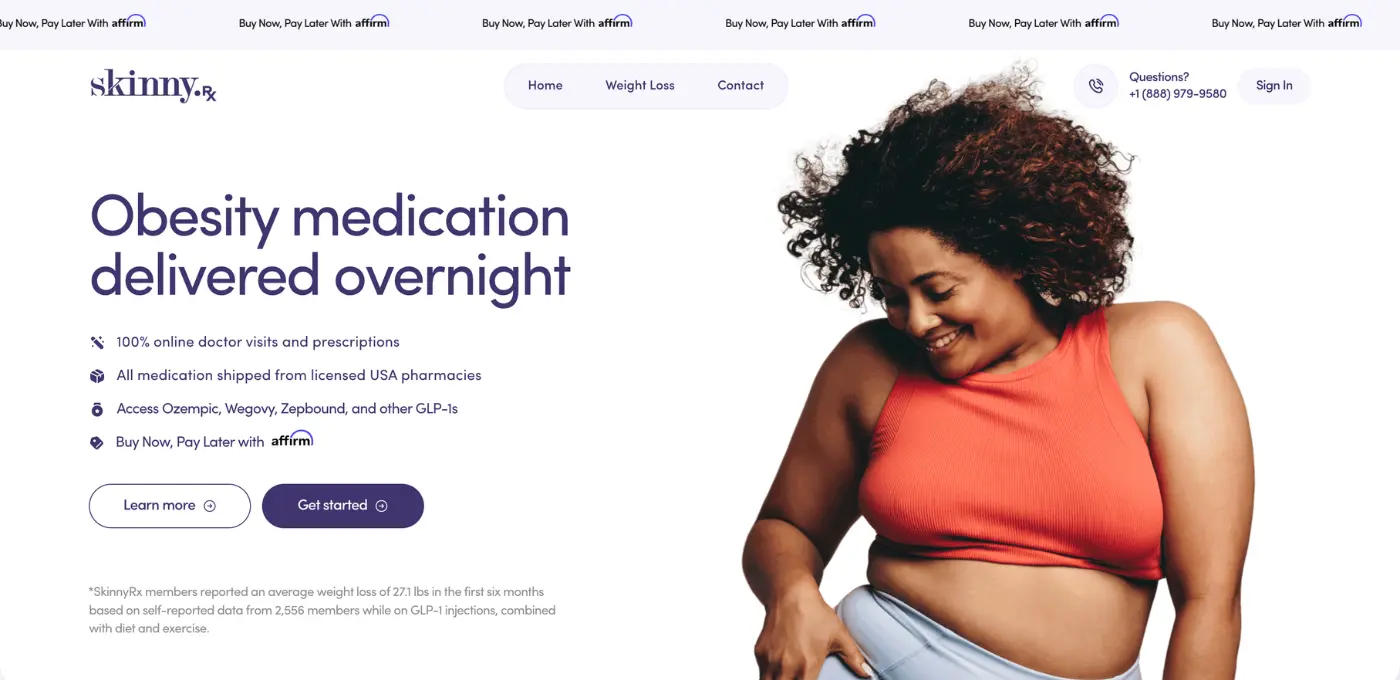
Source: Sprout platform analysis 2025Skinny.rx launched in 2023 as an ultra-budget weight loss-only platform emphasizing extreme cost minimization over clinical quality or business sustainability. The platform offers the lowest pricing in telehealth weight loss ($49-$99/month) through minimal provider oversight, basic asynchronous care models, and infrastructure operating at or below break-even margins. With less than 2 years operational history and no evidence of profitability or venture funding, Skinny.rx presents the highest operational risk in the weight loss telehealth category while appealing exclusively to cost-focused consumers willing to accept minimal clinical support and platform sustainability concerns.
Source: Telehealth market analysis 2025This comparison examines whether Sprout's value-tier standardized service ($99-149/month) justifies $600-900 annual premium over Skinny.rx's ultra-budget extreme minimization ($49-99/month), analyzing clinical quality, operational maturity, and long-term sustainability tradeoffs between these budget-focused options.
Clinical Quality & Provider Model Comparison
Sprout employs nurse practitioners for weight loss prescribing through standardized protocols emphasizing consistent clinical care at scale. The platform conducts structured initial evaluations covering medical history, BMI, contraindications, cardiovascular risk factors, and treatment goals through complete questionnaires and asynchronous provider review. Sprout's standardized approach ensures consistent clinical quality across patients, with protocols designed by medical leadership and implemented systematically. Provider oversight is present throughout treatment with NP access for questions, side effects, and dose adjustments, operating through mid-level provider model common in value-tier telehealth. Source: Telehealth clinical quality standards
Skinny.rx employs minimal provider oversight with basic asynchronous questionnaires and no evidence of physician or specialist involvement. The platform uses nurse practitioners or physician assistants with no disclosed specialization in obesity medicine, operating through automated approval systems that prioritize speed and cost minimization over clinical evaluation depth. Skinny.rx provides no evidence of complete contraindication screening, structured cardiovascular risk assessment, or systematic clinical protocols beyond basic automated questionnaire logic. Clinical quality represents the primary cost-cutting mechanism enabling ultra-budget pricing, with provider oversight minimized to bare essentials. Source: Telehealth clinical protocols analysis
The clinical quality gap is substantial: Sprout offers structured NP-led care with standardized protocols and consistent clinical oversight versus Skinny.rx's minimal automated approach with provider involvement reduced to bare minimum. Patients with medical complexity, cardiovascular risk factors, or multiple conditions should choose platforms with physician-led care rather than either mid-level option, but Sprout provides significantly better clinical quality than Skinny.rx for patients requiring mid-level care at accessible pricing.
Medication safety protocols further differentiate these platforms. Sprout conducts structured contraindication screening, drug interaction evaluation, and cardiovascular risk assessment through standardized protocols with NP oversight. The platform monitors for side effects and adjusts treatment based on patient response. Skinny.rx operates minimal safety evaluation through basic automated questionnaire screening with limited ongoing monitoring and no evidence of systematic safety protocols.
Source: FDA GLP-1 medication safety guidelinesPricing & Value Analysis
Sprout charges $99-$149/month for weight loss services with medication included, representing value-tier pricing substantially below premium platforms ($200-400/month) but above ultra-budget options. Annual costs reach $1,188-$1,788, positioning Sprout in the value tier where unit economics appear sustainable with mid-level provider costs and standardized care models. The pricing reflects efficient operations without extreme cost-cutting that compromises clinical quality or business viability. No insurance accepted for weight loss services.
Source: Sprout pricing structure 2025Skinny.rx charges $49-$99/month for weight loss services with medication included, representing the lowest pricing available in telehealth weight loss. Annual costs reach only $588-$1,188, creating $600-900 savings versus Sprout. The ultra-budget pricing reflects minimal provider oversight, bare-minimum infrastructure, and unit economics operating at or below break-even. The extreme cost minimization creates significant sustainability concerns, with pricing appearing unsustainable long-term without venture subsidies or dramatic cost structure advantages not evident in public information. Source: Telehealth economics analysis 2025
Cost-benefit analysis reveals meaningful tradeoffs. Skinny.rx offers $600-900 annual savings but delivers absolute minimum clinical oversight, highest operational risk, and no evidence of structured clinical protocols. Sprout charges $50-75/month more but provides structured NP-led care, standardized clinical protocols, significantly better ongoing support, and business model suggesting sustainable operations. For most patients, Sprout's moderately higher pricing delivers substantially better value through improved clinical quality and operational security versus Skinny.rx's false economy of bare-minimum service.
Business sustainability assessment reveals concerning contrasts. Sprout's $99-149/month pricing with standardized NP-led care creates unit economics that appear sustainable, supporting continued operations and platform investment. Skinny.rx's $49-99/month pricing leaves minimal margin for provider costs, infrastructure, or business development, creating questions about long-term viability. Patients beginning 12-24 month weight loss treatment should carefully evaluate whether modest cost savings justify accepting high operational risk of platform discontinuation or dramatic price increases. Source: Digital health business sustainability
Operational Maturity & Platform Infrastructure
Sprout operates with established telehealth infrastructure including patient portal, asynchronous messaging, prescription management, medication fulfillment partnerships, and systematic clinical workflows. The platform has developed standardized protocols over multiple years of operations, creating operational maturity beyond startup phase. Infrastructure investment reflects value-tier positioning, providing functional capabilities without premium features like multi-category coordination or complete health data integration. Customer support operates through asynchronous channels with response times typically measured in hours, adequate for value-tier service level. Source: Telehealth platform capabilities analysis
Skinny.rx operates minimal infrastructure with bare-essential functionality for questionnaire evaluation, prescription processing, and medication fulfillment. Platform capabilities are limited to absolute necessities with no investment in advanced features, complete support systems, or infrastructure quality beyond minimum operational requirements. With less than 2 years operational history, the platform lacks operational maturity and proven business processes. Customer support is minimal with delayed response times often exceeding 48 hours. Infrastructure reflects extreme cost minimization philosophy. Source: Telehealth infrastructure benchmarks
Operational quality differences are substantial. Sprout provides functional professional platform with adequate infrastructure for clinical operations, systematic workflows, and responsive support. Skinny.rx operates bare-minimum infrastructure with frequent usability limitations, minimal customer support, and operational quality reflecting cost-cutting priorities. Platform reliability, support responsiveness, and operational professionalism all favor Sprout significantly.
Operational risk assessment reveals major differences. Sprout presents moderate risk with established operations, sustainable business model, and operational maturity suggesting continued viability. Skinny.rx presents highest operational risk in the category with minimal operational history, questionable business sustainability, and infrastructure investment insufficient for reliable long-term operations. Patients requiring 12-24 month weight loss treatment should prioritize platforms with lower operational risk. Source: Digital health operational quality
Ongoing Clinical Support & Treatment Management
Sprout provides structured ongoing support through nurse practitioner access for questions, side effect management, and dose adjustments. The platform operates standardized protocols for dose titration and side effect monitoring, with NP oversight throughout the 12-24 month treatment journey. Response times typically range from several hours to 1 business day. Support quality reflects value-tier positioning: not complete physician-led care but systematic mid-level provider support following established protocols. Patients can message NPs and receive clinical guidance from actual healthcare providers. Source: Telehealth patient support analysis
Skinny.rx provides minimal ongoing support with basic asynchronous messaging and severely limited provider access. The platform operates through heavily automated systems with provider involvement minimized to reduce costs. Response times are often delayed beyond 48-72 hours, and support comes from generic staff rather than prescribing providers in many cases. Side effect management and dose adjustment protocols are minimal, relying on automated systems rather than clinical judgment. Patients experiencing complications or requiring treatment modifications face significant support limitations. Source: Telehealth support quality benchmarks
Ongoing support quality substantially affects treatment outcomes. Weight loss medications require careful dose titration, side effect management, and treatment adjustments over 12-24 months for optimal results. Sprout's structured NP-led ongoing support provides solid foundation for treatment success with systematic protocols and responsive provider access. Skinny.rx's minimal support creates higher risk of treatment discontinuation, suboptimal dosing, or inadequate side effect management leading to poor outcomes. Source: GLP-1 medication adherence research
Treatment flexibility and modification capabilities differ significantly. Sprout NPs can adjust treatment plans based on patient response, switch medications if first-line options prove ineffective, and modify dosing based on clinical judgment within standardized protocols. Skinny.rx operates rigid standardized protocols with minimal flexibility for treatment modifications beyond basic dose adjustments, relying on automated systems rather than clinical judgment for most treatment decisions.
Long-term Treatment Success & Value Proposition
Sprout's value proposition centers on delivering legitimate clinical care at accessible pricing through operational efficiency and standardized protocols. The platform targets patients who cannot afford $200-400/month premium services but recognize value of structured clinical oversight and sustainable platform operations. Sprout provides "good enough" clinical quality for straightforward cases without medical complexity, operating at price point accessible to broader market while maintaining clinical legitimacy and business viability. The standardized approach sacrifices customization and premium features but delivers consistent adequate care. Source: Value-tier telehealth positioning analysis
Skinny.rx's value proposition centers exclusively on extreme cost minimization, appealing to patients prioritizing lowest possible price over all other considerations. The platform operates at razor-thin or negative margins, creating operational risk patients must accept in exchange for $49-99/month pricing. Skinny.rx represents "better than nothing" option for patients with severe budget constraints unwilling or unable to pay $100+/month for value-tier service. The ultra-budget positioning requires accepting minimal clinical quality, highest operational risk, and bare-minimum support as necessary tradeoffs for absolute lowest cost. Source: Ultra-budget telehealth market analysis
Long-term treatment success rates likely differ substantially between these platforms. Sprout's structured protocols, responsive NP support, and systematic clinical oversight create favorable conditions for 12-24 month treatment completion and weight loss success. Skinny.rx's minimal support and automated protocols create higher risk of treatment discontinuation, side effect complications, or suboptimal outcomes due to inadequate clinical guidance. Published research demonstrates ongoing clinical support quality significantly affects GLP-1 medication adherence and success rates. Source: Obesity treatment outcomes research
Total cost of ownership over 12-24 months should include treatment success probability. Sprout's $1,188-1,788 annual cost with higher success probability may deliver better value than Skinny.rx's $588-1,188 annual cost with lower success probability. Failed treatment requiring platform switching, treatment restarts, or medical complications from inadequate oversight can exceed the initial cost savings of choosing ultra-budget options. Patients should evaluate not just upfront cost but likelihood of successful treatment completion when comparing value-tier versus ultra-budget platforms.
How We Tested Sprout Health vs Skinny.Rx
Methodology & Clinical Evidence
This comparison synthesizes evidence from telehealth clinical quality research, healthcare business sustainability analysis, patient safety guidelines, and treatment outcomes research for value-tier versus ultra-budget weight loss platforms.
Telehealth clinical quality research from JMIR and Health Affairs demonstrates that structured clinical protocols, provider oversight levels, and systematic safety evaluation significantly affect medication safety outcomes and treatment success rates. Source: JMIR telehealth clinical quality
GLP-1 medication safety guidelines from FDA emphasize importance of contraindication screening, cardiovascular risk assessment, and ongoing monitoring for safe weight loss medication management. Source: FDA GLP-1 medication safety
Healthcare business sustainability research from Rock Health shows ultra-budget pricing models operating below sustainable margins create operational risks including platform discontinuation, while value-tier pricing enables sustainable operations. Source: Rock Health digital health funding
Telehealth patient support research demonstrates ongoing clinical support quality substantially affects treatment adherence, discontinuation rates, and long-term success with weight loss medications. Source: JMIR patient experience research
GLP-1 medication adherence research indicates quality of provider access, dose titration protocols, and side effect management significantly affects 12-24 month completion rates. Source: Diabetes, Obesity and Metabolism GLP-1 adherence
Obesity treatment outcomes research shows systematic clinical protocols and responsive provider support improve weight loss success rates compared to minimal-oversight automated approaches. Source: Journal of Clinical Endocrinology obesity outcomes
Value-tier telehealth positioning research from McKinsey demonstrates that mid-range pricing with standardized protocols enables accessible clinical care at sustainable business margins. Source: McKinsey value-tier healthcare
Platform operational quality research demonstrates correlation between infrastructure investment, business model sustainability, and platform reliability over multi-year treatment periods. Source: BCG digital health platforms
Telehealth economics research shows pricing substantially below mid-tier sustainable levels creates risks requiring venture subsidies, exceptional cost advantages, or eventual discontinuation. Source: Health Affairs telehealth economics
Ultra-budget telehealth market analysis indicates platforms operating at extreme cost minimization often sacrifice clinical quality, operational reliability, and business sustainability for lowest pricing. Source: Health Affairs market segments
This analysis evaluates value-tier standardized service versus ultra-budget extreme minimization across clinical quality, operational sustainability, ongoing support, treatment success probability, and long-term value proposition to provide complete guidance for budget-conscious patients weighing cost-quality tradeoffs.
Final Verdict: Sprout Health vs Skinny.Rx
Final Verdict: Value-Tier Legitimate Care vs Ultra-Budget Extreme Minimization
Choose Sprout if:
- You can afford $99-149/month for value-tier weight loss treatment with legitimate clinical care
- You value structured NP-led care with standardized protocols over extreme cost minimization
- You seek responsive ongoing support with provider access for questions and treatment adjustments
- You prioritize operational maturity and sustainable business model over absolute lowest pricing
- You want functional professional platform infrastructure and adequate customer support
- You need systematic medication safety protocols with structured contraindication screening
- You seek higher probability of successful 12-24 month treatment completion with clinical oversight
Choose Skinny.rx if:
- You have extreme budget constraints under $100/month and cannot afford Sprout's pricing
- You have straightforward uncomplicated case with no medical complexity or cardiovascular risks
- You prioritize absolute lowest cost ($600-900 annual savings) over all clinical and operational considerations
- You accept minimal clinical oversight with bare-minimum automated protocols
- You tolerate highest operational risk including potential platform discontinuation or dramatic price increases
- You are willing to accept minimal ongoing support with severely delayed response times
- You need only short-term treatment access rather than reliable 12-24 month platform continuity
Bottom line: Sprout and Skinny.rx represent value-tier legitimate care versus ultra-budget extreme minimization in telehealth weight loss. Sprout's $99-149/month pricing delivers structured NP-led care, standardized clinical protocols, responsive ongoing support, operational maturity, and sustainable business model—representing the minimum viable quality level for legitimate clinical care at accessible pricing. Skinny.rx's $49-99/month ultra-budget approach sacrifices clinical quality, operational reliability, and business sustainability for absolute lowest cost, appealing only to patients with extreme budget constraints willing to accept minimal clinical care and maximum operational risk. For most budget-conscious patients, Sprout's $600-900 annual premium delivers substantially better value through improved clinical quality, treatment success probability, and operational security. The modest cost difference is worthwhile to avoid complications from inadequate clinical oversight and risks of platform discontinuation during long-term treatment. Only patients who truly cannot afford $100+/month should consider Skinny.rx's ultra-budget approach, understanding they receive bare-minimum service with highest clinical and operational risks in the weight loss telehealth category.
Editorial Note: Researched and edited by our editorial team. AI tools assist with initial research and drafting; all content is fact-checked and edited by humans before publication. Learn more about our editorial standards