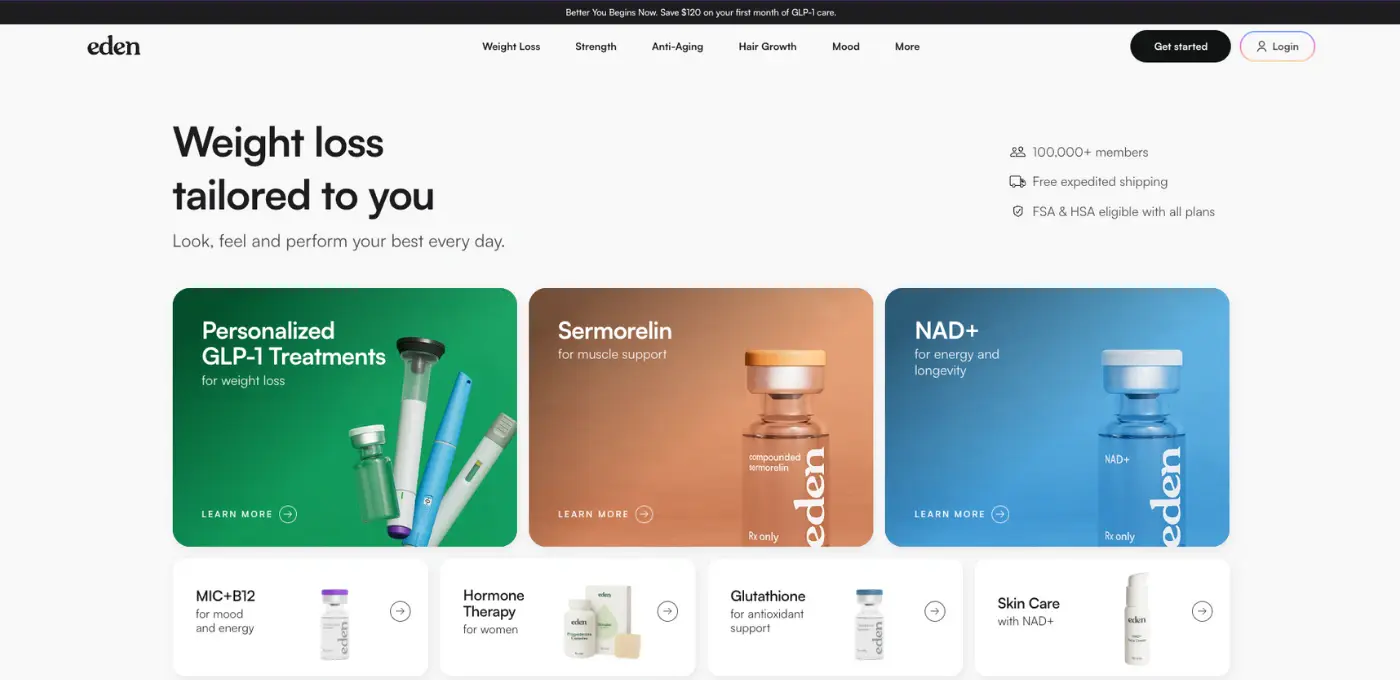
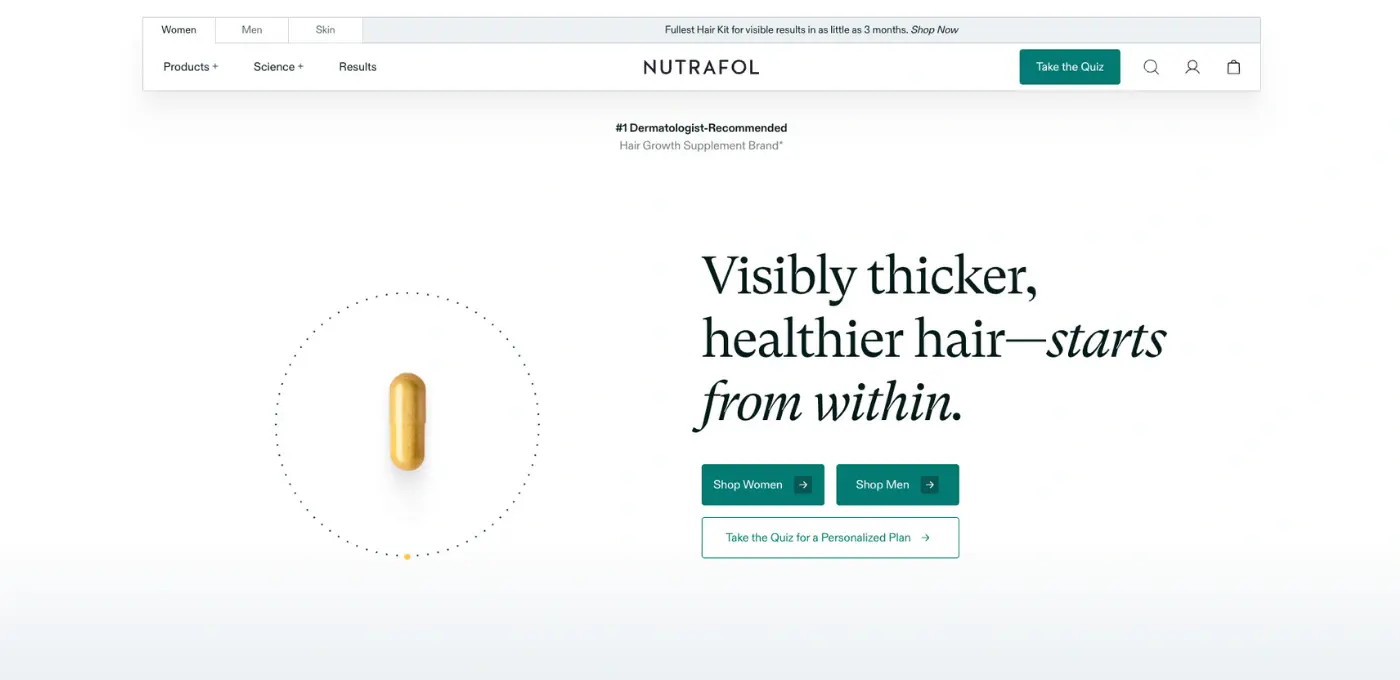
Choosing between Eden and Nutrafol comes down to what you actually want from a hair and wellness program. Eden is a telehealth platform with prescription options spanning weight loss, ED, and hair loss, while Nutrafol focuses specifically on physician-formulated supplements that target root causes of thinning. Here is how the two compare on price, approach, and who each one fits best.
Eden vs Nutrafol: Brand Overview
Eden is a telehealth company that connects you with licensed clinicians for prescription treatments including compounded semaglutide and tirzepatide for weight loss, sildenafil and tadalafil for ED, and topical or oral hair loss medications. The platform holds a 9.1 rating (Excellent) in our ratings and bundles medical visits, ongoing messaging, and lifestyle coaching into monthly memberships. Treatments ship directly to your door after a clinician reviews your intake.
Nutrafol is a different category entirely. It sells over-the-counter nutraceutical supplements built around 21 ingredients like saw palmetto, marine collagen, ashwagandha, and biotin, designed to address stress, hormones, nutrition, and metabolism as drivers of thinning hair. The brand carries a 9.1 rating (Excellent) in our ratings and is sold through dermatologists, Sephora, and direct subscription.
The core difference is regulatory. Eden offers compounded and prescription drugs that require a clinician relationship, while Nutrafol products are dietary supplements regulated by the FDA under DSHEA rules rather than as drugs. Supplements cannot legally claim to treat or cure hair loss the way an FDA-approved drug like finasteride or minoxidil can, according to the
FDA's guidance on dietary supplements.
If you want a prescription pathway with clinician oversight, Eden is structured for that. If you want a non-prescription daily capsule with published trial data on its specific formula, Nutrafol fits that lane.
Pricing and Subscription Costs
Nutrafol starts at $88 per month for a single bottle subscription, with discounts to roughly $79 per month on three-month plans. The price is the same whether you choose the Men's, Women's, Women's Balance for menopause, or Postpartum formula. Shipping is free on subscriptions and you can pause or cancel through your account.
Eden's pricing depends on what you are treating. Compounded semaglutide starts at $297 per month, tirzepatide runs higher, and hair loss or ED treatments are priced separately based on the medication and dose your clinician prescribes. Membership typically includes the consultation, medication, and follow-up messaging in one bundled fee.
On a pure dollar basis, Nutrafol is cheaper because you are buying a supplement rather than a compounded prescription drug plus medical care. However, HSA and FSA dollars generally cover prescription medications and clinician visits, and the
IRS Publication 502 outlines which medical expenses qualify, which can offset Eden's higher sticker price for eligible treatments.
Neither company is typically covered by commercial insurance for these specific services, so you should plan on paying out of pocket either way.
Treatment Options and Ingredients
Nutrafol's formulas combine saw palmetto, ashwagandha (Sensoril), marine collagen, tocotrienol complex, hyaluronic acid, biotin, and a curcumin-piperine blend. The brand has published trials on its specific formulations, including a six-month study on the Women's formula showing improvements in hair growth measures versus placebo, though results vary by person and the supplement is not a drug.
Eden's hair loss offerings center on FDA-approved active ingredients with decades of clinical data. Oral finasteride at 1 mg has been studied for male pattern hair loss, and topical minoxidil 5% solution and foam are approved for both men and women. The
FDA's drug label for finasteride (Propecia) describes how the drug inhibits type II 5-alpha reductase to lower scalp DHT.
These are different mechanisms. Finasteride directly reduces the hormone most associated with androgenetic alopecia, while Nutrafol uses botanical DHT modulators like saw palmetto plus stress and nutrition support. A 2020 review in the Journal of the American Academy of Dermatology notes that prescription finasteride and minoxidil have the strongest evidence base for pattern hair loss, while supplements show more modest effects.
Some people use both, taking a prescription drug for the strongest effect on the hormone driver and a supplement for general nutritional and stress-related support. Talk to a clinician before stacking treatments.
Clinical Process and Support
Eden requires an asynchronous online intake, a clinician review, and ongoing follow-ups through the platform's messaging system. For weight loss medications, Eden also includes lifestyle coaching focused on nutrition and habit changes. Because compounded semaglutide and tirzepatide are not FDA-approved finished products, the
FDA has issued guidance clarifying that compounded versions are produced by 503A or 503B pharmacies and are not reviewed for safety and efficacy in the same way as branded drugs.
Nutrafol does not require a prescription or clinician visit. You take a quiz on the website, get a formula recommendation, and start a subscription. Some dermatologists do recommend or sell Nutrafol in their offices, and the brand offers a separate Nutrafol+ telehealth add-on that connects you with a clinician for prescription options if you want them.
Support style differs. Eden is built around an ongoing clinician relationship with refills tied to check-ins, while Nutrafol is more of a self-directed consumer product with email customer service and a hair coach option. Neither replaces a board-certified dermatologist for diagnosing conditions like alopecia areata, scarring alopecia, or thyroid-driven shedding.
If your thinning is sudden, patchy, or accompanied by other symptoms, see a dermatologist before starting either option.
Who Each Brand Is Best For
Eden is a fit if you want prescription-strength treatment with telehealth convenience, especially if you are also interested in addressing weight or sexual health alongside hair loss. The bundled clinician access makes sense if you prefer one platform for multiple conditions and you are comfortable with compounded medications. The
NIH National Library of Medicine provides detailed information on finasteride for anyone considering an oral DHT blocker.
Nutrafol works better if you want a non-prescription daily routine, you are pregnant or breastfeeding and cannot take finasteride, or you prefer to start with a supplement before considering drugs. It also tends to appeal to women going through postpartum shedding or perimenopause, where hormonal shifts and stress are major contributors and a clinician may not prescribe finasteride.
Cost-conscious shoppers often start with Nutrafol because the entry price is lower and there is no medical visit required. Those with diagnosed androgenetic alopecia who want maximum evidence-based effect generally lean toward Eden or another telehealth provider that prescribes finasteride and minoxidil.
Your goals, medical history, and budget should drive the choice rather than marketing claims from either brand.
Final Comparison
Eden and Nutrafol are not really direct competitors despite both targeting hair loss. Eden is a prescription telehealth platform offering FDA-approved drugs and compounded medications with clinician oversight starting around $297 per month for weight loss and variable pricing for hair loss. Nutrafol is a $79 to $88 per month supplement subscription that does not require a prescription.
On clinical strength, prescription finasteride and minoxidil each beat placebo across the randomized trials pooled in a
2017 systematic review and meta-analysis of androgenetic alopecia treatments. Nutrafol has its own trials on its specific formula but operates under supplement rules rather than drug approval standards.
On convenience, both are mail-order and easy to start. Eden adds a clinician layer, which is useful if you want medical guidance and refills handled in one place. Nutrafol skips that step entirely, which some shoppers prefer.
In our ratings, Eden and Nutrafol sit level at 9.1 (Excellent) apiece, though they reflect different products and expectations.
Final Verdict: Eden vs Nutrafol
Eden and Nutrafol solve different problems. Choose Eden if you want clinician-prescribed treatments with the strongest evidence base for pattern hair loss or if you are also addressing weight or sexual health, and choose Nutrafol if you want a non-prescription daily supplement that targets stress, hormones, and nutrition without a medical visit.
Frequently Asked Questions
Can you take Eden's finasteride and Nutrafol together?
Some people do combine prescription finasteride with a supplement like Nutrafol, since they work through different pathways. You should ask your clinician first, especially if you are on other medications or have liver, hormone, or prostate concerns.
Is Nutrafol FDA-approved for hair loss?
No. Nutrafol is a dietary supplement regulated under DSHEA, not a drug. Only FDA-approved drugs like finasteride and minoxidil are formally approved to treat hair loss, and supplements cannot make disease treatment claims under FDA rules.
Does Eden offer the same hair loss medications as other telehealth brands?
Eden's hair loss menu typically includes oral finasteride and topical minoxidil, the two ingredients with the strongest evidence for pattern hair loss. Specific formulations and combination products vary, so check the current Eden menu before signing up.
How long until you see results from either option?
Hair cycles are slow. Most clinical studies on finasteride, minoxidil, and Nutrafol measure outcomes at three to six months, with continued change through twelve months. Stopping treatment generally reverses gains over time.
Are Nutrafol and Eden safe during pregnancy?
Finasteride is contraindicated in pregnancy because of the risk of birth defects in male fetuses, and pregnant women should not handle crushed or broken tablets. Nutrafol sells a Postpartum formula but recommends consulting your obstetrician before use during pregnancy or breastfeeding.
Can HSA or FSA dollars be used for these services?
Prescription medications and qualifying clinician visits through Eden are generally HSA and FSA eligible. Dietary supplements like Nutrafol are usually not eligible unless prescribed for a specific medical condition with a letter of medical necessity, per IRS rules on qualified medical expenses.
Editorial Note: Researched and edited by our editorial team. AI tools assist with initial research and drafting; all content is fact-checked and edited by humans before publication. Learn more about our editorial standards