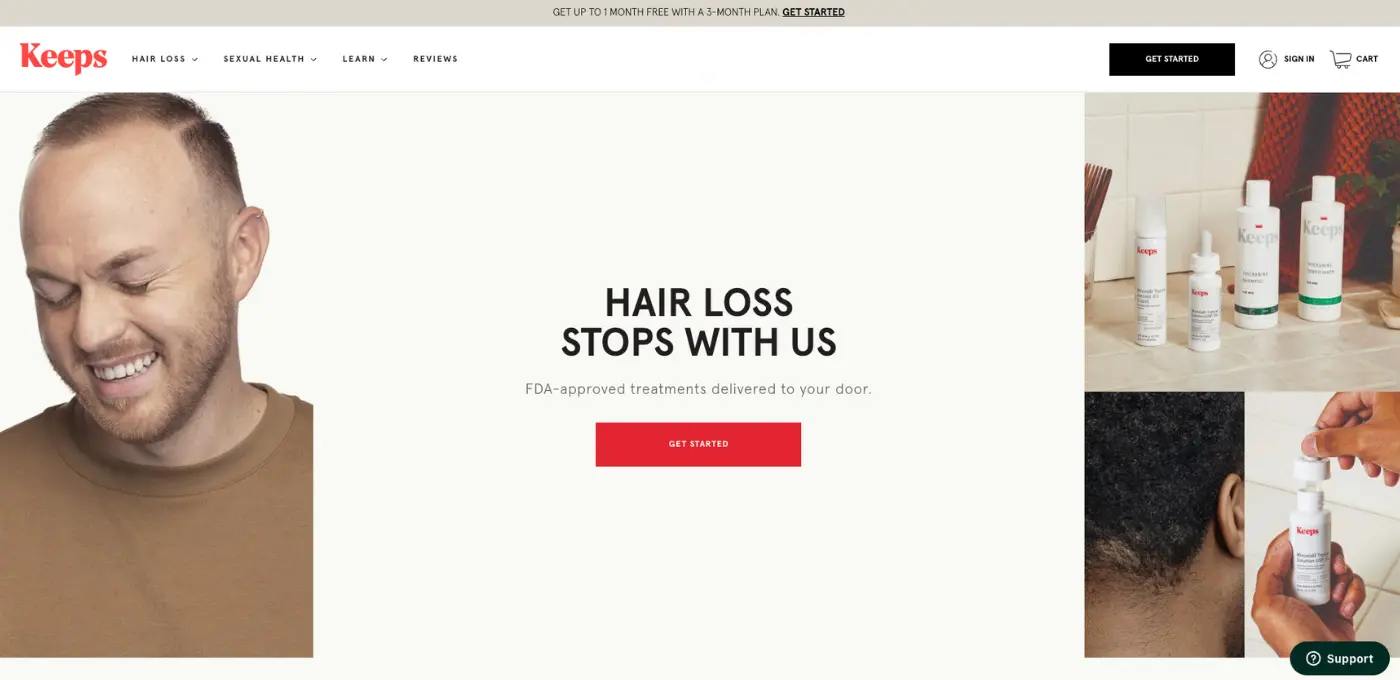
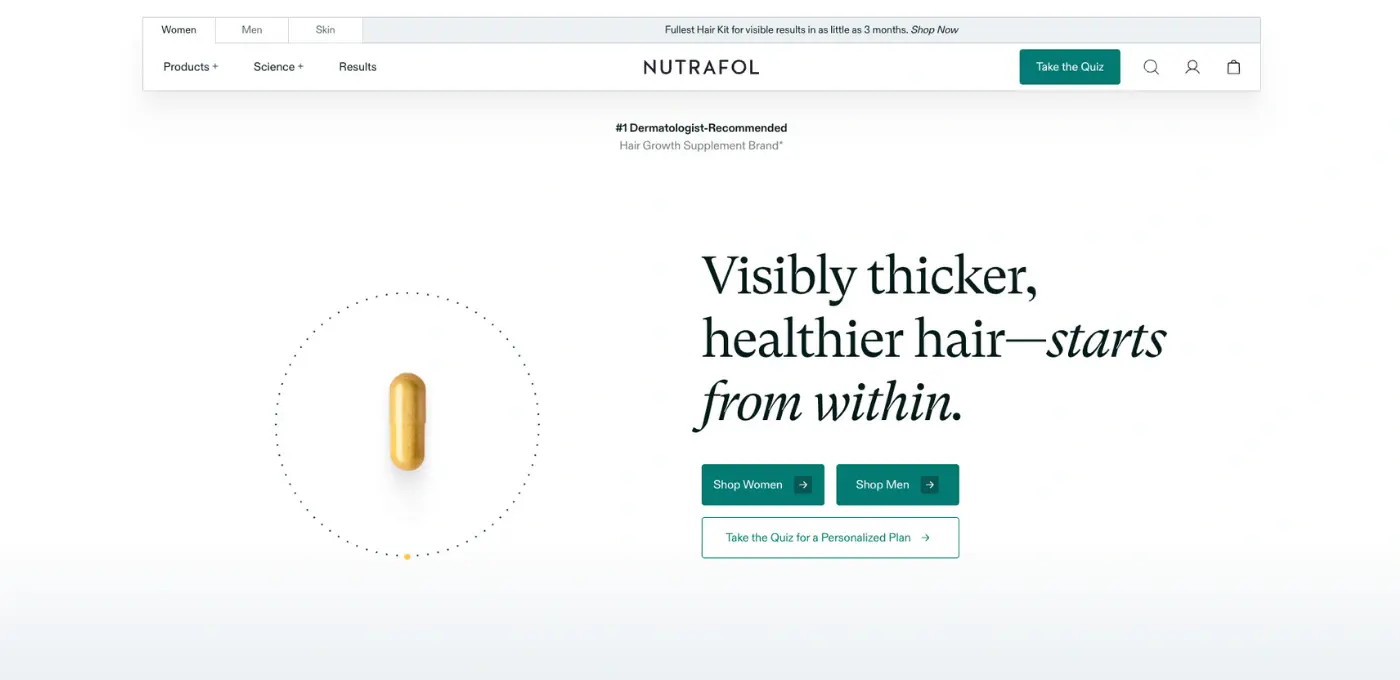
Choosing between Keeps and Nutrafol represents a fundamental decision between prescription pharmaceutical intervention and premium supplement-based wellness approaches for hair loss. Keeps offers FDA-approved finasteride and minoxidil at $30/month for combination treatment with physician consultations, documented efficacy (66% of men showed regrowth in finasteride's registration trials; individual results vary), and 30-40 years of safety data. Nutrafol provides proprietary botanical supplements at $88/month emphasizing wellness, stress management, and nutritional optimization with limited independent clinical validation. This evidence-based comparison examines clinical efficacy data, cost-effectiveness analysis, safety profiles, and treatment philosophies to help you choose between proven prescription medications and premium supplement alternatives for male pattern baldness.
Overview: Prescription Medication Specialist vs Supplement Premium Brand
Keeps has specialized exclusively in prescription hair loss treatment since 2017, offering FDA-approved medications finasteride (generic Propecia) and minoxidil at affordable pricing starting at $20/month for finasteride and $10/month for minoxidil. The company takes a focused approach: FDA-approved prescription medications with convenient telehealth consultations and direct home delivery. Keeps follows
AAD clinical guidelines for androgenetic alopecia with dermatology-focused providers.
Nutrafol launched in 2016 as a premium hair wellness brand offering physician-formulated dietary supplements at $88/month ($79/month with annual subscription). Rather than prescription medications, Nutrafol uses botanical ingredients, vitamins, minerals, and adaptogens marketed to address root causes of hair thinning including stress, inflammation, hormonal imbalances, and nutritional deficiencies. The company emphasizes a wellness approach beyond pharmaceutical intervention.
The fundamental distinction represents two competing hair loss treatment philosophies: Keeps provides FDA-approved prescription medications (finasteride, minoxidil) with clinical trial evidence demonstrating hair regrowth in 60-66% of men, while Nutrafol offers proprietary supplement formulations with limited independent clinical validation but marketed as addressing underlying health factors contributing to hair loss.
For men seeking treatments with strong clinical evidence, FDA approval, and documented efficacy in large-scale trials, Keeps delivers cost-effective prescription medications. For those preferring supplement-based approaches emphasizing overall wellness, willing to pay premium pricing, and comfortable with limited independent clinical validation, Nutrafol offers a non-prescription alternative. The platforms serve fundamentally different treatment philosophies and patient preferences.
Both Keeps and Nutrafol employ medical professionals (Keeps: licensed physicians, Nutrafol: physician formulations with optional consultations), offer direct-to-consumer convenience, and maintain quality manufacturing standards. However, they operate on opposite ends of the hair loss treatment spectrum: pharmaceutical intervention versus nutritional supplementation.
Treatment Mechanisms and Clinical Evidence
Keeps provides finasteride (1mg daily), a 5-alpha-reductase inhibitor that blocks conversion of testosterone to dihydrotestosterone (DHT) - the hormone responsible for miniaturizing hair follicles in male pattern baldness. According to
FDA clinical trial data, finasteride halts hair loss in 83% of men and promotes visible regrowth in 66% over 2 years. The mechanism is well-understood: reducing scalp DHT levels by 60-70% prevents further follicle miniaturization.
Minoxidil (topical solution) offered by Keeps is a vasodilator that increases blood flow to hair follicles and prolongs the anagen (growth) phase of the hair cycle. Topical 5% minoxidil is FDA-approved for androgenetic alopecia and is applied twice daily. Finasteride and minoxidil act through different mechanisms, which is why providers often prescribe them together - the most common approach available for androgenetic alopecia.
Nutrafol formulations contain 21+ botanical ingredients including saw palmetto, ashwagandha, curcumin, marine collagen, tocotrienols, and proprietary blends targeting inflammation, stress hormones (cortisol), and oxidative stress. The company's scientific rationale suggests that hair loss stems from multiple factors beyond DHT: chronic stress elevating cortisol, systemic inflammation, nutritional deficiencies, and hormonal imbalances. Their supplements purportedly address these root causes.
Clinical evidence for Nutrafol is substantially weaker. The company cites a 2020 study published in the Journal of Drugs in Dermatology showing increased hair count and reduced shedding in supplement users versus placebo. However, this company-sponsored study involved 40 participants over 6 months - far smaller and shorter than the multi-year, thousands-of-patient trials establishing finasteride efficacy. Independent validation in larger populations with longer follow-up is lacking.
According to dermatology expert consensus from
The American Academy of Dermatology, only two treatments have strong evidence for male pattern baldness: finasteride (oral) and minoxidil (topical). Supplements including saw palmetto, biotin, and multivitamins lack sufficient evidence to recommend as primary treatments. Nutrafol may provide modest benefits for men with genuine nutritional deficiencies or stress-related shedding, but cannot match the clinical-trial evidence behind prescription medications for androgenetic alopecia.
Pricing Comparison and Long-Term Value Analysis
Keeps charges $20/month for finasteride, $10/month for minoxidil, and $30/month for combination treatment ($360 annually for combination). These prices include prescription medications, medical consultations, automatic refills, and free shipping. Over 5 years of continuous treatment (required for sustained benefits), Keeps combination therapy costs $1,800 total. You can pause or cancel anytime without penalties or subscription minimums.
Nutrafol charges $88/month for their Men's supplement ($1,056 annually) or $79/month with annual prepayment commitment ($948 annually). Over 5 years, the annual subscription totals $4,740 - 2.6x more expensive than Keeps prescription combination treatment. Nutrafol offers no medical consultations included in base pricing, though they provide optional $25 hair wellness consultations with nutritionists (not physicians) focused on supplement recommendations and lifestyle modifications.
The cost-effectiveness analysis becomes stark when considering clinical evidence. Keeps provides finasteride, which is FDA-approved for male pattern hair loss, at $360 annually. Nutrafol provides a supplement, which the FDA has not reviewed for effectiveness in hair loss, at $948-$1,056 annually. You pay about 2.6x more for the option with the weaker regulatory standing.
For long-term financial impact, consider 5-year treatment costs. Keeps combination treatment: $1,800 total with documented clinical efficacy (66% achieve regrowth). Nutrafol supplement: $4,740 total with limited clinical validation. This represents $2,940 additional spending for treatments with weaker evidence - money that could fund other health priorities, retirement savings, or quality-of-life expenses.
Tax treatment differs between platforms. Prescription medications through Keeps qualify for HSA/FSA payment as qualified medical expenses, and may be tax-deductible when medical expenses exceed 7.5% of adjusted gross income. Nutrafol supplements likely qualify for HSA/FSA payment but face potential scrutiny as wellness products rather than medical treatments. Neither platform accepts insurance coverage, as cosmetic hair loss treatment typically isn't covered (unlike medically necessary hair loss from chemotherapy or alopecia areata).
Medical Consultation and Provider Expertise
Keeps uses asynchronous online consultations with licensed physicians and dermatology-focused providers who specialize in hair loss treatment. After creating an account, you complete a medical questionnaire covering hair loss patterns, family history, previous treatments, medical conditions, and current medications. You upload photos of your scalp from multiple angles to document baseline hair density. Licensed providers in your state review your assessment within 24 hours.
The Keeps providers focus exclusively on hair loss - their entire practice involves managing androgenetic alopecia with finasteride and minoxidil. This specialization means extensive experience counseling patients on realistic expectations, managing finasteride side effects (sexual dysfunction affecting 1-2% of men), optimizing minoxidil application techniques, and recognizing cases requiring in-person dermatology evaluation. They follow evidence-based protocols proven effective rather than experimental approaches.
Quarterly medical reviews through Keeps assess treatment response, evaluate side effects, and make dosing adjustments. Providers use photo comparisons showing before-and-after scalp images to objectively track progress. They educate patients on hair growth timelines (typically 4-6 months for stabilization, 8-12 months for visible regrowth) and managing expectations during the initial shedding phase that sometimes occurs in months 1-3.
Nutrafol offers optional hair wellness consultations ($25) with nutritionists and health coaches - not dermatologists or physicians. These consultations focus on lifestyle modifications, stress management, dietary improvements, and supplement recommendations to complement their products. While nutritional support can benefit overall health, these consultants lack medical training to diagnose underlying conditions causing hair loss (thyroid disorders, iron deficiency, hormonal imbalances) that require medical treatment.
According to research published in The Journal of the American Academy of Dermatology02876-4/fulltext), physician-led hair loss consultations identify treatable medical conditions in 18% of cases presenting as "routine" male pattern baldness - including hypothyroidism, iron deficiency, autoimmune alopecia, and medication side effects. Keeps' physician consultations can recognize these conditions and recommend appropriate medical evaluation, while Nutrafol's nutritionist consultations lack medical diagnostic capability.
Side Effects, Safety Profiles, and Risk Considerations
Finasteride through Keeps carries documented side effects occurring in 1-2% of men: decreased libido, erectile dysfunction, reduced ejaculate volume. These effects are typically reversible upon discontinuation, though rare cases of persistent sexual dysfunction have been reported. The
FDA Propecia label includes warnings about sexual side effects, breast tenderness, and potential impact on PSA levels (important for prostate cancer screening). Keeps physicians screen for contraindications including prostate cancer, liver disease, and plans for conception.
Minoxidil side effects include scalp irritation, itching, and unwanted facial hair growth (if solution drips onto face). Rarely, minoxidil can cause dizziness or rapid heartbeat due to its vasodilator properties. These side effects are well-characterized from decades of clinical use and post-market surveillance. The safety profile is well-understood, allowing informed risk-benefit decision-making.
Nutrafol supplements are generally well-tolerated in company-sponsored studies, with mild digestive upset reported in some users. The ingredients are "generally recognized as safe" (GRAS) for consumption. However, the complexity of 21+ botanical ingredients creates potential for herb-drug interactions, allergic reactions to specific botanicals, and cumulative effects from multiple bioactive compounds whose interactions aren't fully studied.
Saw palmetto (Nutrafol ingredient) may interact with anticoagulants and antiplatelet medications, potentially increasing bleeding risk. Ashwagandha can affect thyroid hormone levels, concerning for patients with thyroid disorders. Marine collagen may trigger allergic reactions in individuals with shellfish allergies. According to
FDA guidance on dietary supplements, manufacturers don't need to prove safety or efficacy before marketing - placing responsibility on consumers to research ingredient safety.
Long-term safety data strongly favors prescription medications. Finasteride has over 30 years of post-market surveillance in millions of men, with rare but well-characterized risks. Minoxidil has 40+ years of safety data. Nutrafol's proprietary formulation has limited long-term safety data beyond a few company-sponsored studies - the interactions between 21+ botanical ingredients over years of continuous use haven't been extensively studied in diverse populations. For risk-averse patients, the well-characterized safety profile of prescription medications provides more predictability.
Expected Results, Timeline, and Success Rates
Keeps prescription medications have well-established efficacy expectations from large clinical trials. Finasteride halts hair loss progression in 83% of men and promotes visible regrowth in 66% over 2 years. Minoxidil promotes regrowth in 40-50% of men after 12 months. Combination therapy (finasteride + minoxidil) provides synergistic benefits with success rates approaching 70-75% for halting loss and visible regrowth. These are average outcomes - individual results vary based on age, extent of hair loss, and treatment adherence.
Timeline expectations are realistic and evidence-based. Months 1-3: Potential shedding phase as miniaturized hairs fall out (normal response, not treatment failure). Months 4-6: Hair loss stabilization becomes apparent - less shedding in shower, on pillow. Months 6-12: Visible regrowth for responders, with increased density and thicker hair diameter. Years 2-5: Continued gradual improvements with sustained treatment. The
5-year finasteride study found that improvements in scalp hair held up across five years of continued daily use, and that men on placebo kept losing hair over the same period.
Nutrafol claims "visible results in 3-6 months" based on their company-sponsored study showing increased hair count after 6 months of supplementation. However, independent replication of these results in larger populations is lacking. Their before-and-after photos and testimonials show varied results, with some users reporting improvements while others see minimal change. Success rates aren't established in the same rigorous manner as prescription medications.
The critical difference: Keeps success rates are derived from FDA registration trials involving thousands of men with standardized outcome measures and independent verification. Nutrafol success claims stem primarily from company-sponsored research and customer testimonials - valuable but lower-quality evidence subject to selection bias (satisfied customers more likely to share results). For evidence-minded patients, this distinction significantly impacts treatment confidence.
Realistic expectations matter for treatment adherence. Keeps counsels patients that hair regrowth takes 8-12 months minimum, requires continuous treatment to maintain benefits, and won't restore a full juvenile hairline - setting achievable expectations that improve satisfaction. Nutrafol's marketing emphasizes "thicker, fuller hair" and "targets root causes" potentially creating unrealistic expectations for men with advanced androgenetic alopecia requiring pharmaceutical intervention beyond nutritional optimization.
How We Compared Keeps vs Nutrafol
Our Comparison Methodology
This comparison is based on comprehensive analysis of clinical evidence, pricing structures, treatment mechanisms, and safety profiles from both platforms.
Clinical Evidence: Treatment recommendations reference FDA-approved efficacy data for finasteride (FDA Propecia Label).
Pricing Analysis: Pricing reflects the rates last recorded in our provider database; providers change prices frequently, so confirm current pricing directly at checkout. Long-term cost calculations account for continuous treatment requirements over realistic timelines (5 years).
Safety Evaluation: Side effect profiles, safety data, and interaction risks were evaluated through FDA drug labels, clinical trial safety data, dietary supplement safety research (FDA Supplement Guidance), and post-market surveillance reports.
Our analysis is our own editorial work. Most of the providers compared here pay ManyTreatments a commission when you buy through a link on this page. Nobody pays us for a placement, a rating, or a listing, and we are not going to add that commissions have never influenced anything, because that is a claim about our own conduct we cannot show you evidence for. Our goal is to provide evidence-based comparison to help you make informed healthcare decisions based on clinical efficacy data, cost-effectiveness, and individual treatment preferences regarding pharmaceutical versus supplement-based approaches.
Final Verdict: Keeps vs Nutrafol
Final Verdict: Evidence-Based Medicine vs Supplement Wellness Philosophy
Choose Keeps if you:
- Want FDA-approved prescription medications with Grade A clinical evidence (66% achieve regrowth)
- Prioritize cost-effectiveness ($360/year vs Nutrafol's $948-$1,056/year)
- Value physician oversight and medical consultation included in subscription
- Prefer treatments with 30-40 years of safety data and well-characterized risks
- Want the most evidence-based approach recommended by dermatologists
- Can accept 1-2% risk of reversible sexual side effects from finasteride
Choose Nutrafol if you:
- Prefer supplement-based approaches over prescription medications
- Are concerned about finasteride sexual side effects and want to avoid them entirely
- Value wellness philosophy addressing stress, inflammation, and nutrition
- Can accept weaker clinical evidence (Grade C-D) for premium pricing
- Want to avoid prescription requirements and physician consultations
- Are comfortable paying 2.6x more for supplement approach versus FDA-approved medications
The objective analysis for most men:
For patients prioritizing clinical evidence and cost-effectiveness, Keeps provides objectively superior value: FDA-approved medications with Grade A evidence demonstrating 66% regrowth rates at $360 annually (2.6x cheaper than Nutrafol). The American Academy of Dermatology recommends finasteride and minoxidil as evidence-based treatments, while supplements lack sufficient evidence for primary treatment recommendation.
For patients preferring supplement-based wellness approaches or those who cannot tolerate finasteride side effects, Nutrafol offers a non-prescription alternative emphasizing nutritional optimization and stress management. However, the premium pricing ($4,740 over 5 years vs Keeps' $1,800) and weaker clinical validation mean you're paying substantially more for treatments with lower evidence quality.
Critical consideration: This isn't a "which platform is better" comparison - it's a choice between fundamentally different treatment philosophies. Keeps represents evidence-based pharmaceutical intervention with strong clinical validation. Nutrafol represents supplement-based wellness with limited independent verification but appeal to patients preferring natural approaches.
Most dermatologists and hair loss specialists recommend starting with proven prescription medications (Keeps approach) given the strong evidence. Supplements like Nutrafol may provide modest additional benefits for men with genuine nutritional deficiencies but cannot replace the clinical-trial-supported efficacy of finasteride and minoxidil for androgenetic alopecia treatment.
Frequently Asked Questions
Which treatment has stronger clinical evidence for hair regrowth?
Keeps prescription medications (finasteride and minoxidil) have substantially stronger clinical evidence. Finasteride has Grade A evidence from FDA registration trials showing 66% of men achieve visible regrowth over 2 years. Minoxidil demonstrates 40-50% regrowth rates in clinical studies. Nutrafol supplements have Grade C-D evidence based primarily on one company-sponsored study with 40 participants. The American Academy of Dermatology recommends finasteride and minoxidil as evidence-based treatments, while supplements lack sufficient evidence for primary treatment recommendation.
Is Nutrafol worth the premium price compared to Keeps?
From a cost-effectiveness perspective, no. Nutrafol costs $948-$1,056 annually (2.6x more expensive than Keeps' $360/year combination treatment) while providing weaker clinical evidence for efficacy. Over 5 years, you spend $2,940 more for Nutrafol with no proof of superior outcomes. Keeps provides FDA-approved medications with documented efficacy at significantly lower cost. Nutrafol may appeal to patients preferring supplement-based approaches or concerned about finasteride side effects, but objective value analysis favors Keeps strongly.
Can I use both Keeps medications and Nutrafol supplements together?
Yes, there are no known dangerous interactions between finasteride/minoxidil and Nutrafol ingredients. Some men use both approaches simultaneously - prescription medications for documented efficacy plus supplements for potential additional benefits from nutritional optimization. However, this combination costs $1,308-$1,416 annually ($360 Keeps + $948-$1,056 Nutrafol). Most dermatologists recommend starting with evidence-based prescription treatments first, then considering supplements only if you have documented nutritional deficiencies or want additional interventions beyond FDA-approved medications.
Which option is safer with fewer side effects?
Nutrafol supplements have fewer side effects (primarily mild digestive upset) compared to finasteride (1-2% experience sexual side effects) and minoxidil (scalp irritation). However, Nutrafol contains 21+ botanical ingredients with potential herb-drug interactions and limited long-term safety data, while finasteride and minoxidil have 30-40 years of safety data in millions of men with well-characterized risks. For predictable, well-studied safety profiles, Keeps prescription medications provide more comprehensive safety data. For minimal short-term side effects, Nutrafol supplements have advantage.
Do I need a prescription or doctor consultation for either option?
Keeps requires a physician consultation (included in subscription) to obtain prescription medications (finasteride and minoxidil, though minoxidil is also available over-the-counter). Physicians screen for contraindications and monitor for side effects. Nutrafol is a dietary supplement requiring no prescription - you can purchase directly without medical oversight. They offer optional $25 nutritionist consultations but not physician consultations. The medical oversight through Keeps ensures appropriate use and safety monitoring; Nutrafol's supplement approach avoids prescription requirements but also lacks medical supervision.
How long do I need to continue treatment to maintain results?
Both approaches require indefinite continuation to maintain benefits. With Keeps, stopping finasteride or minoxidil results in gradual loss of regrown hair over 6-12 months as DHT-driven miniaturization resumes - this is well-documented in clinical studies. Nutrafol states similar requirements for continued supplementation to maintain results. Hair loss is a chronic progressive condition requiring ongoing treatment. Neither approach "cures" androgenetic alopecia; both manage the condition while actively used. This indefinite treatment requirement makes cost considerations (Keeps: $360/year vs Nutrafol: $948-$1,056/year) particularly important.
Editorial Note: Researched and edited by our editorial team. AI tools assist with initial research and drafting; all content is fact-checked and edited by humans before publication. Learn more about our editorial standards