Choosing between Sesame Care and Nutrafol depends on what kind of help you actually need for hair concerns. Sesame Care is a healthcare marketplace that connects you with licensed doctors at flat cash prices, while Nutrafol sells over-the-counter nutraceutical supplements aimed at thinning hair. The two operate in different categories, so the right pick comes down to whether you want a clinician evaluation or a daily supplement routine.
Overview of Sesame Care and Nutrafol
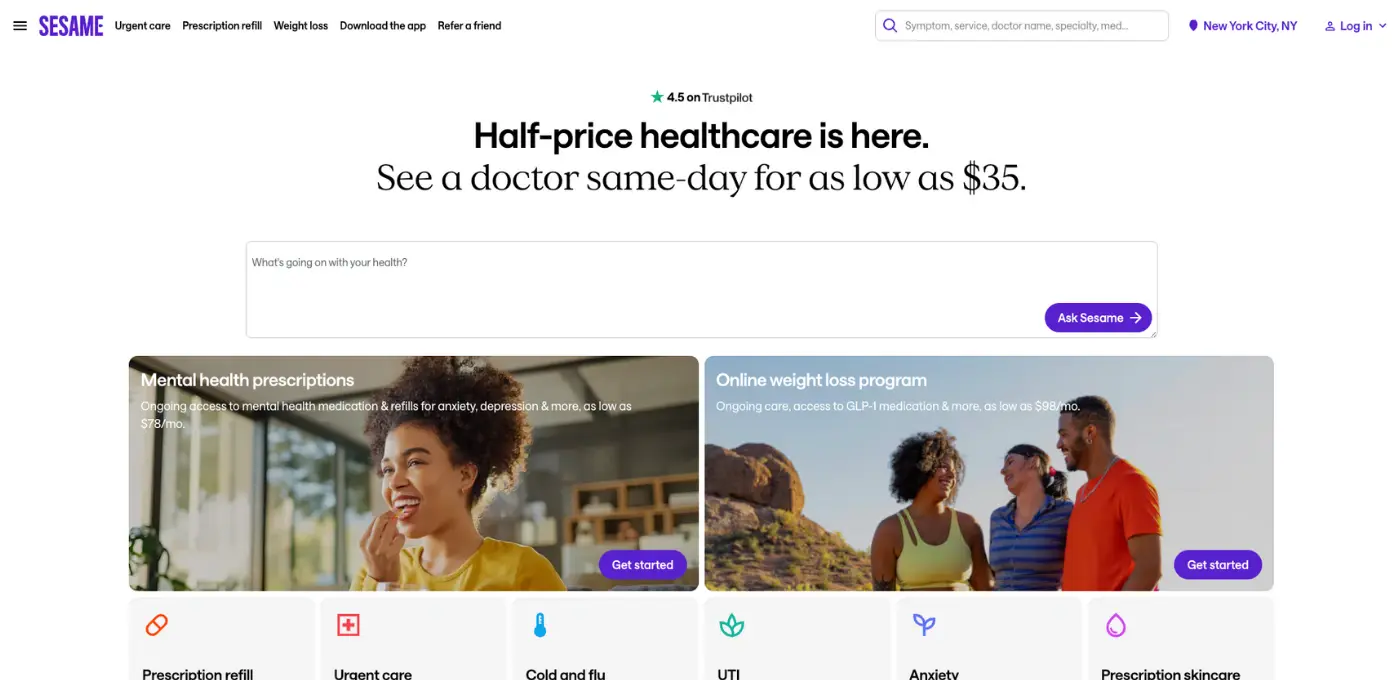
Sesame Care is a direct-to-consumer healthcare marketplace launched in 2018 that lets you book appointments with doctors at transparent prices without insurance. Primary care visits start around $30, and you can also see dermatologists who can evaluate hair loss and prescribe FDA-approved options like finasteride or minoxidil. The platform holds a 9.1 rating (Excellent) in our ratings and works in all 50 states for telehealth visits.
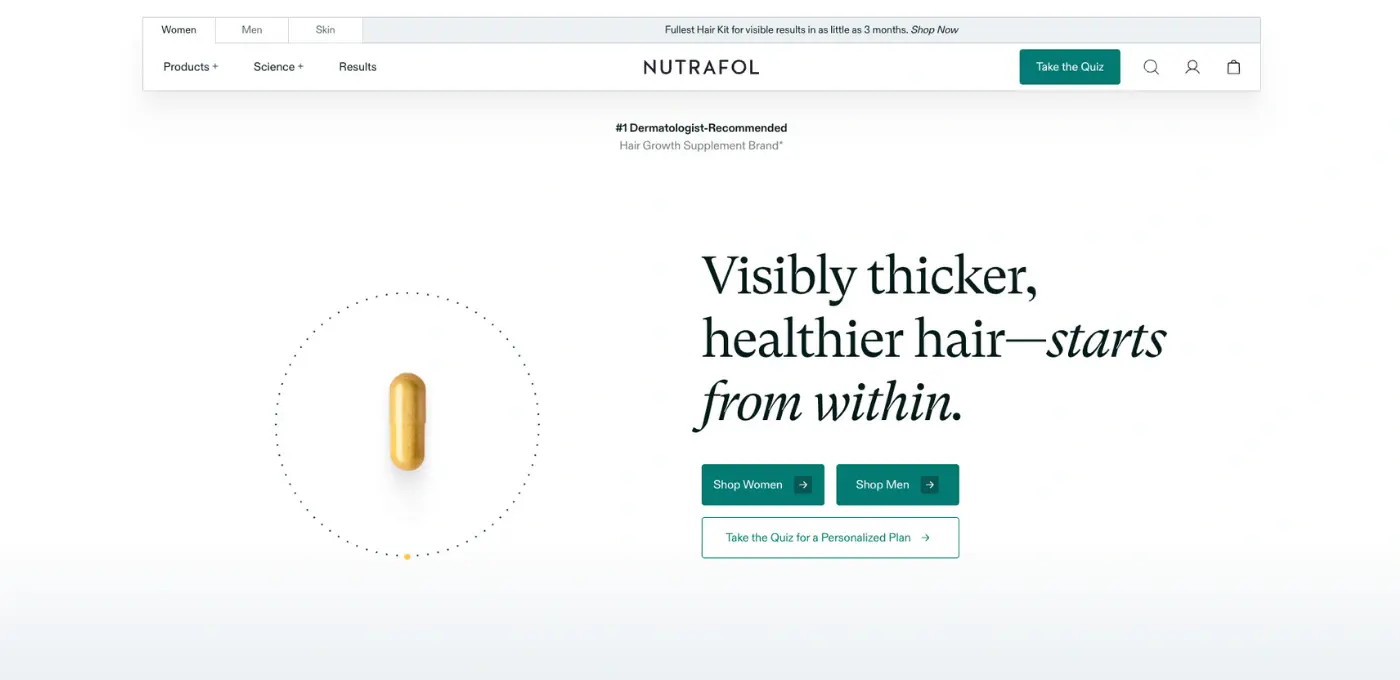
Nutrafol is a hair growth supplement brand that sells physician-formulated capsules with 21 botanical and nutrient ingredients, including saw palmetto, ashwagandha, marine collagen, and biotin. Plans start at $88 per month, and the company markets formulas tailored to men, women, postpartum, and menopause. The brand holds a 9.1 rating (Excellent) in our ratings and positions itself as a nutraceutical, not a drug.
The key distinction is regulatory: Nutrafol products are dietary supplements regulated under DSHEA, while medications you might get through a Sesame Care visit go through full FDA drug approval. According to the FDA, supplements are not reviewed for safety and efficacy before sale the way prescription drugs are.
So while both brands touch the hair loss space, only one connects you to a licensed clinician who can diagnose underlying causes such as androgenetic alopecia, telogen effluvium, or thyroid issues that may require lab work.
Pricing Comparison
Sesame Care is generally cheaper for a single transaction because you pay per visit rather than per month. A primary care telehealth visit starts at $30, dermatology consults usually run $50 to $90, and any prescriptions for finasteride or minoxidil are billed separately at the pharmacy, often $10 to $25 per month for generics.
Nutrafol charges $88 per month for a single bottle subscription, with discounts that bring it closer to $79 per month on longer plans. That adds up to roughly $948 to $1,056 per year for the supplement alone, and you typically need three to six months of consistent use before assessing results, according to the brand's own clinical materials.
For comparison, generic finasteride 1mg, an FDA-approved hair loss treatment, was approved by the FDA in 1997 and often costs under $20 per month through standard pharmacies. That makes a Sesame visit plus a generic prescription notably cheaper over a year than a Nutrafol subscription.
If your goal is the lowest total spend on something with regulatory backing, Sesame Care typically wins. If you specifically want a non-prescription route and prefer a botanical formulation, Nutrafol is priced in line with other premium supplements.
Treatment Options and Ingredients
Sesame Care does not sell its own treatments; instead, doctors on the platform can prescribe whatever is medically appropriate. For hair loss, that often means oral or topical finasteride, topical minoxidil, oral minoxidil off-label, spironolactone for women, or PRP referrals. The
National Institutes of Health notes that finasteride and minoxidil remain the only two FDA-approved drugs specifically indicated for androgenetic alopecia.
Nutrafol's core formula combines saw palmetto, ashwagandha (sensoril), marine collagen, curcumin, tocotrienols, biotin, and additional vitamins and adaptogens. The brand has published its own studies suggesting improvements in hair growth measurements over six months, but these are smaller, company-sponsored trials rather than the large randomized controlled trials required for drug approval.
Saw palmetto, the most-cited active in Nutrafol, has shown some weak DHT-blocking activity in small studies, but a
2020 systematic review found positive results across a handful of small trials and concluded that robust high-quality data are still lacking. So you are choosing between a supplement with modest evidence and prescription drugs with decades of clinical trial data.
If diagnostic clarity matters, only the Sesame Care path includes a clinician who can order labs to rule out iron deficiency, thyroid disease, or hormonal imbalances that supplements alone will not fix.
Clinical Process and Support
Sesame Care's process is built around a real appointment with a licensed clinician. You browse providers, book a video visit, get evaluated, and receive a prescription sent to your pharmacy of choice if appropriate. There is no recurring membership, no auto-ship, and follow-up visits are booked and paid for individually.
Nutrafol's experience is built around a quiz, a subscription, and access to a wellness team for general guidance. You do not see a doctor through Nutrafol, and the brand explicitly states its products are not intended to diagnose, treat, cure, or prevent disease, which is standard supplement language required by
FTC and FDA guidance.
For ongoing support, Sesame Care lets you message your doctor between visits at the doctor's discretion, while Nutrafol offers customer service and naturopathic doctor consults as part of certain plans. Neither replaces a long-term relationship with a dermatologist if your hair loss is progressive.
If hair shedding has come on suddenly or is patchy, that is generally a clinical workup situation, and Sesame Care is structured to handle it. Nutrafol is better thought of as an adjunct lifestyle product.
Who Each Brand Is Best For
Sesame Care is best for you if you want flat-rate access to a real doctor, a diagnosis, and the option of FDA-approved medications. It also fits if you are uninsured, have a high-deductible plan, or simply prefer paying cash for transparent pricing. The platform covers far more than hair loss, so it stays useful for primary care, mental health, and specialty visits.
Nutrafol is best for you if you have already ruled out medical causes of hair thinning, prefer a non-prescription approach, and are comfortable spending around $88 per month for at least six months. According to a study published in JAMA Dermatology, nutraceutical interventions can play a role for some types of shedding, particularly when stress or nutrient gaps are involved, though evidence varies by ingredient.
Women experiencing postpartum or perimenopausal shedding sometimes prefer Nutrafol because finasteride and similar drugs are not appropriate during pregnancy or for women of reproductive age without careful counseling. In those situations, the supplement route plus a clinician check-in can be reasonable.
If budget is tight or you want the strongest evidence base, a Sesame Care visit plus generic finasteride or minoxidil is usually the more cost-effective and clinically supported route.
Final Comparison
Sesame Care and Nutrafol are not really direct competitors; they are different tools for different stages of the hair loss conversation. Sesame Care gives you affordable access to clinicians who can diagnose and prescribe, while Nutrafol gives you a structured supplement routine with no doctor required. The right choice depends on whether you need a workup or you just want to try something over the counter.
On price, Sesame Care visits are cheaper per encounter, and generic prescriptions are far less than $88 per month. On convenience, Nutrafol wins for set-it-and-forget-it subscribers who do not want appointments. On evidence quality, FDA-approved medications accessible through Sesame have a stronger clinical record than any supplement, as outlined in the
American Academy of Dermatology guidelines.
Our ratings are close - Sesame Care at 9.1 and Nutrafol at 9.1 - though they reflect very different experiences: one is doctor visits, the other is a monthly product. Both companies are legitimate businesses with sizable user bases.
For most readers comparing these two, the practical move is to start with Sesame Care for a proper evaluation, then decide whether prescription treatment, a supplement like Nutrafol, or both makes sense based on what the clinician finds.
Final Verdict: Sesame Care vs Nutrafol
If you want the most cost-effective and evidence-based path, Sesame Care is the stronger starting point because it connects you with a licensed clinician who can diagnose the cause of thinning and prescribe FDA-approved treatments. Nutrafol is a reasonable add-on or alternative if you have ruled out medical causes and prefer a supplement route, but at $88 per month it is a premium-priced option compared to generic prescriptions. For most readers, a Sesame visit first and a Nutrafol decision second is the smarter sequence.
Frequently Asked Questions
Can I get Nutrafol through Sesame Care?
No. Nutrafol is sold direct-to-consumer through its own website and select retailers as a dietary supplement, not a prescription. Sesame Care is a marketplace for medical visits and prescriptions, so a doctor there could discuss Nutrafol but would typically prescribe FDA-approved options like finasteride or minoxidil instead.
Is Nutrafol FDA approved for hair loss?
No. Nutrafol is a dietary supplement, and supplements are not approved by the FDA for treating, curing, or preventing any disease. The only FDA-approved drugs for androgenetic alopecia are finasteride and minoxidil, both of which can be prescribed through a Sesame Care telehealth visit when appropriate.
Which is cheaper over a year, Sesame Care or Nutrafol?
Sesame Care is typically cheaper if your goal is treating hair loss. A single dermatology visit plus generic finasteride or minoxidil usually totals around $100 to $300 per year, while a Nutrafol subscription runs roughly $948 to $1,056 per year before any add-ons.
Do I need a prescription for finasteride or minoxidil?
Topical minoxidil 5% is available over the counter, but oral minoxidil and finasteride require a prescription in the United States. A Sesame Care telehealth appointment is one of the more affordable ways to get evaluated and prescribed if treatment is appropriate for you.
Is Nutrafol safe to take with prescription hair loss medications?
Many people take Nutrafol alongside finasteride or minoxidil, but you should confirm with a clinician because saw palmetto and other ingredients can interact with hormonal medications. A Sesame Care doctor can review your supplement list during a visit and flag any concerns.
How long until I see results from each option?
Both supplements and FDA-approved medications generally require at least three to six months of consistent use before assessing change, since hair grows in cycles. Results vary by individual, cause of hair loss, and adherence, and neither Sesame Care nor Nutrafol can guarantee a specific outcome.
Editorial Note: Researched and edited by our editorial team. AI tools assist with initial research and drafting; all content is fact-checked and edited by humans before publication. Learn more about our editorial standards